Artwork
北宋/金 傳黃宗道 舊傳李贊華 獵鹿圖 卷|Stag Hunt
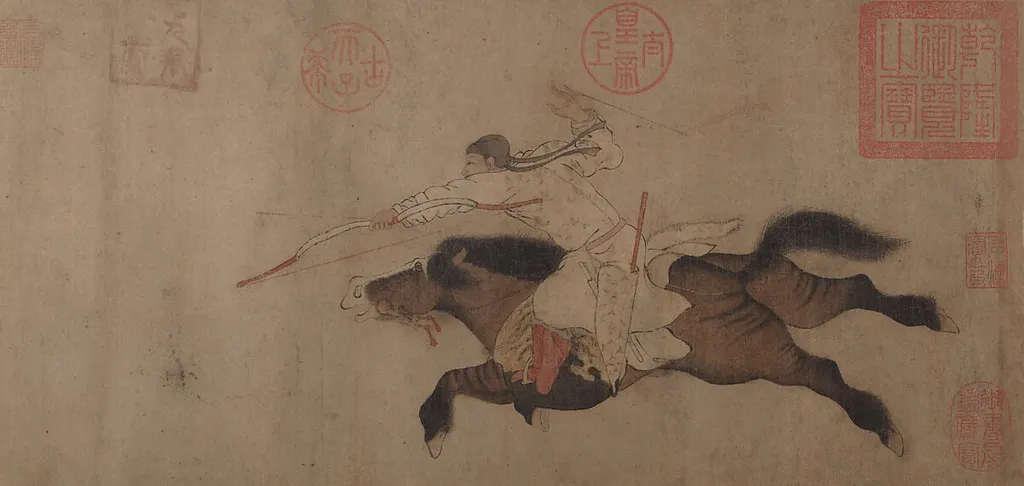
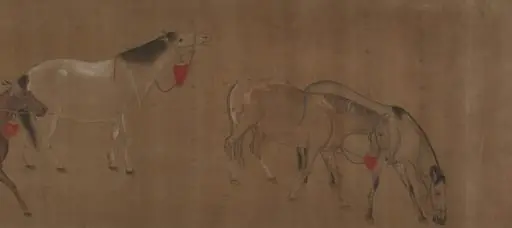
北宋/金 傳黃宗道 舊傳李贊華 獵鹿圖 卷|Stag Hunt is an ink painting by the Song dynasty painting artist Huang Zongdao. It dates from 1097 and is held in the collection of the Metropolitan Museum of Art. The handscroll titled "Stag Hunt" depicts a dynamic scene of horsemen pursuing a deer.
About this work
Subject & Meaning
The handscroll illustrates a mounted warrior discharging a bow toward a deer, a composition that combines equestrianism with archery within a hunting narrative.
The handscroll illustrates a mounted warrior discharging a bow toward a deer, a composition that combines equestrianism with archery within a hunting narrative. The figure, rendered in ink and color on paper, embodies the elite pastime of mounted deer hunting practiced by Song‑Jin aristocracy. By focusing on the act of the hunt, the work signals the owner’s command of martial skills and access to controlled recreation, themes commonly linked to the cultural ideal of refined warfare.
The painting’s subject thus operates both as a record of a specific chase and as a symbolic expression of status and competence in the courtly sphere.
Technique & Style
The work is executed as a handscroll on paper, utilizing ink and color as its primary media. Stylistically, the composition centers on equestrian themes, depicting scenes of hunting that feature men, horses, and the equipment of bow and arrow. While the attribution oscillates between the Northern Song or Jin periods and specific artists Huang Zongdao or Li Zanhua, the formal execution aligns with traditional Chinese narrative painting techniques.
The support material of paper allows for the application of both monochrome ink and polychrome pigments to render the dynamic interaction between the riders and the hunted game. The handling of the medium emphasizes the narrative action of the hunt within the horizontal format of the scroll.
History & Provenance
The handscroll known as Stag Hunt is traditionally attributed to the Northern Song or Jin dynasty artist Huang Zongdao, though older attributions link it to Li Zanhua. The work, executed in ink and color on paper, depicts equestrian hunting scenes involving bows and arrows. While the precise commissioning context and exact year of creation remain undocumented in the available records, the painting is firmly situated within the artistic production of China during the Song or Jin periods.
The artwork is currently held in the collection of the Metropolitan Museum of Art, where it is cataloged as a significant example of early Chinese painting. The provenance chain prior to its acquisition by the museum is not detailed in the provided sources, but its current location confirms its preservation within a major institutional collection.
The handscroll painting known as Stag Hunt, attributed variously to Huang Zongdao or Li Zanhua, is currently held in the collection of the Metropolitan Museum of Art in New York. While the work depicts scenes of equestrianism and hunting with bows and arrows, specific inventory or accession numbers are not provided in the available documentation. The source material identifies the location of the artifact as the Metropolitan Museum of Art but does not list a detailed exhibition history or specific dates of public display for this particular work.
Consequently, while the institutional custody is established, the chronological record of its exhibitions remains unspecified within the provided references.
Legacy
The handscroll by Huang Zongdao and Li Zanhua, titled Stag Hunt, is part of the Metropolitan Museum of Art's collection, a status that underscores its recognized significance within Chinese painting traditions. Its depiction of a mounted hunter with bow and arrow exemplifies Song-Jin era hunting iconography and has been frequently cited in scholarship as a representative example of the genre. The work's inclusion in a major Western museum reflects its enduring reputation and has contributed to ongoing study of hunting scenes as a recurring motif in later Chinese art.
Overview
The handscroll titled "Stag Hunt" depicts a dynamic scene of horsemen pursuing a deer. Executed with ink and color on paper, this painting dates back over 800 years, originating from a period when China was divided between the Northern Song and Jin dynasties. The identity of its creator remains a subject of historical debate, with attributions varying between Huang Zongdao and Li Zanhua.
Context
Hunting scenes were a recurring subject in Chinese art across various periods, often symbolizing power, skill, or courtly life. This handscroll offers a glimpse into the artistic conventions and visual storytelling employed to portray such activities during the Northern Song or Jin era, reflecting a broader tradition of depicting equestrian and animal subjects.
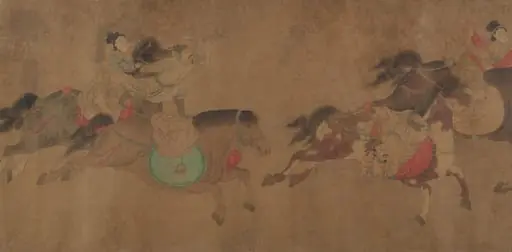
Artist & collection
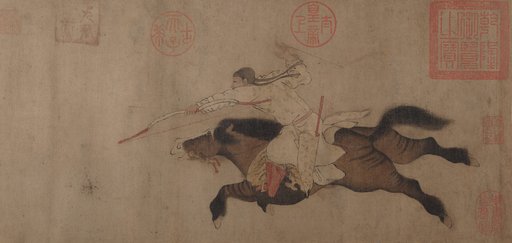
Artist
Huang Zongdao is tied to 12th-century Chinese handscrolls of hunting and court life in ink and color.

- 清 佚名 趙雍(僞款) 馬術圖 卷|Horsemanship demonstration
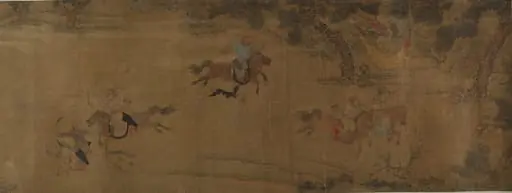 Untitled
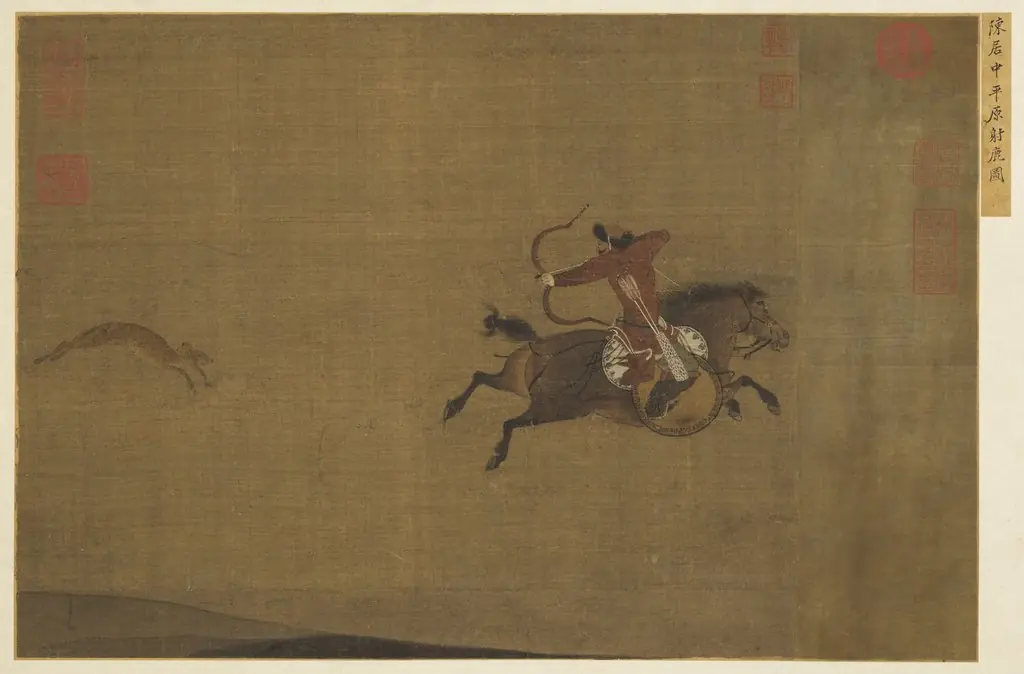 名繪集珍 冊 宋陳居中平原射鹿圖
 Untitled
 明/清 佚名 趙孟頫(僞款) 西成歸樂圖 卷|Happy Return from the West
 Ayusi Sweeping Bandits with a Lance
 Untitled
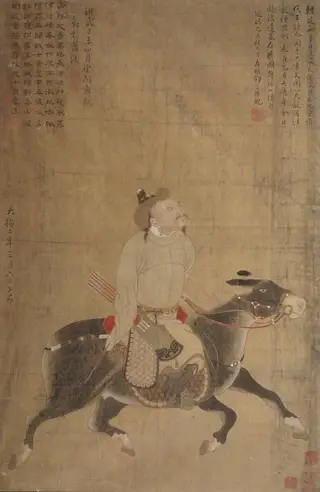 Portrait of Gengis Khan
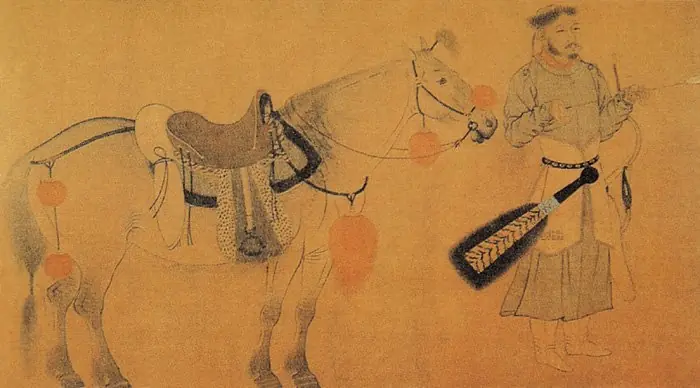 Archer and Horse
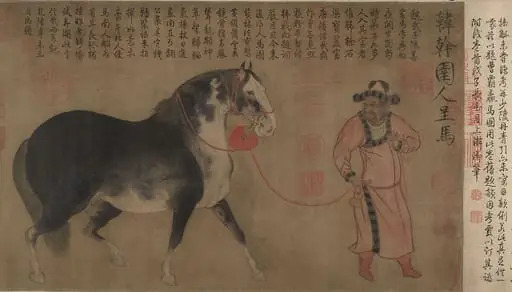 明 佚名 舊傳韓幹 圉人呈馬圖 卷|Horse and groom
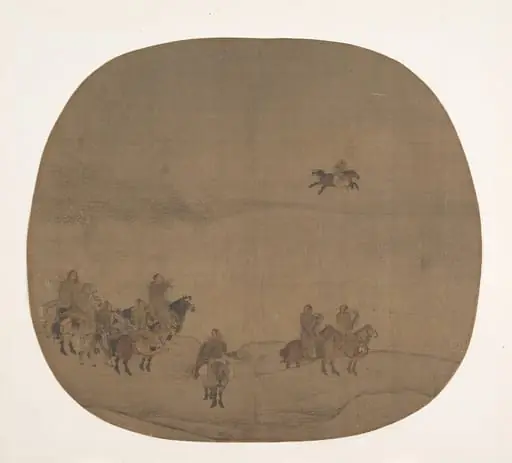 南宋 傳陳居中 胡騎春獵圖 團扇|Nomads hunting with falcons
 明 佚名 八駿圖 卷|Eight Horses