Artwork
Diptych: Calvary and Virgin with Child, Saint Philip and the donor
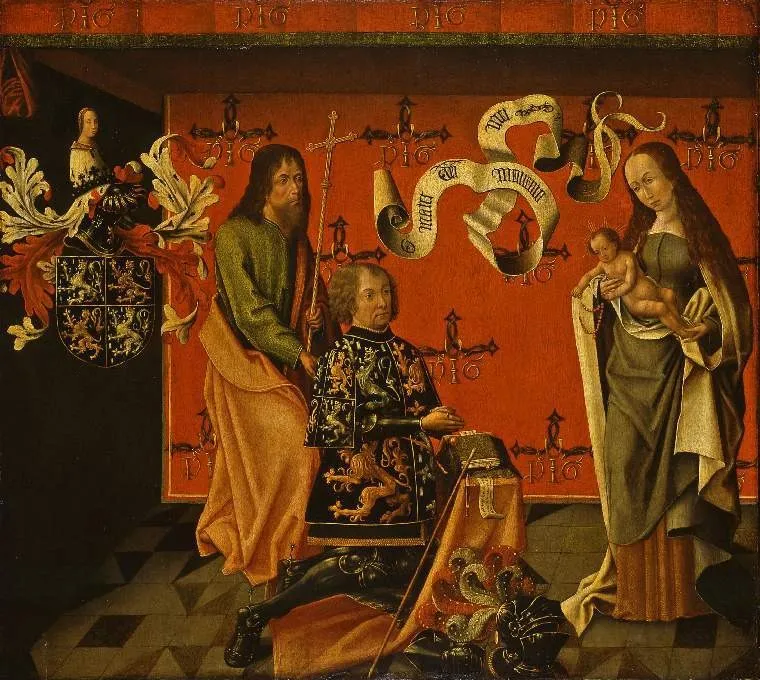
Diptych: Calvary and Virgin with Child, Saint Philip and the donor is an oil painting by the Northern Renaissance artist Unknown. It dates from 1500 and is held in the collection of the Fitzwilliam Museum. The diptych presents a dimly lit interior dominated by a deep red glow.
About this work
Subject & Meaning
The donor’s inclusion kneeling before the Madonna reflects the late medieval tradition of donor portraits, linking private piety with sacred intercession.
The diptych juxtaposes two paired scenes that together articulate a devotional programme. The left panel shows the Calvary, with Christ on the cross flanked by the Virgin and Saint John, while the right panel presents the Virgin and Child enthroned, accompanied by Saint Philip the Apostle and the donor, identified as the Chevalier Philip Hinckaert. The donor’s inclusion kneeling before the Madonna reflects the late medieval tradition of donor portraits, linking private piety with sacred intercession.
The iconography underscores themes of intercession and salvation. The Virgin’s presence on Calvary and in the right panel emphasizes her role as mediatrix, while Saint Philip the Apostle, often invoked against demonic influence, reinforces the protective and salvific power of Christ’s sacrifice depicted opposite. The pairing of the two panels invites contemplation of the Crucifixion’s redemptive promise through the Virgin’s maternal intercession.
Technique & Style
The diptych is executed in oil paint on a wooden panel support. This medium and substrate combination was characteristic of Northern European religious painting during the early 16th century. The work measures 66.2 cm in height and 73 cm in width, presenting a substantial yet portable format typical for private devotional diptychs of the period.
Stylistically, the composition depicts religious figures including the Virgin and Child, Saint Philip, and the donor, Philip Hinckaert, rendered with the detailed realism associated with Flemish Primitives.
History & Provenance
The diptych was painted in 1500 by an anonymous artist, as recorded in its catalog entry and confirmed by its creation date (1500) and medium (oil on panel). It was originally commissioned by the donor depicted in the work and remained in the collection of Martin Colnaghi before entering the Fitzwilliam Museum, where it has been housed since its bequest by Louis Colville Gray Clarke in 1960 and accession in 1961.
The work is held by the Fitzwilliam Museum in Cambridge, where it bears the accession number PD.19-1961. It was bequeathed by Louis Colville Gray Clarke in 1960 and formally received by the museum in 1961. The diptych has been exhibited in a special exhibition of early Flemish primitives held in Bruges, and it remains part of the museum's collection as documented in its catalogue entries.
Legacy
The diptych depicting the Virgin and Child with Saint Philip and a donor has been part of the Fitzwilliam Museum's collection since its acquisition in 1961, following bequest by Louis Colville Gray Clarke. It was previously exhibited in the 1902 Exposition des primitifs flamands à Bruges, marking one of the early recognitions of its significance in early Netherlandish painting. The work's scholarly attention was further heightened through its inclusion in Art UK's catalog, which documents its provenance and conservation history, ensuring continued academic engagement with this early Renaissance piece.
Overview
The diptych presents a dimly lit interior dominated by a deep red glow. Three figures occupy the space: a standing man in a green robe clutching a staff, a seated elder in richly ornamented attire, and a woman in a dark dress cradling an infant. A heraldic shield and a twisted rope bearing letters complete the composition.
Artist & collection









 The Gift of Kalmthout
 Virgo inter Virgines
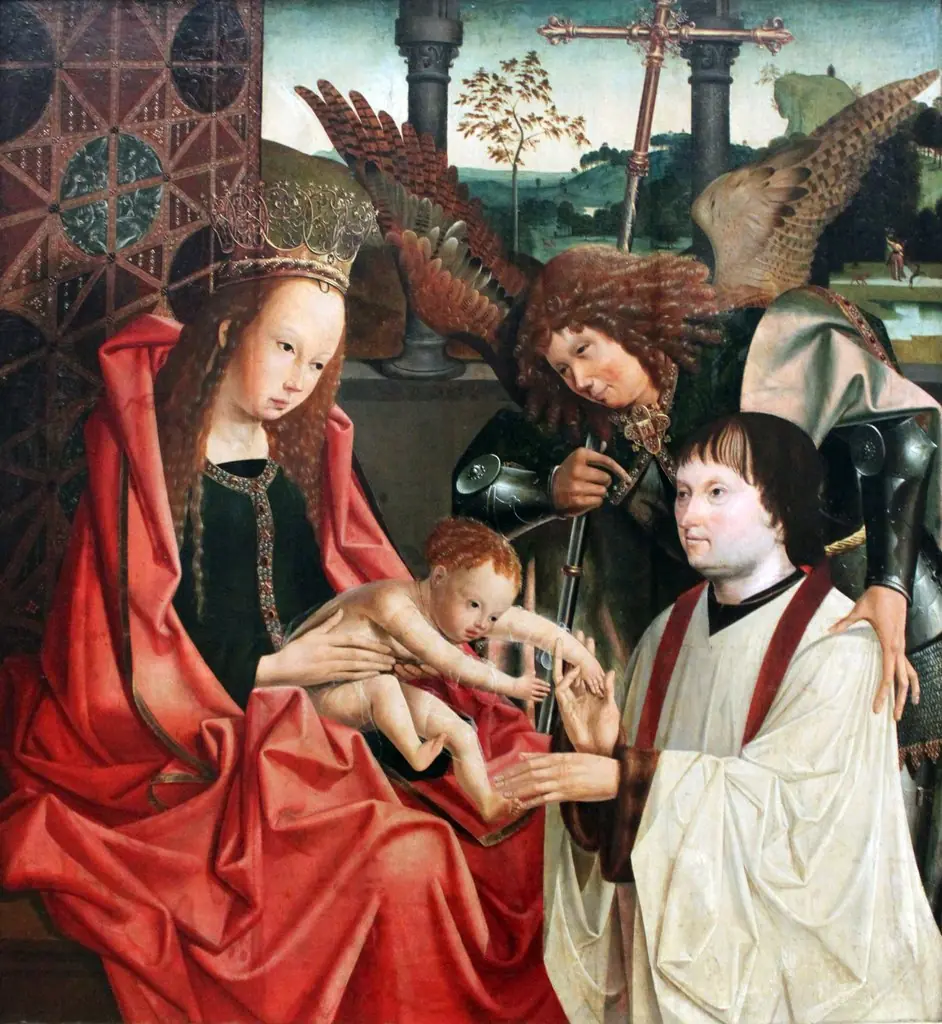 Maria with the child, the Archangel Michael and a donor
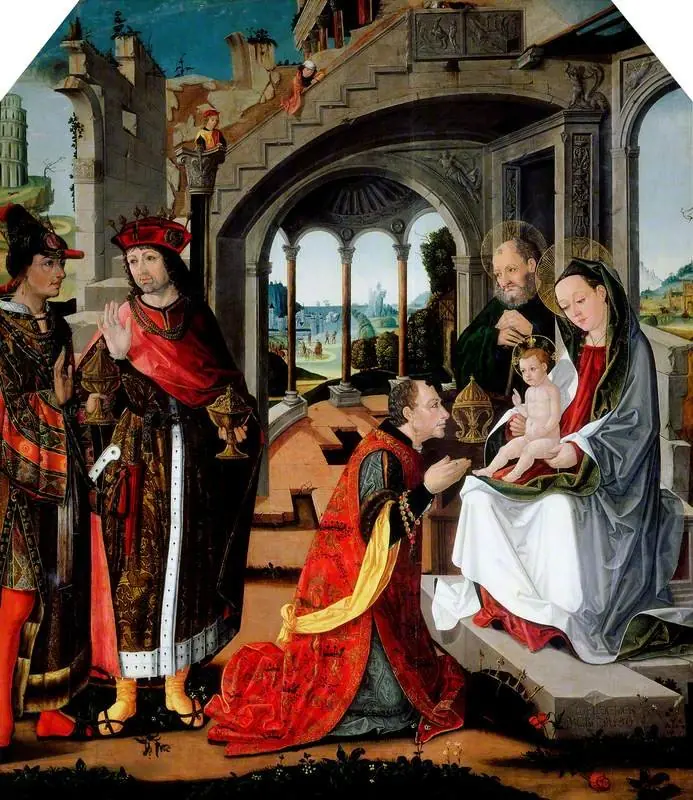 The Adoration of the Magi
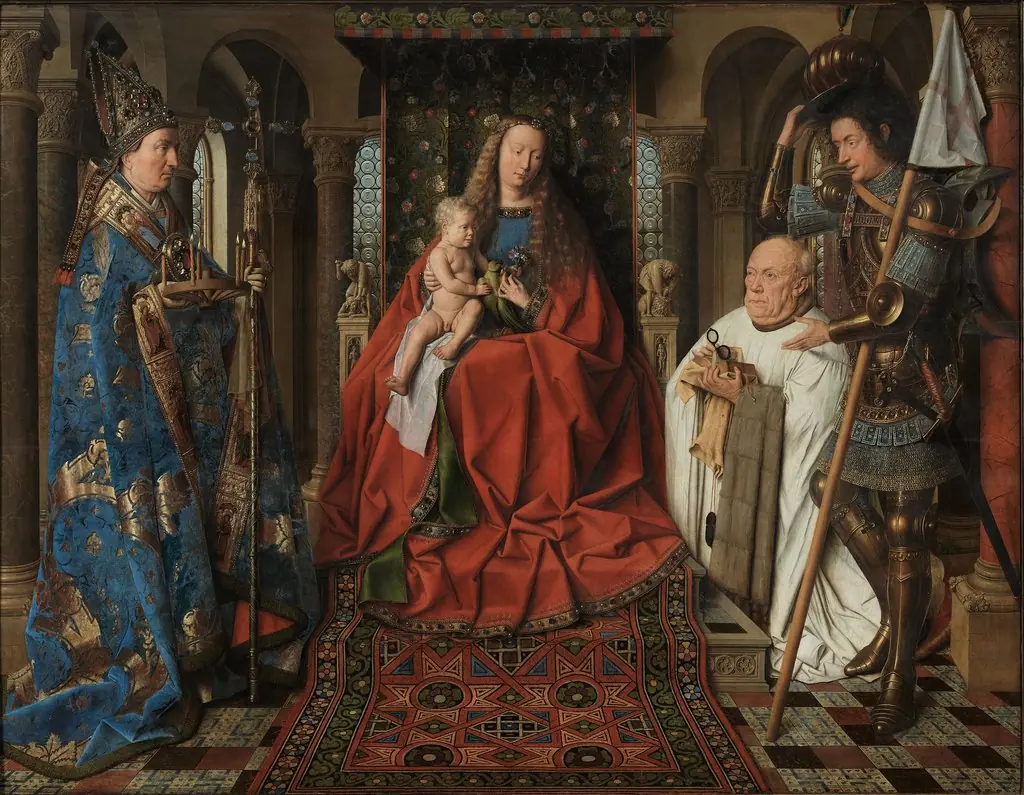 Madonna with Canon Joris van der Paele
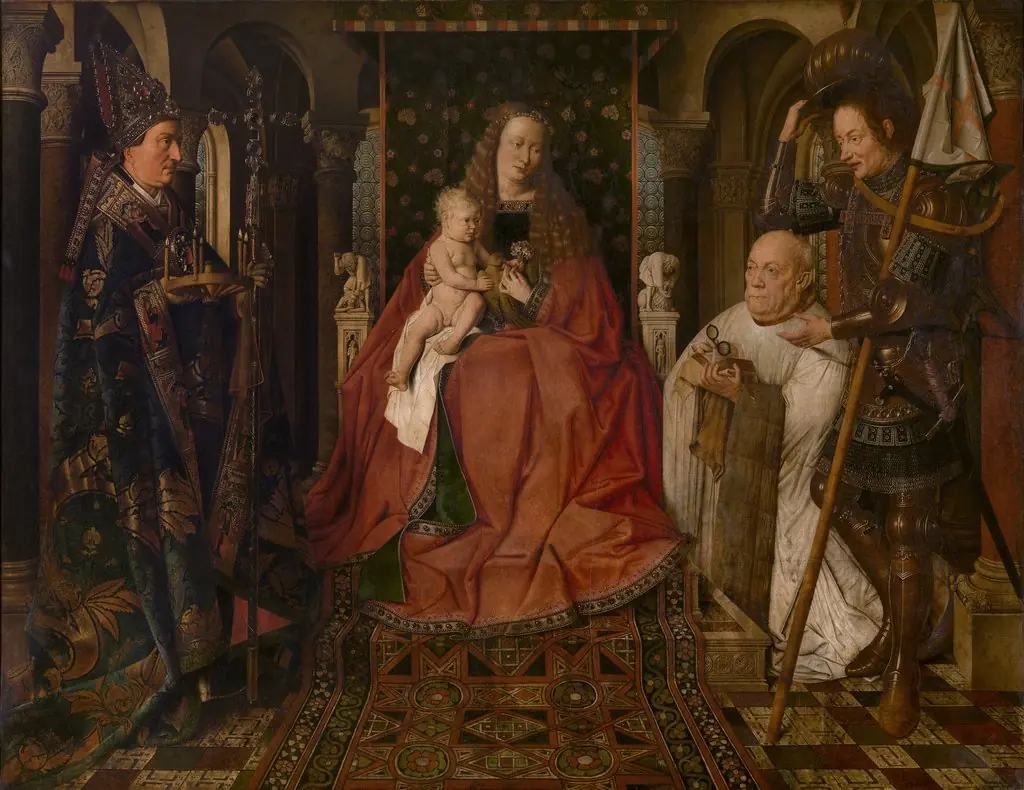 Madonna surrounded by Saint George, Saint Donatianus of Reims and the Donor Canon Van der Paele
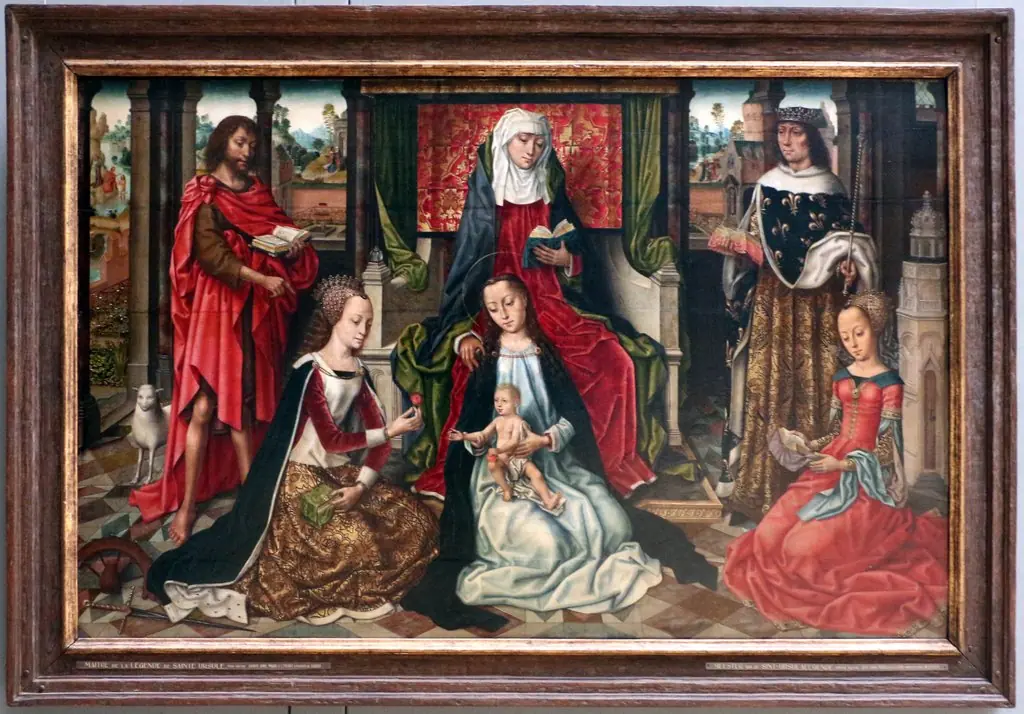 Saint Anne with the Virgin and Child and four saints (John the Baptist, Louis IX, Catherine and Barbara)
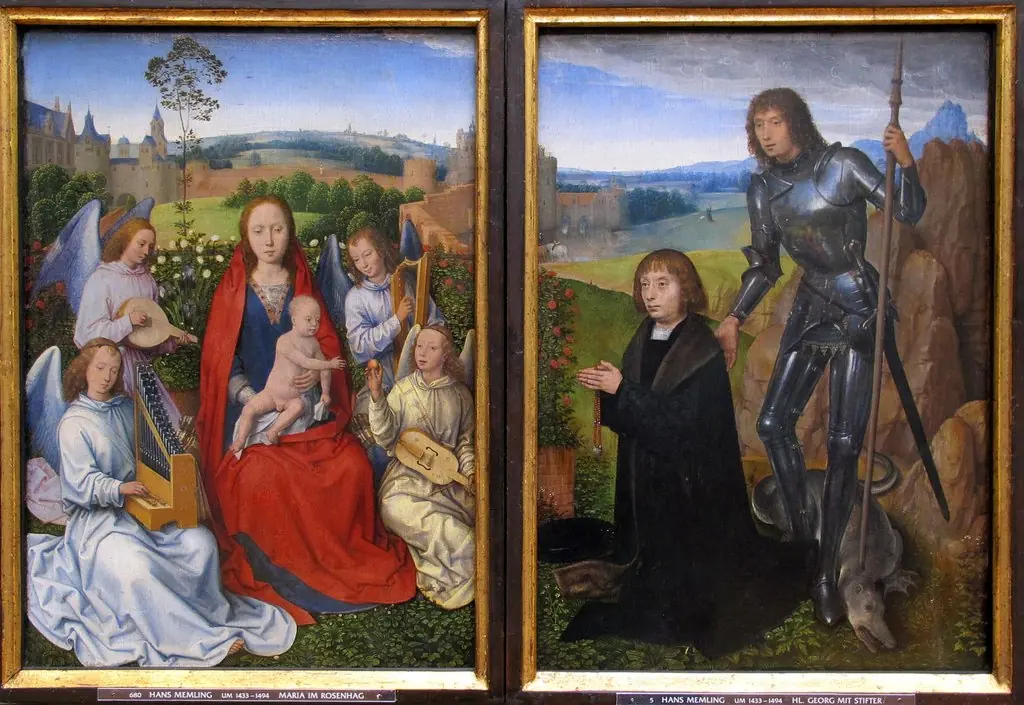 Diptych of Munich
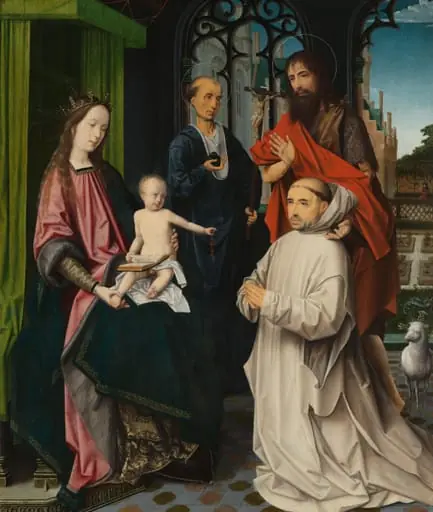 Tronende Maria en Christus, met Sint-Hiëronymus, Johannes de Doper en een kartuizer monnik