Artwork
Saints Dymphna and Lucy
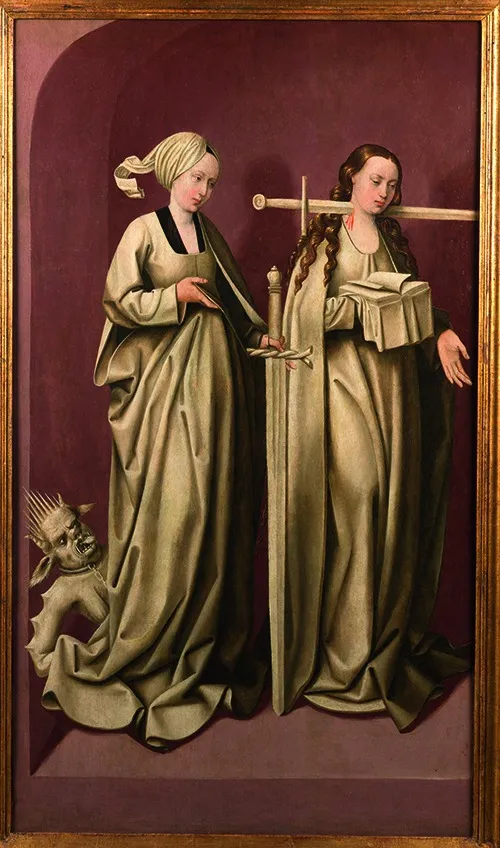
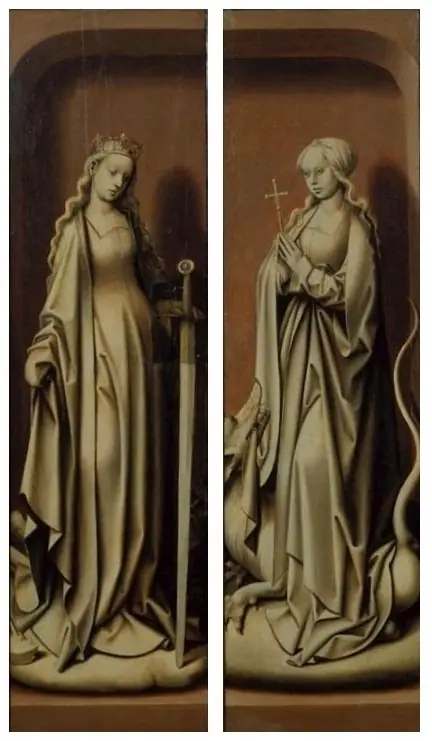
Saints Dymphna and Lucy is an oil painting by the Northern Renaissance artist Goswin van der Weyden. It dates from 1504 and is held in the collection of the Royal Museum of Fine Arts Antwerp.
About this work
Subject & Meaning
This subdued treatment directs attention to the figures themselves and their symbolic attributes, emphasizing contemplative identification over narrative drama.
The painting depicts Saints Dymphna and Lucy, two Christian holy women venerated in the late medieval and early modern Catholic tradition. Saint Dymphna, identified as the principal subject, is traditionally associated with mental illness and is invoked as a protector of the afflicted, while Saint Lucy is recognized as a virgin martyr linked with sight and light. Their pairing on a single panel reflects a common early Netherlandish devotional practice of uniting saints of related or complementary intercessory roles, allowing the work to function both as veneration of two holy figures and as a focus for layered spiritual petitions.
Executed in grisaille on a shutter of a polyptych, the work adopts a restrained monochromatic palette typical of exterior wings intended to harmonize with architectural surroundings when closed. This subdued treatment directs attention to the figures themselves and their symbolic attributes, emphasizing contemplative identification over narrative drama.
Technique & Style
The work is executed in oil paint on a wooden support forming a painted shutter door of a polyptych, employing a grisaille technique that renders the figures in monochrome tones. The composition presents Saints Dymphna and Lucy in a devotional arrangement, with careful attention to drapery and facial expression that reflects early sixteenth‑century Netherlandish conventions. The painting measures 123 cm in height and 75 cm in width, and its surface condition remains stable, showing only minor craquelure consistent with age.
Formal analysis notes the restrained palette and linear precision characteristic of Goswin van der Weyden’s style within the religious genre.
History & Provenance
Saints Dymphna and Lucy was created by Goswin van der Weyden in 1504, executed in oil paint as a grisaille panel designed for the shutter door of a polyptych. The work's inception date of 1504 is recorded in its cataloguing data, establishing the year of its commission and production.
The painting is held in the collection of the Royal Museum of Fine Arts Antwerp in partnership with The Phoebus Foundation, and it is housed at the Royal Museum of Fine Arts Antwerp. Beyond this institutional ownership, the sources do not document an earlier ownership chain or specific circumstances of the original commission.
Saints Dymphna and Lucy is held at the Royal Museum of Fine Arts Antwerp, where it is listed under the inventory number RKD000064523. The work was created in 1504 by Goswin van der Weyden as an oil painting on a grisaille shutter door of a polyptych. It has been part of the museum’s collection since its acquisition and was featured in the exhibition "Early Netherlandish Paintings: Masterpieces from the Phoebus Foundation" held at the Royal Museum of Fine Arts Antwerp in 2021.
Context
The painting shows Dymphna and Saint Lucy rendered in grisaille on a shutter door of a polyptych, reflecting early 16th-century Netherlandish religious practice. Its creation in 1504 places it within the stylistic milieu of Goswin van der Weyden, active in Antwerp during the transitional period between late Gothic devotional art and emerging Renaissance naturalism. The work's presence in the Royal Museum of Fine Arts Antwerp since its acquisition by The Phoebus Foundation underscores its significance within the corpus of surviving Netherlandish religious panels, where grisaille techniques were employed to emphasize sculptural form in devotional contexts.
Legacy
The painting has been cited as an early example of grisaille technique applied to a polyptych, influencing later religious works that employ monochrome schemes to suggest depth and narrative clarity. Its presence in the Royal Museum of Fine Arts Antwerp has allowed continued scholarly study of van der Weyden's stylistic innovations, reinforcing his reputation as a master of devotional imagery in the early 16th century. The work's focus on the saints Dymphna and Lucy reflects their enduring cultic popularity during the period, a theme that persisted in regional chapels and private devotions throughout the Low Countries.
The attribution to Goswin van der Weyden has been reinforced through comparative analysis with other works bearing his signature, establishing a consistent stylistic lineage that scholars trace from this panel to later altarpieces in the region.
Overview
Created in 1504 by Flemish artist Goswin van der Weyden, this oil painting presents the saints Dymphna and Lucy standing together before a deep red backdrop. The work is part of the Northern Renaissance tradition and is presently housed in the Royal Museum of Fine Arts in Antwerp.
Artist & collection
Artist
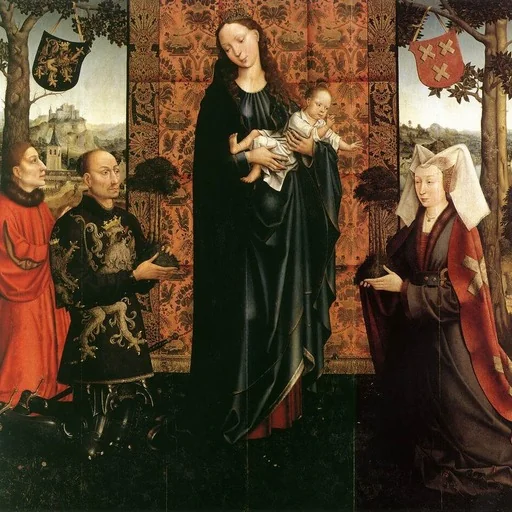
Goswin van der Weyden or Goossen van der Weyden (1455–1543) was a Flemish Renaissance painter active in Antwerp.

 Triptych of Antonius Tsgrooten
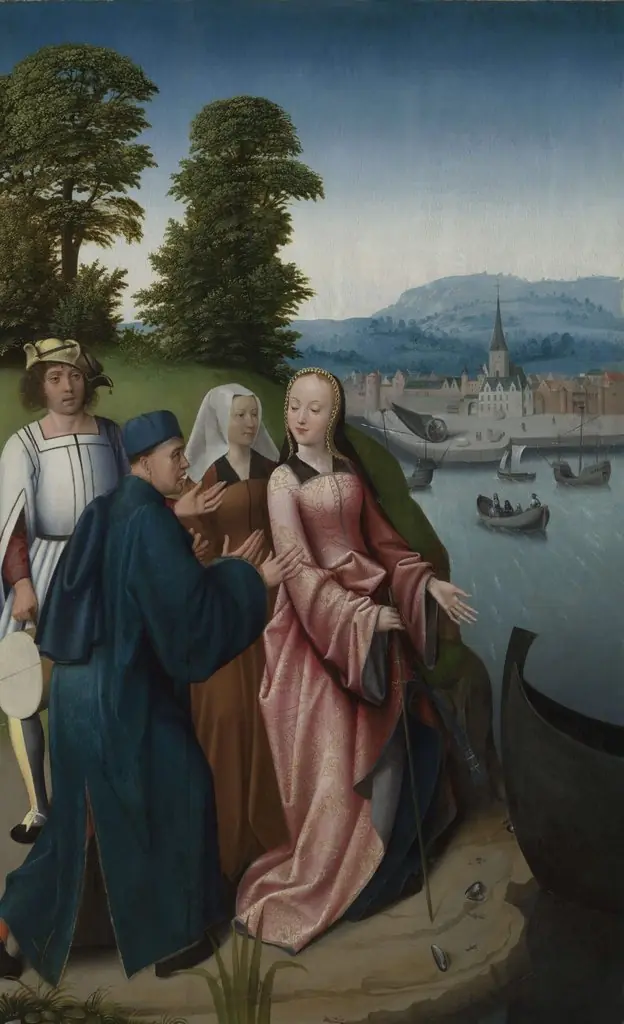 Dymphna and her Companions about to Embark
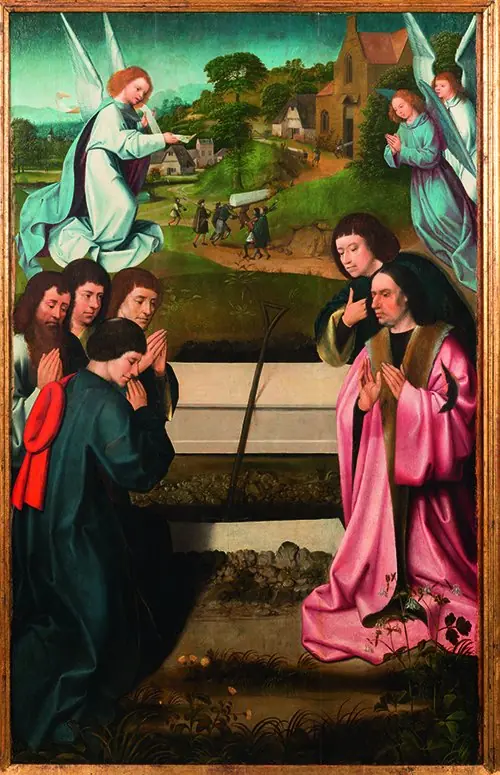 Discovery of the Sarcophagi Containing the Bodies of Dymphna and Gerebernus
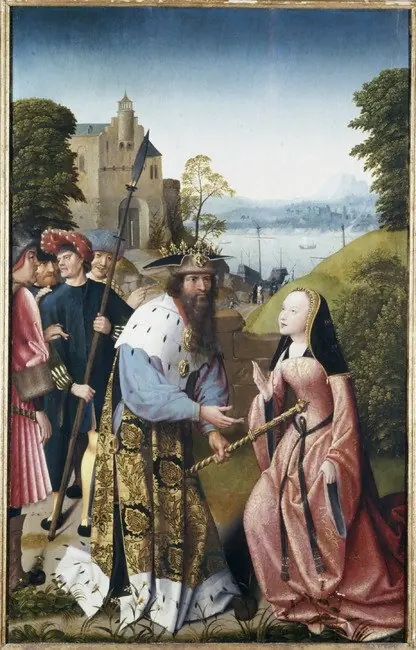 Dymphna’s Father Proposes to her
 The Gift of Kalmthout
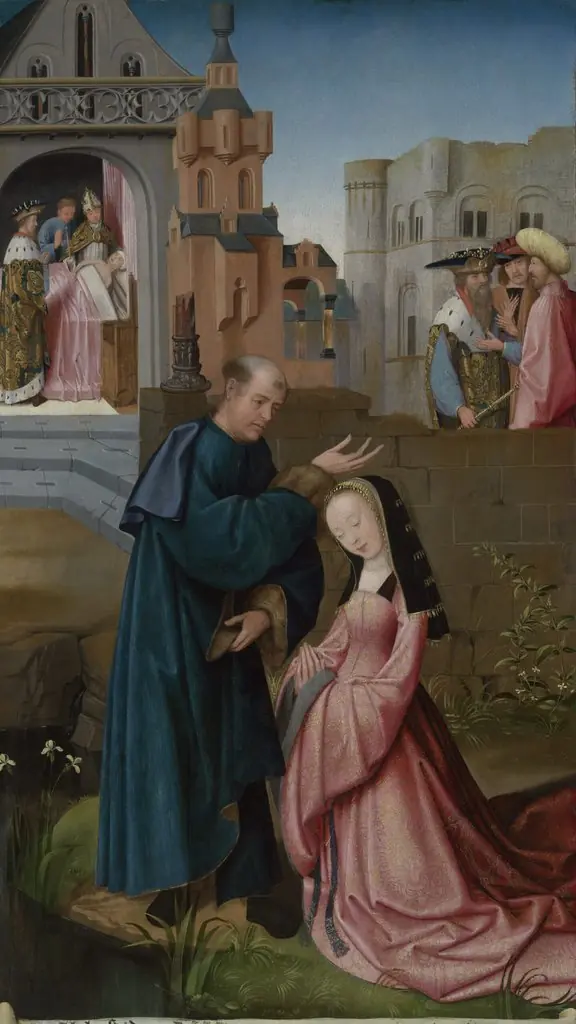 Baptism of Dymphna, with the Death of Dymphna’s Mother Represented in the Background
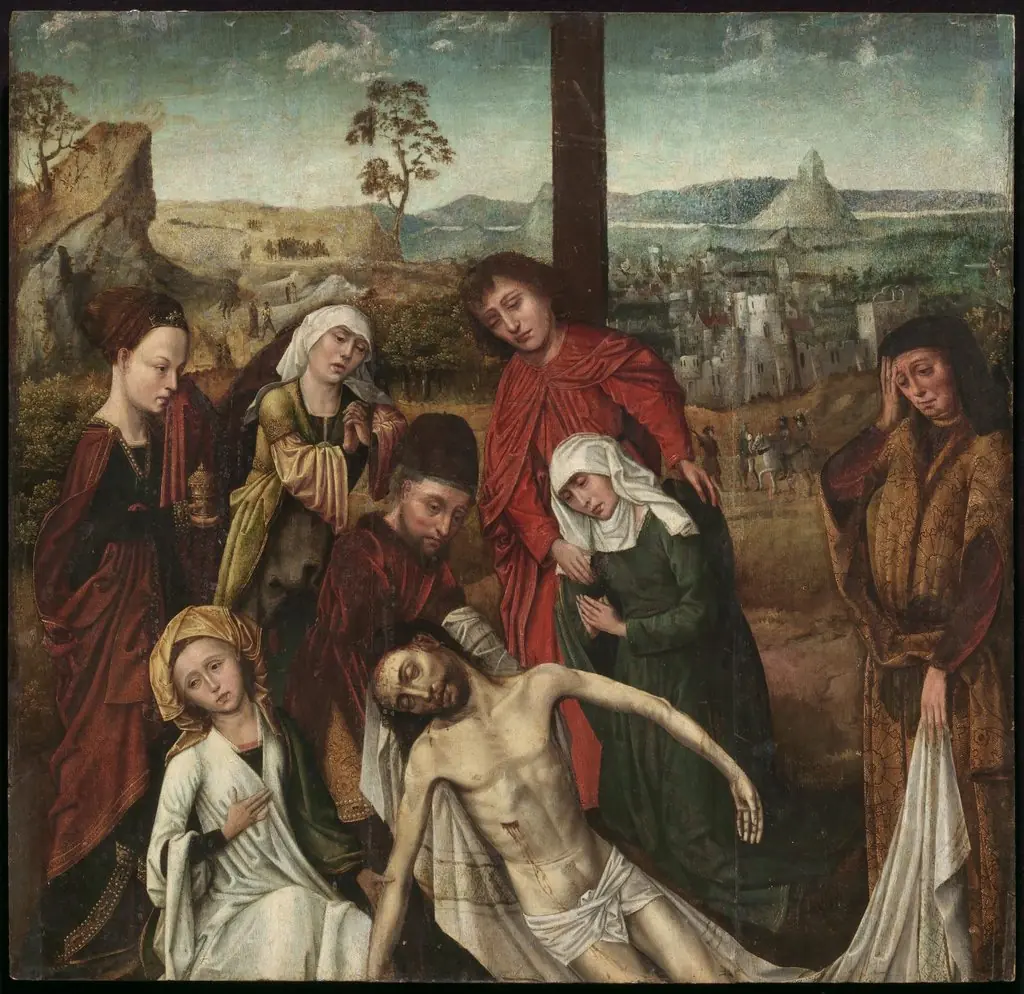 The Deposition of Christ
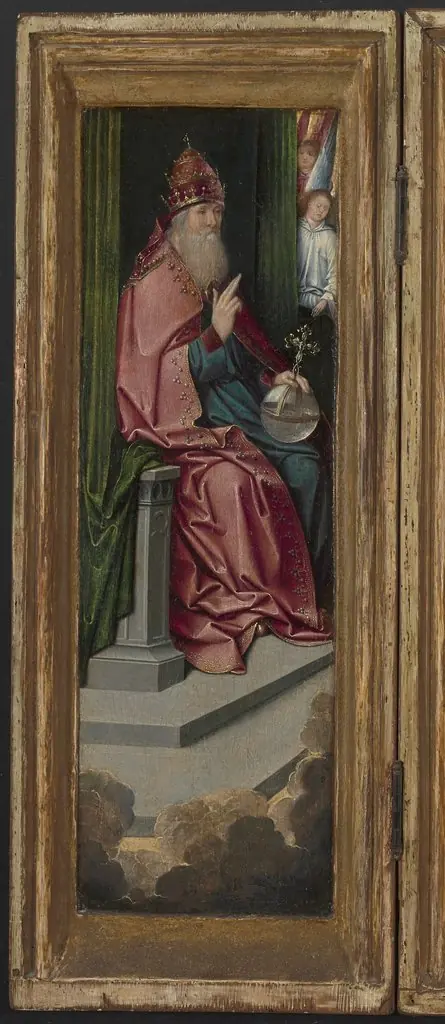 God the Father
- Der Dreikönigsaltar Außentafeln: Die Heiligen Katharina und Agnes
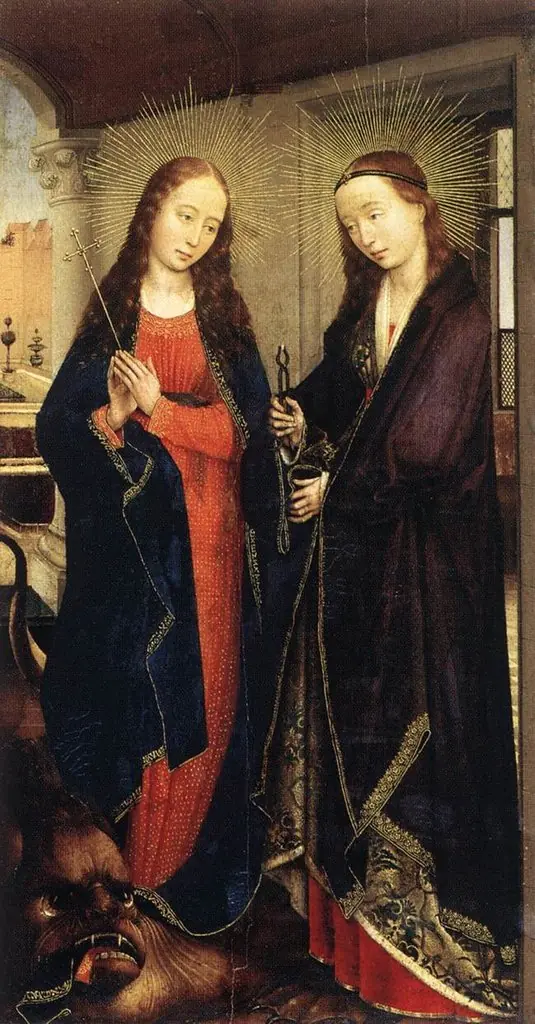 Saint Margaret and Saint Apollonia
 Santa Catarina e Santa Margarida
 Anunciação
 Saint Catherine
 Oda Stecke
![Saint Catherine [right wing exterior], by Master of the Starck Triptych](https://artifactworldgallery.com/img/master-of-the-starck-triptych--saint-catherine-right-wing-exterior--33943bd5985ff592-w320.webp) Saint Catherine [right wing exterior]
Saint Catherine [right wing exterior] Saint Herculanus and Saint James the Great
 Wing of Lazarus tritptych with donor and Saint Catharine
 Saint Bartholomew Altarpiece: Saint John the Evangelist and Margaret
 Diptych with the Passion of Christ (right wing): Crowning with Thorns and Agony on the Garden
 Altarflügel Marientod