Artwork
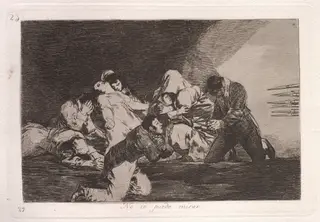
No se puede saber por que (One Can't Tell Why)
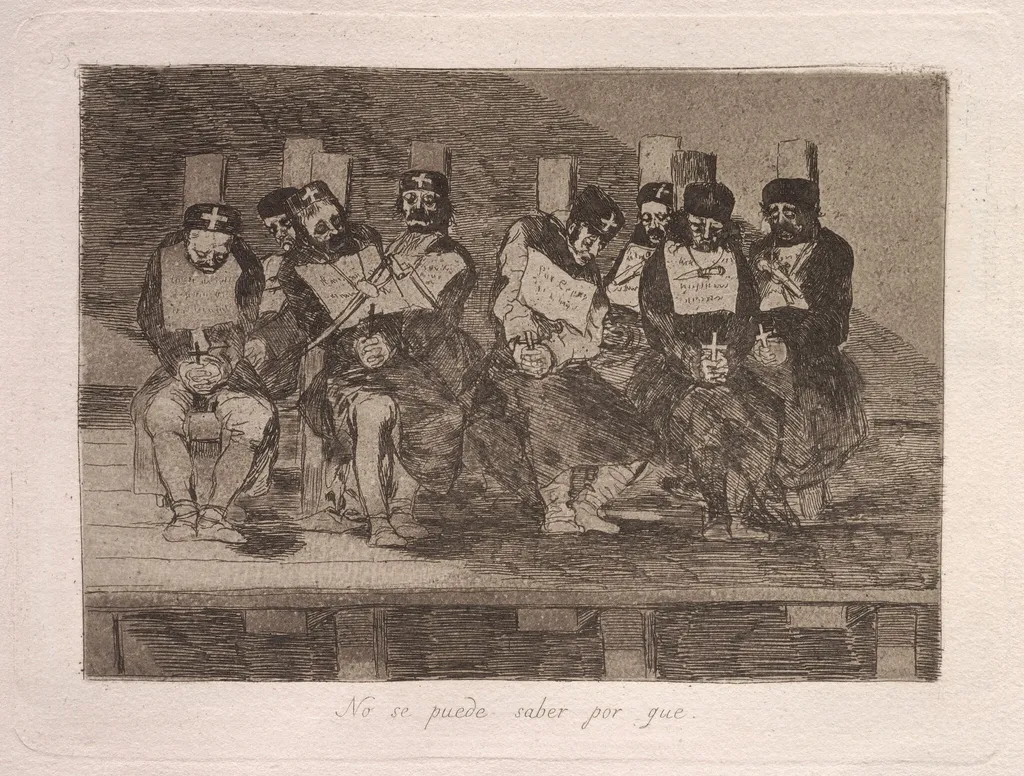
No se puede saber por que (One Can't Tell Why) is an ink print by the Impressionist artist Francisco de Goya. It is held in the collection of the National Gallery of Art. Created in 1863, this print by Francisco Goya combines etching, burnished lavis, drypoint, and burin to produce a haunting, layered image.
About this work
Overview
Created in 1863, this print by Francisco Goya combines etching, burnished lavis, drypoint, and burin to produce a haunting, layered image.
Created in 1863, this print by Francisco Goya combines etching, burnished lavis, drypoint, and burin to produce a haunting, layered image. It belongs to his later series of works on paper, made after his physical and psychological decline, which moved away from public commissions toward introspective, often unsettling visions. The technical complexity reflects his deepening experimentation with printmaking as a vehicle for personal expression.
Subject & Meaning
The image depicts a group of skeletal figures, clad in tattered ecclesiastical or chivalric robes, gathered in a dim, confined space. They clutch crosses and books, their bones visible beneath the remnants of authority. One figure sits apart, neglected.
The title, 'One Can't Tell Why,' underscores an unresolved mystery, perhaps questioning the futility of institutional power, the ambiguity of faith, or the inevitability of decay beneath ceremonial guise.
Technique & Style
Goya employed multiple intaglio methods to achieve tonal depth and texture: etching for fine lines, drypoint for rich, fuzzy shadows, burin for sharp incisions, and burnished lavis for soft, atmospheric gradations. The result is a chiaroscuro effect that isolates the figures in gloom, enhancing their eerie, ghostly presence. The roughness of the lines and uneven ink distribution convey urgency and emotional weight, diverging from polished academic traditions.
History & Provenance
This work emerged from Goya’s private series, later known as the 'Black Paintings' and related prints, created during his isolation in his farmhouse, the Quinta del Sordo. It was not intended for public display but for his own contemplation. The print remained in private hands until the 20th century, when institutions began collecting his graphic works as pivotal documents of modern artistic consciousness.
Context
Goya produced this piece amid Spain’s political instability and personal disillusionment following the Napoleonic Wars and the restoration of absolutism. His earlier satirical works had grown darker, reflecting a loss of faith in institutions, church, monarchy, reason. This print, like others in the series, avoids narrative clarity, instead evoking existential unease through symbolic ambiguity and visceral imagery.
Legacy
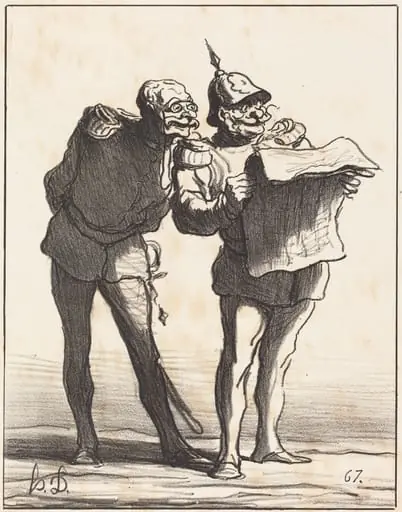
Goya’s use of printmaking to explore psychological and moral themes influenced 19th- and 20th-century artists such as Géricault, Daumier, and later expressionists. His willingness to depict decay, doubt, and the grotesque without moralizing broke from Enlightenment ideals and paved the way for modern art’s focus on inner experience over external order.
Own this work as a print
Artist & collection
Artist
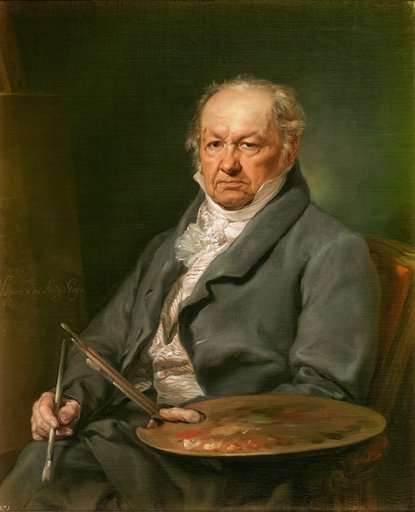
Francisco José de Goya y Lucientes was a Spanish romantic painter and printmaker.