Artwork
Si quebro el cantaro (Yes He Broke the Pot)
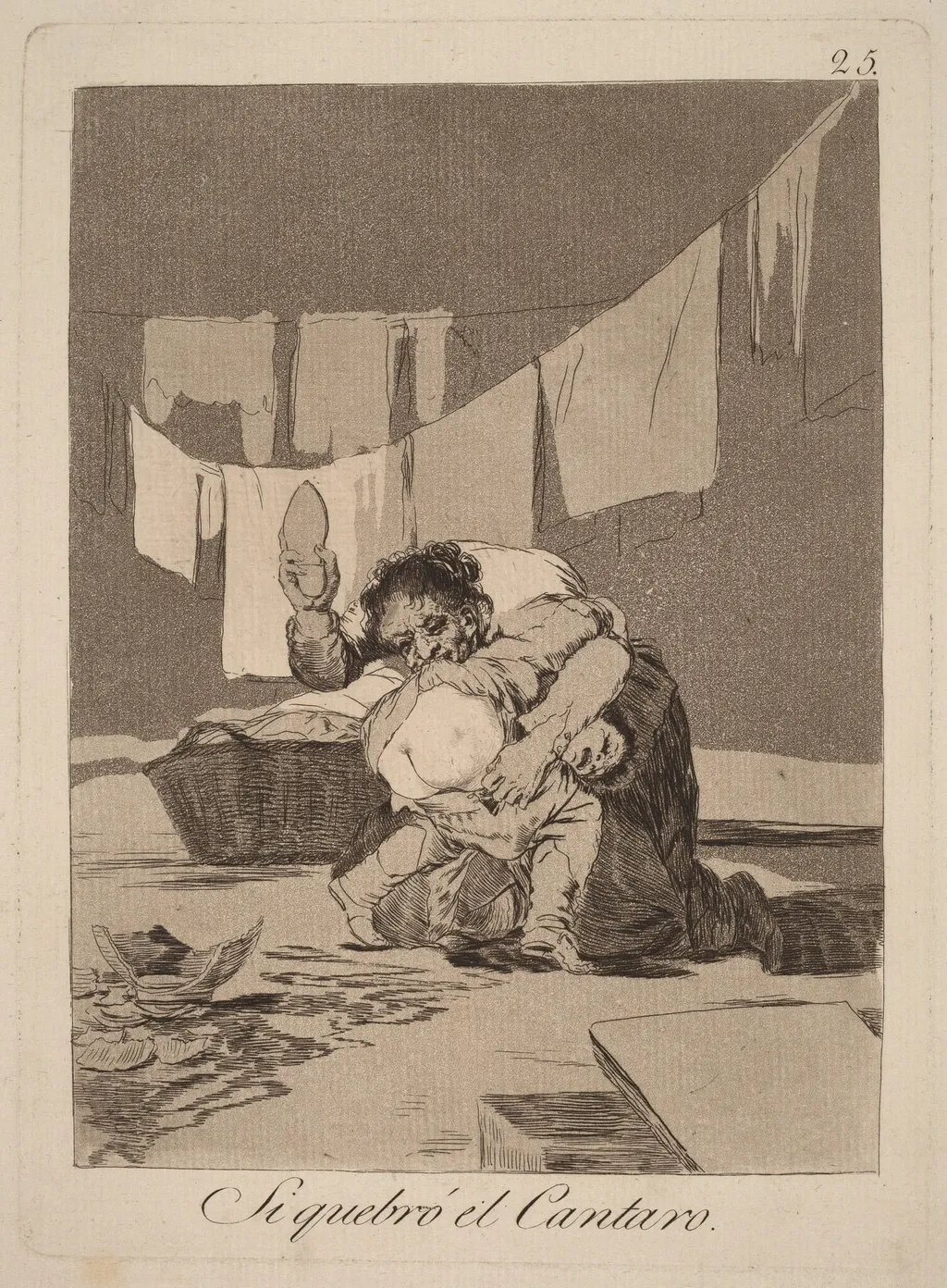
Si quebro el cantaro (Yes He Broke the Pot) is an ink print by the Romanticist artist Francisco de Goya. It dates from 1799 and is held in the collection of the National Gallery of Art.
- Inscription
- Inscribed:recto: in plate, at upper left: 25.; in plate, below image at center: Si quebró el Cantaro.; verso: at lower right in graphite in later hand: FA; at bottom left in graphite in later hand: A95017
- Markings
- Marked:Lessing Julius Rosenwald (Lugt 1760b) and National Gallery of Art
About this work
Overview
Created in 1799, Sí quebró el cántaro is one of the prints that compose Francisco de Goya’s Los Caprichos series. Executed on laid paper, the work combines etching, aquatint and dry‑point to produce a compact, ink‑rich image that examines everyday folly through a sharply observed rural scene.
Subject & Meaning
The composition centers on a kneeling peasant woman whose hands shield her face as a broken clay jar lies at her feet. Nearby, additional pots and scattered household items suggest a domestic setting. The title’s phrasing, “Yes He Broke the Pot,” shifts the focus from the woman’s grief to a broader commentary on blame and responsibility within communal life.
Technique & Style
Goya’s print merges three intaglio processes. Etching provides the precise linear framework, while aquatint supplies broad tonal washes that model the walls and background. Dry‑point adds a velvety, densely furrowed quality to the woman's features and the shattered fragments, enhancing the emotional intensity through varied line density and contrast.
History & Provenance
First issued as part of the 1799 Los Caprichos portfolio, the print circulated among Goya’s patrons and collectors of the period. Original impressions remain in several European institutions, having passed through private collections before entering museum holdings in the 19th and early 20th centuries.
Context
The image reflects Goya’s engagement with Enlightenment criticism of superstition and social inertia. By portraying a commonplace domestic mishap, he aligns the scene with the series’ broader satirical aim: to expose the absurdities of Spanish life on the cusp of Romantic transformation, where traditional customs met emerging individualist critique.
Own this work as a print
Artist & collection
Artist
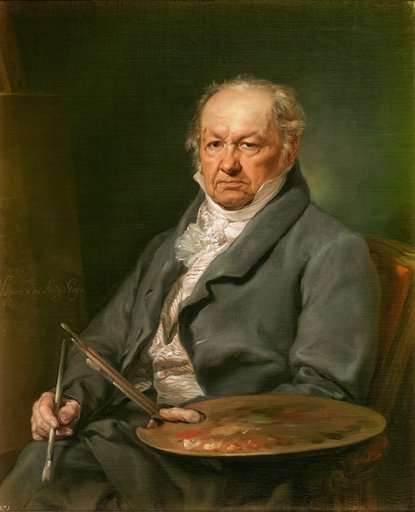
Francisco José de Goya y Lucientes was a Spanish romantic painter and printmaker.

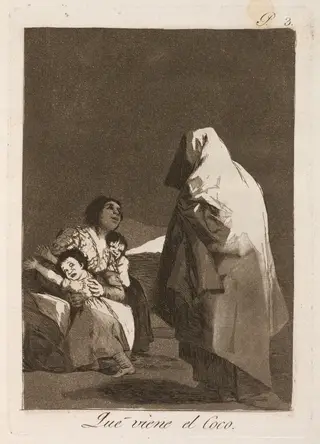 Que viene el coco (Here Comes the Bogey-Man)
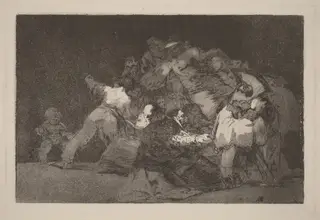 Disparate general (General Folly)
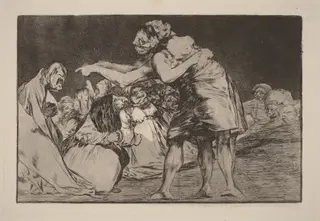 Disparate desordenado (Disorderly Folly)
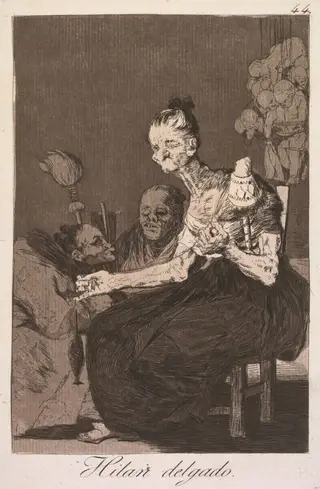 They Spin Finely, Plate 44
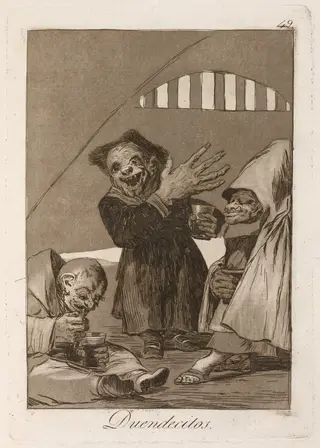 Duendecitos (Hobgoblins)
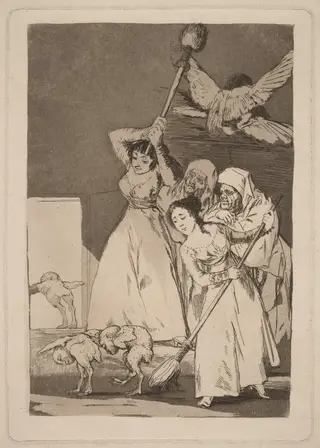 Ya van desplumados (There They Go Plucked)
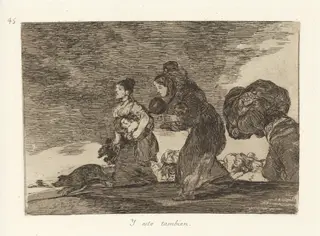 Y esto tambien (And This Too)
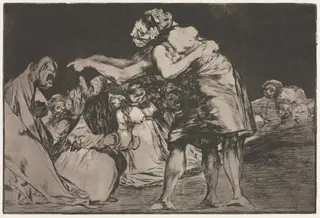 The Proverbs: Matrimonial Folly
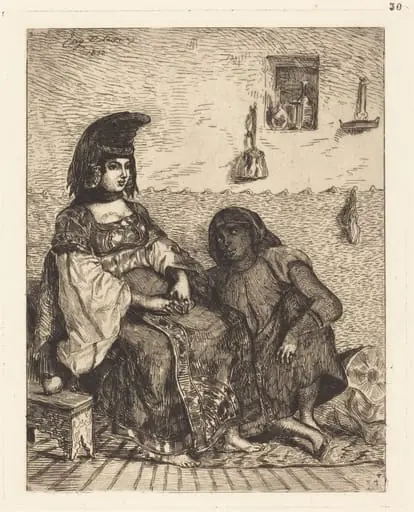 Jewish Woman of Algiers (Juive d'Alger)
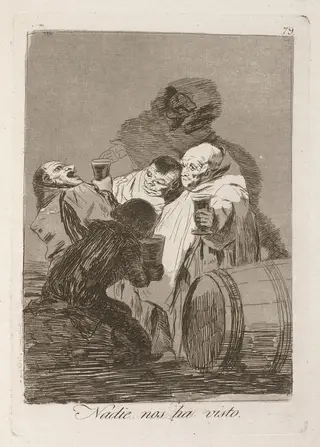 Nadie nos ha visto (No One Has Seen Us)
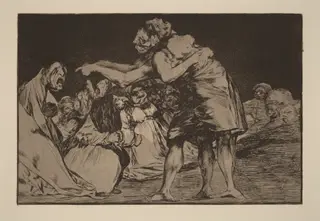 Disparate desordenado (Disorderly Folly)
- Yes, He Broke the Pot, Plate 25