Artwork
Portrait of J. L.
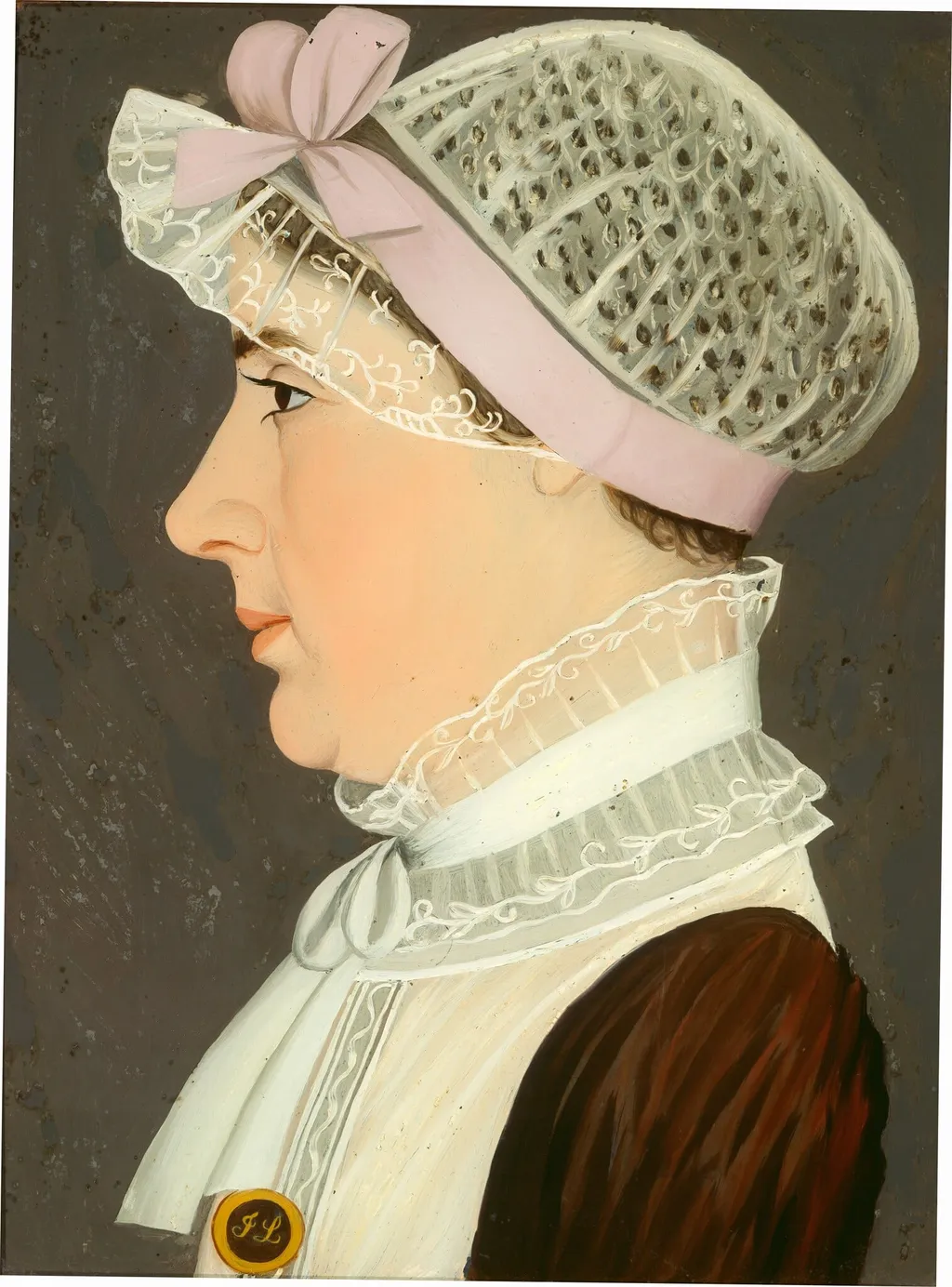
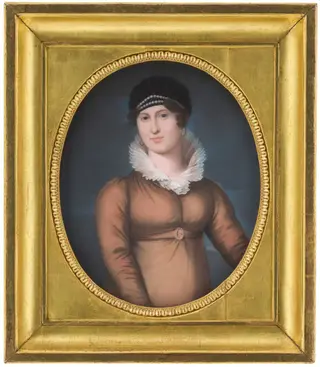
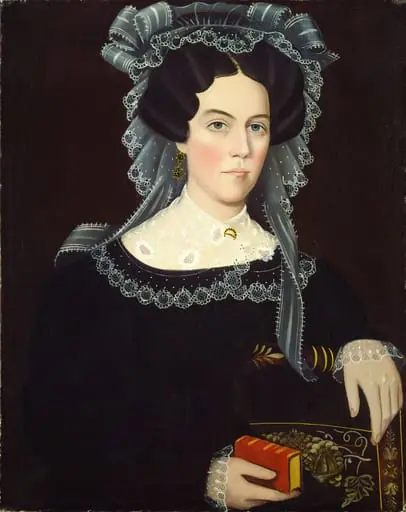
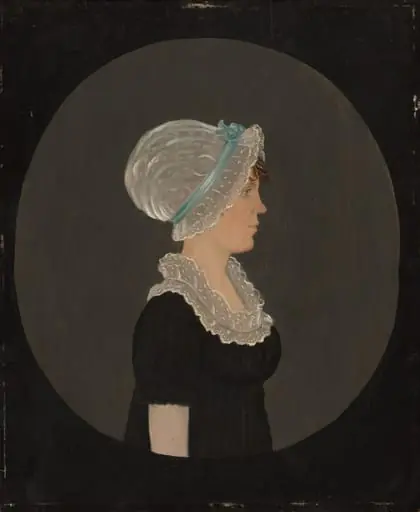
Portrait of J. L. is a glass painting by the Romanticist artist Benjamin Greenleaf. It dates from 1814 and is held in the collection of the National Gallery of Art.
- Inscription
- Inscribed:lower left on brooch: J L
About this work
Technique & Style
Created in 1810, this portrait by Benjamin Greenleaf is executed as a reverse painting on glass.
Created in 1810, this portrait by Benjamin Greenleaf is executed as a reverse painting on glass. The work measures 33.2 cm in height and 25.5 cm in width. As a painted portrait, the piece utilizes glass as its primary support, requiring the artist to apply pigments to the reverse side of the panel to achieve the final image.
The specific handling of the medium and the current physical condition of the artwork are not detailed in the available records, though the object remains part of the permanent collection at the National Gallery of Art in Washington, D.C.
History & Provenance
Benjamin Greenleaf created the Portrait of J. L. in 1810 using the technique of reverse painting on glass. The work originated in Connecticut before entering the collection of Edgar William and Bernice Chrysler Garbisch, who purchased it in 1948. The Garbisches subsequently donated the painting to the National Gallery of Art in Washington, D.C., in 1953.
Portrait of J. L. is held in the collection of the National Gallery of Art in Washington, D.C. The work entered the museum's holdings in 1953 as a gift from Edgar William and Bernice Chrysler Garbisch, who had purchased the piece in 1948. Prior to their acquisition, the painting was recorded as originating from Connecticut. No specific exhibition history or inventory accession number is provided in the available records.
Context
Benjamin Greenleaf's Portrait of J. L., painted in 1810 as a reverse work on glass, exemplifies early American portraiture's technical experimentation and regional genre conventions. Its depiction of an unnamed sitter reflects the limited documentation of New England's emerging middle-class subjects during the Federal period. The work entered the National Gallery of Art collection through the 1948 acquisition of the Chrysler Garbisch holdings, a significant transfer that expanded the museum's early American holdings.
Scholarship on Greenleaf remains sparse, with minimal dedicated study beyond catalogues referencing his role in early American glass painting traditions. The portrait's stylistic analysis situates it within contemporary Connecticut portraiture, though comparative studies with regional peers remain underdeveloped. Its provenance highlights mid-20th-century American art collecting practices, particularly the institutional integration of private collections like the Garbisch bequest.
Contextualizing the work within art history requires acknowledging both its material innovation and the broader trajectory of early American portraiture, where technical experimentation often intersected with limited subject documentation. Current scholarship treats it as a representative example rather than a pivotal innovation, underscoring gaps in understanding regional artistic networks.
Overview
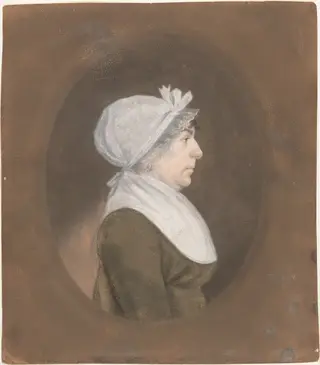
Created around 1814, this reverse‑painted glass portrait is attributed to American artist Benjamin Greenleaf. It presents a woman in profile, distinguished by a white hat trimmed with a pink ribbon and a matching white scarf. The composition emphasizes her attire, including a brown sleeve visible beneath a white vest, and a modest gold pin bearing the initials J L.
Subject & Meaning
The sitter, identified only by the initials on her pin, is rendered with careful attention to personal adornments, suggesting a focus on individual identity within the early‑19th‑century domestic sphere. The profile pose, common in portraiture of the period, conveys a sense of modesty and decorum, while the delicate coloration of the hat and ribbon adds a subtle note of femininity.
Own this work as a print
Artist & collection