Artwork
Aegina Visited by Jupiter
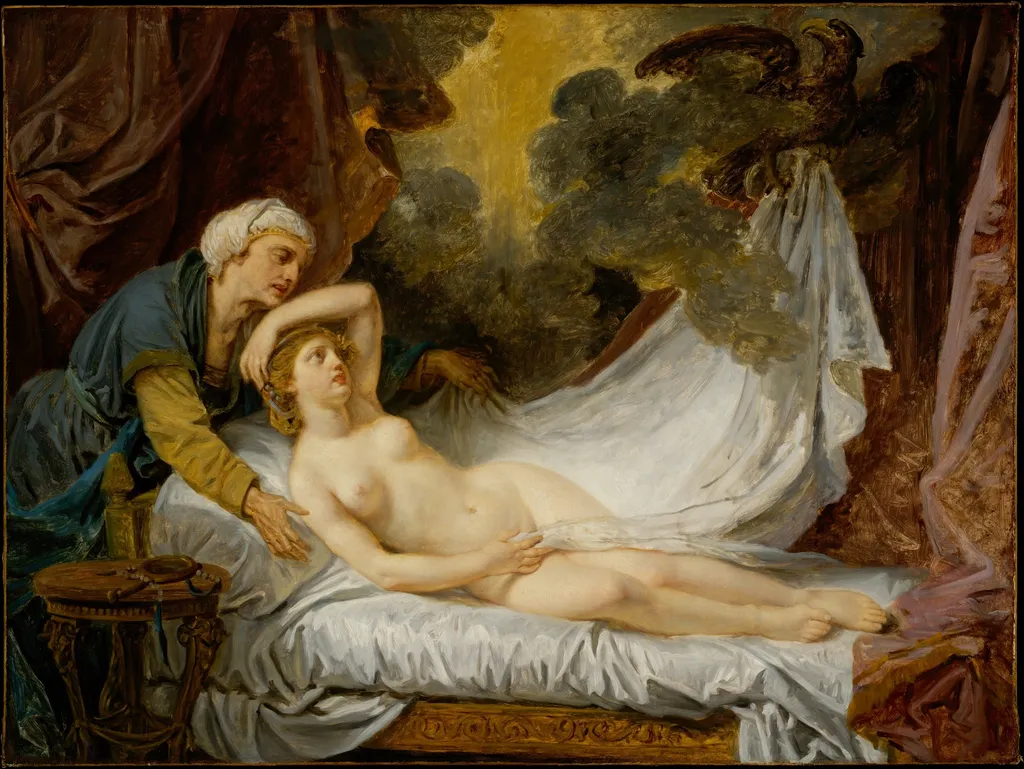
Aegina Visited by Jupiter is an oil painting by the Academic Art artist Jean-Baptiste Greuze. It dates from 1768 and is held in the collection of the Metropolitan Museum of Art.
About this work
Subject & Meaning
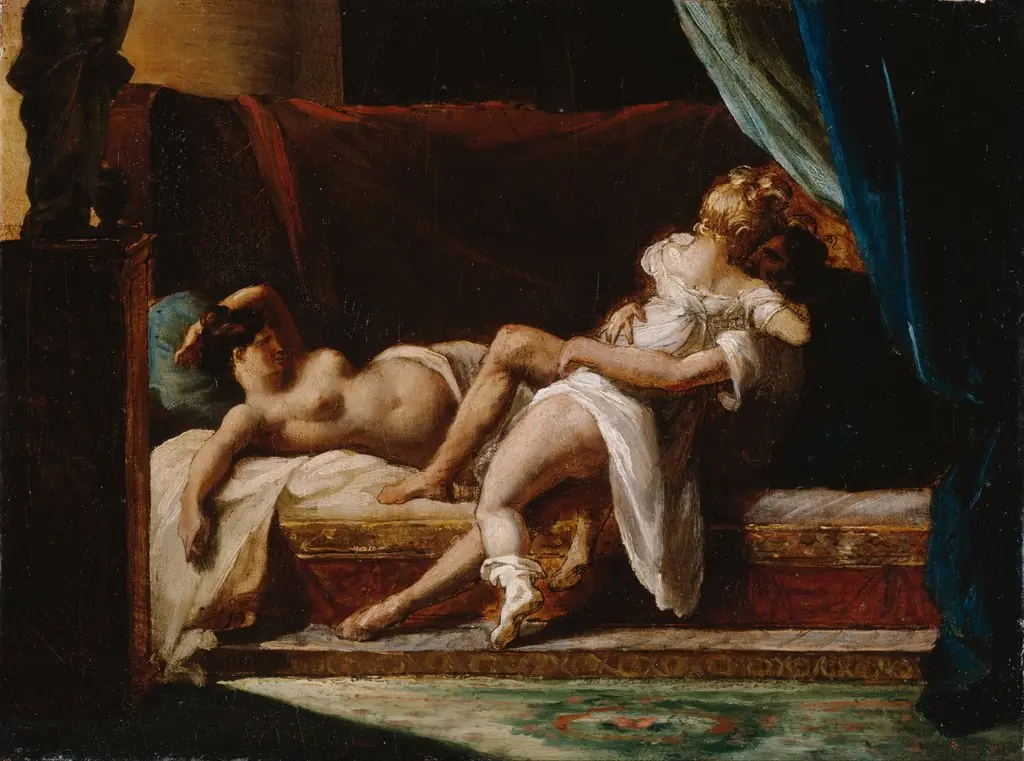
Greuze renders the moment of divine arrival, showing Aegina reclining on a bed while Jupiter stands beside her, an eagle perched nearby as his emblem.
The painting depicts the classical myth in which Jupiter, king of the gods, visits Aegina in human guise, a union that results in the birth of Aeacus, progenitor of the Myrmidons. Greuze renders the moment of divine arrival, showing Aegina reclining on a bed while Jupiter stands beside her, an eagle perched nearby as his emblem. The nudity of the female figure, conventional for antique goddesses and mortal women alike in eighteenth-century academic practice, signals both vulnerability and mythic elevation.
The composition emphasizes intimacy and fate, framing the encounter as a fated, generative event that bridges mortal and divine realms.
Technique & Style
Jean-Baptiste Greuze's Aegina Visited by Jupiter, executed in 1768, is an academic oil painting on canvas. The work measures 147 cm in height and 195.9 cm in width, providing a substantial surface for the mythological narrative. Greuze employs the oil medium to render the figures of Jupiter, Aegina, and the accompanying eagle with the smooth, polished finish characteristic of the Academic movement.
The composition features a nude figure reclining on a bed, a subject handled with the dramatic lighting and emotional intensity typical of the artist's style. The physical support of canvas allows for the detailed brushwork observed in the depiction of the nude form and the surrounding elements, maintaining the structural integrity required for a painting of this scale within the Metropolitan Museum of Art's collection.
History & Provenance
The painting Aegina Visited by Jupiter was created by Jean-Baptiste Greuze in 1768, as confirmed by both the artist’s corpus and WIKIDATA documentation. The work is dated to 1768, aligning with Greuze’s mature period in which he frequently depicted mythological subjects infused with moralizing narratives. The provenance traces the painting directly to the Metropolitan Museum of Art, where it remains in the collection.
No documented commission records survive, but its mythological genre and allegorical content suggest it was likely created for a private patron or the open market, consistent with Greuze’s practice of catering to Enlightenment-era collectors.
Overview
This oil painting, titled Aegina Visited by Jupiter, portrays a mythological encounter characterized by profound intimacy. It features a reclining nude woman attended by a robed celestial figure, set within a dramatic, cloud-filled landscape. The composition emphasizes a moment of quiet contemplation and personal connection between the two figures, drawing the viewer into their private space.
Context
This artwork aligns with a tradition of European painting that explores themes of nudity and profound intimacy. Its sensitive portrayal of the human form and the emotional depth of the encounter resonate with the work of artists such as Jean-Baptiste Greuze, who similarly investigated private moments and the nuances of human connection. The painting thus contributes to a broader art historical dialogue on vulnerability and personal experience.
Own this work as a print
Artist & collection

Artist
Jean-Baptiste Greuze (French pronunciation: 21 August 1725 – 4 March 1805) was a French painter of portraits, genre scenes, and history painting.

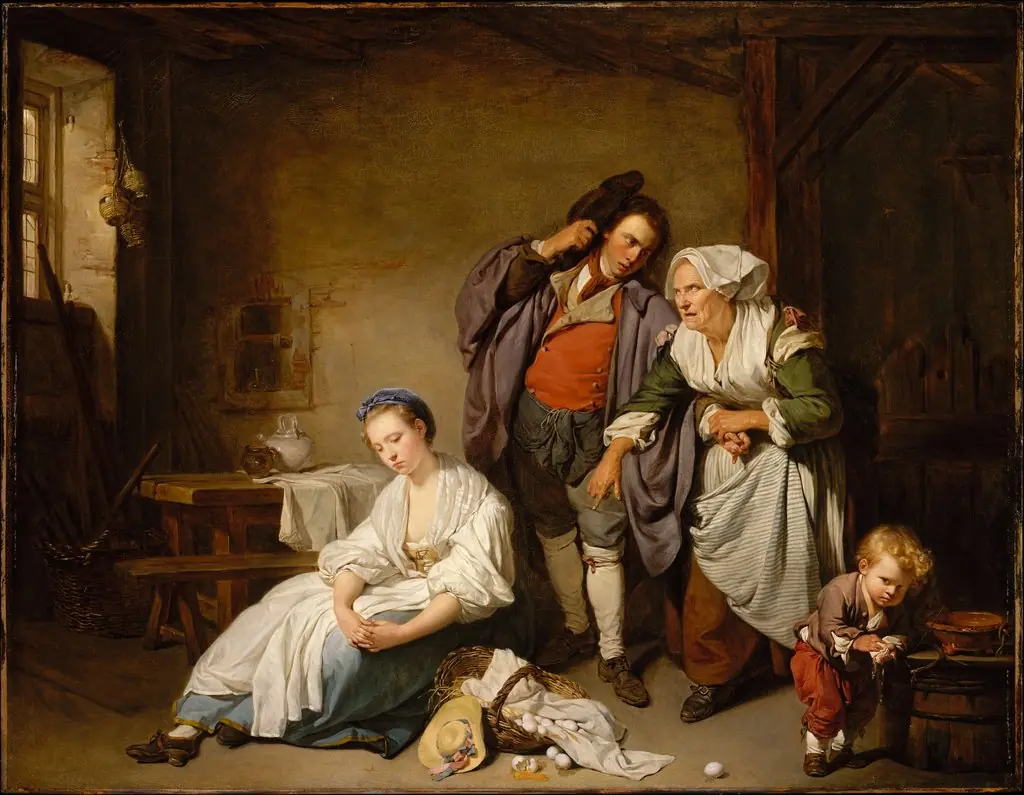 Broken Eggs
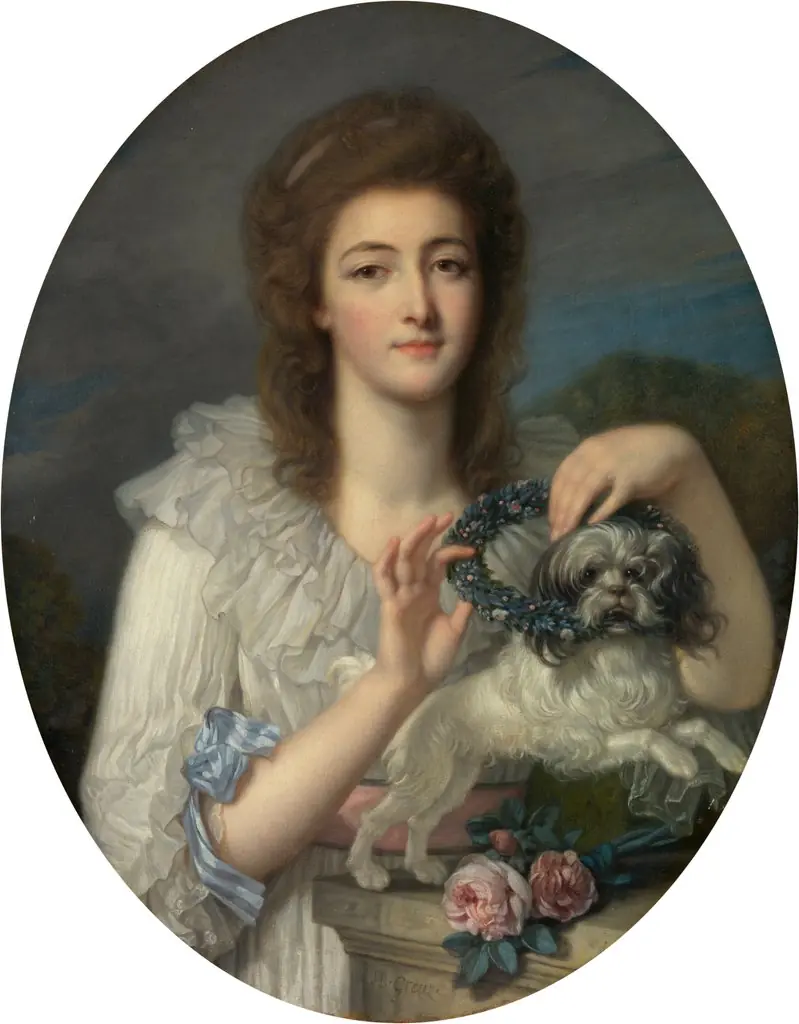 Princess Varvara Nikolaevna Gagarina (1762–1802)
 Ange Laurent de La Live de Jully
 Jean Jacques Caffieri (1725–1792)
 Portrait of Charles Claude de Flahaut de La Billarderie (Comte d'Angiviller)
 Head of a Young Woman
 Head of a Young Boy
 Madame Jean-Baptiste Nicolet (Anne Antoinette Desmoulins, 1743–1817)
 Danaë
Danaë Pygmalion and Galatea
 Venus   and  Adonis
 The Sleeping Danae Being Prepared to Receive Jupiter
 Traum der Dido
 Joseph and Potiphar's Wife
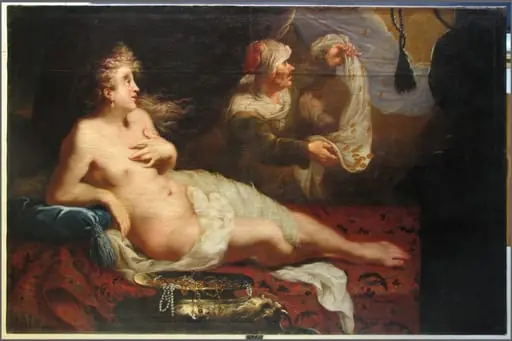 Danae (în Registrul de inventar: Jupiter în chip de ploaie de aur o cercetează pe Danae)
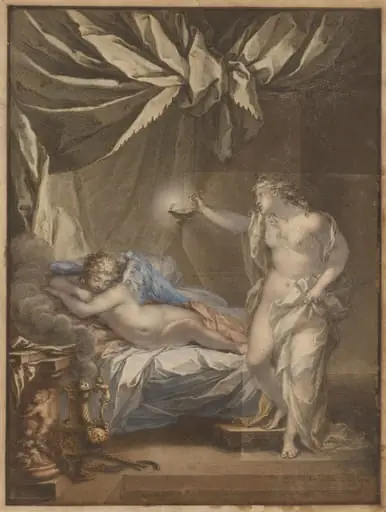 Cupid and Psyche
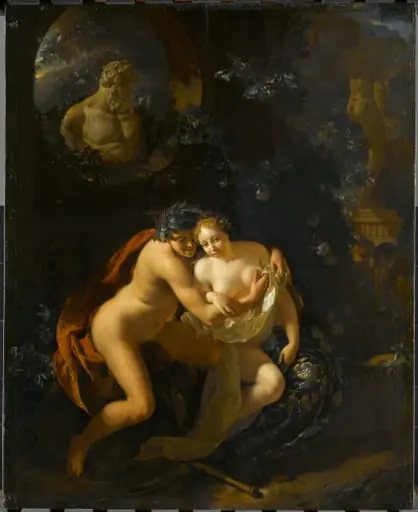 A Couple Making Love in a Park Spied on by Children
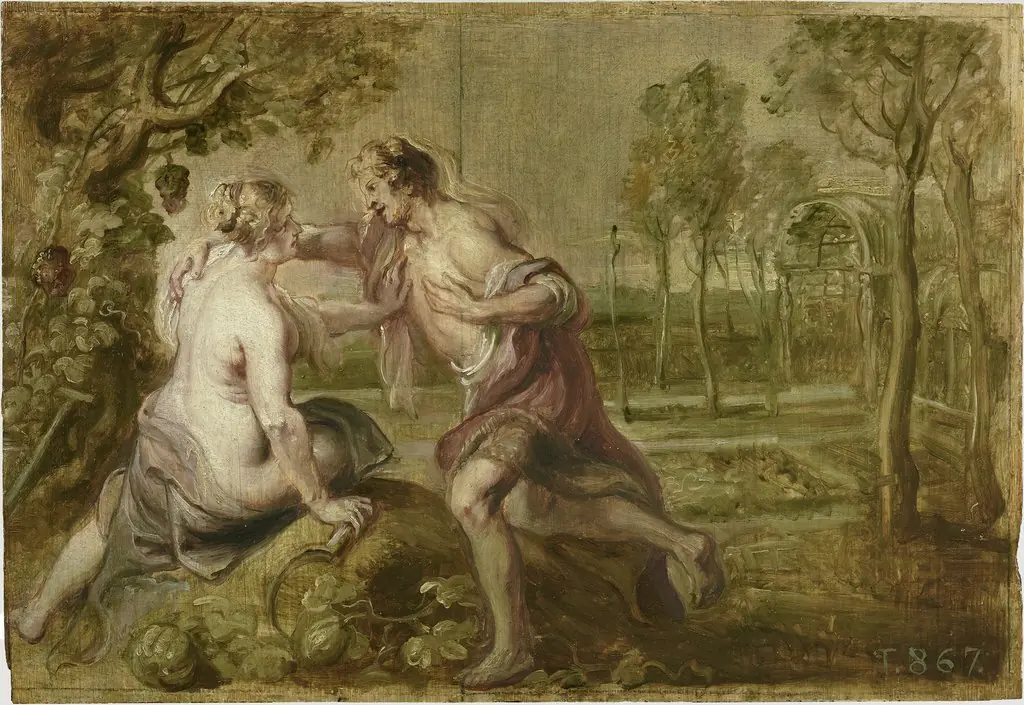 Vertumnus and Pomona
 Three Lovers
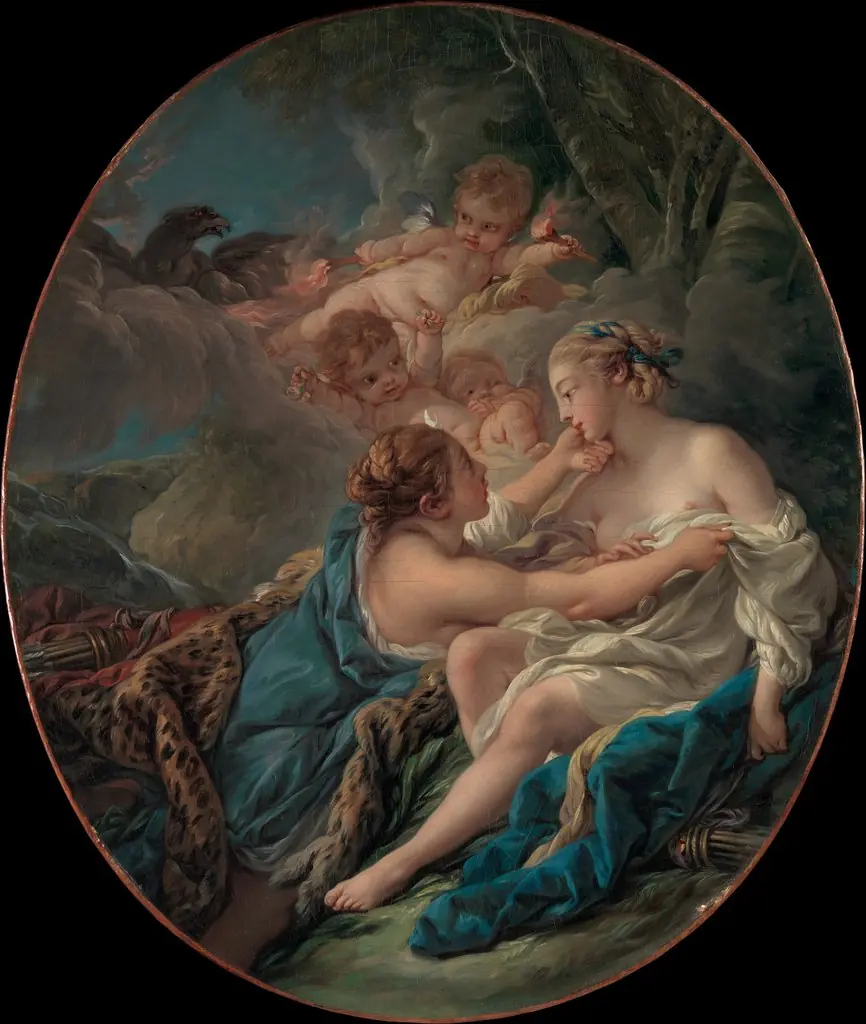
- Jupiter, in the Guise of Diana, and Callisto