Artwork
Judith enthauptet Holofernes
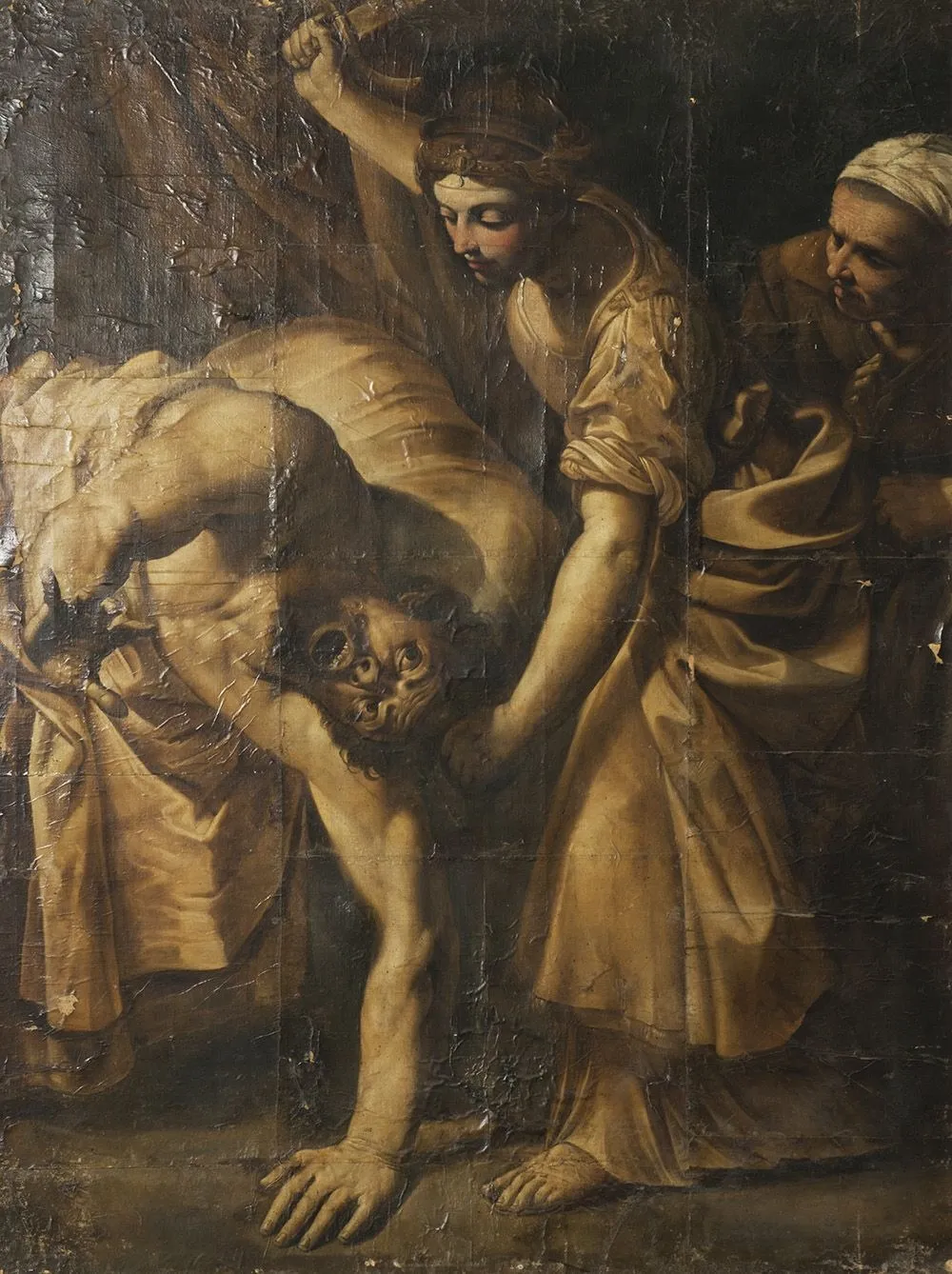
Judith enthauptet Holofernes is an unspecified painting by the Early Baroque Italian artist Guido Reni. It dates from 1608 and is held in the collection of the Bavarian State Painting Collections.
About this work
Subject & Meaning
The composition reflects the Counter-Reformation taste for emotionally charged biblical heroines whose courage and virtue were held up as moral exemplars.
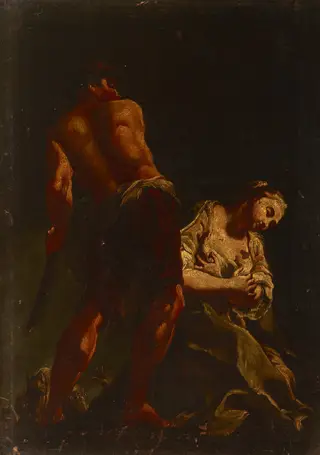
The painting depicts the Old Testament episode of Judith beheading Holofernes, a popular subject in religious art. According to the Book of Judith, the Israelite widow Judith entered the Assyrian camp of the general Holofernes, who was besieging her city, and decapitated him after gaining his trust, an act credited with delivering her people. The work is classified as a religious painting and its main subject is identified as Judith and Holofernes.
Iconographically, the scene centers on Judith and the Assyrian commander Holofernes, capturing the dramatic moment of the beheading. The composition reflects the Counter-Reformation taste for emotionally charged biblical heroines whose courage and virtue were held up as moral exemplars.
History & Provenance
The work was created in 1608 by Guido Reni, as documented in its catalog record. It entered the collection of the Bavarian State Painting Collections and has been housed in the Alte Pinakothek since its acquisition. The painting measures 180 cm in height and 127 cm in width, reflecting its original dimensions.
The painting is housed in the Alte Pinakothek, part of the Bavarian State Painting Collections. Its accession number is not specified in the available sources. The work has been exhibited in the Alte Pinakothek's permanent display of Baroque religious art, though no specific exhibition titles are recorded.
Context
The painting was created by Guido Reni in 1608 and is classified as a religious work depicting the biblical scene of Judith beheading Holofernes. It is housed in the Bavarian State Painting Collections at the Alte Pinakothek in Munich. Scholars have studied its stylistic qualities within the context of Baroque religious art and its significance in Reni's broader oeuvre, often highlighting its compositional influence on later interpretations of the Judith and Holofernes theme.
Overview
Guido Reni’s 1608 oil on canvas presents the biblical episode of Judith beheading Holofernes. Executed for a devotional context, the work now belongs to the collection of the Alte Pinakothek in Munich. The composition centers on three figures illuminated against a dark backdrop, emphasizing the dramatic climax of the narrative.
Technique & Style
Reni employs a restrained palette of earthy browns and muted golds, allowing the chiaroscuro to model the figures with a sculptural quality. The crisp rendering of hair and flesh, combined with a subdued background, creates a sense of depth and heightens the emotional tension of the scene.
Artist & collection
Artist
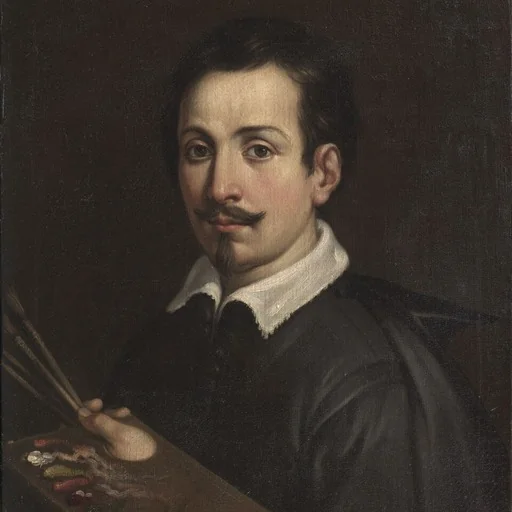
Guido Reni was an Italian Baroque painter, although his works showed a classical manner, similar to Simon Vouet, Nicolas Poussin, and Philippe de Champaigne.