Artwork
Abraham Clark and His Children
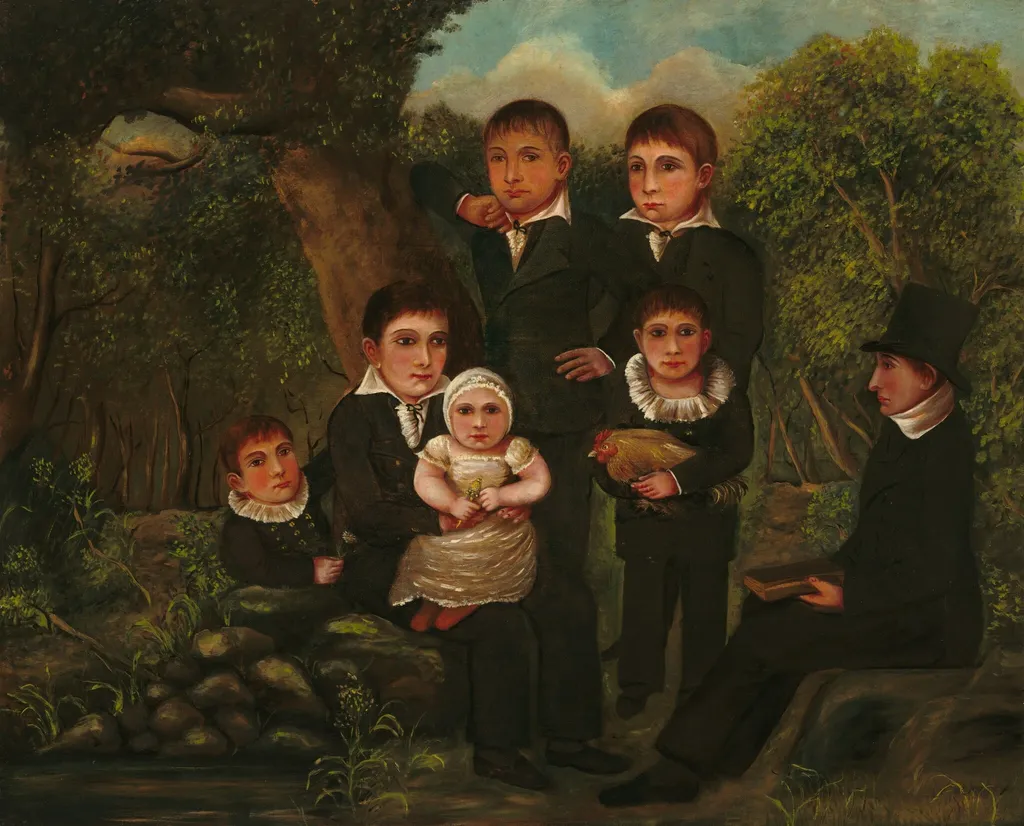
Abraham Clark and His Children is an oil painting by the American Folk Art artist J. H.. It dates from 1822 and is held in the collection of the National Gallery of Art. Created in 1822, this oil on wood work portrays a six‑person family group set in an outdoor landscape of trees and rocks.
- Inscription
- Inscribed:on reverse: April / 29.1822 / JH (in monogram)
About this work
The adults and older children wear dark clothes with white collars, while the youngest child is dressed in a light dress holding flowers.
This painting shows a family of six standing outdoors among trees and rocks. The adults and older children wear dark clothes with white collars, while the youngest child is dressed in a light dress holding flowers. One boy holds a chicken, and another leans against a tree with a book in hand.
The painting was made in 1822, and the artist signed it with initials. The background looks like a garden or forest, with soft light filtering through the leaves.
Next, check out the technique: chiaroscuro to see how light and shadow create depth.
Subject & Meaning
The painting portrays Abraham Clark, a signer of the Declaration of Independence, together with his children, embodying themes of familial legacy and patriotic heritage. The work functions as a visual testament to early American republican ideals and the prominence of influential founding families. Its iconography links the personal narrative of the Clark family to broader narratives of American nation‑building, suggesting continuity between colonial leadership and contemporary 19th‑century values.
The scene emphasizes the intergenerational transmission of civic virtue, with the children positioned as inheritors of their father's legacy. This representation underscores the symbolic role of ancestry in shaping national identity during the early Republic.
Technique & Style
Executed in 1822, this work is an oil painting applied to a wood panel support. The piece measures 64.8 cm in height and 81.3 cm in width. Created by the artist identified as J. H., the composition is classified as a painting within the collection of the National Gallery of Art in Washington, D.C. The use of oil paint on a rigid wooden substrate reflects common portrait practices of the early nineteenth century in the region where the work originated.
History & Provenance
The painting was created in 1822 by the artist identified only as "J. H." in oil on wood. According to provenance records, it was long held in New Jersey by a family claiming descent from Abraham Clark, a signer of the Declaration of Independence. A handwritten note dated November 27, 1943, supplied by Edward and Cora Clark of Aldine, New Jersey, stated that the work had been in their house for about sixty years and had previously belonged to Edward Clark's grandfather, Abraham Clark.
Because of the time span, the signer (1726–1794) cannot have been Edward Clark's grandfather, though he may have been an earlier relation, and the 1822 date inscribed on the back of the panel rules out the signer as the sitter depicted.
Edward and Cora Clark sold the painting to H. Gregory Gulick of Middletown, New Jersey, who in turn sold it in 1947 to Edgar William and Bernice Chrysler Garbisch. The Garbisches later gave it to the National Gallery of Art in 1953.
The painting is held in the collection of the National Gallery of Art in Washington, D.C. Its provenance traces from the Clark family in Aldine, New Jersey, where it remained for approximately sixty years. In 1947, the work was sold by H. Gregory Gulick of Middletown, New Jersey, to Edgar William and Bernice Chrysler Garbisch, who subsequently gifted it to the museum in 1953.
Curatorial records note a handwritten account from 1943 linking the piece to Abraham Clark, a signer of the Declaration of Independence, though historical timelines indicate the signer could not be the subject depicted or the direct grandfather of the later owners.
Legacy
The painting Abraham Clark and His Children entered the collection of the National Gallery of Art in 1953 through a gift from Edgar William and Bernice Chrysler Garbisch, who had acquired it in 1947 from H. Gregory Gulick of Middletown, New Jersey. Its provenance traces back to the Clark family of New Jersey, who regarded it as a family heirloom linked to the signer Abraham Clark through oral tradition, though documentary evidence suggests the connection may be more distant than direct [1]. The work has been part of the National Gallery's permanent holdings since its donation, remaining on view in the American paintings galleries as a representative example of early nineteenth-century New Jersey portraiture.
Overview
Created in 1822, this oil on wood work portrays a six‑person family group set in an outdoor landscape of trees and rocks. The composition balances three adults and three children, each rendered in period attire, against a softly lit backdrop that suggests a garden or forest setting.
Own this work as a print
Artist & collection


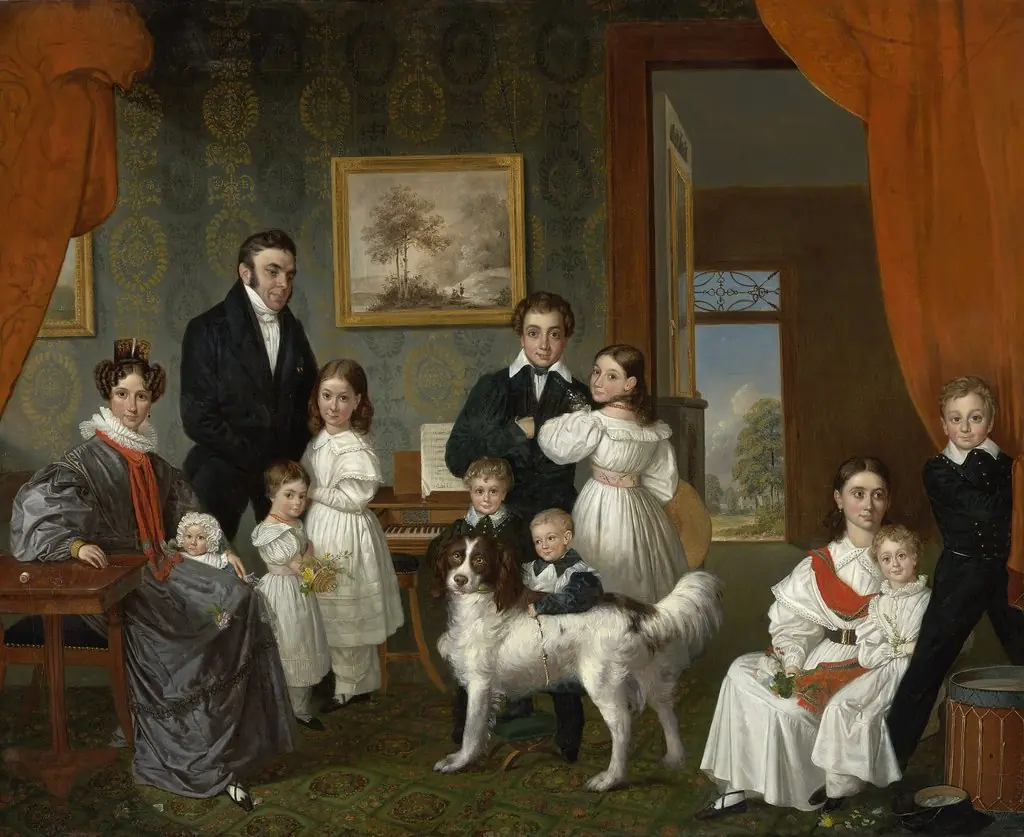 Portrait of the Baud family in their country house in Voorburg
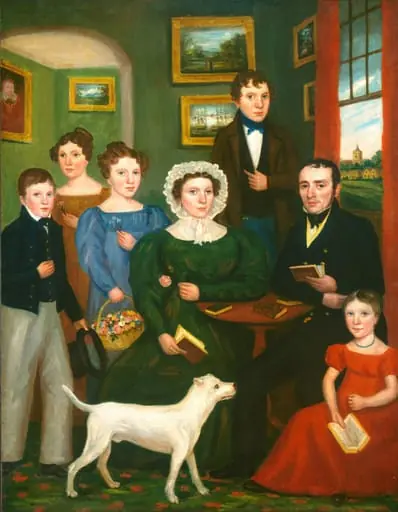 Portrait of an Unknown Family with a Terrier
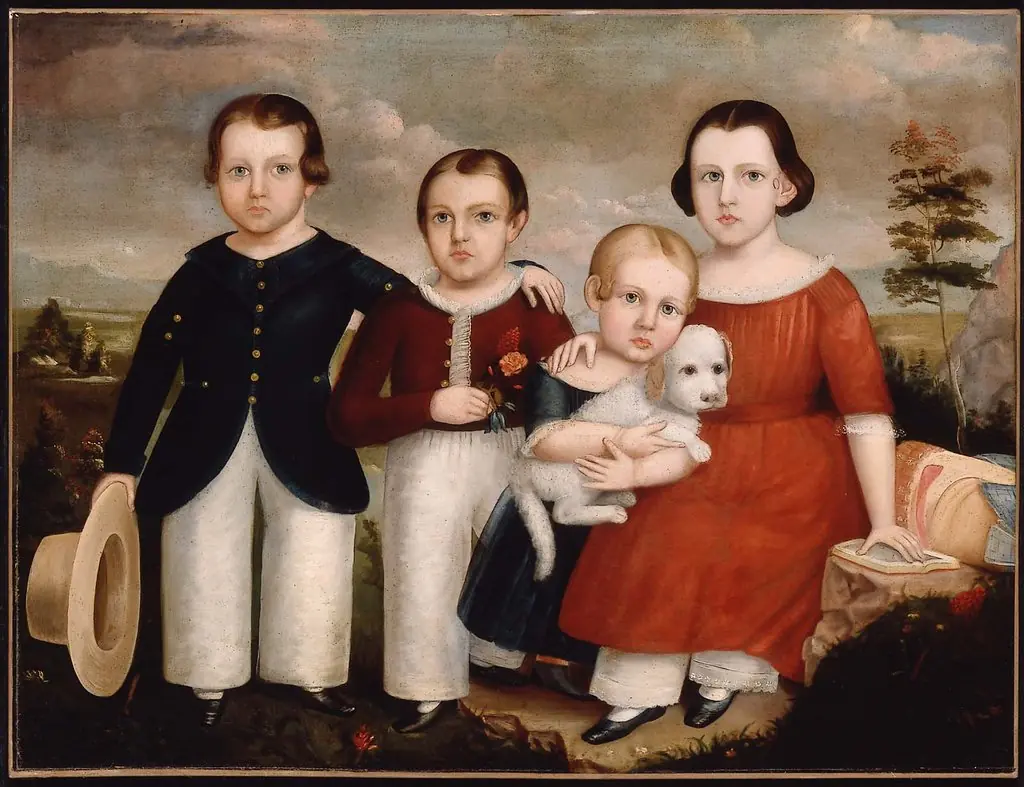 The Nellis Children of Sherburne, New York
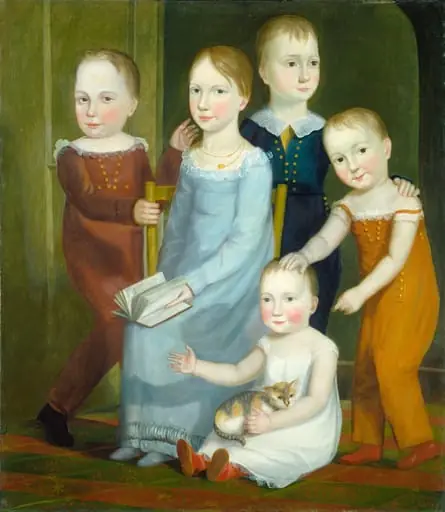 Five Children of the Budd Family
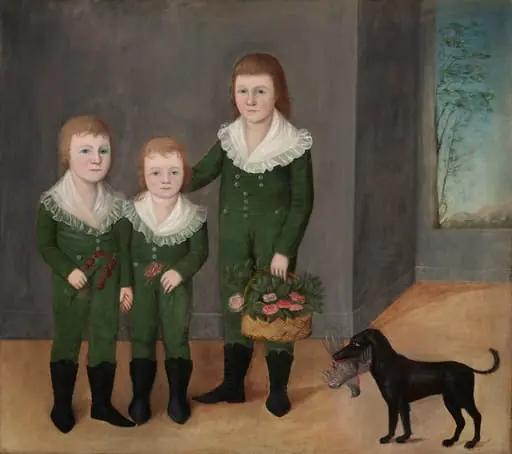 The Westwood Children
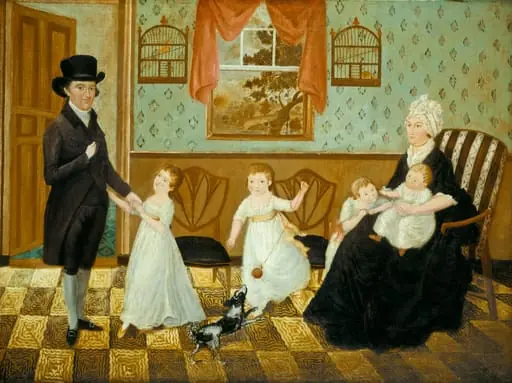 The Sargent Family
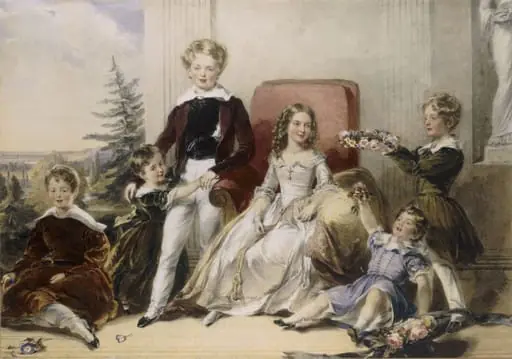 The six children of Elhanan Bicknell Esq
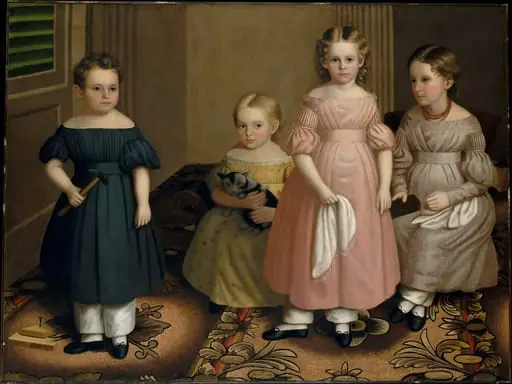 The Alling Children
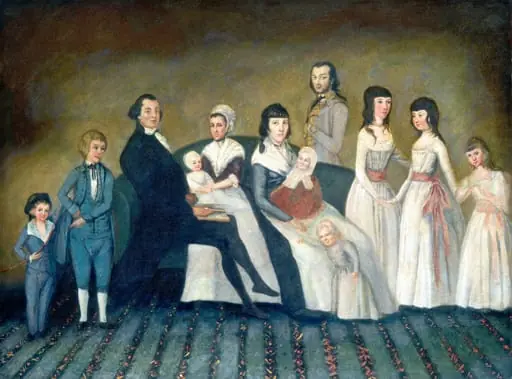 The Cheney Family
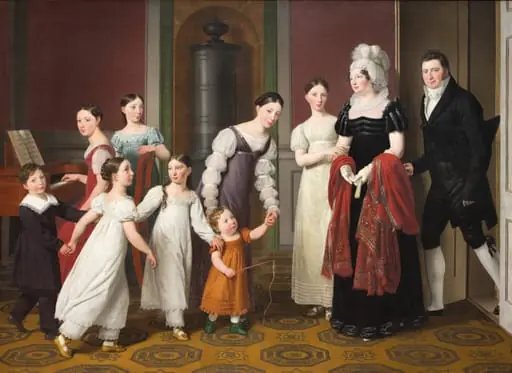 The Nathanson Family
 The Younger Generation
- Mrs. Noah Smith and Her Children