Artwork
Portrait of a man of the family Lespinette
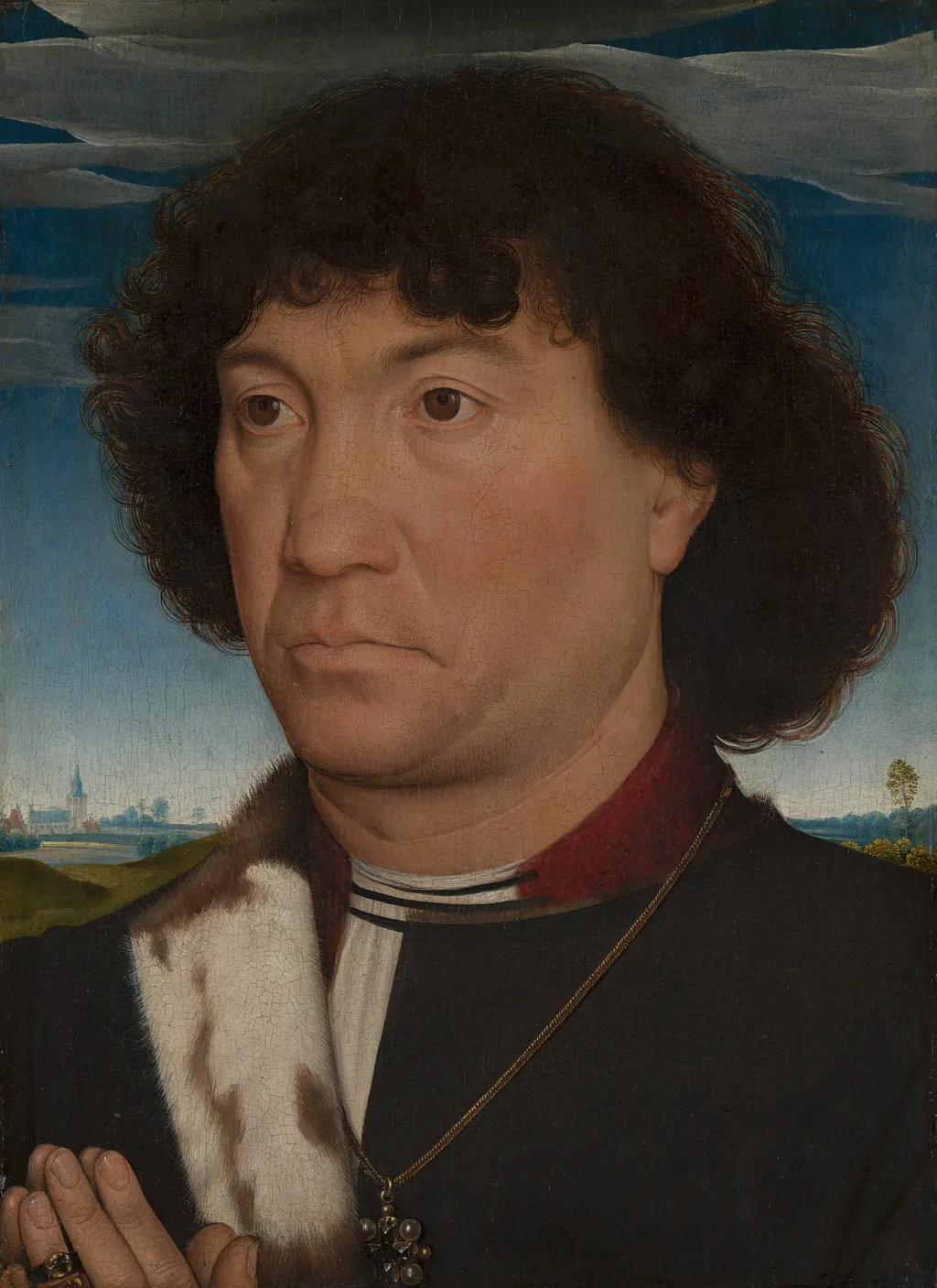
Portrait of a man of the family Lespinette is an oil painting by the Northern Renaissance artist Hans Memling. It dates from 1494 and is held in the collection of the Mauritshuis.
About this work
Overview
Originally the right wing of a diptych, the panel is notable for its monumental framing of the sitter and the complex scholarly debate surrounding his identity.
Portrait of a man of the family Lespinette is an Early Netherlandish oil on panel painting by Hans Memling, created circa 1480 to 1487. Measuring 30.1 by 22.3 centimeters, the work functions as a devotional portrait, capturing a man in prayer against a distant landscape. Originally the right wing of a diptych, the panel is notable for its monumental framing of the sitter and the complex scholarly debate surrounding his identity. The painting entered the Mauritshuis in The Hague in 1895, where it remains a significant example of Memling's portraiture.
Subject & Meaning
The sitter is shown frontally with thick, dark, wavy shoulder-length hair, his hands joined in prayer toward a lost left panel, likely depicting a Virgin and Child. His high social status is signaled by a dark garment with a red collar, a white underlayer, a lynx fur stole, a gold chain with a jeweled cross pendant, and two gem-set rings on his visible right hand. The reverse of the panel bears a coat of arms featuring a shield, a gold helmet, and a falcon with bells on its talons. This heraldry is painted over an earlier, physically textured blazon. The original arms were attributed to the Lespinette family of Franche-Comté, but Dirk De Vos and Till-Holger Borchert note the near-identical resemblance to the arms of the De Visen family from the same region. Borchert argues the sitter is likely Charles de Visen, a chamberlain and confidant of Charles the Bold.
Technique & Style
Executed in oil on panel, the portrait employs smooth, detailed brushwork for the fleshy face and hair, contrasting with the atmospheric handling of the distant landscape. Light falls evenly from the left, modeling the face and creating subtle shadows. The composition is dominated by the sitter, whose torso, hair, and face fill almost the entire surface, creating an extreme proximity. The low viewpoint places the flat landscape, featuring green fields, water, a church spire, and trees, barely above the man's shoulders. While the cropping suggests the panel was cut on all sides, only the right edge was shortened, with the unpainted border preserved on the top, bottom, and right. Infrared reflectography revealed no underdrawing except for the hands, which were originally positioned further right. The surface exhibits fine, regular craquelure. The clouds and the upper blue sky are later additions, painted around the hair and clearly not by Memling.
History & Provenance
Stylistic dating places the work around 1480, supported by dendrochronological analysis yielding an earliest possible date of 1476 and a more probable execution around 1482. The painting was acquired by the Vereniging Rembrandt at the 1894 Christie's London sale of the Sir Andrew Fountaine collection from Norfolk, initially attributed to Antonello da Messina. It was bequeathed to the Dutch state in 1895 and correctly attributed to Memling by 1896. The panel has been exhibited at the Exposition des primitifs flamands à Bruges and the exhibition Remember Me.
Context
The painting belongs to the tradition of Early Netherlandish portraiture and exemplifies Memling's approach to devotional diptychs, comparable to his Diptych of Maarten van Nieuwenhove. Unlike the more spatially balanced Tommaso Portinari portrait, this work pushes the sitter to the forefront, achieving a monumental effect through the low vantage point, the strong contour of the hair against the sky, and the accentuated modeling of the face. The debate over the sitter's identity, pivoting between the Lespinette and De Visen families, reflects broader scholarly challenges in matching Netherlandish heraldry to historical figures, a discussion advanced by experts like Friedländer, De Vos, and Borchert.
Own this work as a print
Artist & collection
Artist
Hans Memling was a German-Flemish painter who worked in the tradition of Early Netherlandish painting.

![Saint Veronica [obverse], by Hans Memling](https://artifactworldgallery.com/img/hans-memling--saint-veronica-obverse--5a649fd8b09c96b9-w320.webp)
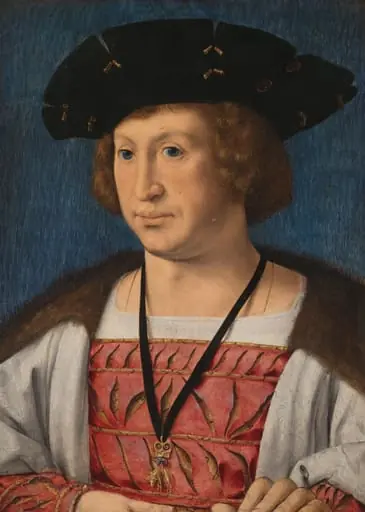
- Portrait of Floris van Egmond (1469-1539), Count of Buren and Leerdam
 Untitled
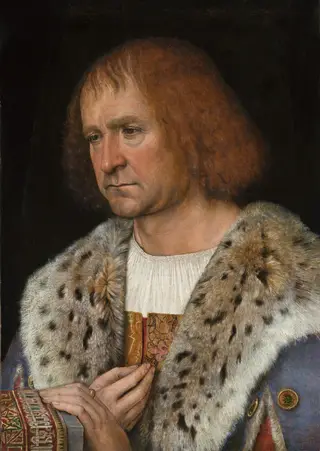 Portrait of Diego de Guevara (?)
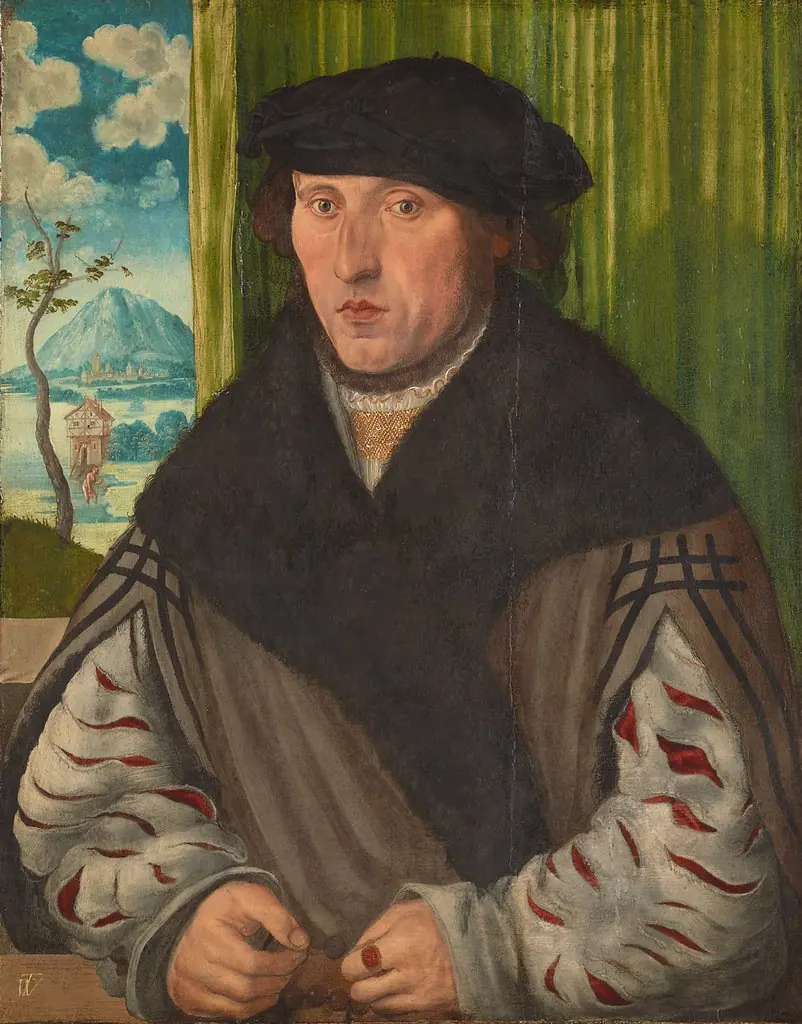 Männliches Bildnis
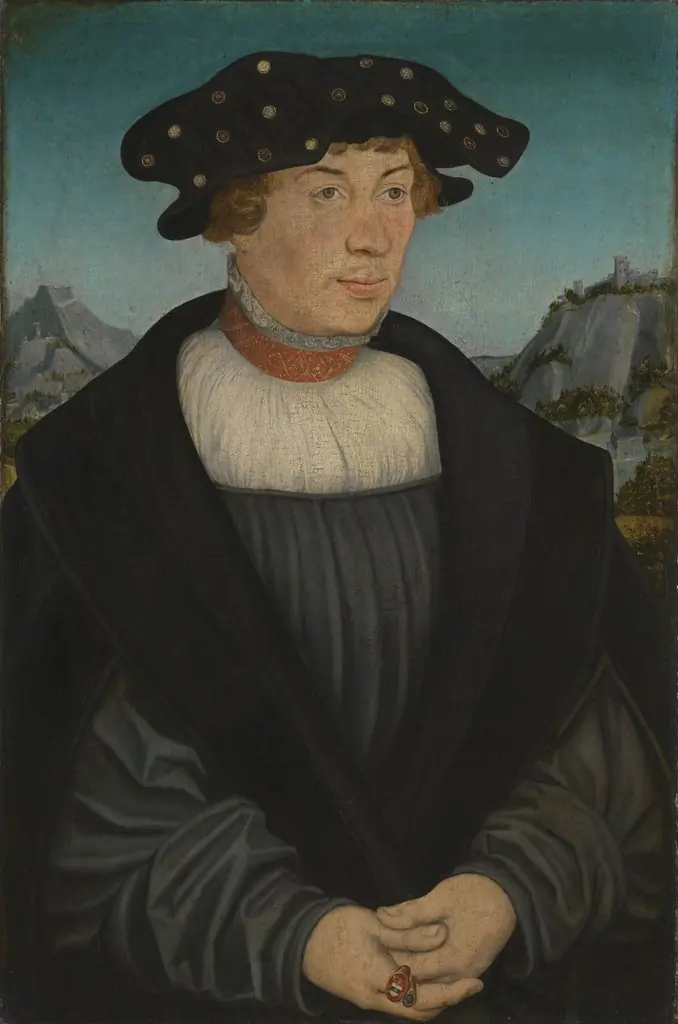 Hans Melber
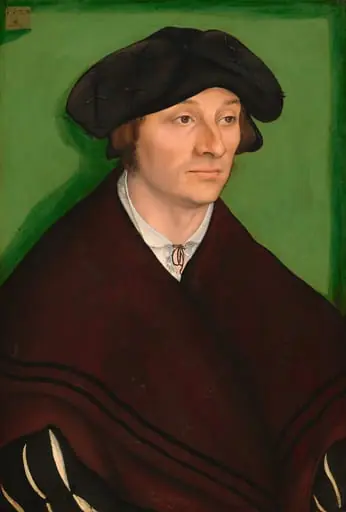 Portrait of a Man
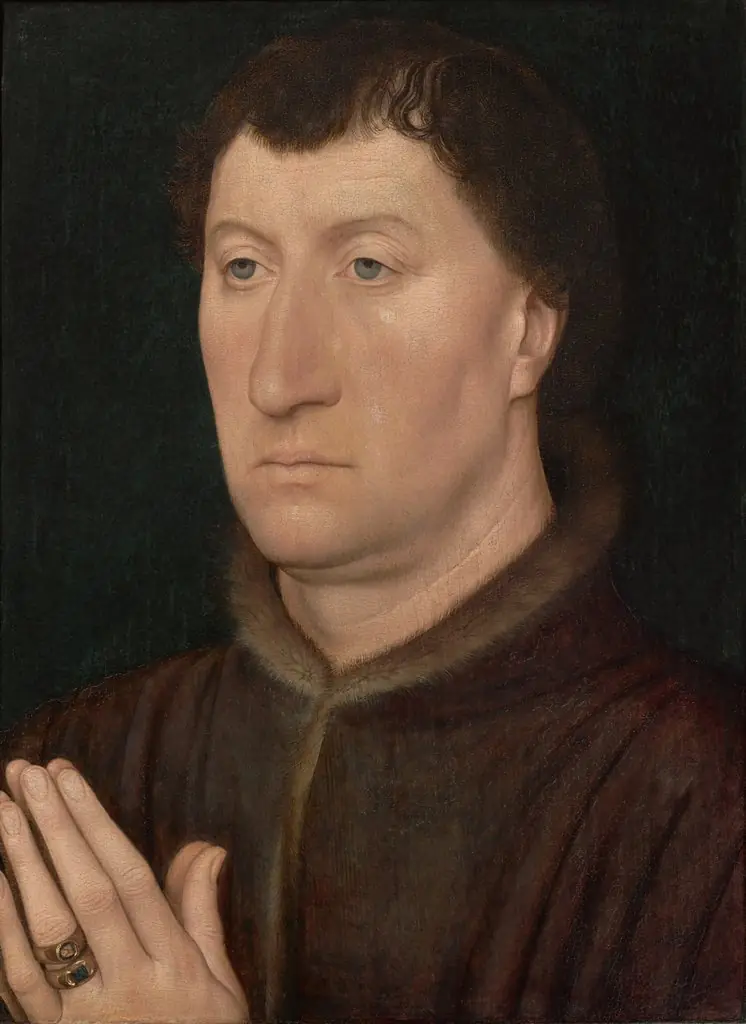 The Canon Gilles Joye
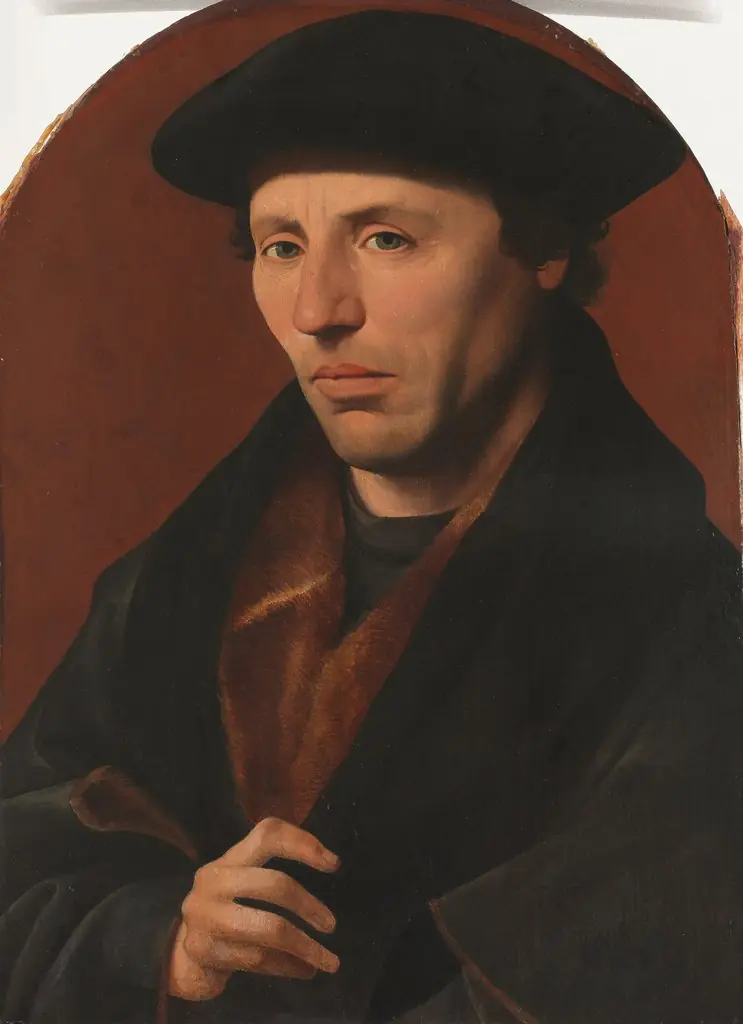 Portrait of a Haarlem Citizen
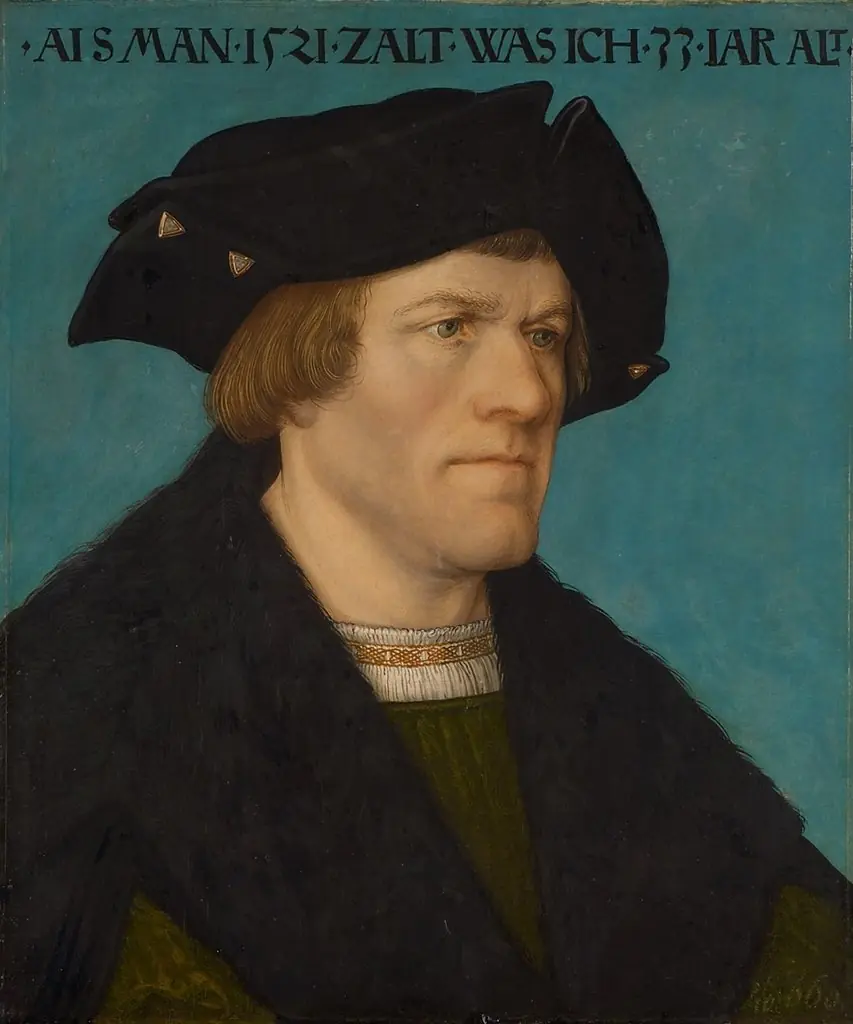 Portrait of a beardless man
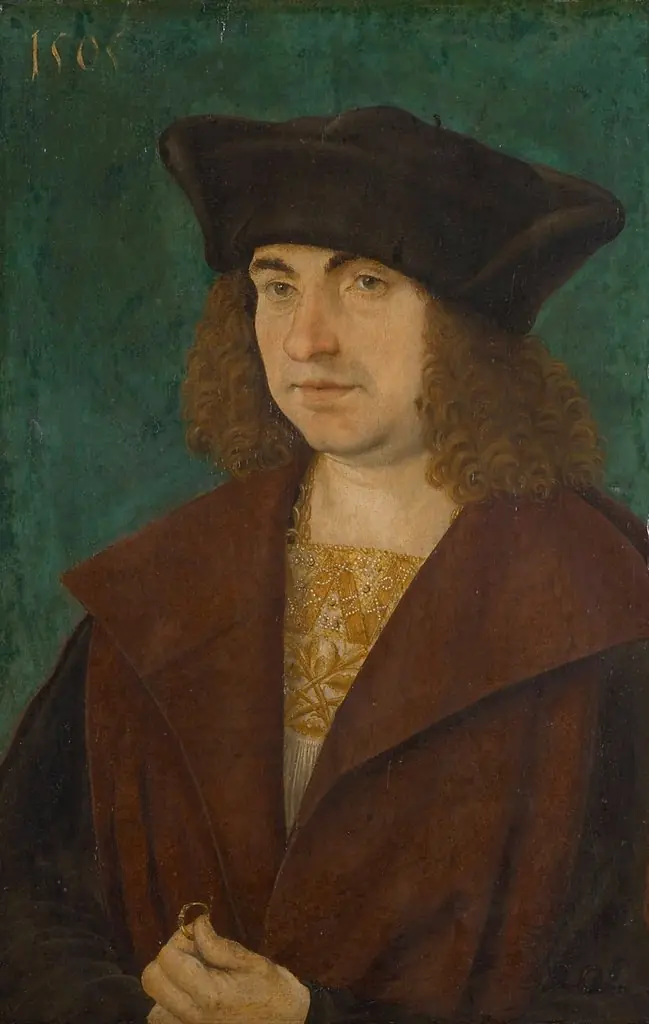 Portrait of a man with ring
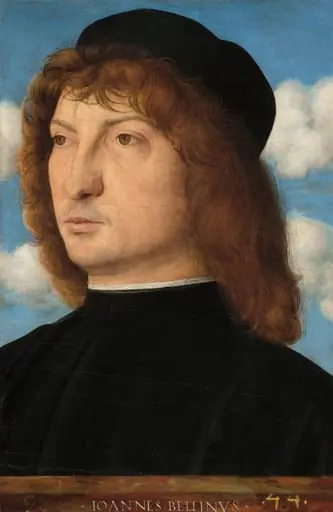 Portrait of a Venetian Gentleman
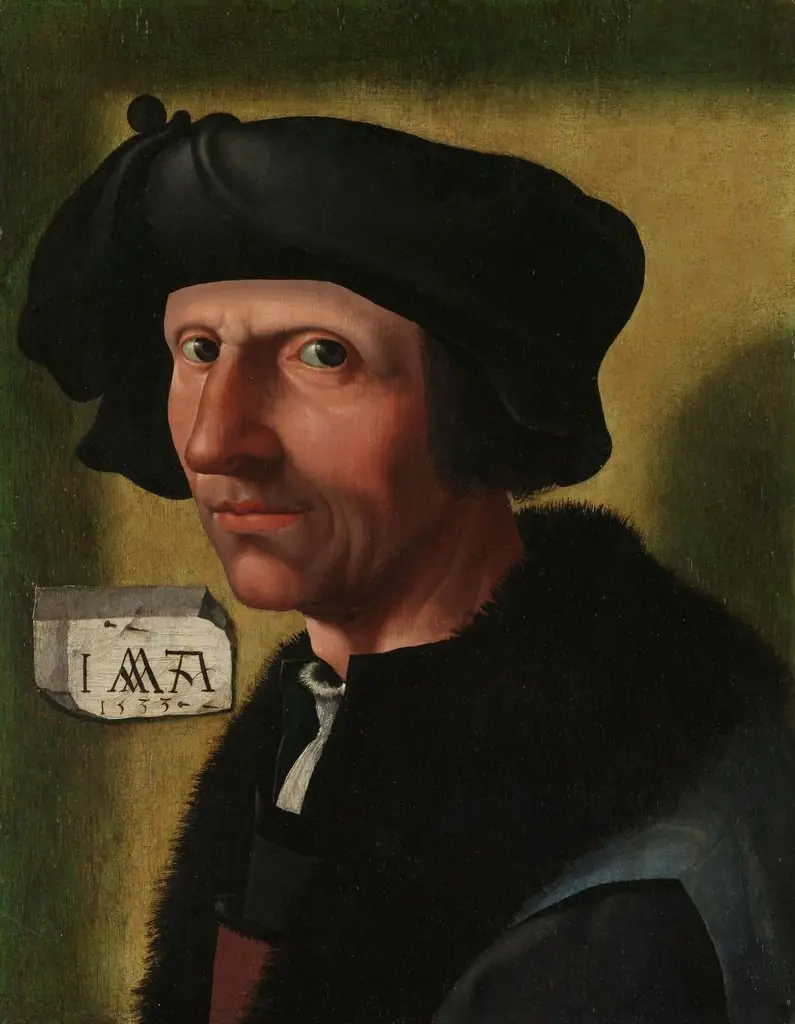 Portrait of Jacob Cornelisz van Oostsanen