Artwork
千代田の大奥 茶の湯辺り花|Chiyoda Inner Palace: No.20 Flower Arranging in Turn (Chiyoda no Ōoku: Chanoyu mawaribana)
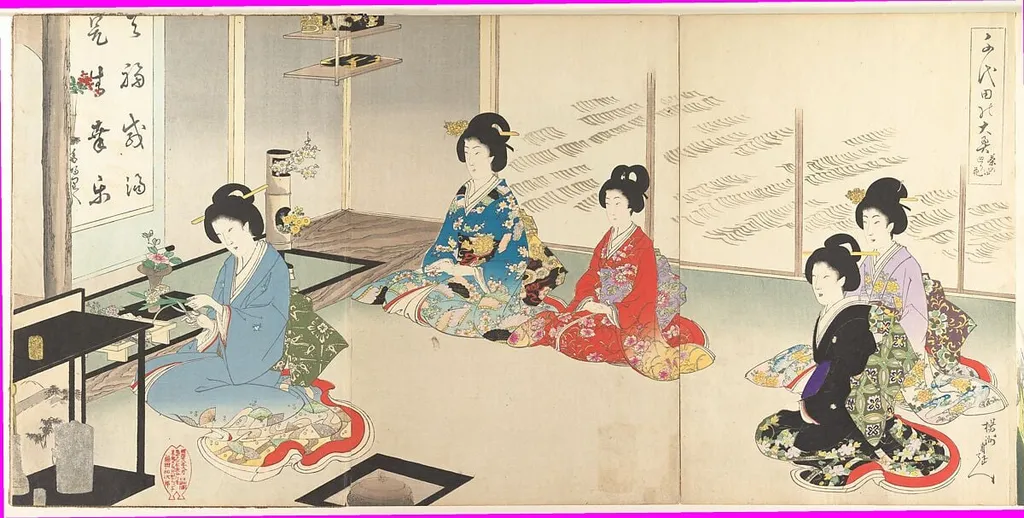
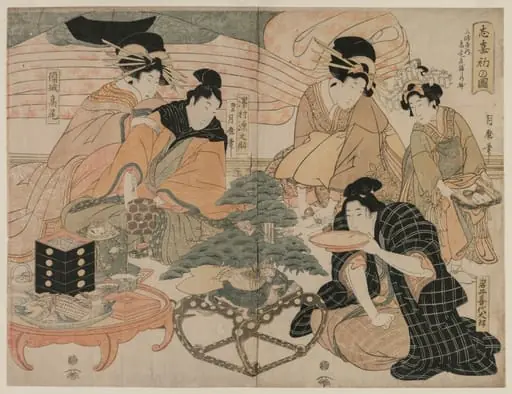
千代田の大奥 茶の湯辺り花|Chiyoda Inner Palace: No.20 Flower Arranging in Turn (Chiyoda no Ōoku: Chanoyu mawaribana) is an ink print by the Impressionist artist Yōshū (Hashimoto) Chikanobu. It dates from 1895 and is held in the collection of the Metropolitan Museum of Art. This triptych woodblock print, created in 1895 by Hashimoto Chikanobu, is titled 'Chiyoda Inner Palace: No.
About this work
This painting shows five women in traditional Japanese clothing, sitting on the floor in a room with a low table and a screen.
This painting shows five women in traditional Japanese clothing, sitting on the floor in a room with a low table and a screen. The women are dressed in colorful kimonos with intricate designs and patterns.
The room is decorated with a few vases and a scroll on the wall, and there is a window with a view of a garden outside. The overall atmosphere of the painting is one of serenity and elegance.
The artist's use of color and composition creates a sense of depth and space in the painting. The painting is a great example of Japanese art from the late 19th century. To learn more about the artist's style and technique, check out Hashimoto Chikanobu.
Overview
This triptych woodblock print, created in 1895 by Hashimoto Chikanobu, is titled 'Chiyoda Inner Palace: No.20 Flower Arranging in Turn'. It is a representation of a serene and elegant scene, characteristic of Japanese art from the late 19th century.
Subject & Meaning
The print depicts five women in traditional Japanese attire seated in a tranquil room with a low table, screen, and decorative elements. The scene conveys a sense of refinement and poise, capturing a moment of leisure within the inner palace.
Technique & Style
The artist's use of ink and color on paper showcases intricate designs and patterns on the women's kimonos, as well as the room's decorations. The composition and color palette create a sense of depth and space, exemplifying Chikanobu's skill in woodblock printing.
History & Provenance
The print is part of The Metropolitan Museum of Art's collection, providing a tangible link to the artistic practices of late 19th-century Japan.
Artist & collection


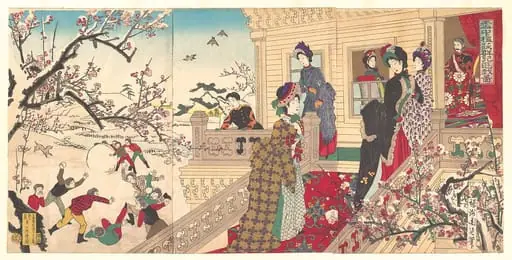 『雪中梅荘群児遊戯 図』|Children Playing in the Snow under Plum Trees in Bloom (Secchū baisō gunji yūgi zu)
 Untitled
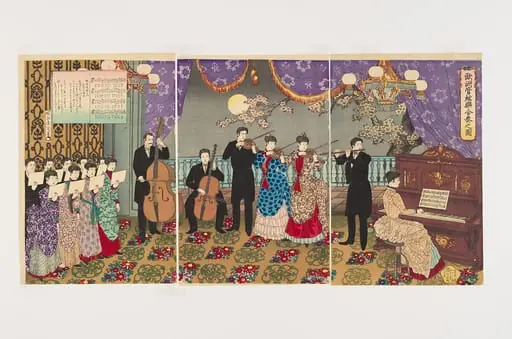 『欧州管絃楽合奏之図』|Concert of European Music (Ōshū kangengaku gassō no zu)
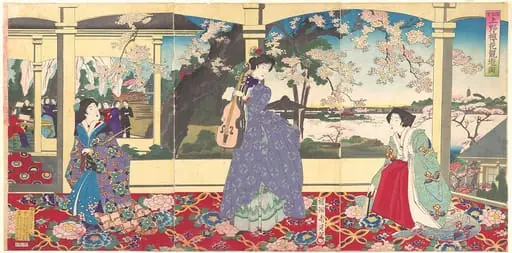 『踏舞会 上野桜花観 遊ノ図』|A Dance Party: Enjoying Cherry Blossom Viewing at Ueno (Tōbukai Ueno ōka yūran no zu)
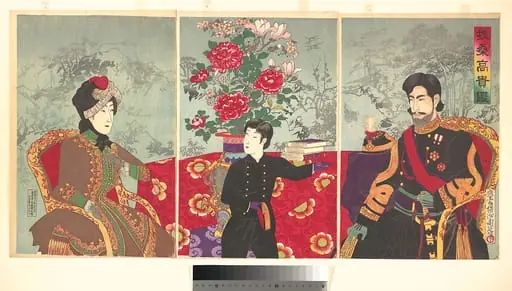 『扶桑高貴鑑』|A Mirror of Japan’s Nobility: The Emperor Meiji, His Wife, and Prince Haru (Fūsō kōki kagami)
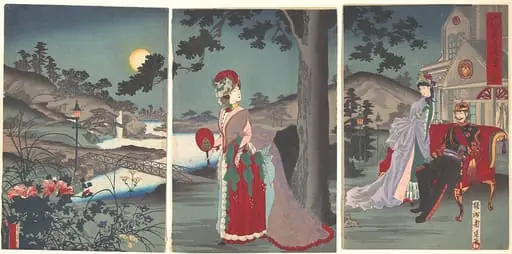 『高貴納涼ノ図』|Nobility in the Evening Cool (Koki nōryō no zu)
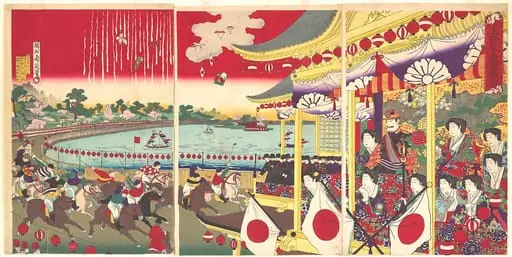 『上野不忍競馬図』|View of the Horse Track at Shinobazu in Ueno Park (Ueno shinobazu keiba zu)
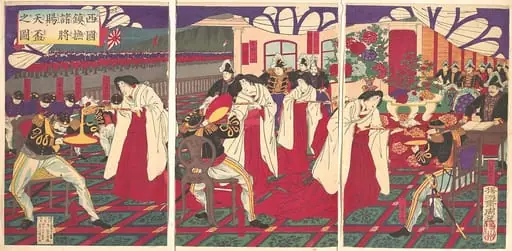 西国鎮静撫諸将天杯賜之図|Illustration of the Commanders who Pacified Western Japan, Receiving the Emperor's Gift Cups (Saigoku chinbu shoshō tenpai o tamau no zu)
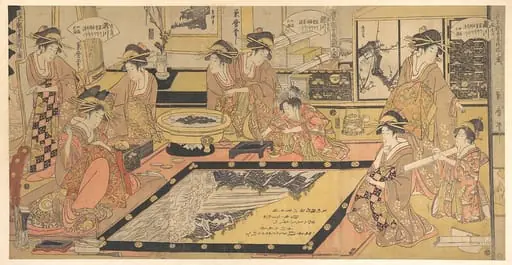
- 『浅草観音奉掛額之 図』 「扇屋内滝川 富川、粂川、玉川、津川、歌川、清川 め浪、お浪」|A Votive Picture to Be Donated to the Kannon of Asakusa (Asakusa Kannon hō kakegaku no zu), by Takigawa of the Ōgiya, Kamuro Menami and Onami, with Tomikawa, Kumegawa, Tamagawa, Tsugawa, Utagawa, and Kiyokawa
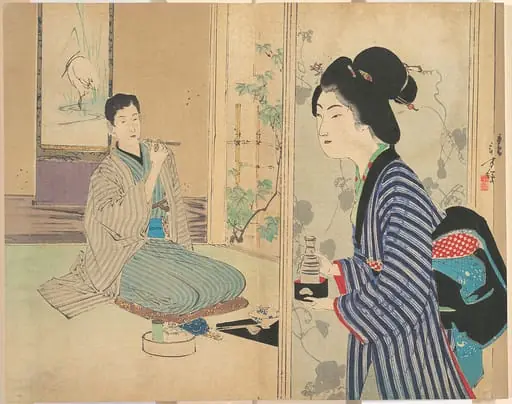 Untitled
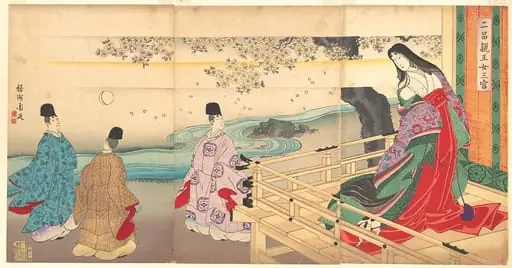 二品親王女三宮|The Third Princess and Kashiwagi, from Chapter 34, “New Herbs I (Wakana I)” (Nihon shinnō onna sannomiya)
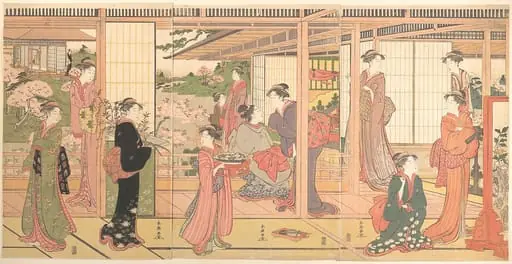 Untitled
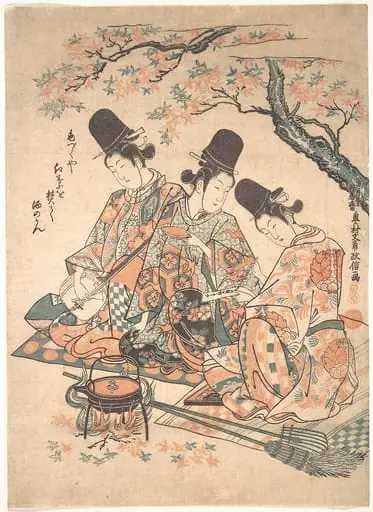 見立『平家物語』 紅葉焚図|Parody of Palace Servants Heating Sake over a Fire of Maple Leaves
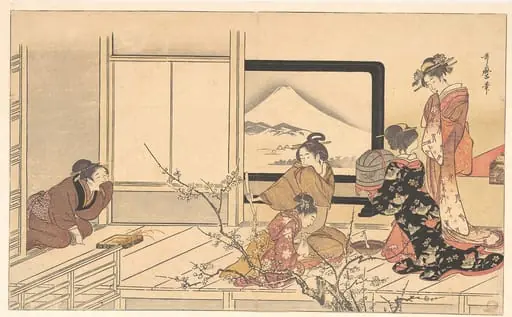 喜多川歌麿画 『男踏歌』 鶯の餌すり|“Preparing Food for the Warbler,” from the album Men’s Stamping Dance (Otoko dōka, uguisu no esa suri)
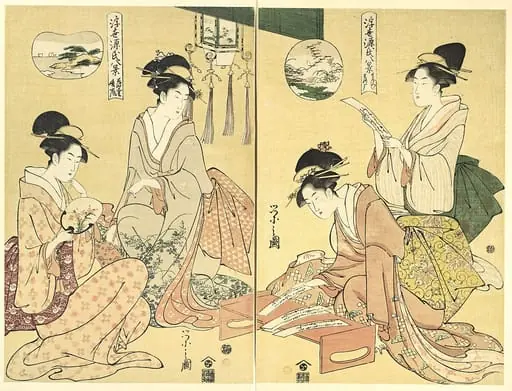 鳥文斎栄之画 「浮世源氏八景 幻 落雁 薄雲 晴嵐」|Spirit Summoner; Wild Geese Returning Home (Maboroshi; Rakugan) (right) and A Thin Veil of Clouds; Clearing Weather (Usugumo; Seiran) (left), from the series Eight Views of The Tale of Genji in the Floating World (Ukiyo Genji hakkei)
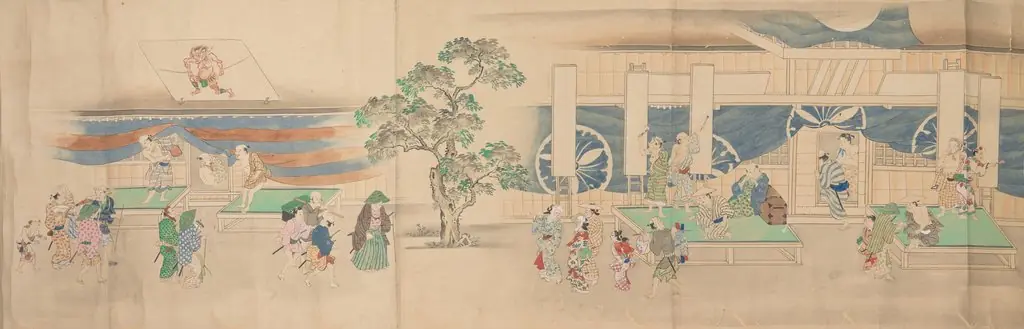 Kabuki Theater
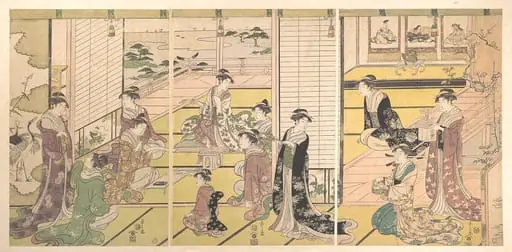 鳥文斎栄之画 和歌三神図|Honoring the Three Gods of Poetry: Women Composing Poems
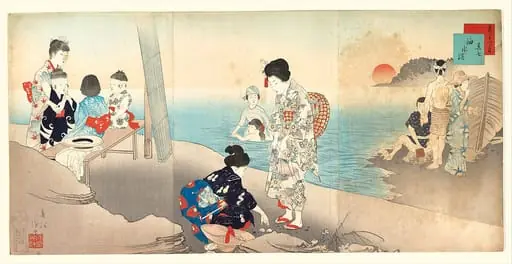 Untitled
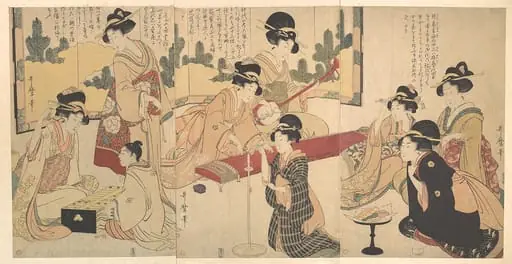 Untitled
 Picture of the First Visit to the Pleasure Quarters