Artwork
Kabuki Theater
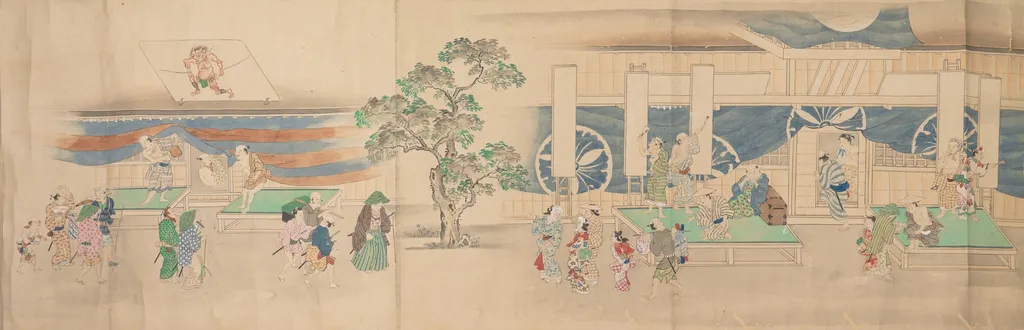
Kabuki Theater is an unspecified painting by the Ukiyo-e artist Nonoyama Kōzan. It dates from 1822 and is held in the collection of the Metropolitan Museum of Art.
About this work
Subject & Meaning
The composition explicitly depicts figures representing both men and women within a theatrical setting, illustrating the human subjects central to the art form.
Created in 1822, Nonoyama Kōzan's painting Kabuki Theater visually captures the dynamic world of Japanese stage performance. The composition explicitly depicts figures representing both men and women within a theatrical setting, illustrating the human subjects central to the art form. While the work serves as a direct representation of the Kabuki genre itself, the inclusion of these specific performers highlights the social and dramatic elements inherent to the theater.
The piece functions as a documentary record of the era's stagecraft, freezing a moment of performance that involves both male and female characters. This imagery underscores the cultural significance of Kabuki as a spectacle during the early nineteenth century in Japan.
History & Provenance
The painting titled Kabuki Theater was created in 1822 by the Japanese artist Nonoyama Kōzan. Produced in Japan, the work depicts figures of men and women within a theatrical setting. The piece currently resides in the collection of the Metropolitan Museum of Art, which serves as its known location and custodian.
Specific details regarding the original commission or intermediate ownership transfers prior to its museum acquisition are not provided in the available records, and no exhibition history is documented.
Overview
Nonoyama Kōzan's painting, Kabuki Theater, created in 1822, captures a vibrant public spectacle. This work, now part of The Metropolitan Museum of Art's collection, offers a glimpse into the popular entertainment of its era. It portrays a bustling theatrical environment, characteristic of the lively urban culture of early 19th-century Japan.
Technique & Style
Nonoyama Kōzan demonstrates a skillful approach to composition, populating the canvas with numerous figures without creating a sense of congestion. The artist employs a striking palette, where vibrant reds, greens, and blues prominently stand out, drawing the viewer's eye across the detailed scene. This use of color and careful arrangement contributes to the painting's overall vivacity and visual appeal, effectively conveying the bustling atmosphere.
Artist & collection

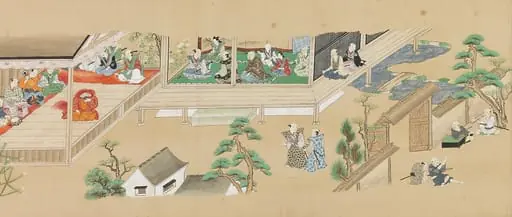 能楽風俗図絵巻|Six Noh Performances in Scenes from Daily Life
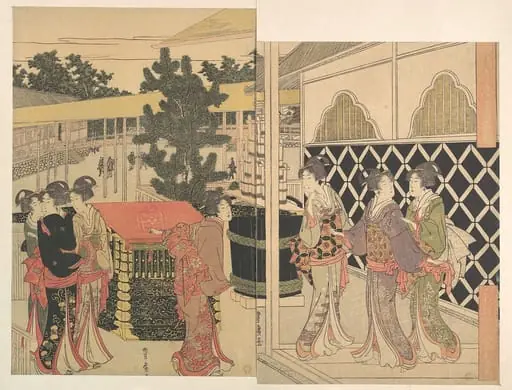 Horinouchi Myōhōji Eho Mairi no Zu|Pilgrimage to Myōhōji in Horinouchi, Edo
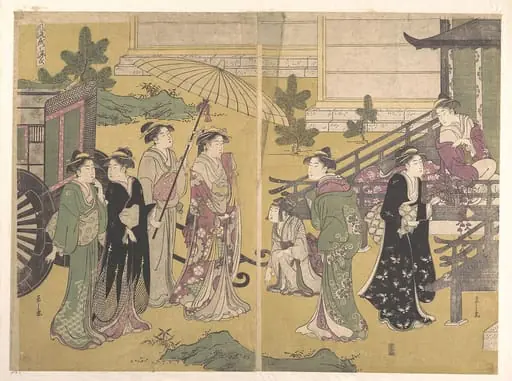 Untitled
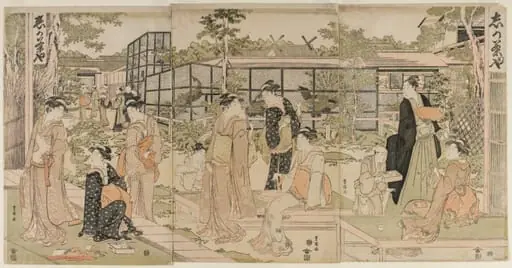 The Shika Teahouse
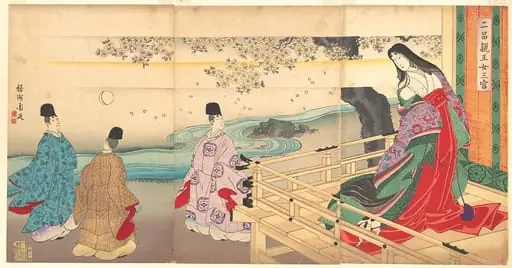 二品親王女三宮|The Third Princess and Kashiwagi, from Chapter 34, “New Herbs I (Wakana I)” (Nihon shinnō onna sannomiya)
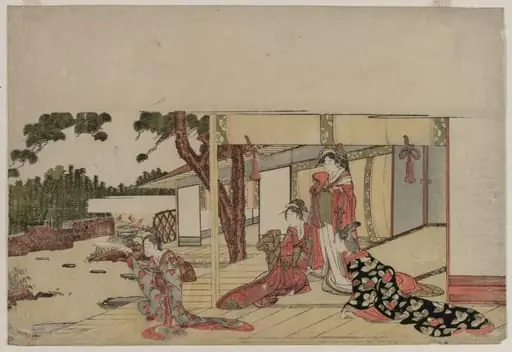 Women on a Veranda
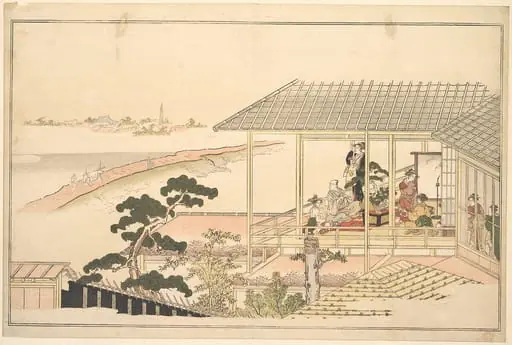 狂月坊|A Party of Merrymakers in a House in the Yoshiwara on a Moonlight Night
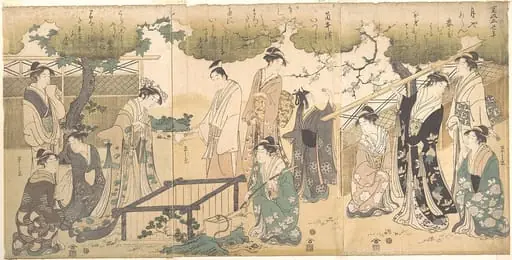 Untitled
 鳥文斎栄之画 和歌三神図|Honoring the Three Gods of Poetry: Women Composing Poems
 Untitled
 Yokohama Gankirō no zu|View of the Interior of the Gankirō Tea House in Yokohama
- Scenes from the Nakamura Kabuki Theater