Artwork
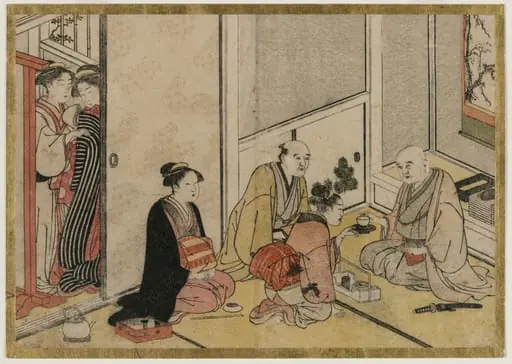
喜多川歌麿画 『男踏歌』 鶯の餌すり|“Preparing Food for the Warbler,” from the album Men’s Stamping Dance (Otoko dōka, uguisu no esa suri)
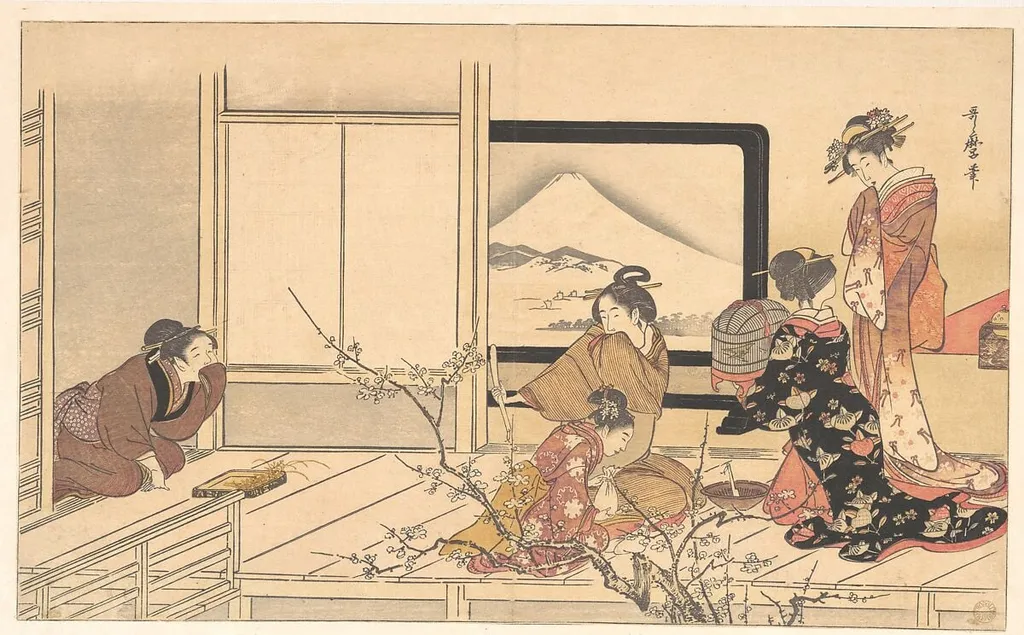
喜多川歌麿画 『男踏歌』 鶯の餌すり|“Preparing Food for the Warbler,” from the album Men’s Stamping Dance (Otoko dōka, uguisu no esa suri) is an ink print by the Romanticist artist Kitagawa Utamaro. It dates from 1798 and is held in the collection of the Metropolitan Museum of Art.
About this work
Overview
This woodblock print, created in 1798 by Kitagawa Utamaro, depicts a domestic interior scene titled “Preparing Food for the Warbler.” It forms part of the multi‑page album Men’s Stamping Dance (Otoko dōka) and is executed on paper with ink and color. The work is part of the Metropolitan Museum of Art’s collection.
Subject & Meaning
The image presents three women engaged in everyday tasks within a modest room. One figure sits by a window, gazing outward, while another leans on the sill, attending to a small bird, likely a warbler. A third woman stands nearby, holding a basket, suggesting the preparation of food for the bird. The composition captures a quiet moment of domestic care.
Technique & Style
Utamaro employed the ukiyo‑e woodblock process, printing a single page from a larger book. Ink outlines define the figures, while subtle color washes convey the light interior and the distant landscape visible through the window. The delicate brushwork and restrained palette reflect the artist’s skill in rendering intimate, genre‑type scenes.
History & Provenance
The print was produced as part of a bound album intended for private circulation in the late Edo period. It entered the Metropolitan Museum of Art’s holdings through acquisition in the 20th century, where it remains catalogued as a representative example of Utamaro’s genre prints.
Context
In the late 18th century, ukiyo‑e artists frequently illustrated scenes of daily life, especially those involving women’s activities. Utamaro, known for his nuanced portrayals of female subjects, integrates a subtle narrative about the relationship between humans and nature, here illustrated by the act of feeding a warbler, a bird associated with seasonal change in Japanese culture.
Artist & collection


 Untitled
 Untitled
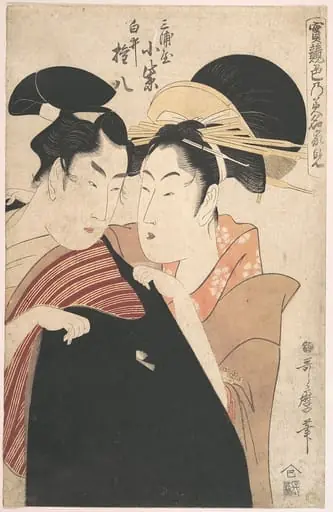 実競色乃美名家見 三浦屋小紫 白井権八|The Lovers Miura-ya Komurasaki and Shirai Gonpachi.
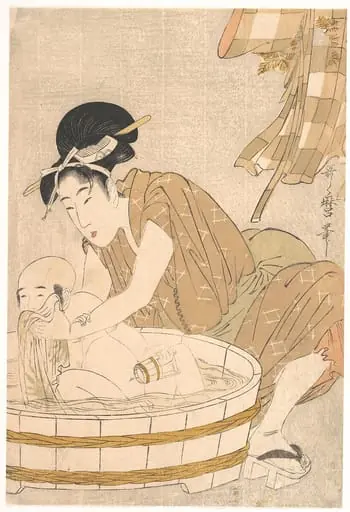 行水|Bathtime (Gyōzui)
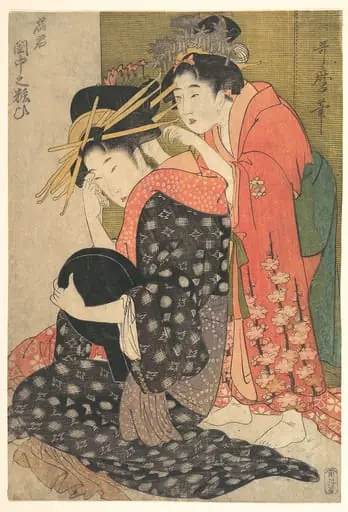 名君 閨中の粧ひ|The Oiran Yoso-oi Seated at Her Toilet
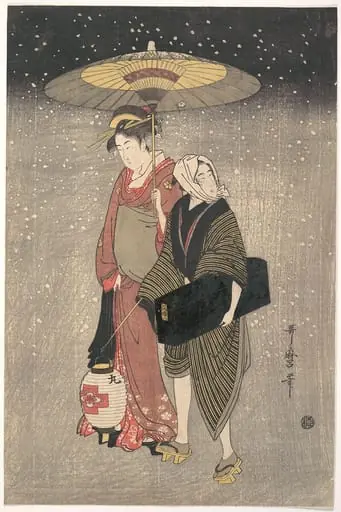 Untitled
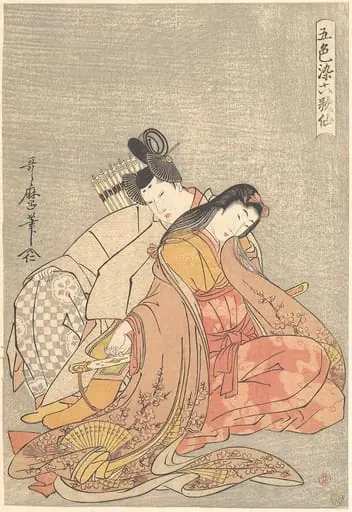 『五色染六歌仙』 在原業平と小野小町|“The Poet Ariwara no Narihira (825–880) and Ono no Komachi,” from the series Five Colors of Love for the Six Poetic Immortals (Goshiki-zome rokkasen)
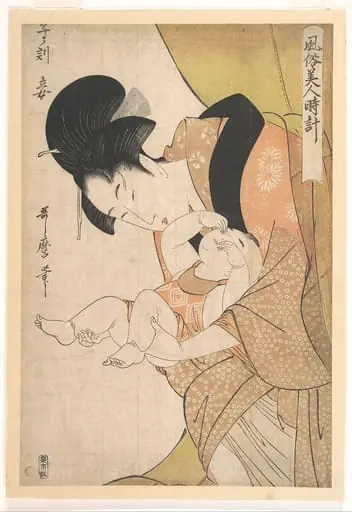 風俗美人時計 子ノ刻 妾|Midnight: Mother and Sleepy Child
- 『浅草観音奉掛額之 図』 「扇屋内滝川 富川、粂川、玉川、津川、歌川、清川 め浪、お浪」|A Votive Picture to Be Donated to the Kannon of Asakusa (Asakusa Kannon hō kakegaku no zu), by Takigawa of the Ōgiya, Kamuro Menami and Onami, with Tomikawa, Kumegawa, Tamagawa, Tsugawa, Utagawa, and Kiyokawa
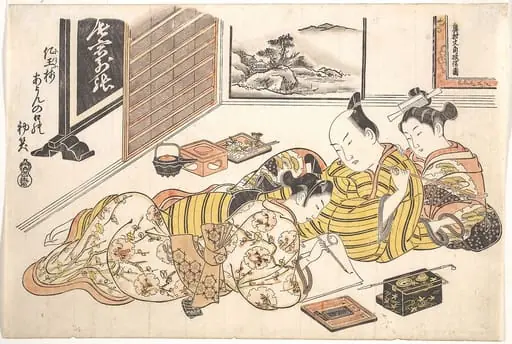 『閨の雛形』 正月|Plate from the Erotic Book Mounds of Dyed Colors: A Pattern Book for the Boudoir (Someiro no yama neya no hinagata), First Month
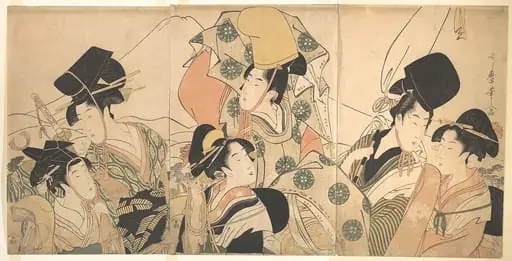 Untitled
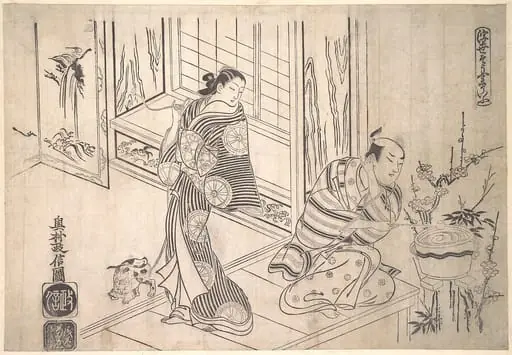 Untitled
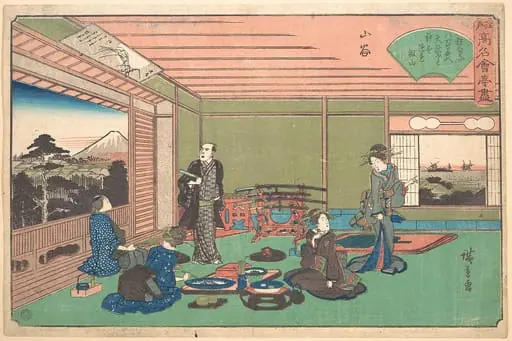 江戸高名会亭尽 山谷 八百善|San-ya (Yaozen)
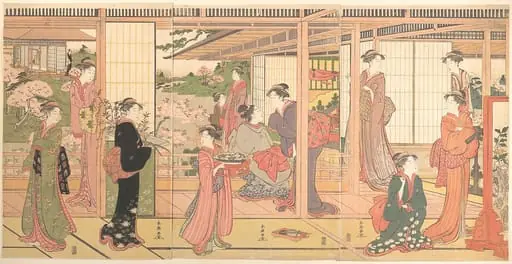 Untitled
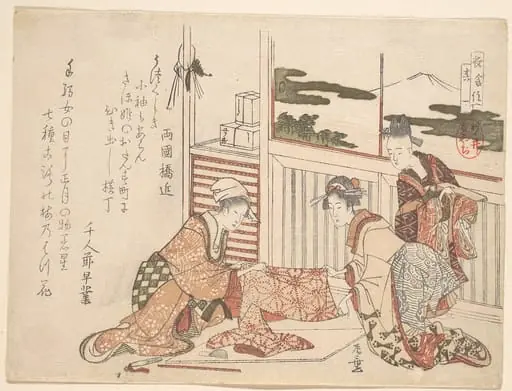 衣食住|Attire
 Untitled
 Untitled
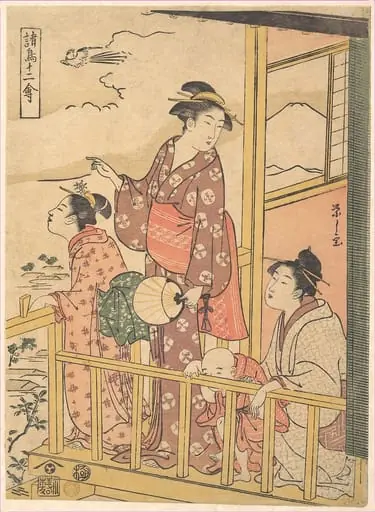 鳥文斎栄之画 「諸鳥十二禽」 尾長鳥|A Long-Tailed Fowl (Onagadori), from the series Twelve Assorted Birds (Shochō jūnikin)
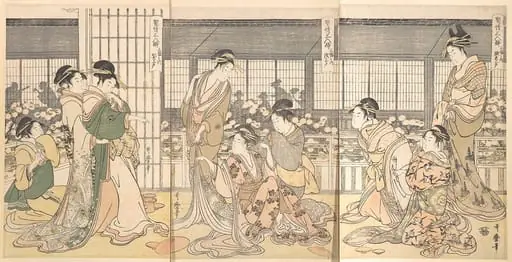 契情三人酔 三幅之内 腹立上戸 泣上戸 笑上戸|Three Intoxicated Courtesans
 Interior Scene