Artwork
Afternoon Shadows
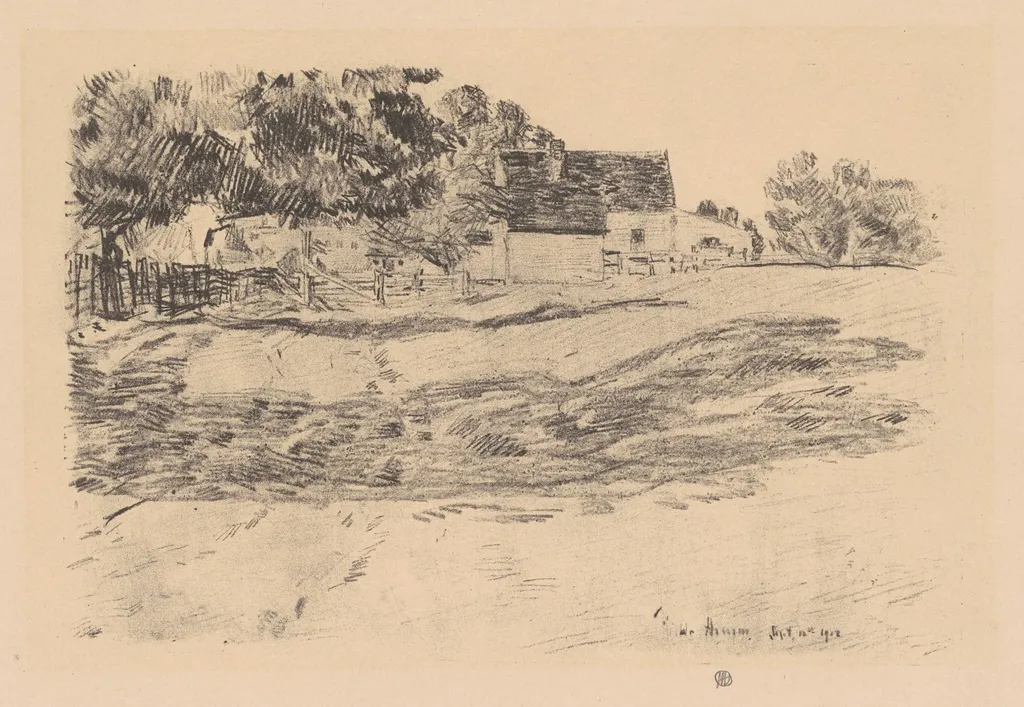
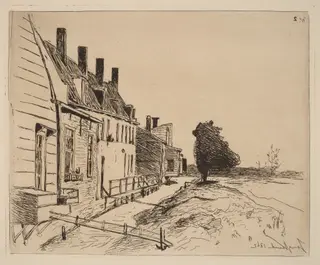
Afternoon Shadows is an ink print by Childe Hassam. It dates from 1918 and is held in the collection of the National Gallery of Art.
- Inscription
- Inscribed:lower right on stone: Childe Hassam, Sept. 12th 1918; lower right in graphite; [the artist's monogram]; lower left edge in green colored pencil by unknown hand: 131 [circled]; lower left edge in graphite by unknown hand: Afternoon Shadows; upper left verso in graphite by unknown hand: #26
About this work
A house sits small in the middle, trees loom on the left, and rough ground leads to a fence in the back.
This lithograph shows a quiet country scene. A house sits small in the middle, trees loom on the left, and rough ground leads to a fence in the back. The black ink is thick in places, thin in others, like quick pencil marks.
Hassam made this in 1918. He used one color but the paper’s pale beige peeks through, making shadows feel real. The scene feels calm, like a moment frozen in time.
Try another Hassam, Childe work next.
Overview
“Afternoon Shadows,” a 1918 lithograph by Childe Hassam, presents a tranquil rural setting rendered in black ink on wove paper. The composition centers on a modest house with a sloping roof, while a mass of trees occupies the left side and a faint fence recedes into the background. The work’s limited palette relies on the paper’s pale tone to suggest light and shadow.
Subject & Meaning
The image captures a moment of quiet countryside life, emphasizing the relationship between built structures and the surrounding natural environment. The solitary house appears dwarfed by the dominant foliage, suggesting a harmonious coexistence of human habitation within a broader landscape.
Technique & Style
Executed as a single‑color lithograph, Hassam manipulates the density of black ink to create texture: thick, saturated areas convey the solidity of trunks and roof, while finer, lighter strokes suggest foliage and distant ground. The beige of the paper serves as a natural midtone, allowing the black to function as both shadow and form.
History & Provenance
Created in the final year of World War I, the print reflects Hassam’s continued interest in American scenes despite his earlier focus on urban Impressionism. It entered the market shortly after its production and has since been held by several private collections before appearing in museum exhibitions of early 20th‑century American printmaking.
Context
During the 1910s, American artists increasingly explored lithography as a means of producing affordable, reproducible works. Hassam’s choice of a monochrome scheme aligns with contemporary trends that emphasized line, tone, and the expressive potential of a single medium rather than color.
Legacy
“Afternoon Shadows” exemplifies Hassam’s versatility beyond his well‑known oil paintings, illustrating his capacity to convey atmosphere and spatial depth through restrained means. The print contributes to the broader appreciation of early American lithography as a distinct artistic practice.
Own this work as a print
Artist & collection

Artist
Frederick Childe Hassam (; October 17, 1859 – August 27, 1935) was an American Impressionist painter, noted for his urban and coastal scenes.

 Road with a Farmhouse on the Right
 The Nurse (La Nourrice)
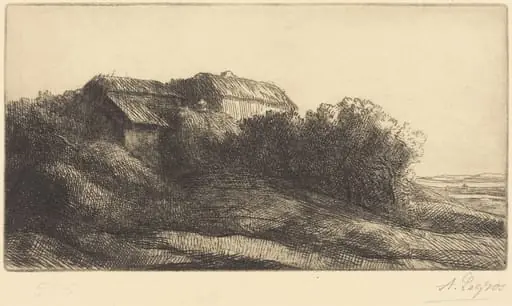 Cottage on a Hillside (Chaumiere sur le coteau)
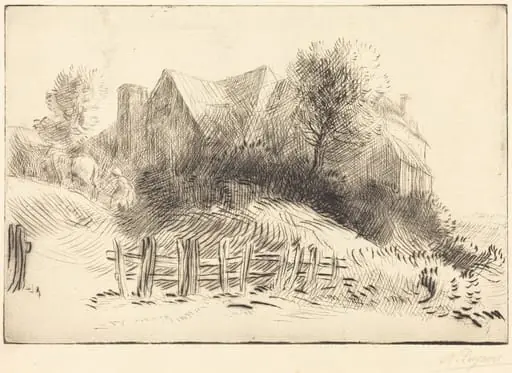 Old Inn (Une ancienne auberge)
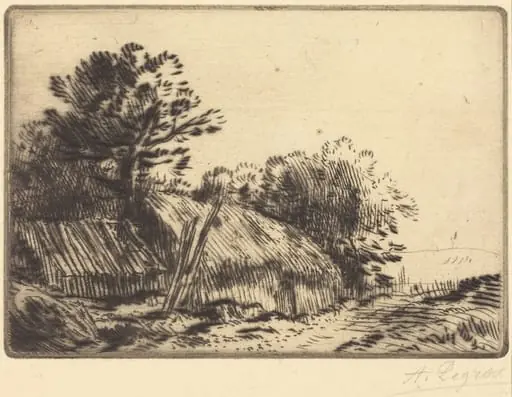 Rustic Scene (Scene rustique)
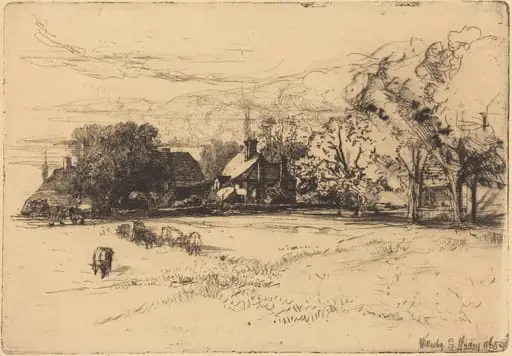 Old Willesley House
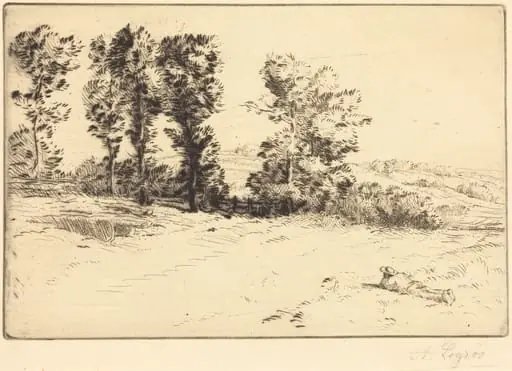 Meadow in Sunshine (Le pre ensoleille)
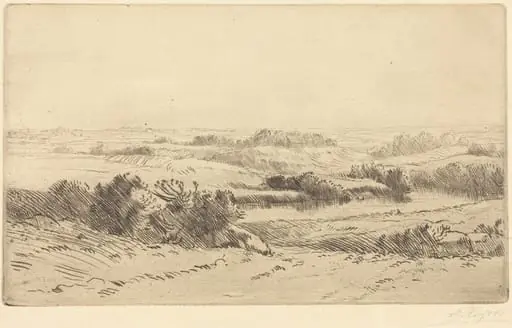 Banks of the Yanne (Les bords de la Yanne)
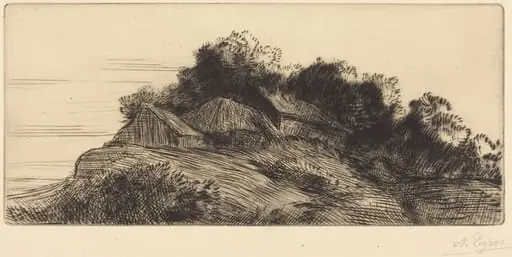 Landscape (Paysage)
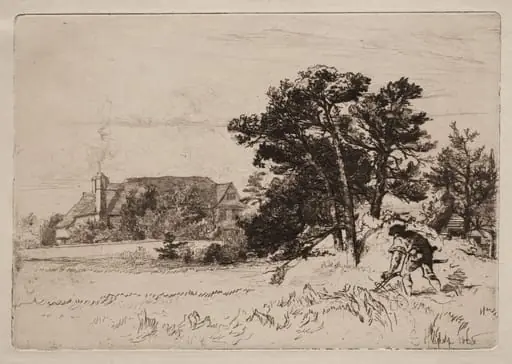 Old Willesley House
 The Houses on the Canal Bank (Les Maisons au bord du canal)
- The Land of Nod