Artwork
The Transport of the Holy House of Loreto
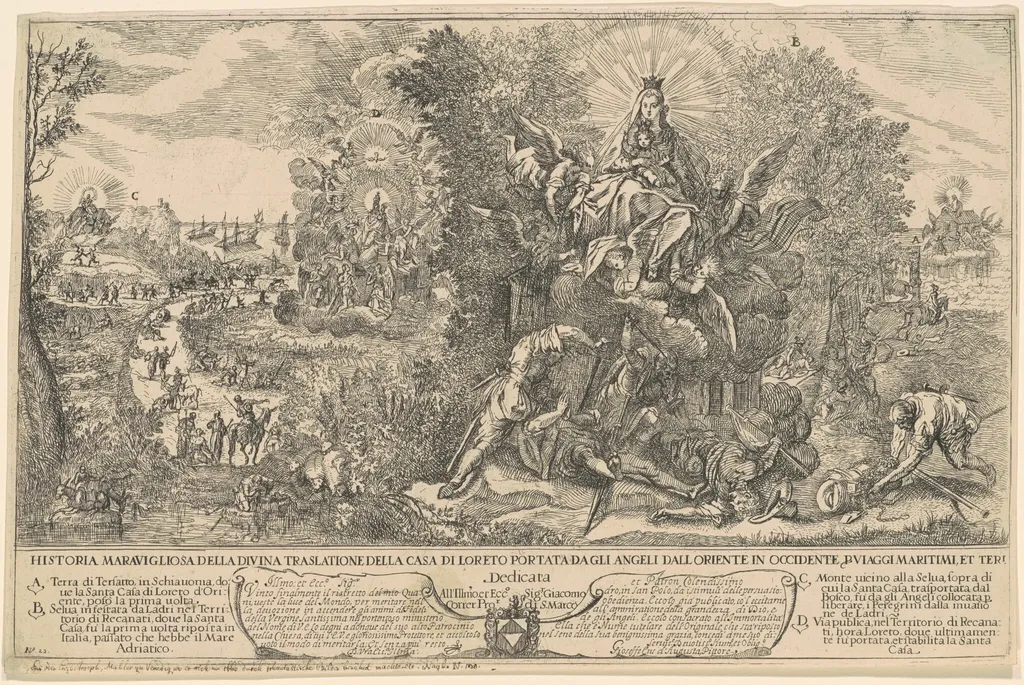
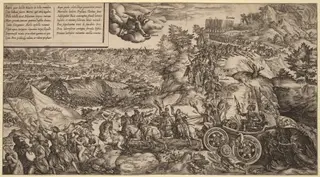
The Transport of the Holy House of Loreto is an ink print by the Baroque artist Joseph the younger Heintz. It dates from 1650 and is held in the collection of the National Gallery of Art.
- Inscription
- Inscribed:below image in plate: 'HISTORIA MARAVIGLIOSA DELLA DIVINA TRASLATIONE DELLA CASA DIR LORETO PORTATA DAGLI ANGELI DALL ORIENTE IN OCCIDENTE P. VIAGGI MARITIMI ET TERI / Dedicata / All'Illmo et Ecc Sigr. Giacomo / Correr Pror di S. Marco; lower left below image in plate: A. Terra di Tersatt, in Schiauonia, do / ue la Santa Casa di Loreto d'Oriente, Poso la prima uolta / B. Selua infestrata... / hebbe il Mare / Adriatico.; lower left in plate: No. 23; lower right in plate: C. Monte uicino all a Selua, sopra di cui la Santa Casa, trasportata dal Bosco... / ... hora Loreto, doue ultimamente fu portata, et stabilita la Santa / Casa; lower center below image in plate: Illmo: et ecco. Sigr. / Vinto finalmente il ristretto del io Qua / ni, ueste la luce del Mondo, per meritare... / Seruit Duotisso. umo. et Obligo. / Gioseffe ens d'Augusta, Pittore; by later hand, across bottom edge of page in pen and ink: Ene oder Enzo Joseph, Mahler zu Venedig, wo er sich ebbe durch phantastiche Bilder [not deciphered] maehlte Nagler N. 138; by later hand, lower left verso in graphite: FHGO/CBMB; by later hand, lower verso in pen and ink: [not deciphered]
About this work
Overview
Created around 1650 by Joseph Heintz the Younger, this etching on laid paper illustrates the legendary transportation of the Holy House of Loreto.
Created around 1650 by Joseph Heintz the Younger, this etching on laid paper illustrates the legendary transportation of the Holy House of Loreto. The scene unfolds in a wooded landscape, where supernatural and earthly elements converge. The composition centers on a massive tree, its branches supporting the house, while figures below react with reverence. Delicate linework captures movement, texture, and spatial depth characteristic of mid-17th-century Northern printmaking.
Subject & Meaning
The image depicts the miraculous flight of the Holy House, believed to be the Virgin Mary’s childhood home, from Nazareth to Loreto, Italy, carried by angels. The central figure atop the tree likely represents the divine presence guiding the structure. Below, a crowd of pilgrims, some kneeling, express awe and devotion.
The inclusion of animals and laborers suggests a sacred event unfolding within the ordinary world, reinforcing the belief in divine intervention in daily life.
Technique & Style
Heintz employed fine, controlled etching lines to render intricate details: foliage, fabric folds, and architectural elements. Contrasts of light and shadow model forms and guide the viewer’s eye toward the elevated house. The use of laid paper enhances the tactile quality, while the dense composition balances chaos and order, reflecting the period’s preference for narrative richness over minimalism.
History & Provenance
The print emerged during a period of heightened devotion to the Loreto shrine, especially in Catholic regions of Central Europe. As a reproductive print, it likely served devotional or educational purposes, circulating among clergy and lay believers. Its survival in multiple institutional collections suggests it was widely distributed, though the artist’s original plates and early impressions remain scarce.
Context
In the mid-1600s, the Loreto legend was actively promoted by the Church as a symbol of Marian protection and divine providence. Prints like this one complemented sermons and pilgrimages, helping to visualize sacred narratives for audiences with limited access to churches or relics. Heintz, trained in Vienna and active in Augsburg, absorbed both Italian compositional traditions and Northern attention to detail.
Legacy
Though not widely known today, the etching exemplifies how religious imagery was disseminated in early modern Europe through print. Its detailed realism and emotional tone influenced later devotional prints in the Habsburg territories. The work remains a quiet testament to the role of visual culture in sustaining popular piety during a time of religious upheaval.
Own this work as a print
Artist & collection


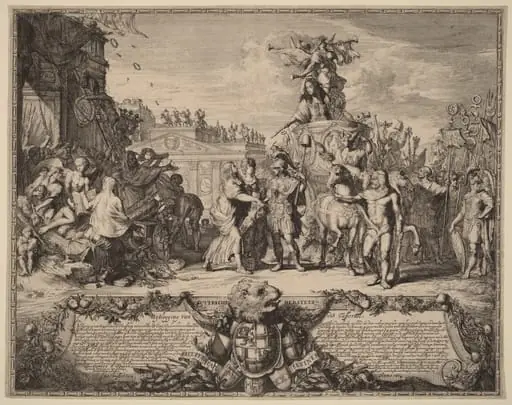
- Uytrecht Herstelt (The Recapture of Utrecht, 1673)
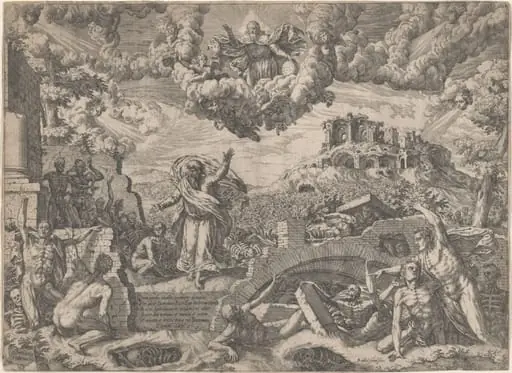 The Vision of Ezekiel
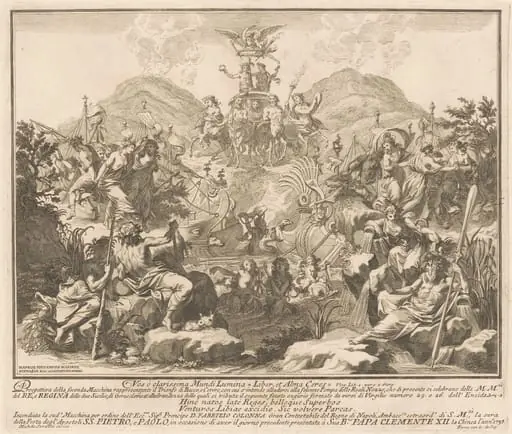 The Seconda Macchina for the Chinea of 1738: The Triumph of Bacchus and Ceres
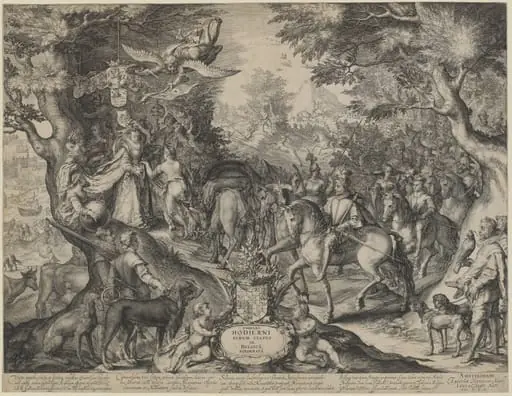 Allegory of Flourishing State of the United Provinces
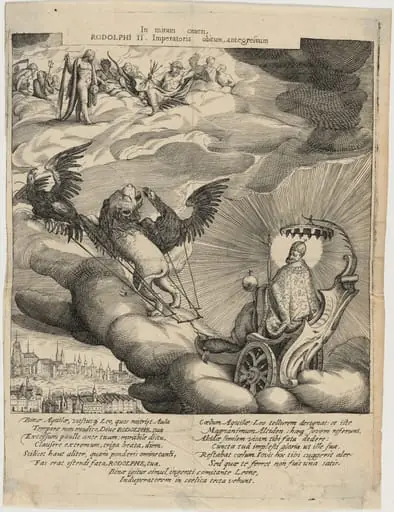 Rudolph II in Chariot Drawn by Lion and Eagle
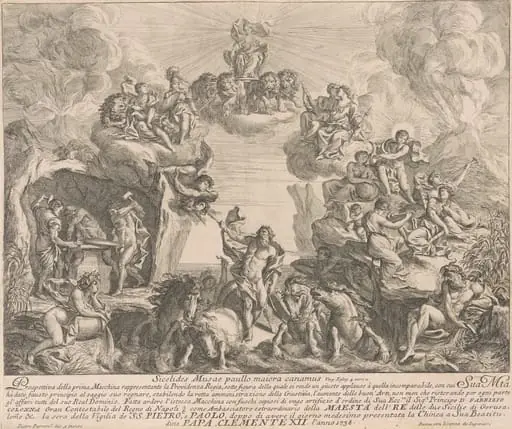 The Prima Macchina for the Chinea of 1738: Allegory of Regal Providence
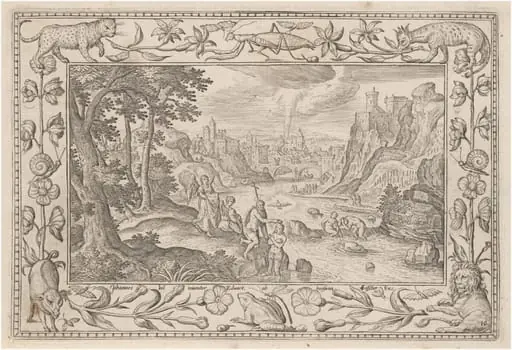 The Baptism of Christ
 The Surrender of John Frederick, Elector of Saxony, After the Battle of Mühlberg
 Allegory in Honor of the Arrival of Cardinal Franciotti as Bishop of Lucca
 Allegory of Painting
 Suleiman the Magnificent Forced to Raise the Siege of Vienna
 Allegory of War