Artwork
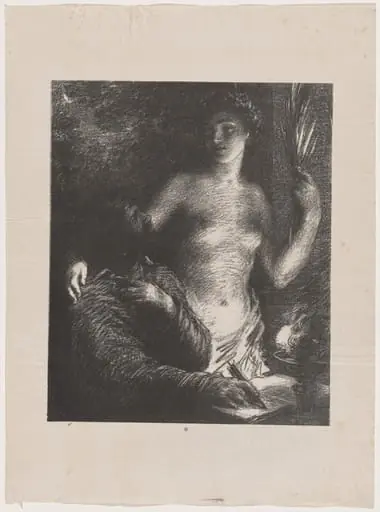
Immortality
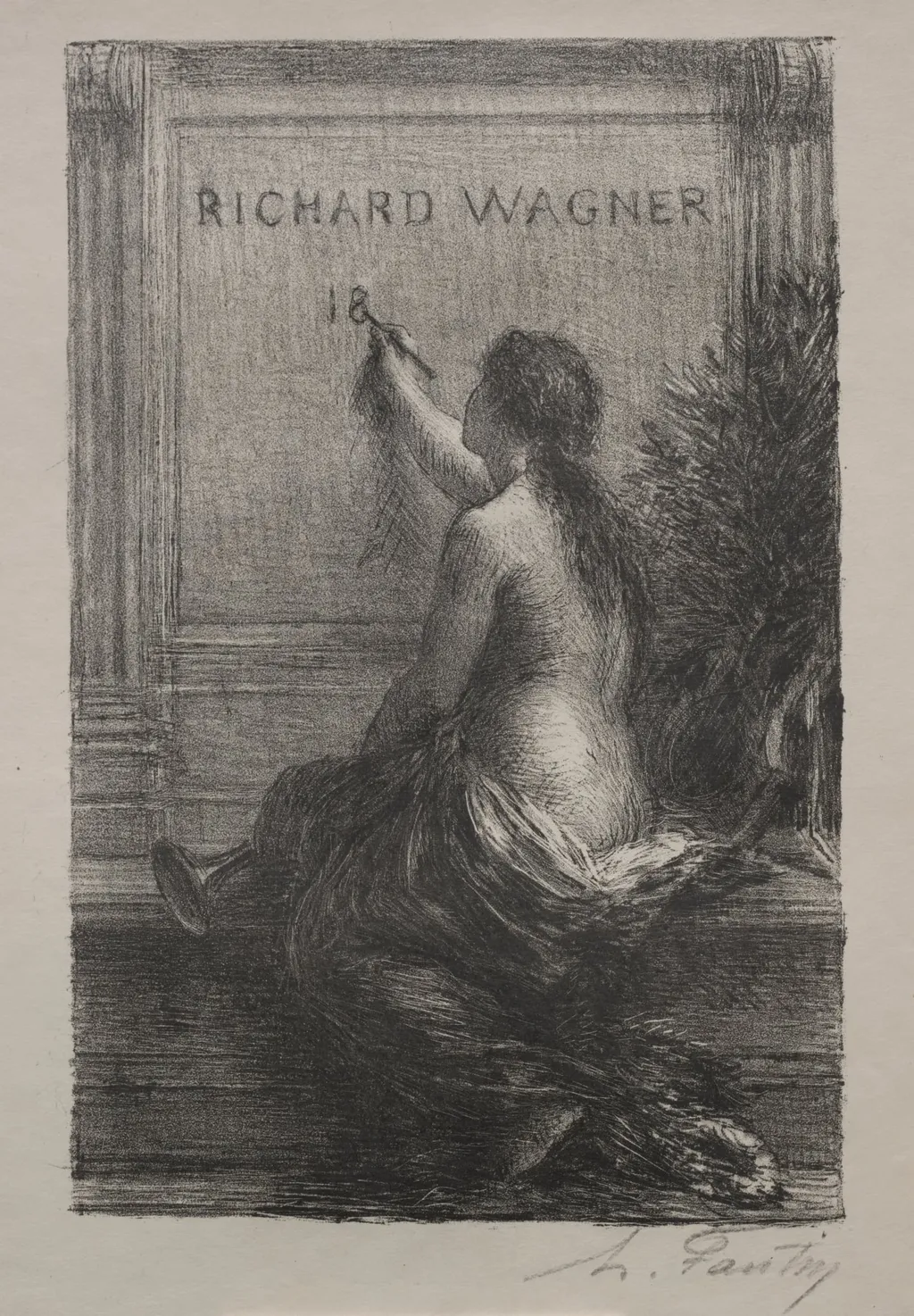
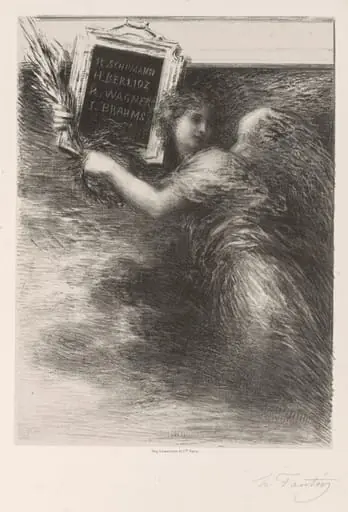
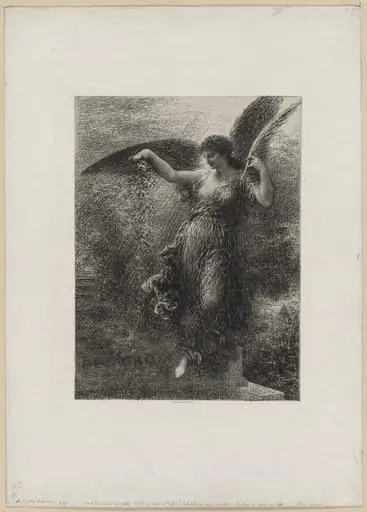
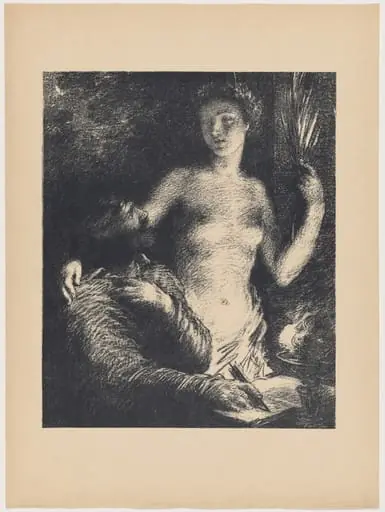
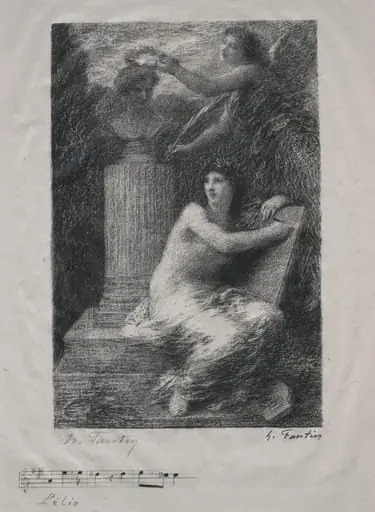
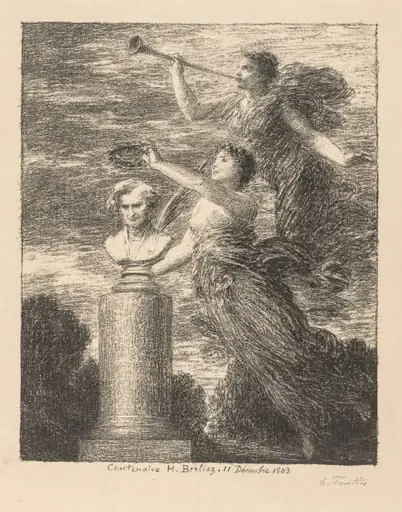
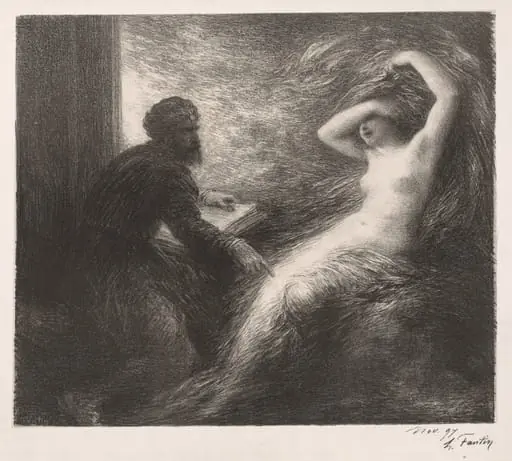
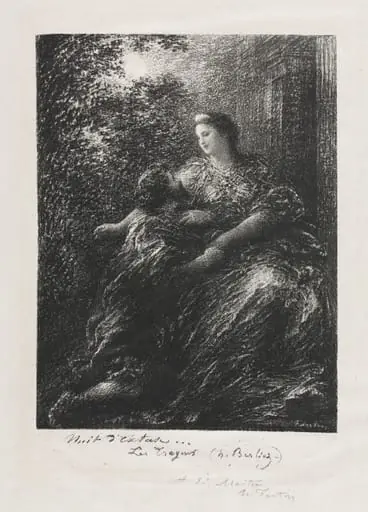
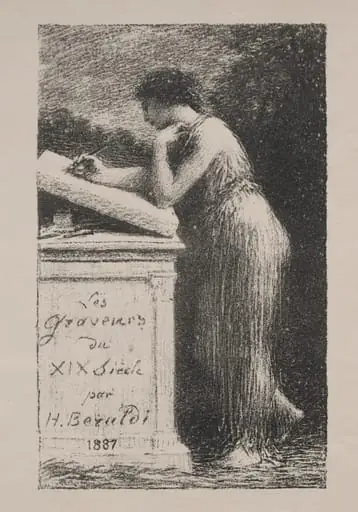
Immortality is a print by the Impressionist artist Henri Fantin-Latour. It dates from 1886 and is held in the collection of the Cleveland Museum of Art.
- Accession no.
- 1921.57
- Credit line
- Gift of Ralph King
About this work
Overview
Created in 1863, this print by Fantin-Latour reflects the influence of Richard Wagner’s artistic ideals, particularly the notion of the gesamtkunstwerk.
Created in 1863, this print by Fantin-Latour reflects the influence of Richard Wagner’s artistic ideals, particularly the notion of the gesamtkunstwerk. Though the work is not a painting but a graphic piece, it embodies an attempt to translate musical emotion into visual form. The composition centers on a gathering of figures within a lush, natural setting, evoking a contemplative atmosphere rather than a narrative scene.
Subject & Meaning
The figures depicted are contemporaries of Fantin-Latour, including writers and musicians drawn to Wagner’s ideas. They are arranged not as participants in a specific event but as symbolic representatives of a cultural circle united by aesthetic ideals. The surrounding flora suggests an idealized natural realm, reinforcing the notion of art as a harmonious, immersive experience akin to Wagnerian opera.
Technique & Style
Fantin-Latour employed delicate line work and subtle tonal gradations to create a quiet, atmospheric effect. Unlike dramatic chiaroscuro, his approach favors soft transitions and restrained detail, allowing mood to emerge through suggestion rather than declaration. The absence of sharp contours and the integration of figures into the landscape reflect an effort to mimic the fluidity and emotional resonance of music.
History & Provenance
The print was produced during a period of intense interest in Wagner’s work in Paris, following the turbulent 1861 premiere of Tannhäuser. Though the opera was withdrawn, its ideas circulated widely among avant-garde circles. Fantin-Latour, a close observer of this milieu, used printmaking to explore Wagnerian themes without direct illustration, positioning his work as a parallel artistic endeavor.
Context
In the 1860s, Parisian artists and intellectuals sought new ways to unify the arts beyond traditional boundaries. Wagner’s concept of the gesamtkunstwerk provided a framework for this ambition. Fantin-Latour’s print is one of several attempts to render musical experience visually, aligning with broader movements that valued synesthesia and emotional abstraction over literal representation.
Legacy
Though less known than his paintings, this print exemplifies a significant strand of 19th-century artistic thought: the desire to dissolve distinctions between sensory experiences. Fantin-Latour’s approach influenced later Symbolist artists who pursued similar aims, embedding musical and poetic sensibilities into visual form without direct narrative or programmatic content.
Own this work as a print
Artist & collection
Artist
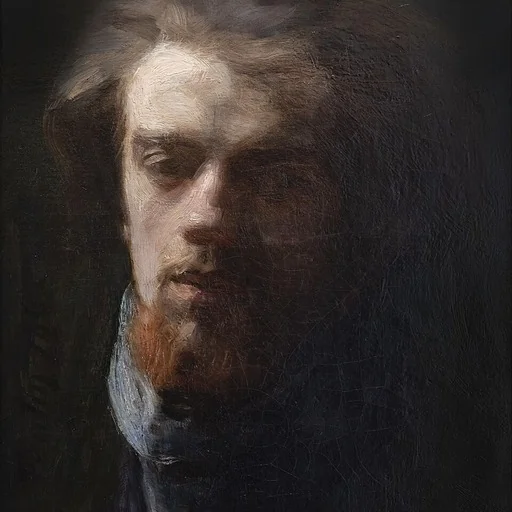
Ignace Henri Jean Theodore Fantin-Latour (French pronunciation:; 14 January 1836 – 25 August 1904) was a French painter and lithographer best known for his flower paintings and group portraits of Parisian artists and writers.