Artwork
À Victor Hugo
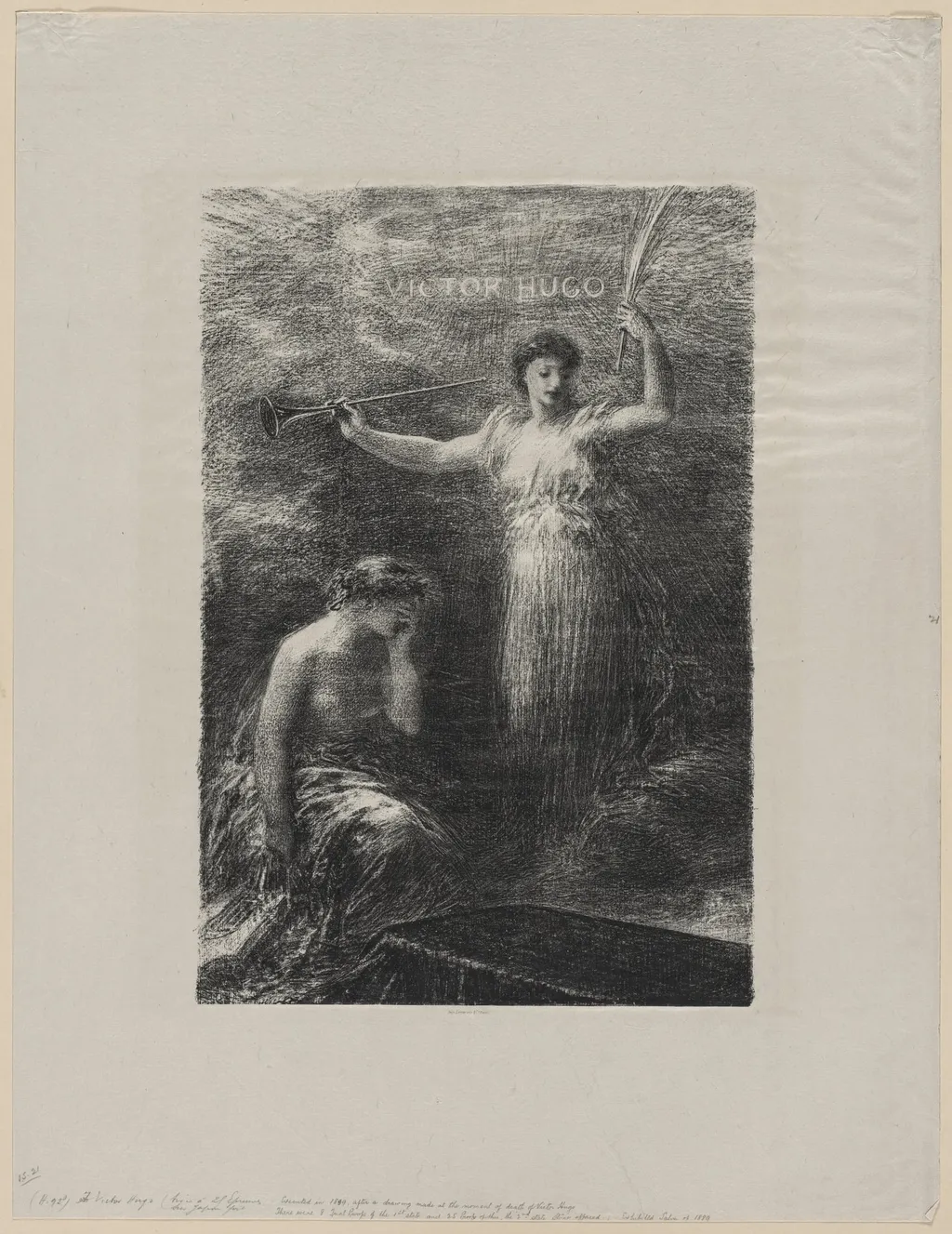
À Victor Hugo is a print by the Impressionist artist Henri Fantin-Latour. It dates from 1889 and is held in the collection of the Cleveland Museum of Art.
- Accession no.
- 1921.66
- Credit line
- Gift of Ralph King
About this work
Overview
Henri Fantin-Latour created the 1889 print À Victor Hugo as part of a series of group portraits honoring prominent French cultural figures.
Henri Fantin-Latour created the 1889 print À Victor Hugo as part of a series of group portraits honoring prominent French cultural figures. Unlike his more famous oil paintings, this work is a lithograph, reflecting his mastery of printmaking. It presents a symbolic rather than literal depiction of the writer Victor Hugo, surrounded by allegorical figures. The piece is held in the collection of The Cleveland Museum of Art.
Subject & Meaning
The print does not portray Hugo or his contemporaries as identifiable individuals. Instead, it uses two stylized figures, a standing form holding a bundle like a torch and a kneeling, draped figure, to represent reverence and mourning. The composition evokes a ritualistic tribute, suggesting Hugo’s enduring spiritual presence in French letters. The absence of realistic detail shifts focus from identity to symbolic gesture.
Technique & Style
Fantin-Latour employed lithography to achieve subtle tonal gradations with minimal line work. The figures emerge from deep shadow through soft chiaroscuro, their forms defined by light rather than precise contours. The sparse, atmospheric rendering avoids narrative clutter, emphasizing mood over detail. This restrained approach aligns with his broader aesthetic, favoring quiet intensity over dramatic flourish.
History & Provenance
Created in 1889, the print was made shortly after Hugo’s death, as part of a broader cultural response to his passing. Fantin-Latour, known for his portraits of literary circles, turned to allegory here to avoid the limitations of literal representation. The work entered The Cleveland Museum of Art’s collection through documented acquisition, preserving its place in late 19th-century French print culture.
Context
In the decades following Hugo’s death, French artists and writers sought ways to honor his legacy beyond biography. Fantin-Latour’s print reflects a trend toward symbolic portraiture, distancing itself from realism to capture emotional resonance. This approach paralleled broader shifts in fin-de-siècle art, where metaphor and atmosphere gained precedence over documentary accuracy.
Legacy
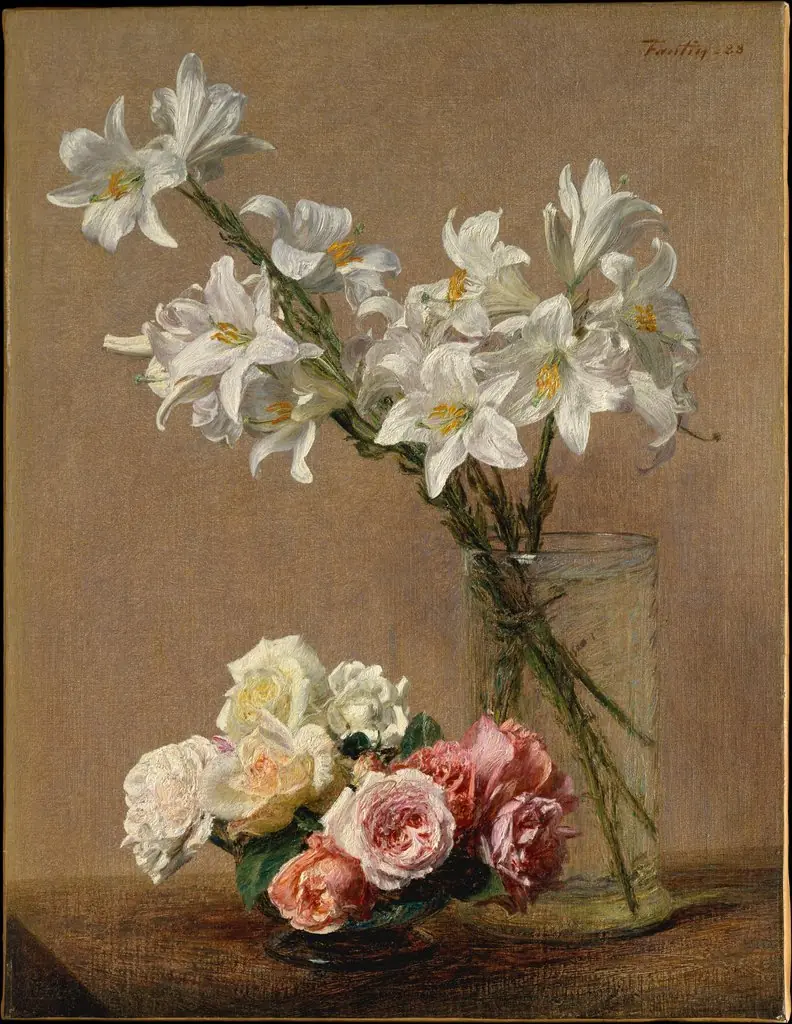
À Victor Hugo stands as a quiet but significant example of how printmaking could convey collective memory without literal representation. While less known than Fantin-Latour’s floral still lifes or oil group portraits, this lithograph illustrates his ability to distill complex cultural sentiments into minimal, evocative forms. It remains a key work in understanding post-Hugo artistic commemoration in France.
Own this work as a print
Artist & collection
Artist
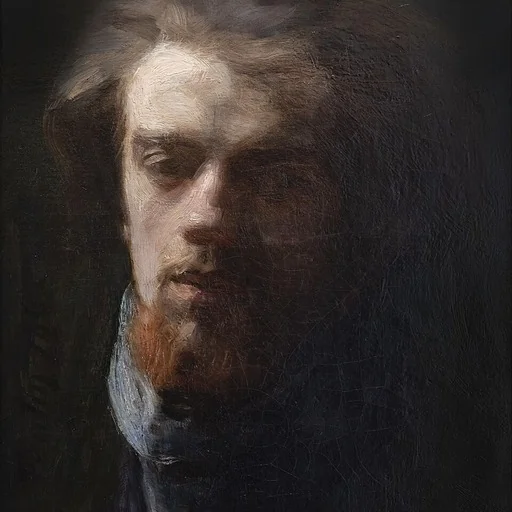
Ignace Henri Jean Theodore Fantin-Latour (French pronunciation:; 14 January 1836 – 25 August 1904) was a French painter and lithographer best known for his flower paintings and group portraits of Parisian artists and writers.

- Inspiration
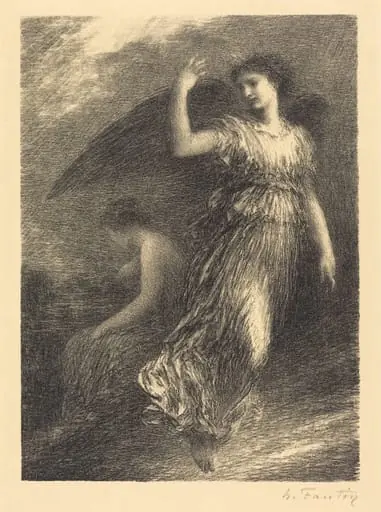 Debut from "Paradise and the Peri" (3rdplate )
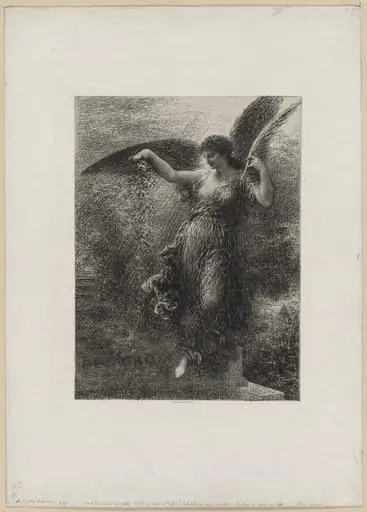 À Eugene Delacroix
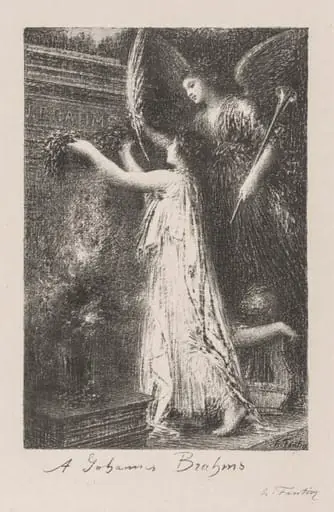 À Johannes Brahms
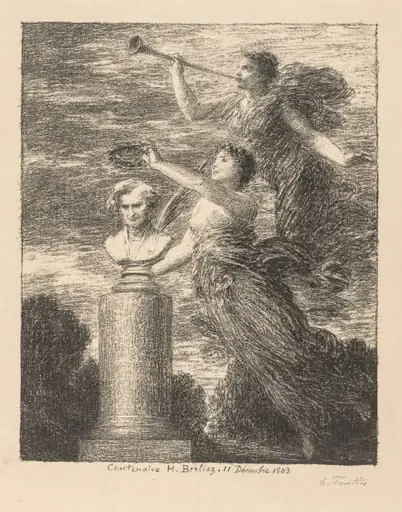 Centenary of Hector Berlioz
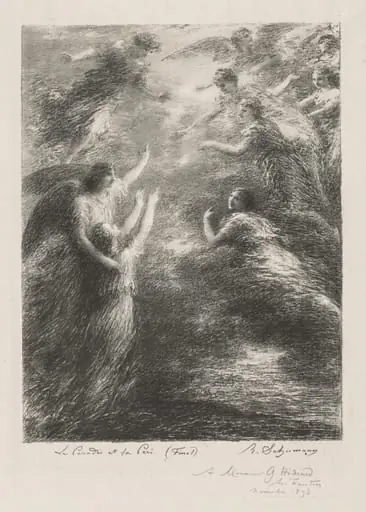 Le Paradis et la Peri
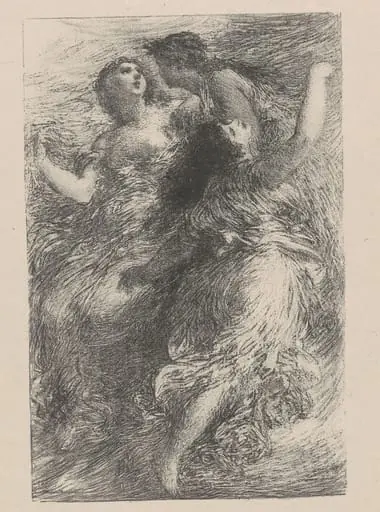 L'Or du Rhin -- Les Filles du Rhin
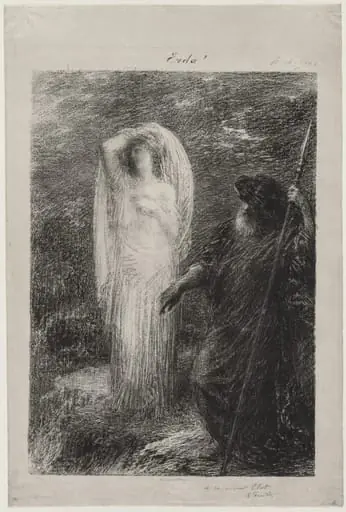 L'Evocation d'Erda
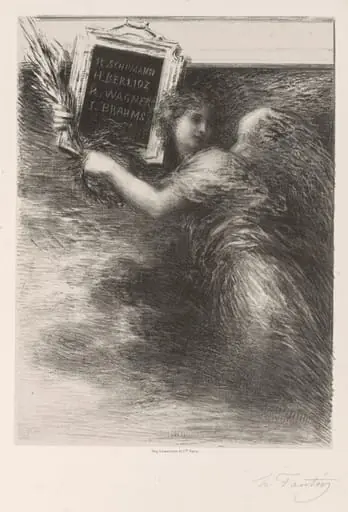 The Genius of Music
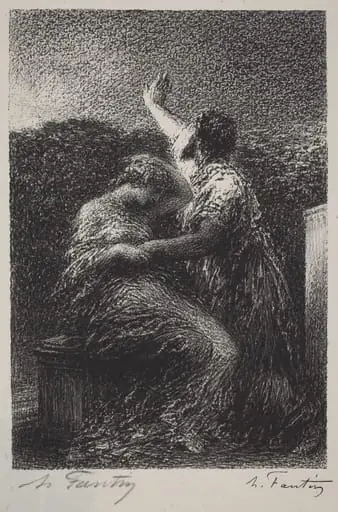 Le Mage Balthazar et Fatime
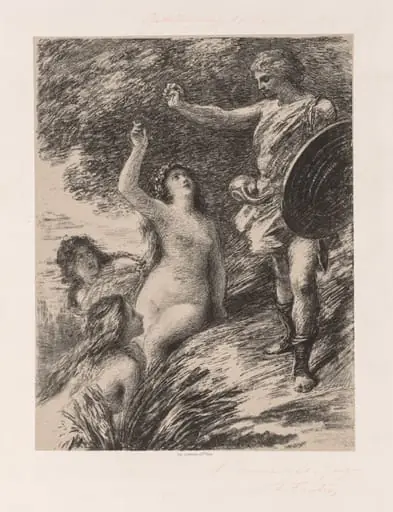 Siegfried and the Daughters of the Rhine
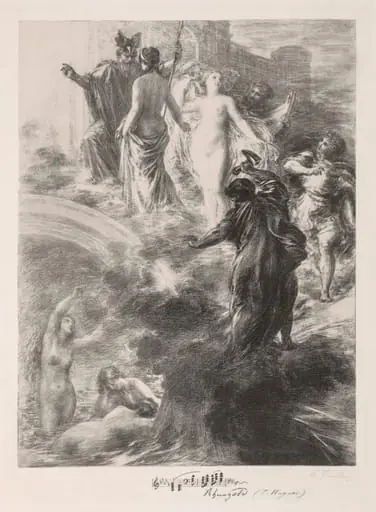 Finale of the Rhinegold