Artwork
Arab Coffeehouse
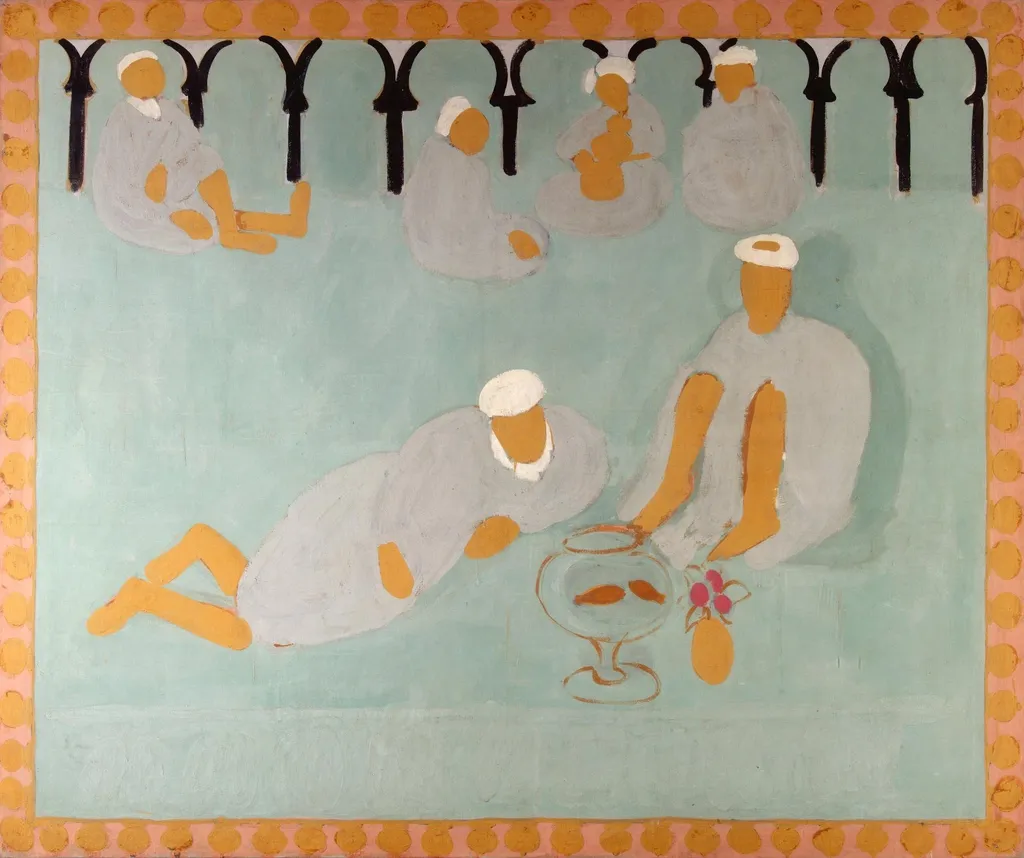
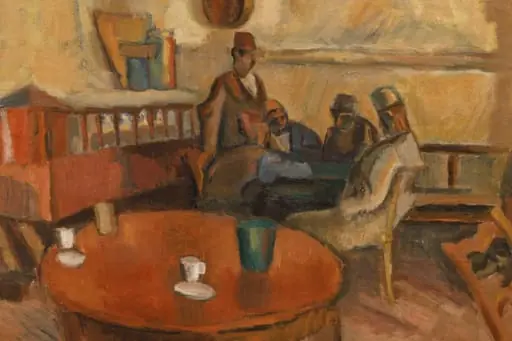
Arab Coffeehouse is a distemper painting by the Fauvist artist Henri Matisse. It dates from 1913 and is held in the collection of the Hermitage Museum.
About this work
Overview
Arab Coffeehouse is a 1913 distemper-on-canvas painting by Henri Matisse, characterized by its serene depiction of a group of people in a coffeehouse setting.
Subject & Meaning
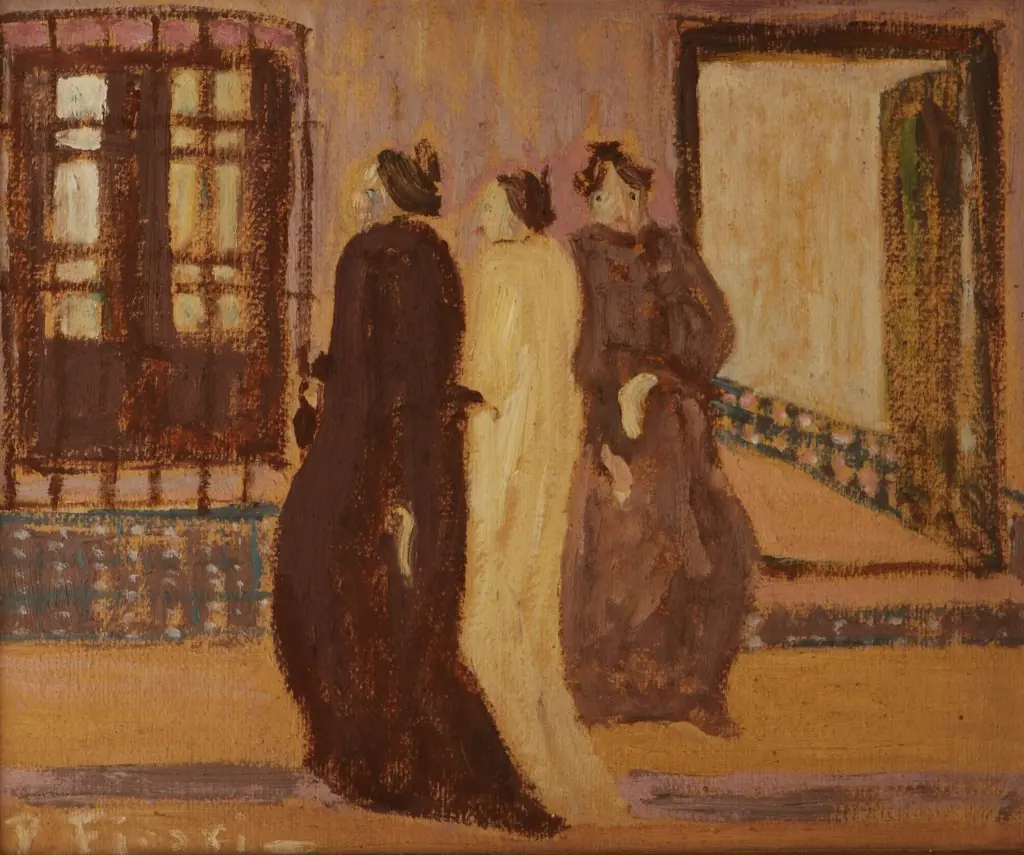
The painting portrays a relaxed gathering of individuals in robes and turbans, engaged in leisurely repose around a table with simple still-life elements (vase, fruit), conveying a sense of communal tranquility.
Technique & Style
Matisse employed pastel colors and a light blue background, accented by a border of yellow dots, to create a calm atmosphere. The use of distemper, a medium less common in his oeuvre, adds a unique texture to the work.
History & Provenance
Created in 1913, Arab Coffeehouse is part of Matisse's series of works from the 1910s and 1920s featuring goldfish, though the element is not immediately apparent in this piece. Provenance details are not specified.
Context
While part of a goldfish-themed series, Arab Coffeehouse stands out for its focus on human interaction and serene, everyday life, reflecting Matisse's exploration of comfort and intimacy in his subjects.
Legacy
The painting's appeal lies in its peaceful ambiance and the glimpse it offers into Matisse's diverse explorations during the early 20th century, though it may not be as widely recognized as some of his other works.
Artist & collection
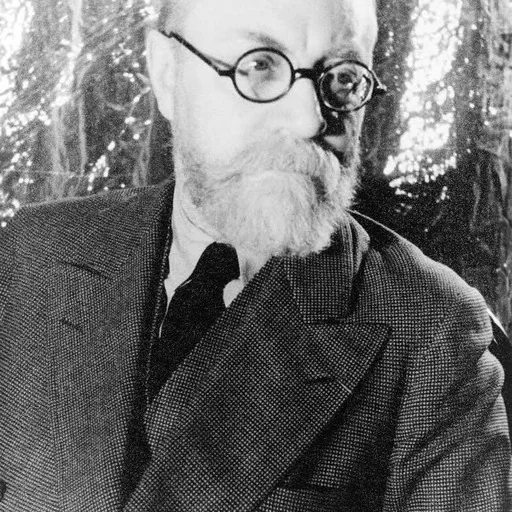
Artist
Henri Émile Benoît Matisse (French:; 31 December 1869 – 3 November 1954) was a French visual artist, known for both his use of colour and his fluid and original draughtsmanship.