Artwork
Nude. Black and Gold
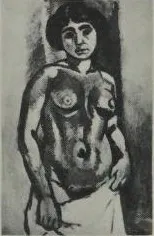
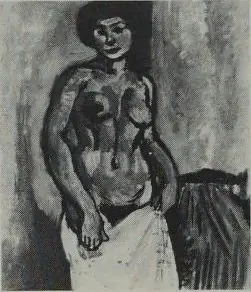
Nude. Black and Gold is an oil painting by the Fauvist artist Henri Matisse. It dates from 1908 and is held in the collection of the Hermitage Museum.
About this work
Overview
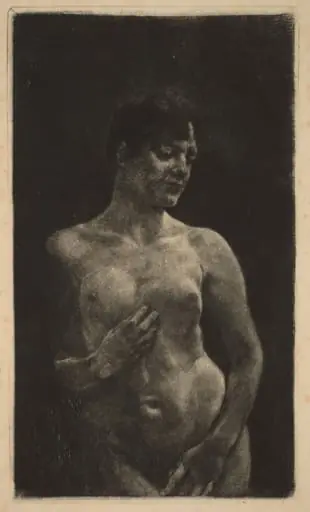
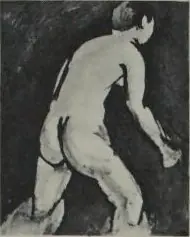
Henri Matisse created the oil painting Nude. Black and Gold in 1908, during his involvement with the Fauvist movement. The work presents a solitary nude figure rendered in a limited palette of black, white and touches of gold, set against a deep black background. It is part of the State Hermitage Museum’s collection in St. Petersburg.
Subject & Meaning
The composition shows a standing nude with one arm folded behind the back, its skin depicted in flat, dark tones. The face is rendered with minimal modeling, relying on strong contour lines rather than chiaroscuro. The stark contrast between the figure and the surrounding darkness emphasizes the bodily form as a sculptural presence rather than a narrative scene.
Technique & Style
Matisse applied the oil paint with noticeable impasto in selected areas, allowing the brushstrokes to remain visible and giving the surface a tactile, almost carved quality. The limited chromatic range and the use of gold highlights reflect Fauvist concerns with bold color, while the simplified forms point toward a move away from naturalistic representation.
History & Provenance
After its completion, the painting entered the collection of the State Hermitage Museum, where it remains on display. Its acquisition reflects the early 20th‑century interest of Russian institutions in French modernism and in Matisse’s evolving approach to the nude.
Artist & collection
Artist
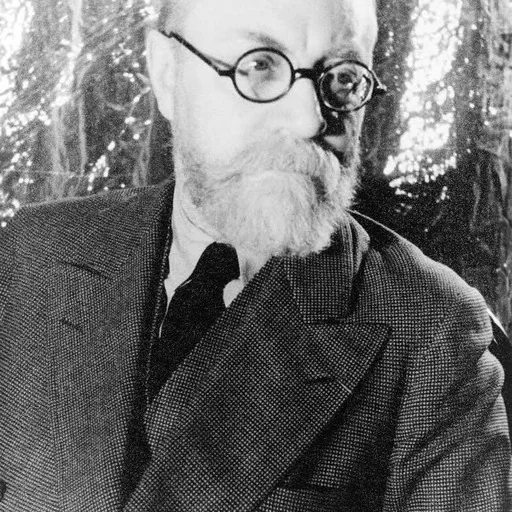
Henri Émile Benoît Matisse (French:; 31 December 1869 – 3 November 1954) was a French visual artist, known for both his use of colour and his fluid and original draughtsmanship.