Artwork
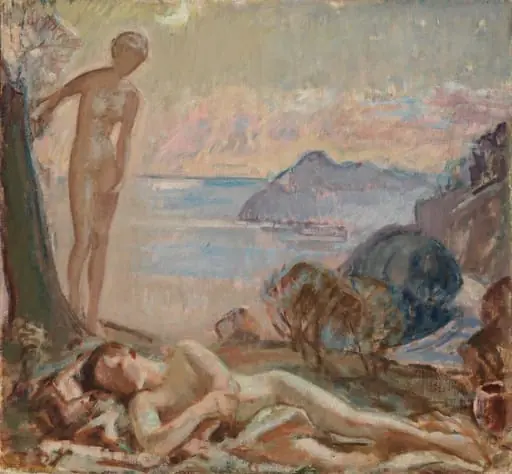
Nymph and Faun
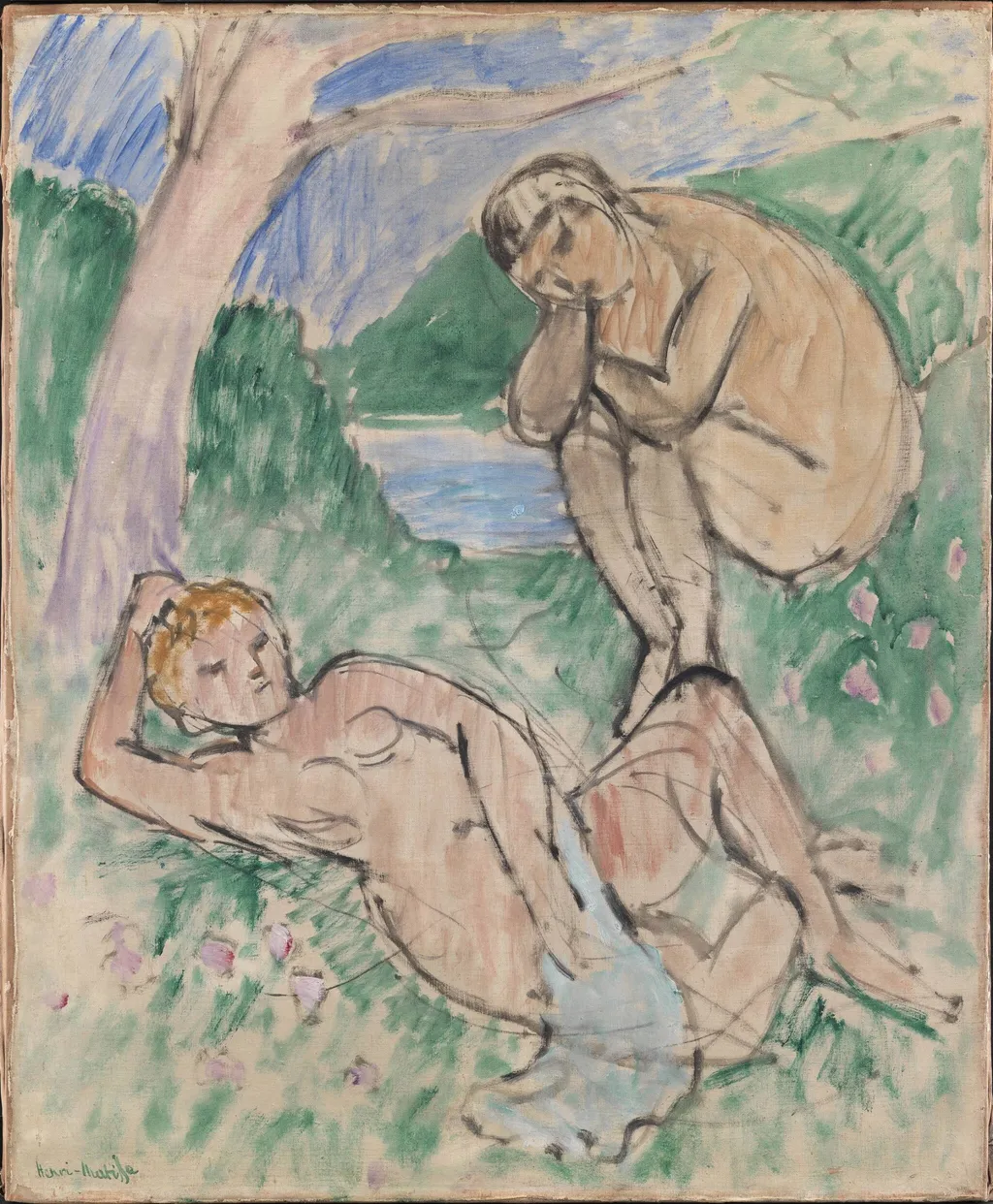
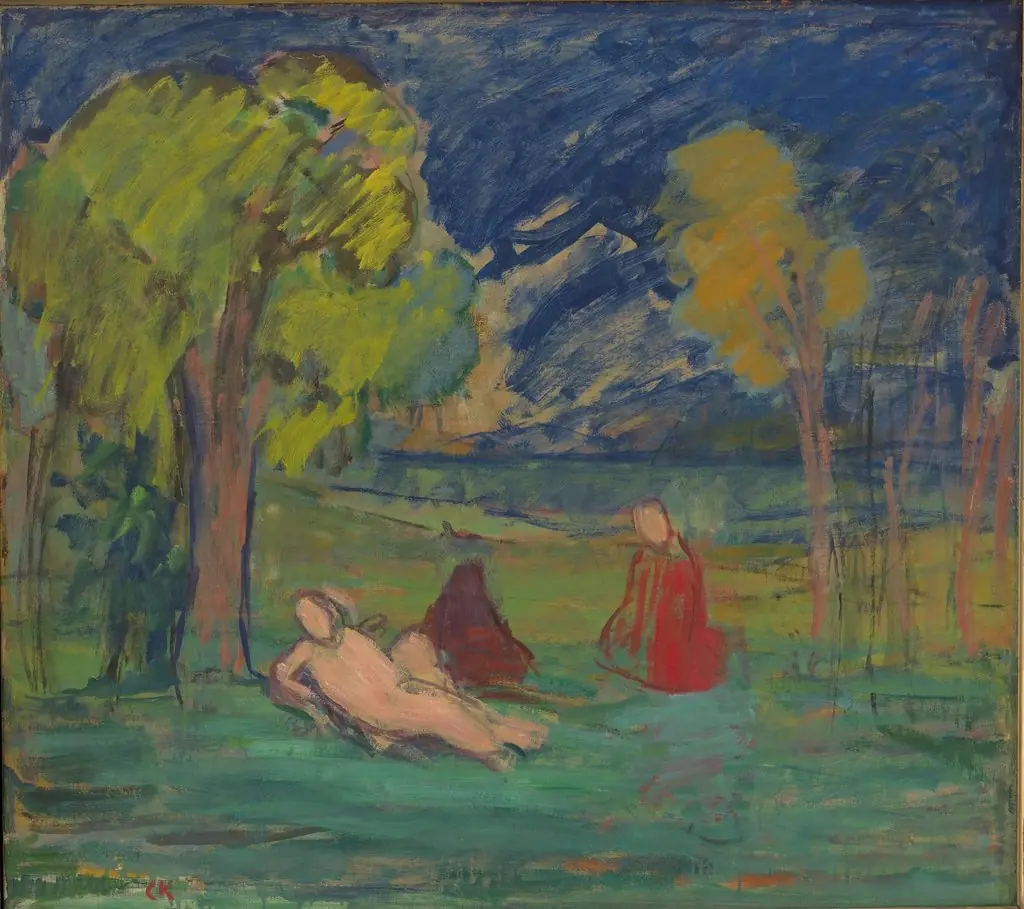
Nymph and Faun is an oil painting by the Fauvist artist Henri Matisse. It dates from 1907 and is held in the collection of the Statens Museum for Kunst.
About this work
Subject & Meaning
The work portrays a nude male figure identified as a faun and a female figure as a nymph, set in a mythological idyll.
The work portrays a nude male figure identified as a faun and a female figure as a nymph, set in a mythological idyll. The pairing draws on Greco-Roman iconography to evoke primal nature and sensual harmony. The scene reflects Matisse's interest in mythological subjects during his early Fauve period, using the natural setting to symbolize an idealized, timeless union.
The painting is housed in the Statens Museum for Kunst in Copenhagen, acquired in 2018.
Subject & Meaning
Technique & Style
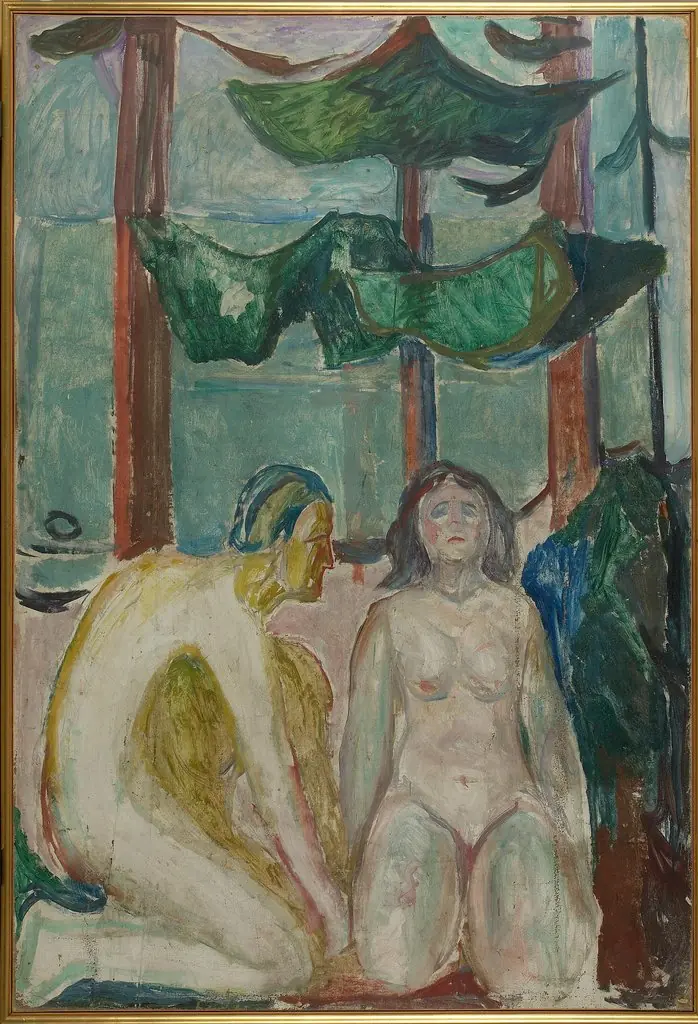
Nymph and Faun is an oil painting executed on canvas, a medium consistent with Matisse's broader practice of the period. According to the catalogue record, the work measures 73 cm in height by 59 cm in width and was produced in Collioure in 1907. The French-language source identifies the technique as huile sur toile (oil on canvas) and classifies the subject as an idyll depicting a nude man and woman beneath a tree near a body of water, with figures that recall a faun and a nymph drawn from Greco-Roman mythology.
The painting appears as a depicted artwork within Matisse's 1911 canvas The Red Studio, where it is shown hanging in his atelier at Issy-les-Moulineaux among earlier works still in his possession. It is now held in the collection of the Statens Museum for Kunst in Copenhagen.
Context
Nymph and Faun was painted by Henri Matisse in 1907 at Collioure, in the Pyrénées-Orientales, and belongs to a cluster of works the artist produced that year depicting nude figures in pastoral or mythological settings. The painting is catalogued as an idyll in the mythological genre and was long known by the alternative title Nymphe et Faune before its acquisition by the Statens Museum for Kunst in Copenhagen in 2018. Its place within Matisse's wider output is documented through The Red Studio (1911), in which the artist reproduced his earlier canvases as they hung in his Issy-les-Moulineaux studio, including this composition, attesting to its significance among his pre-1911 works.
Legacy
The painting holds a distinct legacy within Henri Matisse's oeuvre, evidenced by its direct inclusion in his 1911 work The Red Studio. That later canvas, which depicts Matisse's studio in Issy-les-Moulineaux decorated with several earlier paintings he still possessed, prominently features this 1907 idyll among its displayed works. Additionally, the painting's reputation has been shaped by its titling history; it was long known by the alternative title Nymph and Faun due to its figures' resemblance to characters from Greco-Roman mythology, though it is now more commonly recognized as Bathers.
Overview
Nymph and Faun is a 1907 oil painting by Henri Matisse, characterized by soft, vibrant colors and expressive brushwork, embodying the early Fauvist style.
History & Provenance
Created during Matisse's period of intense color experimentation, the work is now part of the collection at Statens Museum for Kunst.
Artist & collection
Artist
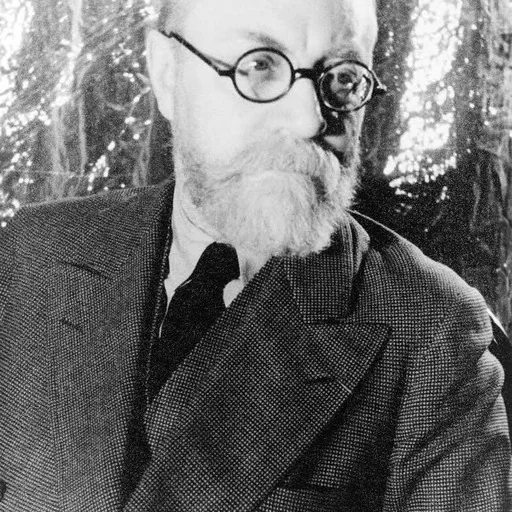
Henri Émile Benoît Matisse (French:; 31 December 1869 – 3 November 1954) was a French visual artist, known for both his use of colour and his fluid and original draughtsmanship.