Artwork
Rendezvous in the Forest
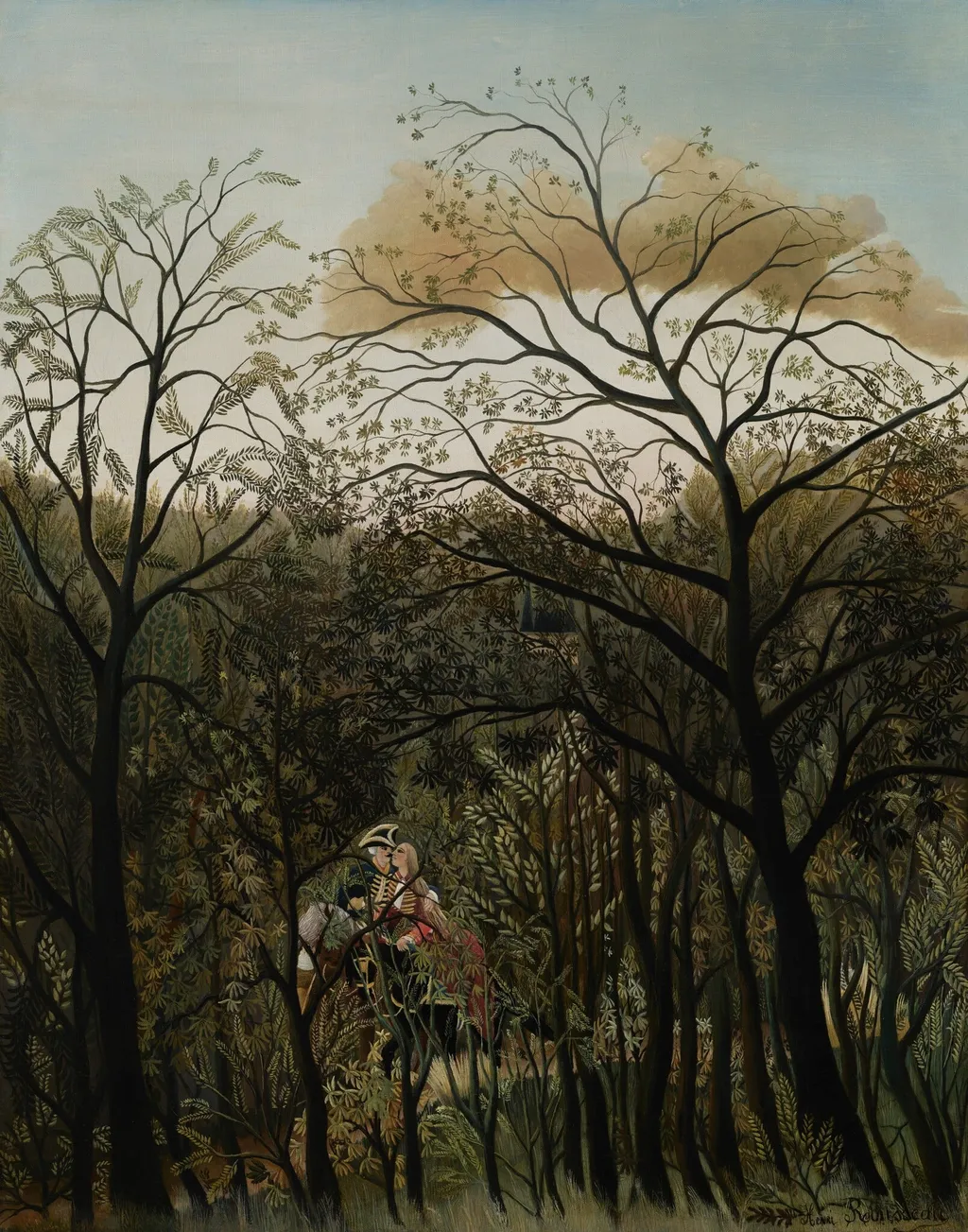
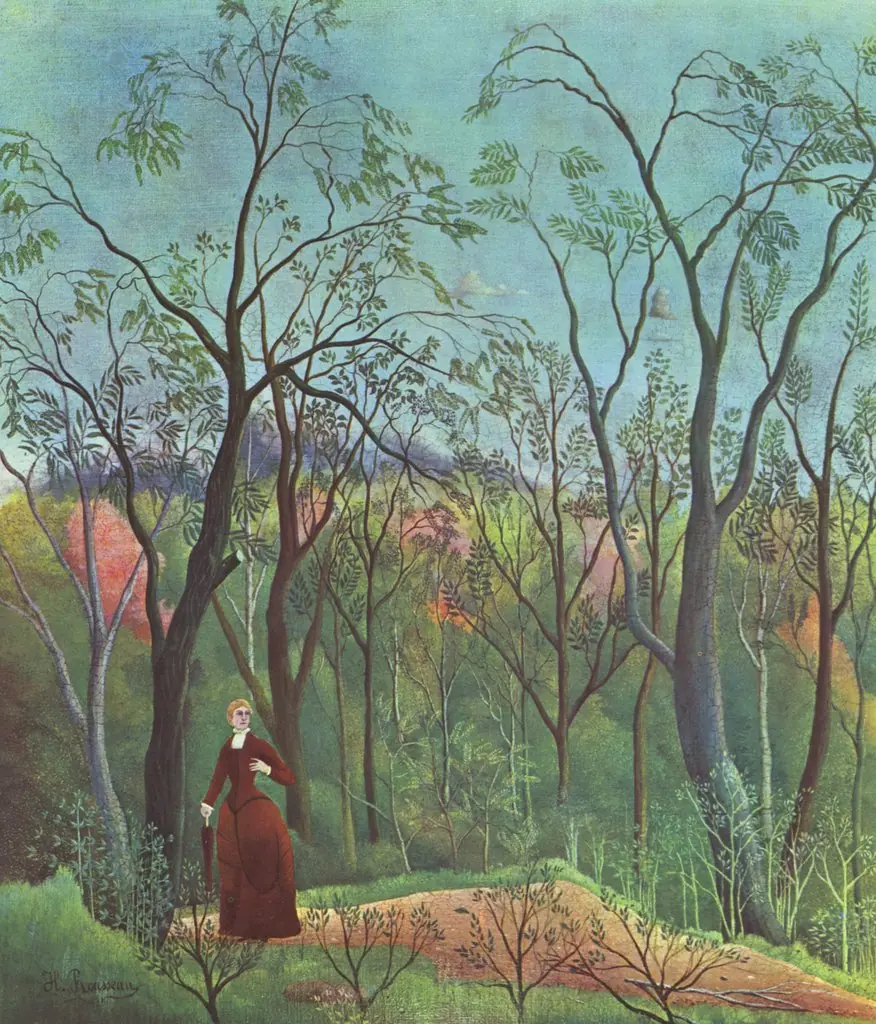
Rendezvous in the Forest is an oil painting by the Impressionist artist Henri Rousseau. It dates from 1889 and is held in the collection of the National Gallery of Art.
- Inscription
- Inscribed:lower right: Henri Rousseau
About this work
Subject & Meaning
The composition features a man and a woman mounted on horses who are exchanging a kiss, a central narrative element that defines the work's subject matter.
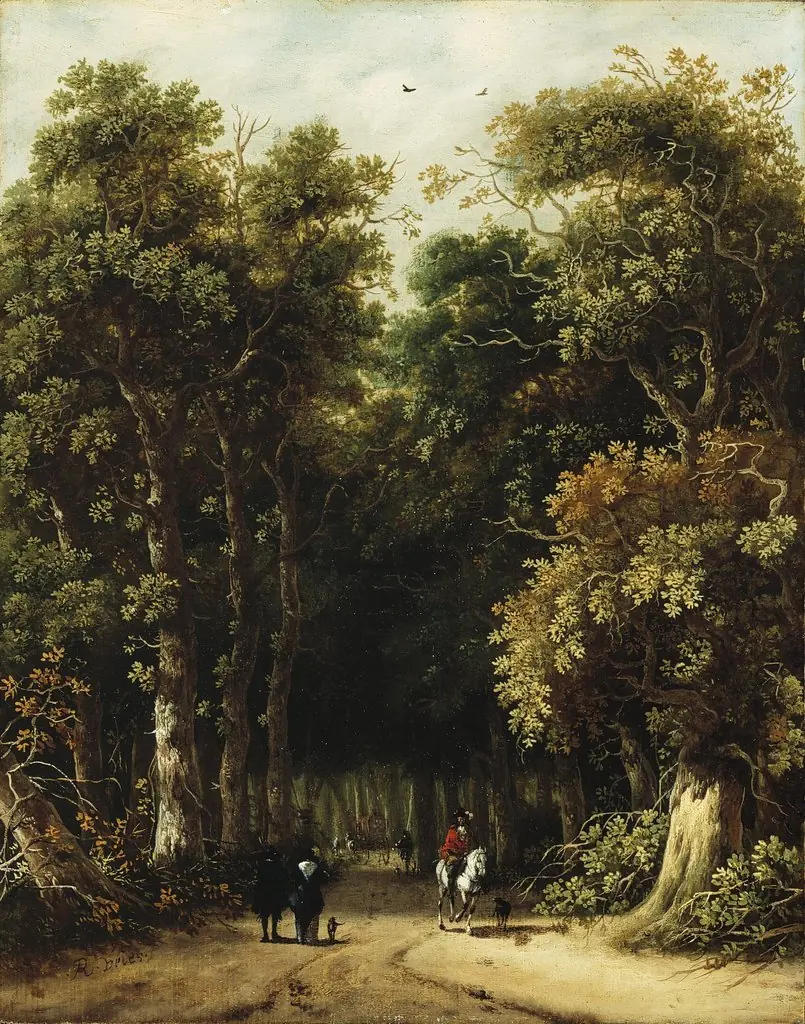
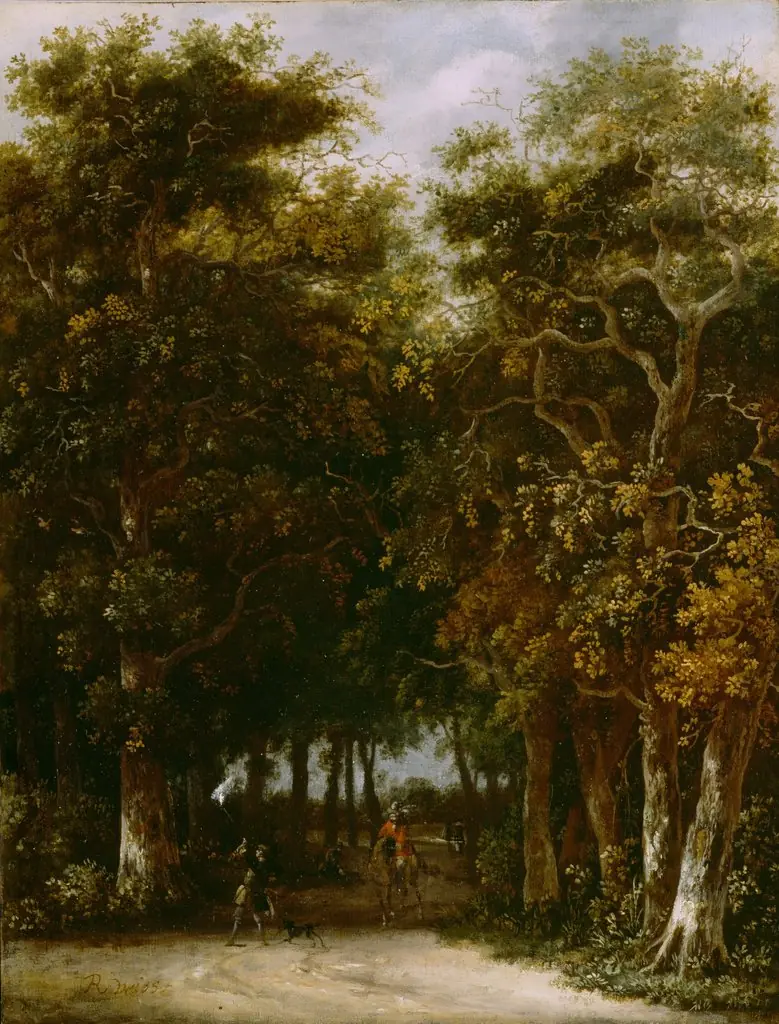
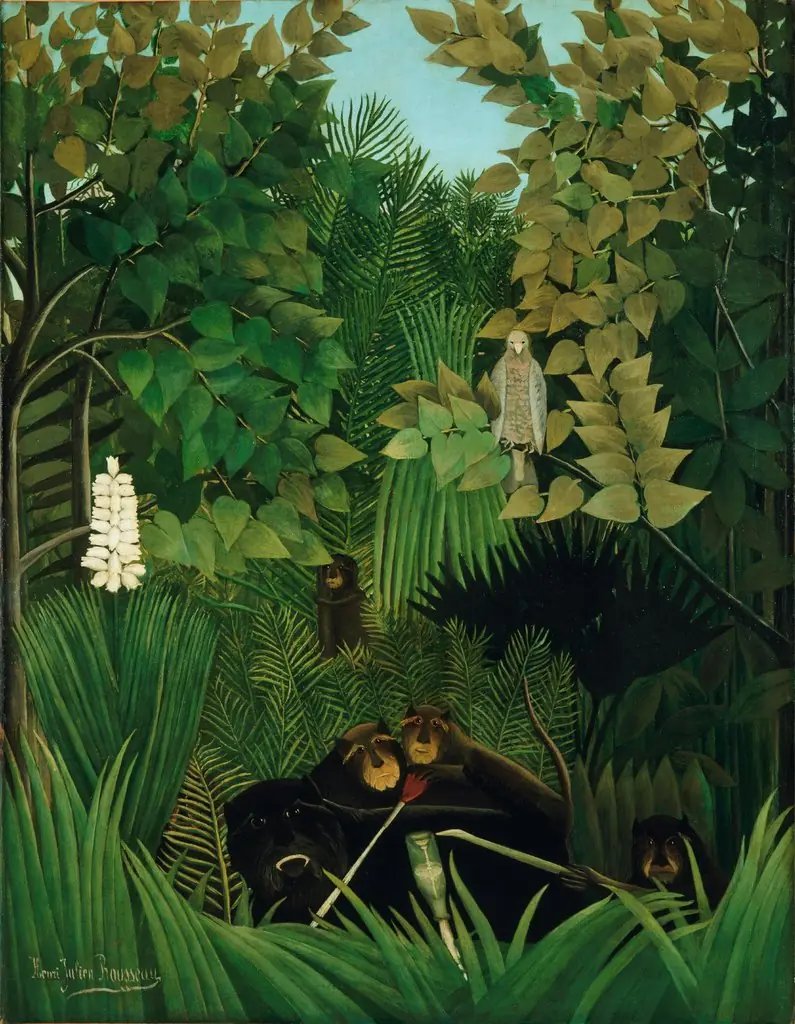
Rendezvous in the Forest depicts a romantic scene set within a dense woodland, characterized by the artist's distinctive naïve style. The composition features a man and a woman mounted on horses who are exchanging a kiss, a central narrative element that defines the work's subject matter. While the painting is classified broadly as a landscape dominated by trees, the specific interaction between the two riders transforms the forest setting into a stage for intimate human connection.
The title suggests a planned meeting, and the visual representation of the couple's embrace confirms this theme of rendezvous. The work stands as a literal illustration of lovers meeting in nature, prioritizing the emotional moment of their union over realistic botanical or spatial accuracy.
Technique & Style
The painting Rendezvous in the Forest (1889) is executed in oil on canvas, a medium recorded in the artist’s file and confirmed by the National Gallery of Art catalog. Its support is a stretched canvas, typical of Rousseau’s practice, and the work measures 92 × 73 cm. The composition belongs to the naïve art movement, showing a flattened spatial arrangement, simplified forms and a decorative, almost childlike handling of figures and foliage. The scene portrays a couple exchanging a kiss beneath a tree in a forest, rendered with bright, unmodulated color and a lack of academic perspective.
The painting has been part of the National Gallery of Art’s collection since 1972, where it is conserved under standard museum conditions.
History & Provenance
Henri Rousseau painted Rendezvous in the Forest in 1889 using oil on canvas; the work was initially given by the artist to his baker in Paris that year. It later passed to the dealer Bela Hein before being sold in June 1931 to Marie N. Harriman and W. Averell Harriman in New York. The painting remained in the Harriman collection until the W. Averell Harriman Foundation transferred it to the National Gallery of Art in 1972.
Ownership records also list Bela Hein, Marie Norton Harriman and W. Averell Harriman as successive owners. The painting is dated 1889 and is classified as a landscape in the naïve genre.
Rendezvous in the Forest is currently held in the collection of the National Gallery of Art in Washington, D.C. The work entered the museum's holdings in 1972 as a gift from the W. Averell Harriman Foundation. Prior to this acquisition, the painting passed through the hands of Parisian dealer Bela Hein before being sold in June 1931 to Marie N. Harriman and W. Averell Harriman of New York. The artwork's earlier provenance traces back to 1889, when the artist, Henri Rousseau, originally gifted the canvas to his baker in Paris.
While the piece is firmly established within the National Gallery of Art's permanent collection, the provided records do not list specific temporary exhibitions or loan histories for the work.
Overview
Rendezvous in the Forest (1889) is an oil on canvas painting by the French Post-Impressionist Henri Rousseau. The work depicts a nocturnal scene within a dense, stylized forest where tall, dark trees create a canopy of black lace against a deep blue sky. A solitary lantern stands centrally, emitting a warm glow that casts elongated shadows across the forest floor, illuminating the immediate surroundings while leaving the periphery in obscurity.
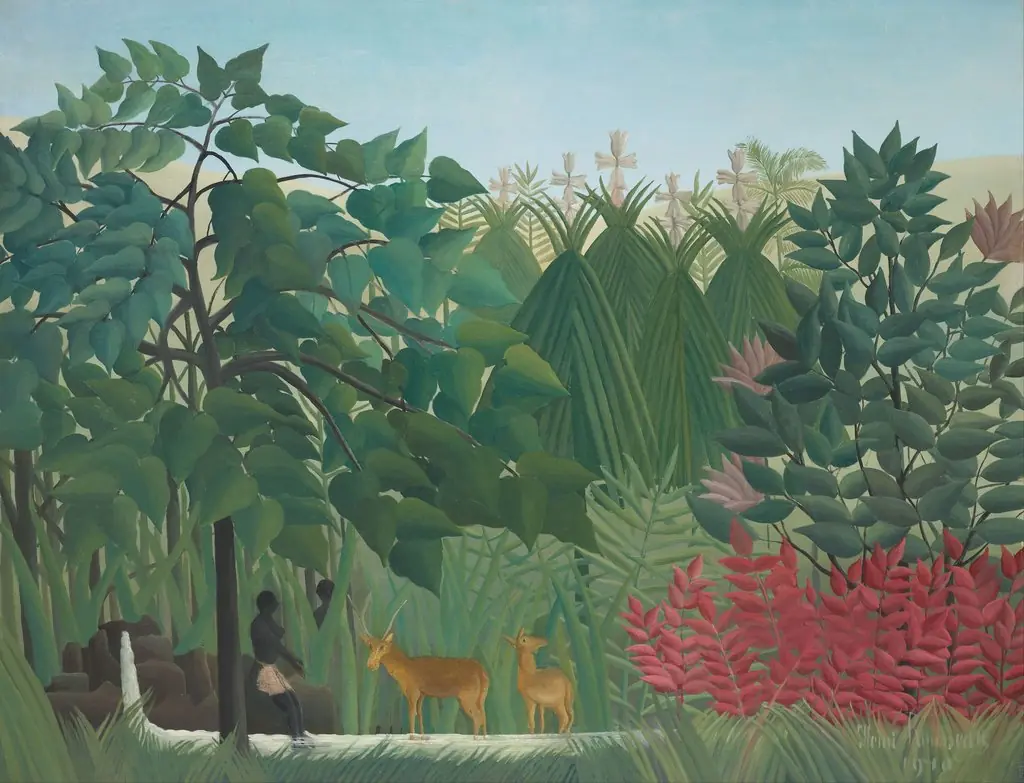
Executed during the early phase of Rousseau's mature career, this piece exemplifies his signature approach to the jungle motif, characterized by flattened perspectives, intricate linear details in the foliage, and a dreamlike, static atmosphere. Although Rousseau never traveled beyond France, he constructed these exotic landscapes through observation of botanical gardens, natural history museums, and illustrated books in Paris. The painting reflects his unique ability to blend folk-art simplicity with a sophisticated sense of mystery and rhythm.
It stands as a significant example of his contribution to the Naïve art movement, demonstrating his departure from academic realism toward a more imaginative and symbolic representation of nature.
Context
Although Henri Rousseau never traveled beyond France, his imagination frequently drew inspiration from exotic environments. "Rendezvous in the Forest" reflects this fascination, presenting an invented jungle-like setting. The artist's ability to imbue such imagined landscapes with a convincing sense of atmosphere underscores his unique contribution to late 19th-century painting.
Own this work as a print
Artist & collection

Artist
Henri Julien Félix Rousseau (French: ; 21 May 1844 – 2 September 1910) was a French post-Impressionist painter in the Naïve or Primitive manner.