Artwork
Evening Thou Bringest All
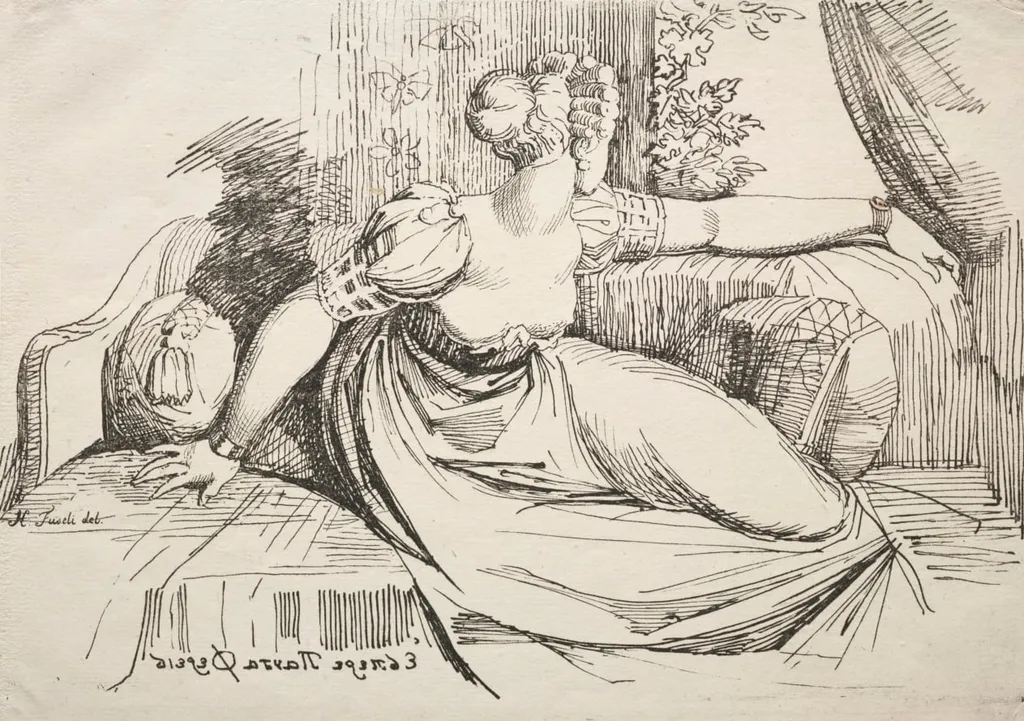
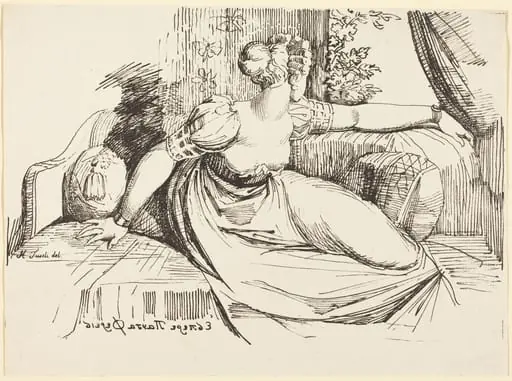
Evening Thou Bringest All is a print by the Romanticist artist Henry Fuseli. It dates from 1803 and is held in the collection of the Cleveland Museum of Art.
- Accession no.
- 1940.1113
- Credit line
- Mr. and Mrs. Lewis B. Williams Collection
About this work
Overview
Evening Thou Bringest All is a lithograph characterized by expressive, dynamic lines and a sense of frenzied movement, depicting a woman twisting in mid-air amidst a stormy background.
Subject & Meaning
The subject, a woman in turbulent motion, conveys intense energy. Her wild hair and billowing dress swirl around her, set against a dark, sketchily suggested stormy sky.
Technique & Style
Created using newly invented lithography, the artist drew on prepared limestone, which was then inked and printed, reversing the image. The backward Greek text at the lower left reveals the printmaking process.
History & Provenance
The work showcases Fuseli's early adoption of lithography, a novel medium at the time, highlighting his experimentation with innovative techniques.
Context
While the immediate, expressive marks suggest direct drawing, the reversed text and overall energy distinguish it from traditional sketches, aligning more with the expressive potential of lithography.
Legacy
The piece's dramatic, dreamlike quality, achieved through bold lines and energetic composition, may draw comparisons to impasto techniques, though it remains distinct in its lithographic execution.
Artist & collection
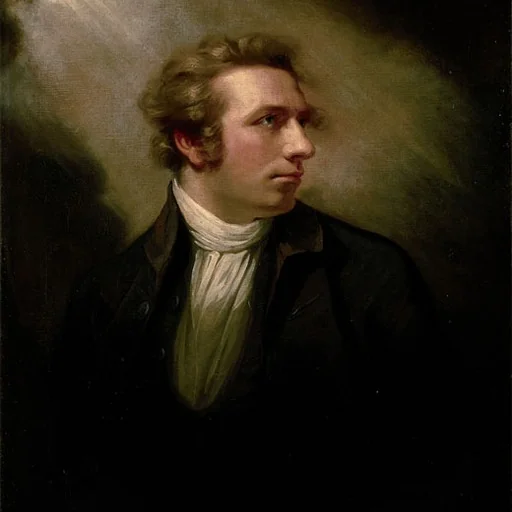
Artist
Henry Fuseli was a Swiss painter, draughtsman, and writer on art who spent much of his career in Britain.