Artwork
A Forest Cascade at Hiram, Maine
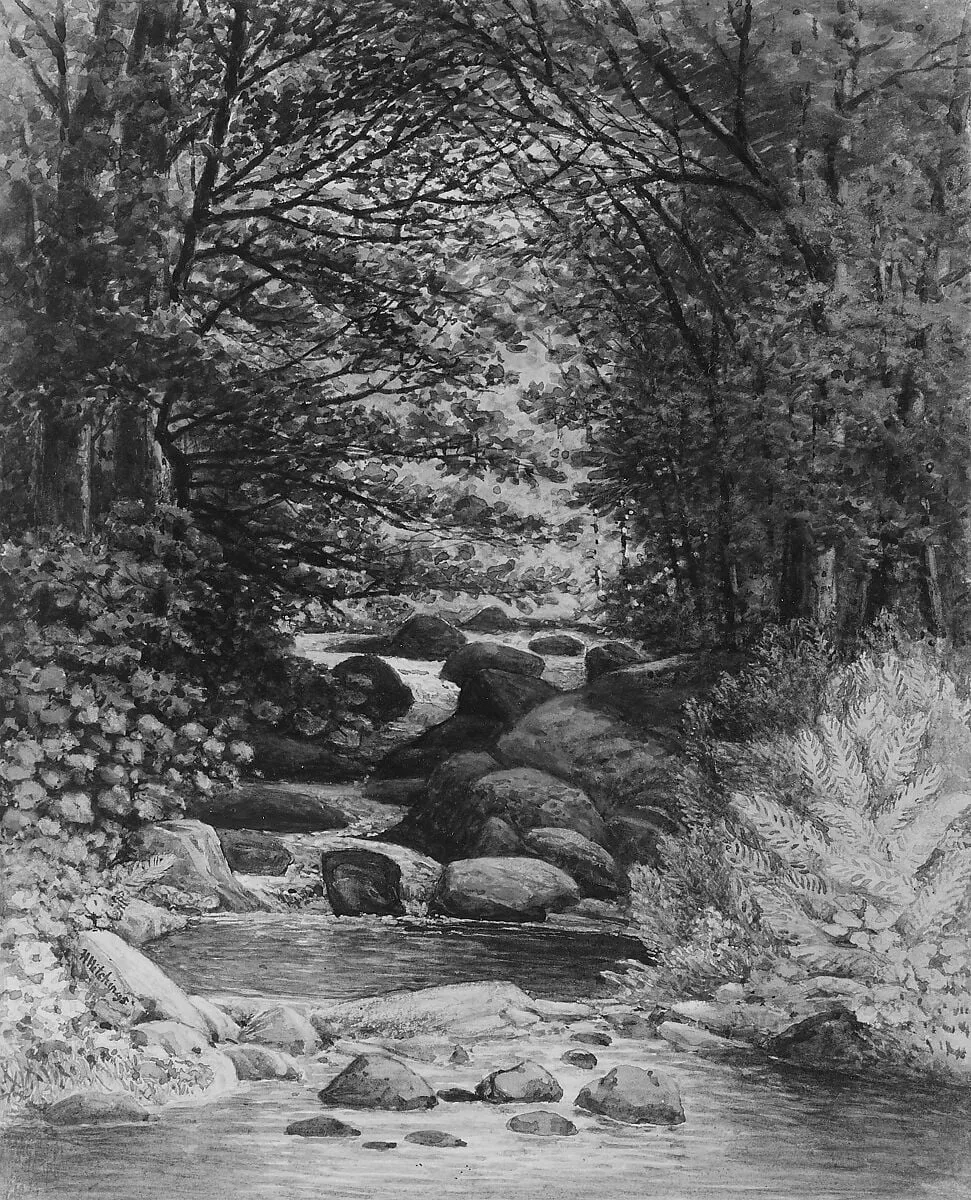
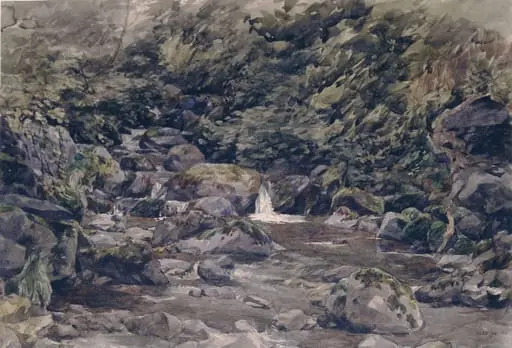
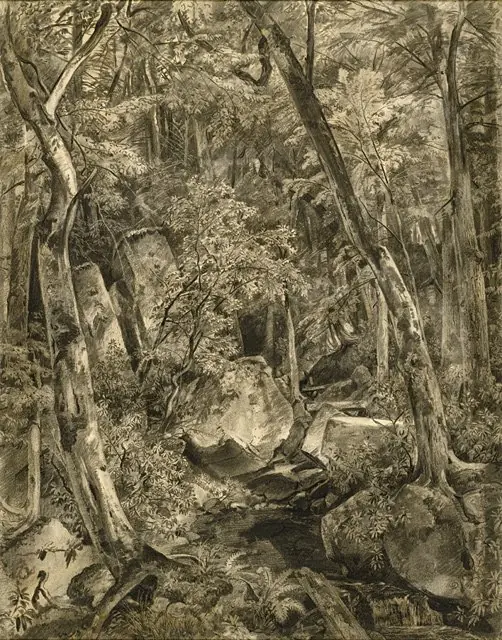
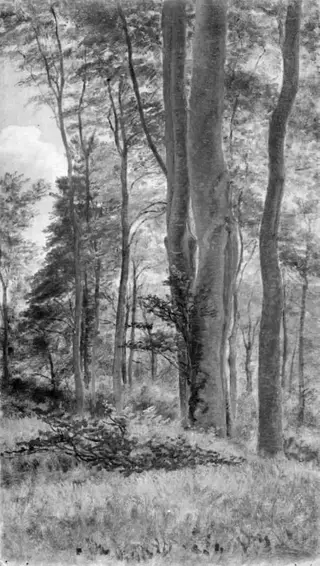
A Forest Cascade at Hiram, Maine is a watercolor work on paper by the American Impressionist artist Henry Hitchings. It dates from 1859 and is held in the collection of the Metropolitan Museum of Art.
About this work
He chose a corner of Maine instead, no grand mountains, just the everyday woods behind his house.
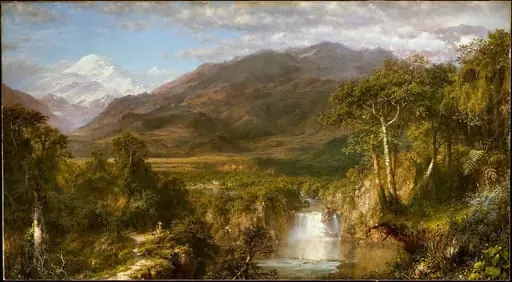
You see a quiet forest stream tumbling over mossy rocks, sunlight filtering through tall pines.
Hitchings painted this in 1859, when most artists were still sketching Europe. He chose a corner of Maine instead, no grand mountains, just the everyday woods behind his house. The watercolor lets light glow through the paper, making the leaves feel wet and alive.
If you like this, look up watercolor. It’s how he made the greens shimmer without heavy paint.
Technique & Style
Henry Hitchings created A Forest Cascade at Hiram, Maine in 1859 using a mixed-media approach on an off-white bristol board support. The work combines watercolor and gouache with graphite underdrawing to render its landscape subject. Measuring 31.9 cm in height and 25.4 cm in width, the piece is classified within the landscape genre and focuses on the depiction of trees.
The combination of opaque gouache with transparent watercolor allows for varied textural effects typical of mid-19th-century American landscape studies.
History & Provenance
A Forest Cascade at Hiram, Maine was created by Henry Hitchings in 1859, executed in watercolor, gouache, and graphite on off-white bristol board. The work is held in the collection of the Metropolitan Museum of Art, classified within the institution's American Wing. The sources do not provide information about a commissioning party, prior owners, or intermediate ownership transfers between the artist and the museum.
The watercolor and gouache on bristol board is held by The Metropolitan Museum of Art, New York, accessioned as 54.3.2.
It was first recorded in the Museum’s collection in 1954. The work has not been recorded as included in any subsequent public exhibitions in the Museum’s American Wing or elsewhere.
Context
Henry Hitchings’ A Forest Cascade at Hiram, Maine (1859) emerges within the mid-nineteenth-century American landscape tradition, where artists increasingly turned to intimate, localized scenes rather than grand panoramas. While Hitchings remains a lesser-studied figure compared to contemporaries like Jasper Cropsey or Sanford Gifford, this work aligns with the period’s shift toward meticulous naturalism, capturing specific botanical details and atmospheric effects. Scholarship on Hitchings is sparse, but the Metropolitan Museum of Art’s classification of the piece within its American Wing underscores its role in documenting regional landscape motifs of the era.
The watercolor’s technical precision, layered gouache and graphite on bristol board, reflects the medium’s growing sophistication in mid-century America. Though not a canonical work, it contributes to the broader context of artists exploring Maine’s wilderness, a subject later amplified by figures such as Frederic Edwin Church. Its modest scale and unidealized composition situate it among works that prioritized observational fidelity over dramatic idealization.
Overview
A Forest Cascade at Hiram, Maine, executed in 1859 by Henry Hitchings, is a watercolor, gouache, and graphite work on off-white Bristol board depicting a secluded woodland scene. The composition centers on a stream tumbling over moss-covered rocks, illuminated by sunlight filtering through a canopy of tall pines. Painted in Hiram, Maine, the work reflects Hitchings' commitment to local American landscapes during a period when many of his contemporaries focused on European subjects.
Rather than pursuing grandiose mountain vistas, the artist captures an intimate, everyday corner of the New England woods, likely situated near his residence. The medium allows for a delicate rendering of light and texture, emphasizing the quiet atmosphere of the forest floor and the movement of the water. This piece stands as a representative example of Hitchings' mid-career output, demonstrating his ability to find aesthetic value in the immediate natural surroundings of his home state rather than relying on exotic or imported imagery.
Subject & Meaning
The image presents a tranquil woodland waterway, where clear water rushes over rounded rocks while dappled sunlight filters through tall pines. The limited scale of the setting, no dramatic peaks or distant vistas, emphasizes the quiet, everyday beauty of the local forest, suggesting a personal connection to the artist’s immediate environment.
Artist & collection