Artwork
Cutting the Stone
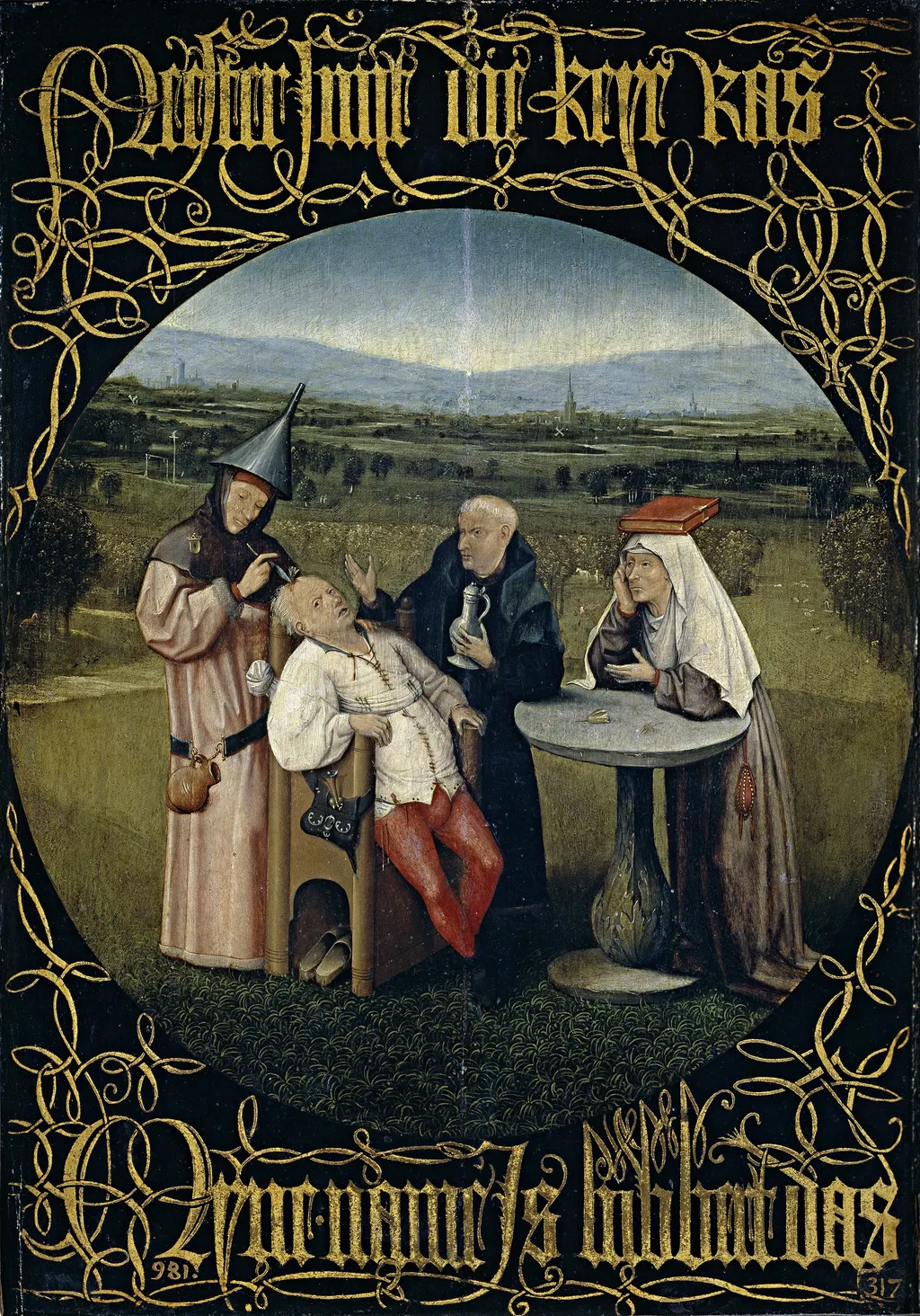
Cutting the Stone is an oil painting by the Northern Renaissance artist Hieronymus Bosch. It dates from 1503 and is held in the collection of the Museo del Prado.
About this work
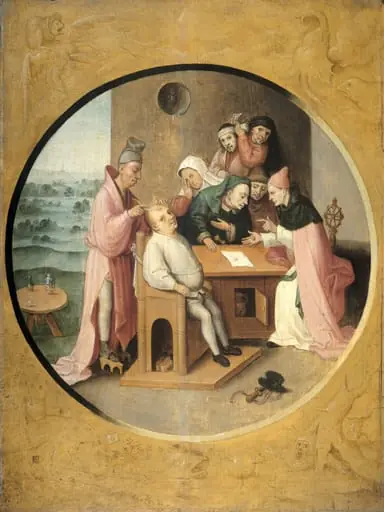
A funnel-hatted surgeon leans over a bound peasant in a field near two distant cities, performing trepanation to pull not a stone but a water-lily bulb from the man's skull. The patient names himself in Gothic script as Lubbert Das, a stock fool of Dutch literature. Hieronymus Bosch painted the circular panel on Baltic oak between 1501 and 1505; it now hangs at the Museo del Prado.
Subject & Meaning
The scene functions as a moral satire on gullibility and charlatanism, mocking both the credulous patient and the fraudulent doctor.
The painting depicts a surgeon wearing a funnel hat, a symbol of deception or false wisdom, extracting the 'stone of madness' from the head of a patient named Lubbert Das, a foolish character in Dutch literature. The extracted 'stone' appears as a flower bulb, playing on the Dutch word kei (stone or bulb). A monk and a woman with a book balanced on her head (a satire of superstitious practices or an emblem of folly) look on.
The gallows in the background allude to the world's wickedness. The scene functions as a moral satire on gullibility and charlatanism, mocking both the credulous patient and the fraudulent doctor.
Technique & Style
The painting is executed in oil on an oak panel, measuring approximately 48 x 35 cm, and employs a circular (tondo) format. The paint handling reflects Bosch's early period: figures appear stiff and awkward, with angular drapery folds and a lack of coherent spatial integration between the figures and the background landscape. A prominent formal feature is the decorative Gothic inscription encircling the central scene, rendered in gold with elaborate ornamental flourishes known as "cadellen."
These stylistic qualities have led some scholars to regard it as an early work, though dendrochronological analysis suggests a date after 1494.
History & Provenance
Cutting the Stone was created after 1494, as dendrochronological analysis indicates it could not have been painted earlier. Its earliest recorded owner was Philip of Burgundy, Bishop of Utrecht, listed in a 1524 inventory at his castle Duurstede. The painting may have subsequently belonged to Felipe de Guevara and then passed to King Philip II of Spain around 1570, though this identification remains uncertain.
The work now in the Museo del Prado was held by the Duke of Arco, inventoried in 1794 at his country residence, after which it entered the Spanish royal collection. Attribution to Bosch is debated; the Bosch Research and Conservation Project has questioned its autograph status.
Context
The critical reception of Cutting the Stone has been shaped by persistent attribution debates. First ascribed to Bosch by Henri Hymans in the early 20th century, the attribution was soon met with skepticism. More recently, the Bosch Research and Conservation Project (BRCP) argued it is not autograph, prompting the Prado to refuse its loan for a 2016 exhibition.
Dendrochronological analysis dates the panel after 1494, challenging earlier views of it as a youthful work from circa 1480; Bernard Vermet regards the later date as consistent with the advanced landscape style. Scholarship predominantly interprets the scene as a moral allegory on folly and charlatanism, linking it to contemporary satires such as Sebastian Brant's Ship of Fools (1494). The work's place in art history is contested: some view it as an early masterpiece of Bosch's moralizing oeuvre, while others see a workshop product.
As an early Netherlandish allegorical painting, it contributes to the tradition of proverbial and moralizing genre scenes that flourished in the region.
Legacy
The attribution and dating of Cutting the Stone have long been subjects of scholarly debate, shaping its legacy. Originally cataloged as anonymous in the Prado in 1904, it was first attributed to Bosch by Henri Hymans. Later, the Bosch Research and Conservation Project (BRCP), founded in 2010, argued the work was not by the master.
In response, the Prado refused to lend it to the 2016 Bosch exhibition in 's-Hertogenbosch, intensifying controversy over its authenticity and place in Bosch's oeuvre.
Overview
Hieronymus Bosch's Cutting the Stone, also known as The Extraction of the Stone of Madness, is an oil painting on a circular Baltic oak panel, created between 1501 and 1505. Now housed in the Museo del Prado, Madrid, this work presents a satirical depiction of a pseudo-medical procedure. It critiques human credulity and the absurdity of certain folk remedies through a meticulously rendered, allegorical scene of a quack surgeon.
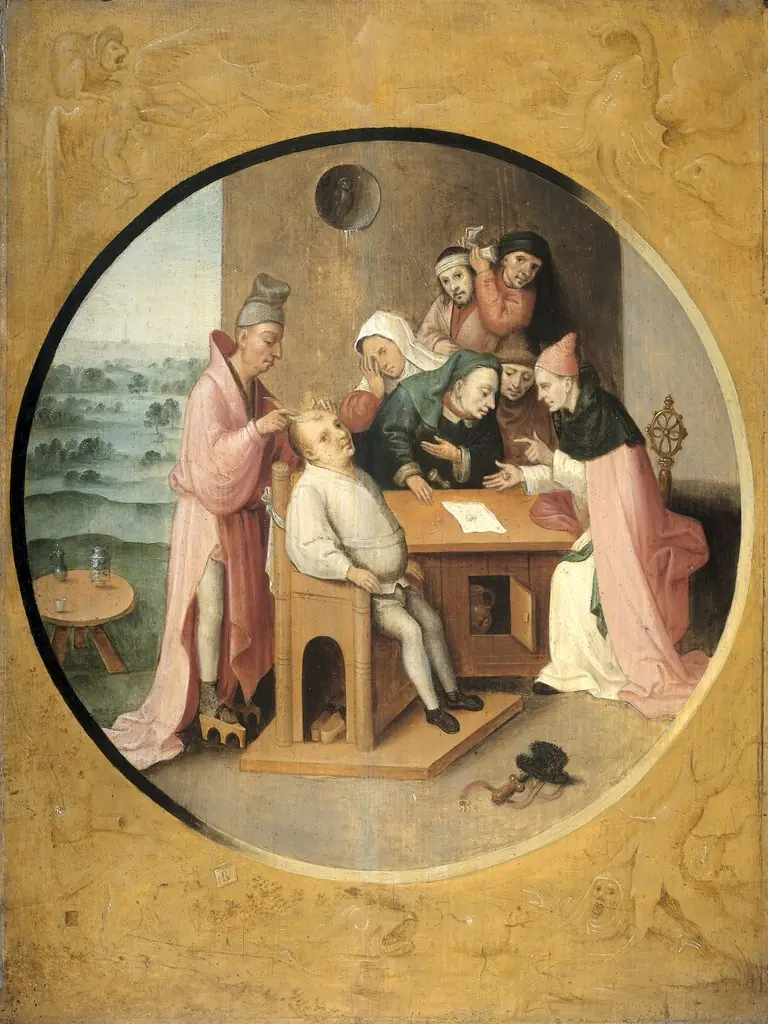
Own this work as a print
Artist & collection
Artist
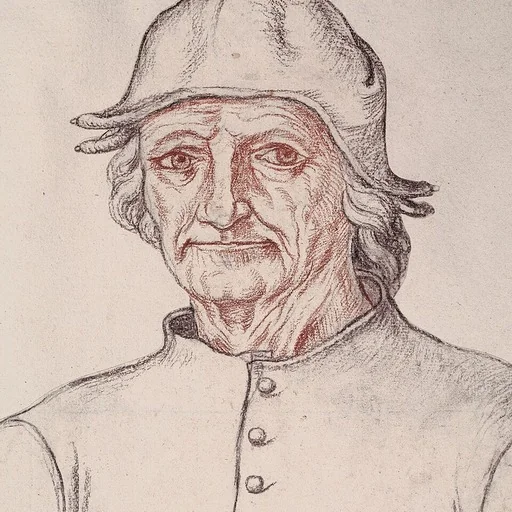
Hieronymus Bosch (; Dutch:; born Jheronimus van Aken; c. 1450 – 9 August 1516) was a Dutch painter from Brabant. He is one of the most notable representatives of the Early Netherlandish painting school. His work,…

 'Removing the Rocks in the Head'
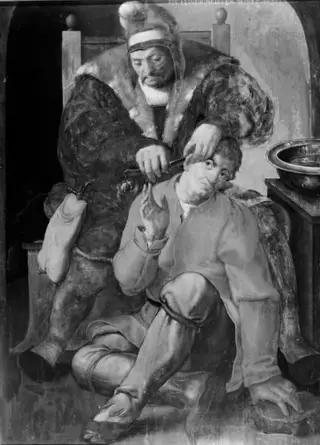 A Surgeon Operating on a Peasant
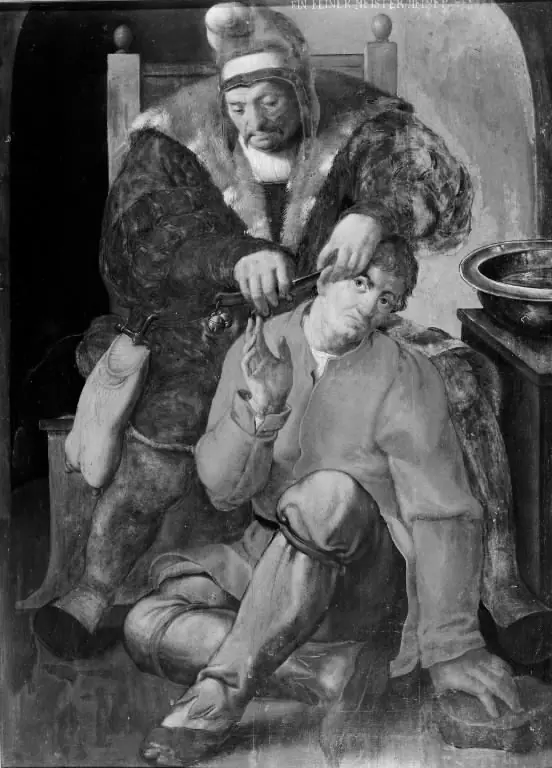 A Surgeon Operating on a Peasant
 Hercules with Omphale
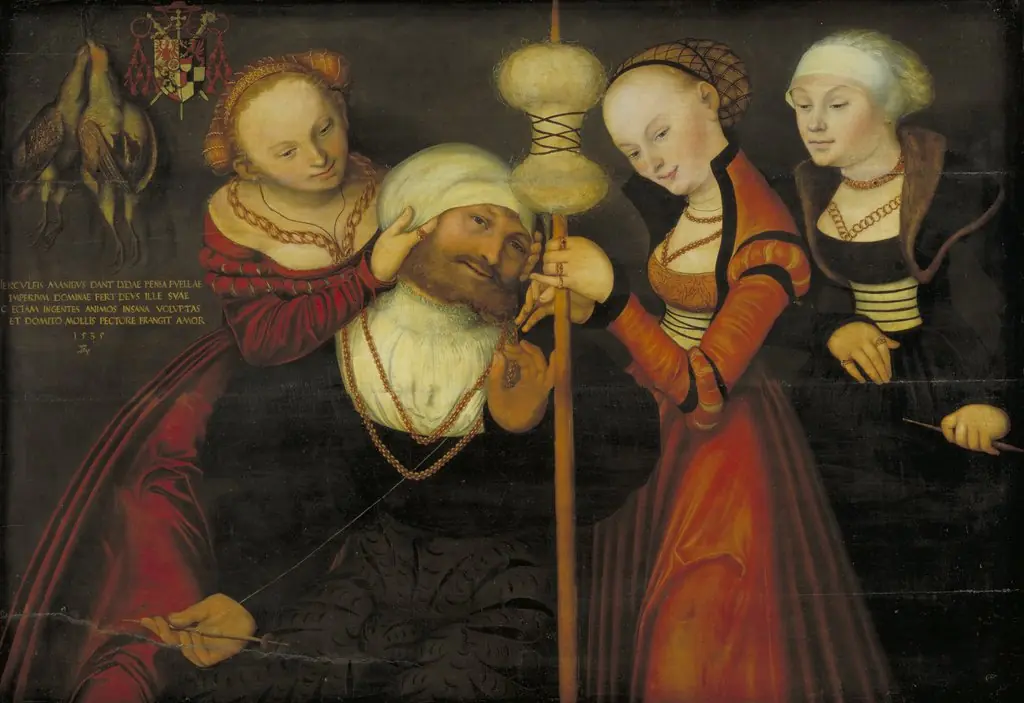 Hercules with Omphale
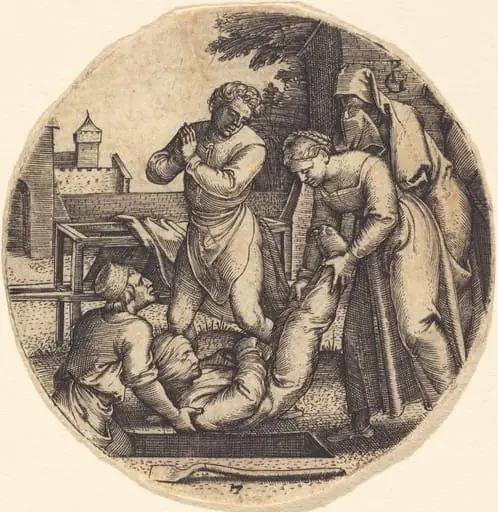 To Bury the Dead
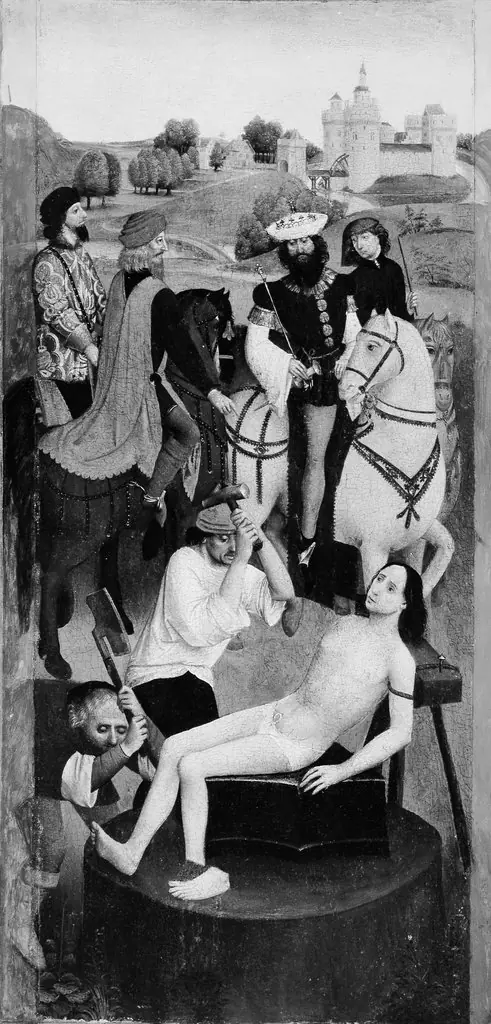 The Martyrdom of Saint Adrian; The Martyrdom of Two Saints, Possibly Ache and Acheul
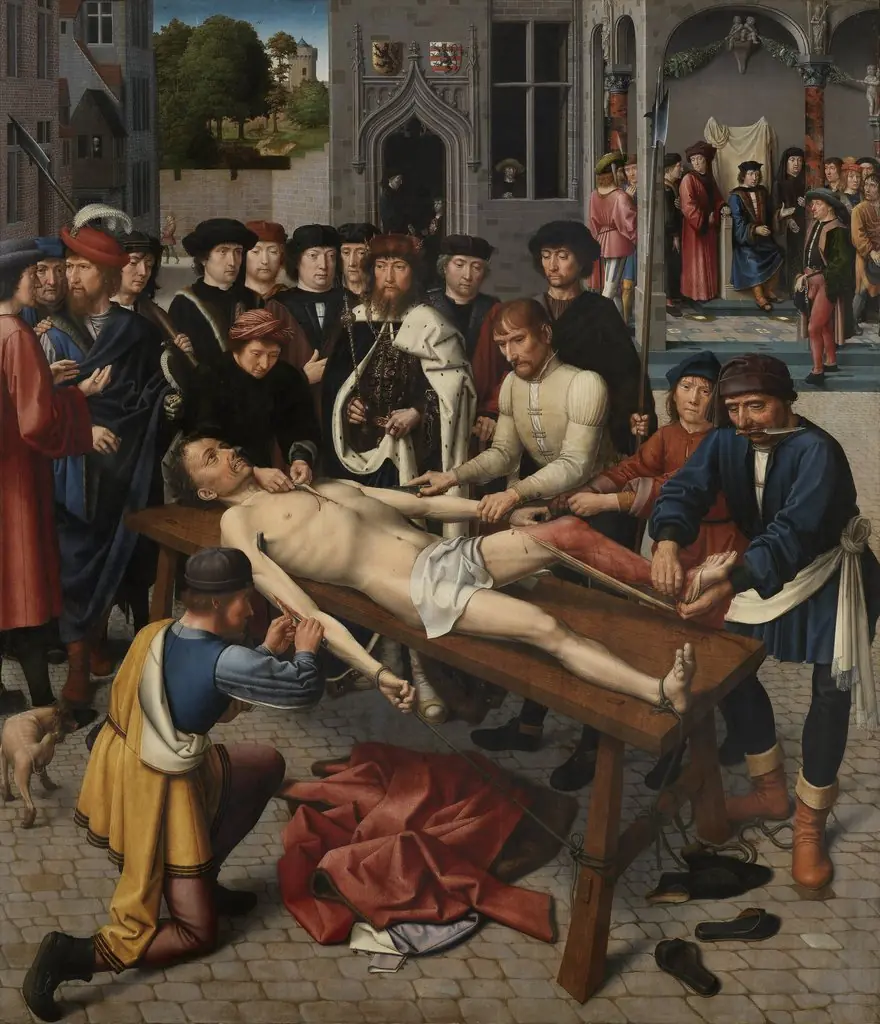 Judgement of Cambyses: The skinning of Sisamnes
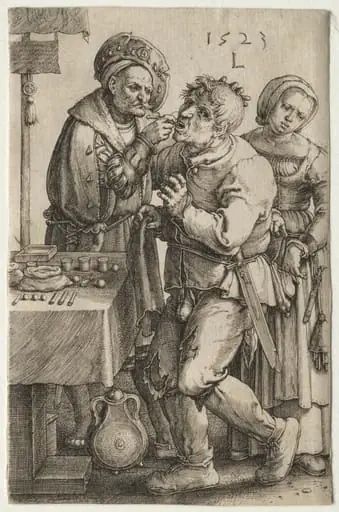 The Dentist
 Christ crowned with thorns
 The Dentist
- Cutting the Stone