Artwork
Plate 1: Two Ostriches and a Starling
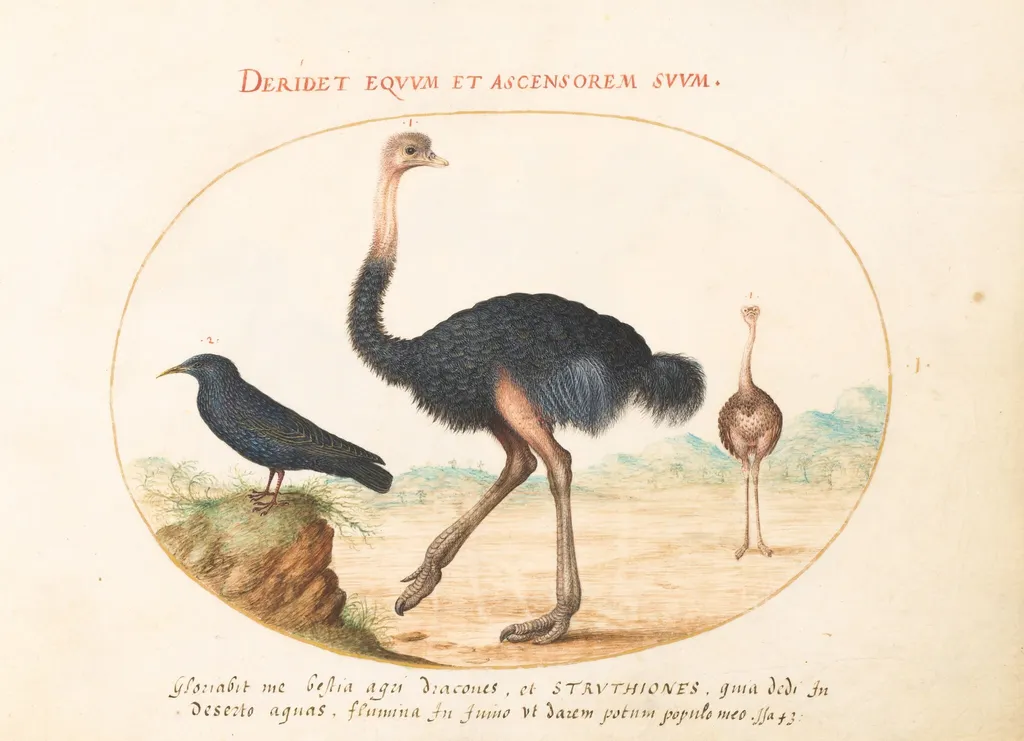
Plate 1: Two Ostriches and a Starling is a gouache drawing by the Renaissance artist Joris Hoefnagel. It dates from 1594 and is held in the collection of the National Gallery of Art.
- Inscription
- Inscribed:Upper center in red ink: DERIDET EQVVM ET ASCENSOREM SVVM. (“She scorns the horse and his rider.” Job 39:18) (Latin Vulgate Bible); center right in gold: .I.; birds in image numbered .1. and .2., in red ink; lower center in brown ink: Gloriabit me bestia agri dracones , et STRVTHIONES, quia dedi in / deserto aquas , flumina In Invio vt darem potum populo meo. Isa 43: (“The beast of the field will honor me, the dragons and the ostriches: because I give waters in the wilderness and rivers in the desert, to give drink to my people, my chosen.” Isaiah 43:20) (Latin Vulgate Bible) Facing page: Upper center in black (?) ink: Nunc sturnos inopes, fringillarumq[ue] qu[a]erlas / Audit, et arguto passere vernat ager.; lower center in brown ink: Erit Terra Impiorum Cubile. draconum / et pascua STRVTIONVM. Isa: 34. (“It will be a habitation of dragons and the pasture of ostriches.” Isaiah 34:13) (Latin Vulgate Bible)
About this work
Overview
Created around 1594 by Joris Hoefnagel, this work is a watercolor and gold paint drawing on parchment, part of a series documenting natural forms.
Created around 1594 by Joris Hoefnagel, this work is a watercolor and gold paint drawing on parchment, part of a series documenting natural forms. It belongs to a tradition of meticulous manuscript illustration that gradually evolved into standalone natural history studies. The use of delicate pigments and metallic accents reflects the transition from devotional illumination to secular observation of the natural world in late 16th-century northern Europe.
Subject & Meaning
The composition features two ostriches and a starling arranged in a sparse, sandy landscape. The birds are rendered with anatomical precision, suggesting scientific intent rather than symbolic allegory. The starling, smaller and darker, contrasts in scale and posture with the larger birds, emphasizing differences in species and behavior.
The Latin inscription above anchors the image in a scholarly tradition of classification, aligning the work with early modern natural history.
Technique & Style
Hoefnagel applied watercolor in thin, layered glazes to achieve subtle tonal transitions in the birds' plumage, while gold paint outlines and highlights add luminosity without overwhelming the delicate parchment surface. The background is minimized to focus attention on form, with minimal vegetation and a single rock suggesting environment without narrative. The circular border frames the scene like a specimen in a collector’s album, reinforcing its role as an object of study.
History & Provenance
This plate was likely produced as part of a larger manuscript or album commissioned for a learned patron, possibly connected to the Habsburg court, where Hoefnagel worked. Its survival as a single sheet suggests it was later removed from its original context, perhaps during the dispersal of collections in the 17th or 18th century. The work’s preservation reflects its value as both artistic and scientific artifact.
Context
In the late 1500s, northern European artists increasingly turned to direct observation of flora and fauna, moving away from stylized medieval conventions. Hoefnagel’s work contributed to this shift, bridging the illuminated manuscript tradition with emerging naturalist practices. His detailed depictions of animals, often drawn from live specimens or preserved skins, supported the growing interest in empirical classification during the Scientific Revolution.
Legacy
Hoefnagel’s precision and integration of decorative elements influenced later natural history illustrators and still-life painters in the Low Countries. His approach, combining scientific accuracy with aesthetic refinement, helped legitimize the depiction of animals as worthy subjects for artistic attention outside religious or allegorical frameworks. This plate exemplifies the quiet transition from manuscript to museum culture.
Own this work as a print
Artist & collection

Artist
Joris Hoefnagel or Georg Hoefnagel (1542 – 24 July 1601) was a Flemish painter, printmaker, miniaturist, draftsman and merchant.

 Forum Vulcani: The Hot Springs at Pozzuoli
 Plate 76: Insects with a Pink and Cream Columbine
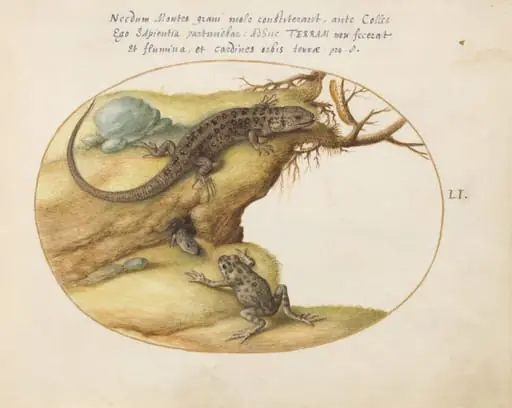 Plate 51: Two Sand Lizards, a Common Parsley Frog(?), and a Caterpillar
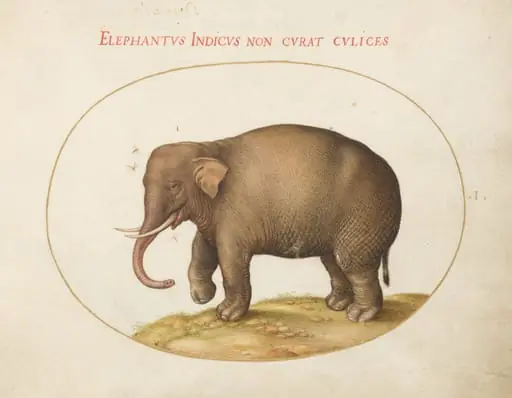 Plate 1: Elephant with Insects
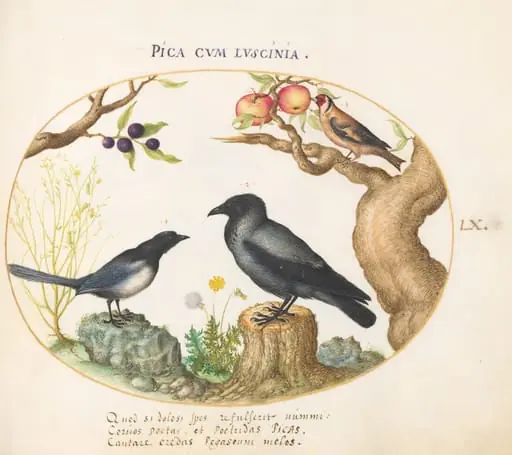 Plate 60: Magpie, Crow, and Goldfinch
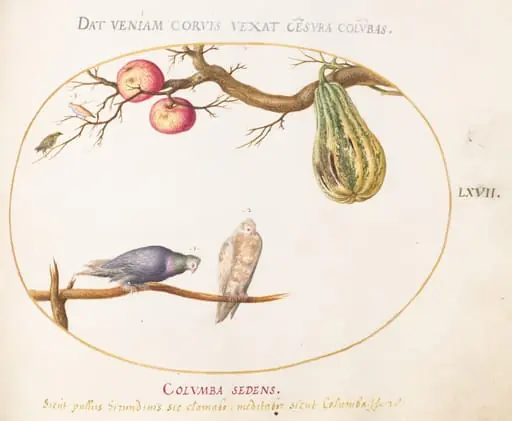 Plate 67: Two Doves beneath a Gourd and Apples
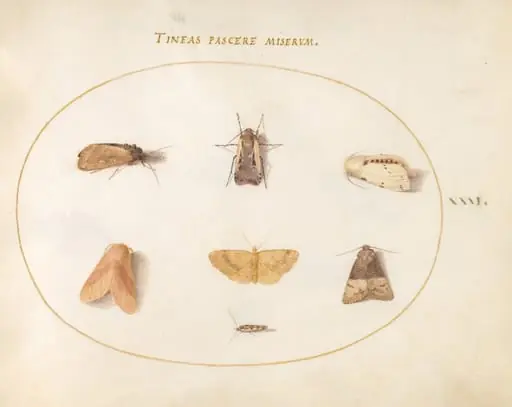 Plate 31: Seven Moths
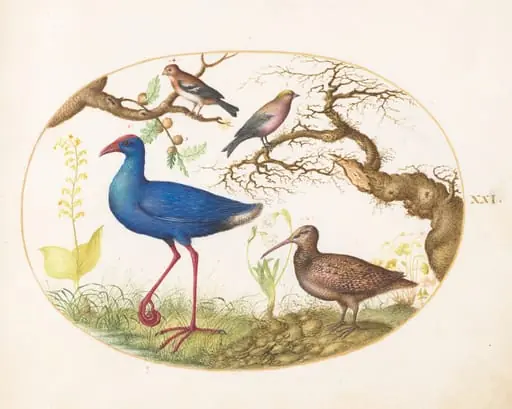 Plate 21: Swamp Hen and Woodcock with a Streaked Rosefinch, a Finch, and Oak Galls
- Plate 20: A Plover with Four Other Birds
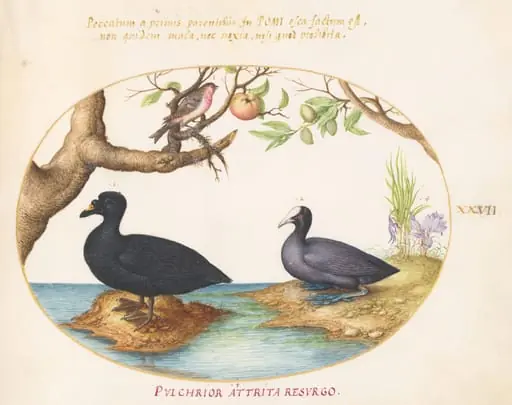 Plate 27: A Common Scoter, a Eurasian Coot, and a Rosefinch(?)
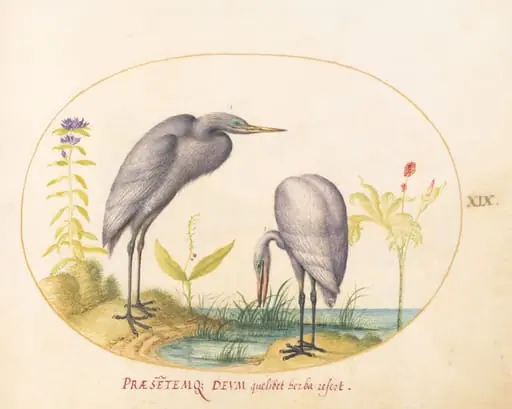 Plate 19: Two Great Egrets with Green Breeding Masks
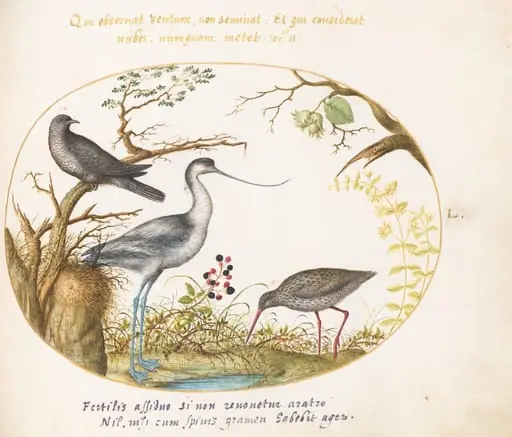 Plate 50: An Avocet with Two Other Birds
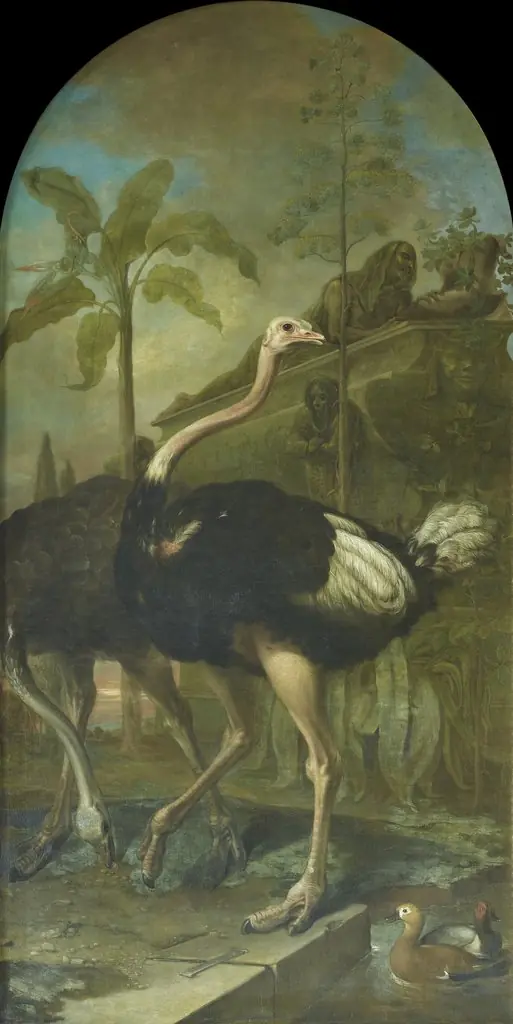 A Pair of Ostriches, a Sarcophagus in the Background
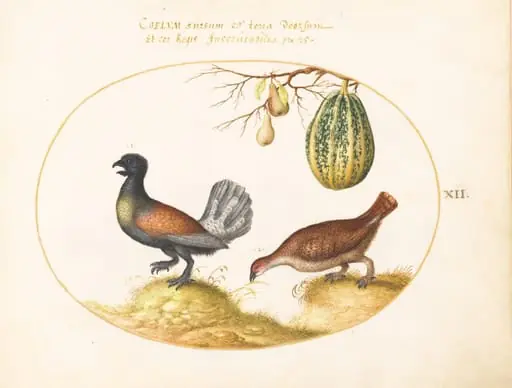 Plate 12: Pair of Wood Grouse with a Melon and Pears
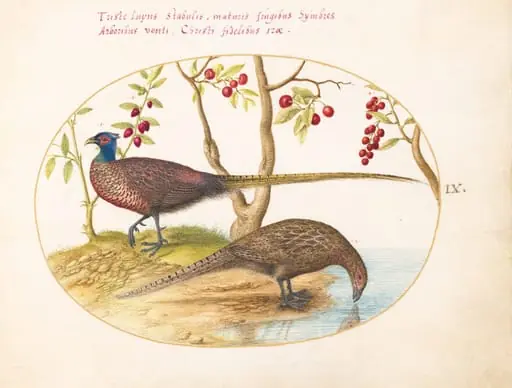 Plate 9: Two Pheasants with Fruiting Plants
 Plate 2: Two Eagles
 Plate 24: Two Swans, a Kingfisher, and a Bullfinch