Artwork
Plate 4: An Egyptian Vulture, a Northern Goshawk(?), and an "Aquila Heteropode" (Short Toed Eagle?)
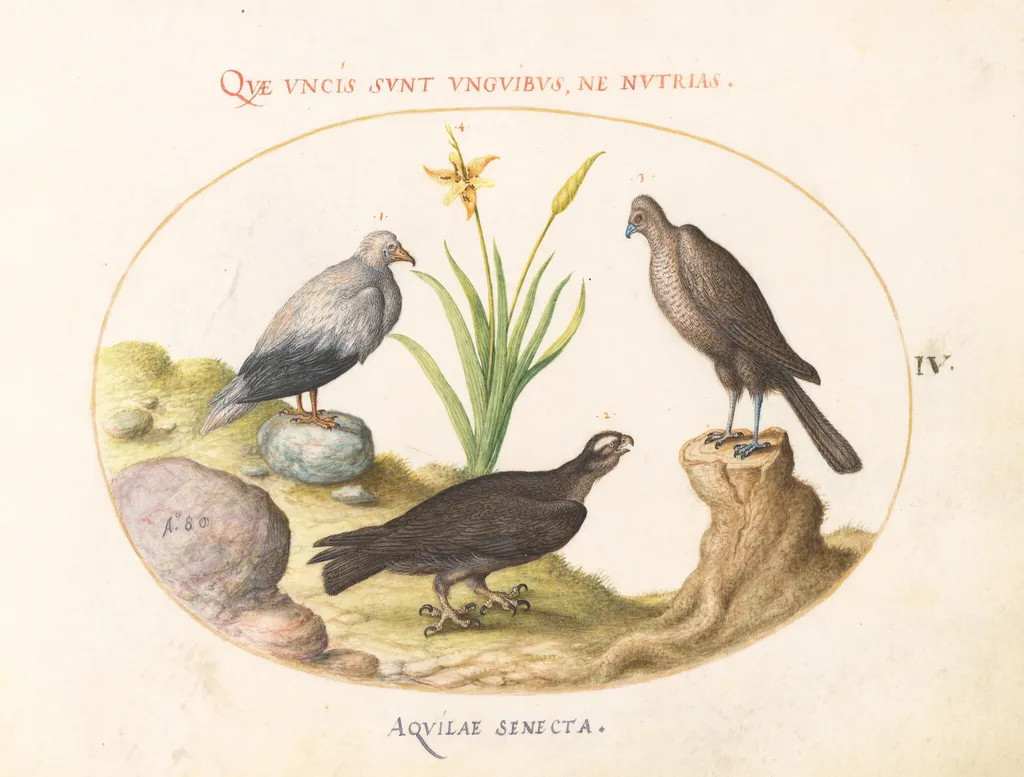
Plate 4: An Egyptian Vulture, a Northern Goshawk(?), and an "Aquila Heteropode" (Short Toed Eagle?) is a gouache drawing by the Renaissance artist Joris Hoefnagel. It dates from 1580 and is held in the collection of the National Gallery of Art.
- Inscription
- Inscribed:Upper center in red ink: QVAE VNCIS SVNT VNGVIBVS, NE NVTRIAS.; center right in black ink: IV.; birds in image numbered .1., .2. and .3., in red ink; plant in image numbered .4., in red ink; lower/center left on rock, in black ink: Ao.80; lower center in violet ink: AQVILAE SENECTA. Facing page: Upper center in (gold?): Numquid ad praeceptum tuu[m] elevabitur AQVILA. / Et In arduis ponet nidum suum? Job.39. (“Does the eagle mount up at thy command, and make her nest on high?” Job 39:27-30) (Latin Vulgate Bible); lower center in black ink: Qui replet In bonis desiderium tuum: Renovabitur / Vt AQVILAE iuventus tua Ps: 102. (“Who satisfies your mouth with good things; so that your youth is renewed like the eagle’s.” Psalms 102:5) (Latin Vulgate Bible)
About this work
The use of watercolor and gold paint on parchment is notable, as it shows the artist's attention to detail and choice of materials.
This painting is titled Plate 4: An Egyptian Vulture, a Northern Goshawk(?), and an "Aquila Heteropode" (Short Toed Eagle?). It was created by Joris Hoefnagel in 1580. The use of watercolor and gold paint on parchment is notable, as it shows the artist's attention to detail and choice of materials. Check out the Renaissance movement to learn more about the style and period that influenced this work.
Overview
Created in 1580 by Joris Hoefnagel, this illuminated plate features three birds of prey rendered in watercolor and gold on parchment. As one of the final practitioners of manuscript illumination, Hoefnagel blended artistic refinement with observational precision. The work belongs to a broader tradition of natural history documentation, where visual accuracy was pursued alongside decorative elegance, reflecting the transitional moment between medieval codex culture and early modern scientific illustration.
Subject & Meaning
The plate depicts an Egyptian vulture, a northern goshawk (with tentative identification), and a bird labeled 'Aquila Heteropode,' likely a short-toed eagle. These species were chosen not for symbolic narrative but for their physical distinctiveness. The inclusion of uncertain classifications signals an emerging interest in taxonomic clarity, even as naming conventions remained fluid. The birds are presented without context, emphasizing form and detail over ecological or mythological association.
Technique & Style
Hoefnagel applied translucent watercolors with meticulous brushwork, layering hues to capture feather texture and plumage variation. Gold paint highlights select contours and eyes, enhancing luminosity without overwhelming naturalism. The use of parchment as a support reflects traditional manuscript practices, while the precision of rendering aligns with emerging Renaissance ideals of empirical observation. Each bird is isolated against a blank ground, focusing attention on anatomical accuracy.
History & Provenance
This plate was likely part of a larger, now-dispersed collection of avian studies commissioned during Hoefnagel’s travels in Central Europe. It may have originated as a standalone sheet or belonged to a natural history album intended for scholarly or aristocratic audiences. Its survival in relatively intact condition is rare, as many such works were disbound or lost during later centuries of collection reorganization.
Context
In the late 16th century, European naturalists increasingly sought to classify and depict the natural world with greater fidelity. Hoefnagel’s work emerged alongside early encyclopedic projects like those of Conrad Gesner, bridging artistic craftsmanship and emerging biological inquiry. His illustrations, though still decorative, contributed to a shift away from allegorical representation toward direct observation, influencing later natural history illustrators across northern Europe.
Legacy
Hoefnagel’s detailed avian studies helped establish a visual language for ornithological documentation that preceded modern field guides. His integration of artistic technique with scientific intent influenced generations of naturalists and illustrators, particularly in the Low Countries and Germany. While not widely known today, his work remains a critical link between medieval illumination and the rise of empirical biology in the early modern period.
Own this work as a print
Artist & collection

Artist
Joris Hoefnagel or Georg Hoefnagel (1542 – 24 July 1601) was a Flemish painter, printmaker, miniaturist, draftsman and merchant.

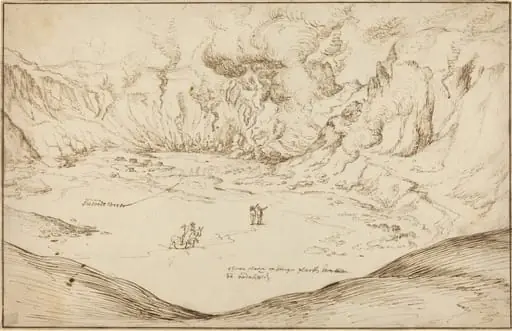 Forum Vulcani: The Hot Springs at Pozzuoli
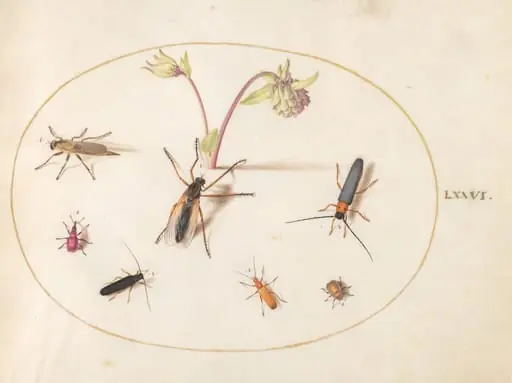 Plate 76: Insects with a Pink and Cream Columbine
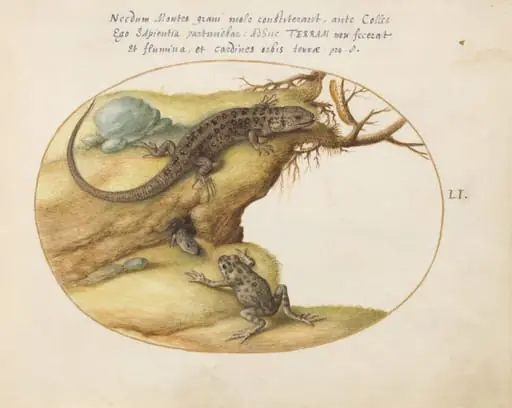 Plate 51: Two Sand Lizards, a Common Parsley Frog(?), and a Caterpillar
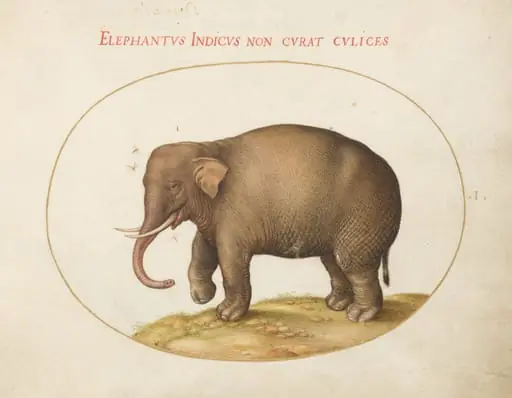 Plate 1: Elephant with Insects
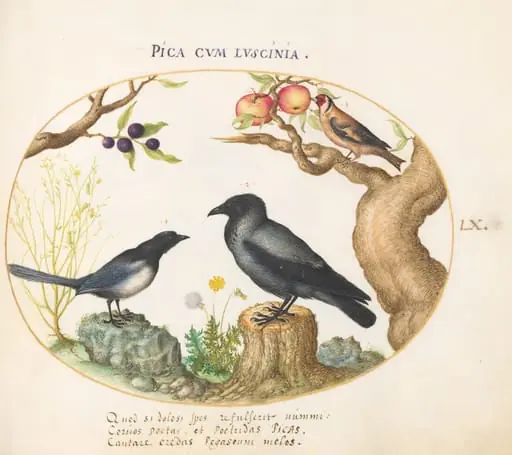 Plate 60: Magpie, Crow, and Goldfinch
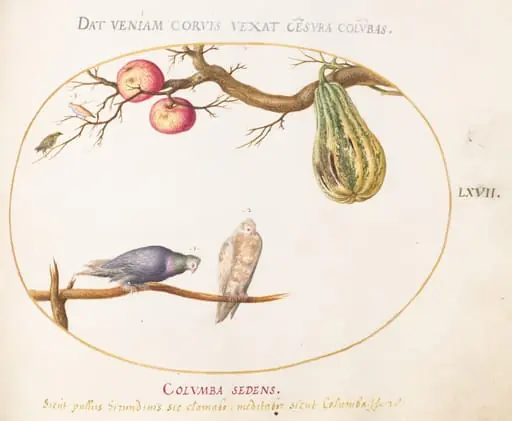 Plate 67: Two Doves beneath a Gourd and Apples
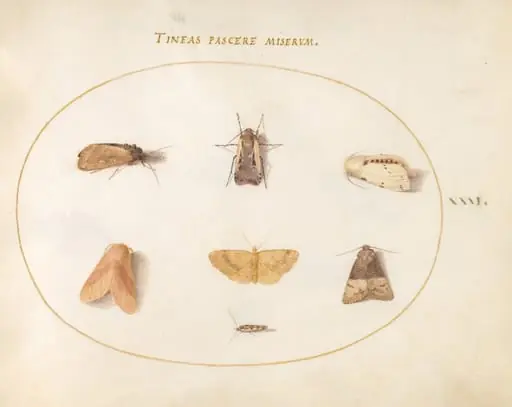 Plate 31: Seven Moths
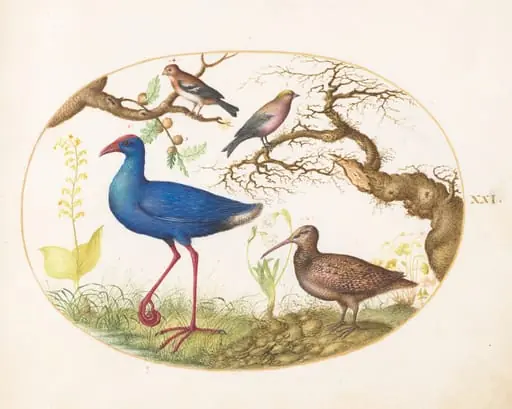 Plate 21: Swamp Hen and Woodcock with a Streaked Rosefinch, a Finch, and Oak Galls
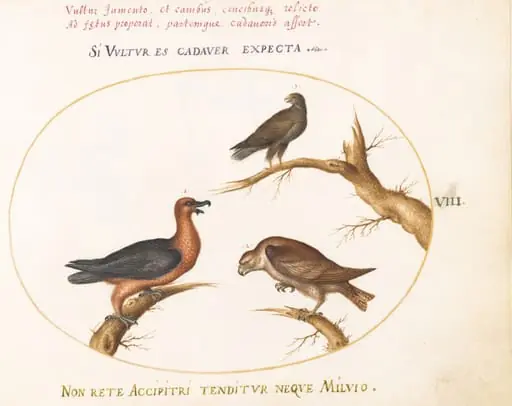
- Plate 8: Bearded Vulture with Two Birds of Prey
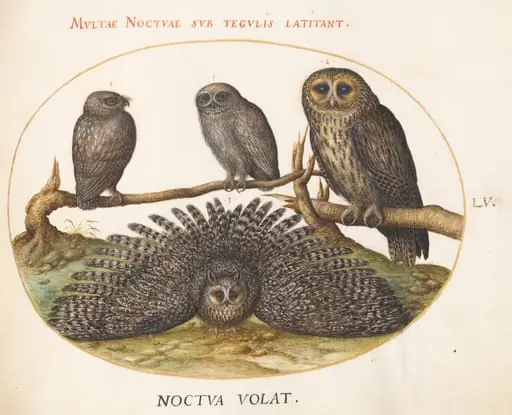 Plate 55: A Tawny Owl, an Eagle Owl, and Two other Owls
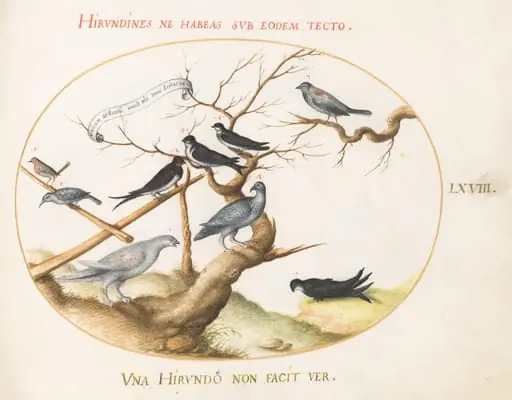 Plate 68: A Ptarmigan, Swallows, and Other Birds
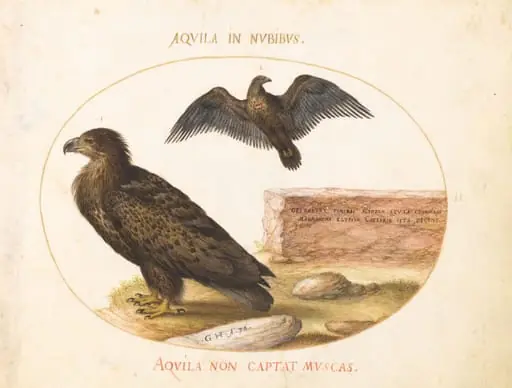 Plate 2: Two Eagles
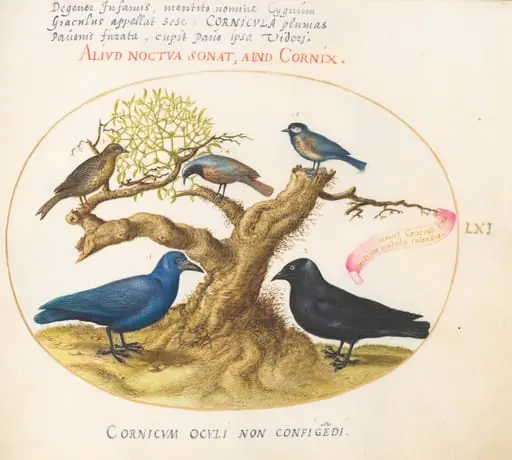 Plate 61: Blue Crow(?), Jackdaw, Chickadee or Tit, and Other Birds
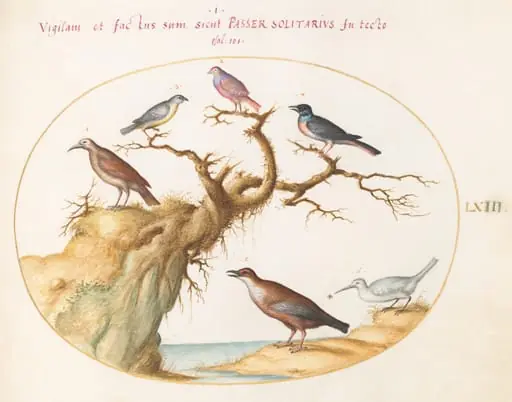 Plate 63: Six Small Birds, Including a Bluethroat and a Cuckoo(?)
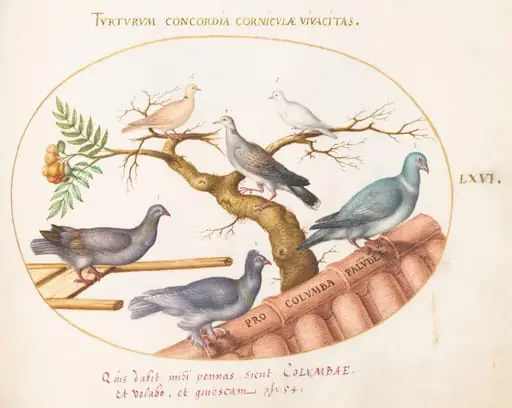 Plate 66: Doves and Pigeons
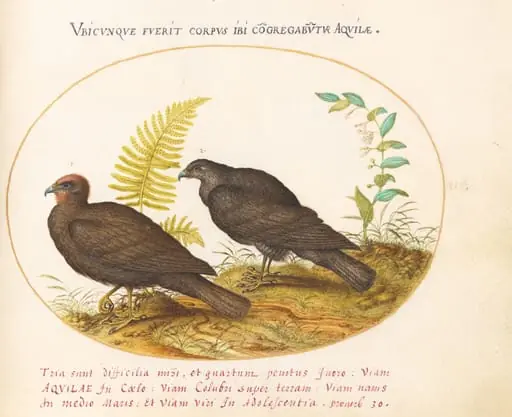 Plate 3: Two Hawks
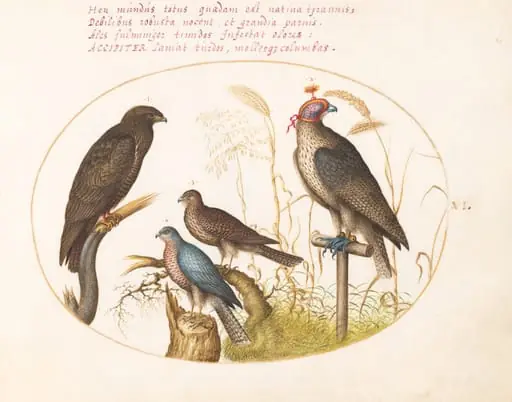 Plate 6: Four Birds of Prey, Including a Sparrowhawk(?)
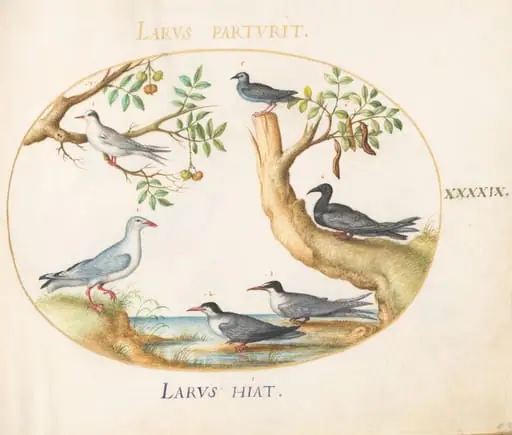 Plate 49: Gulls with a Carob Tree and a Pistachio Tree(?)
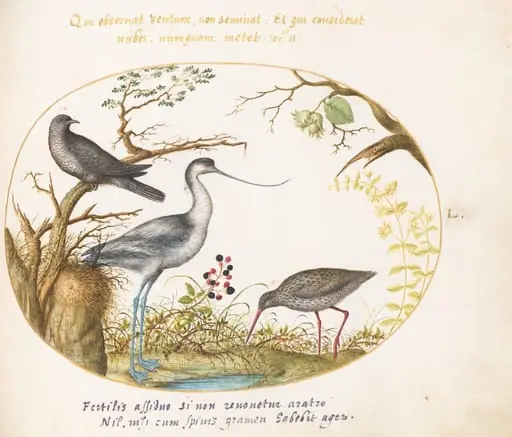 Plate 50: An Avocet with Two Other Birds
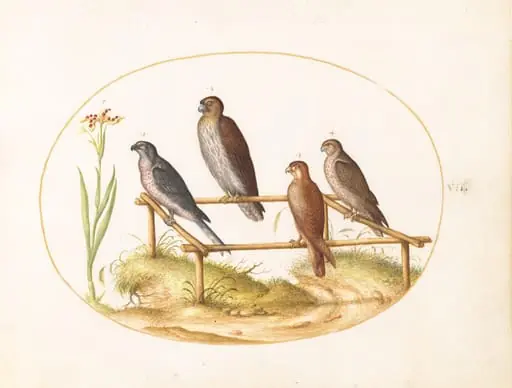 Plate 7: Four Birds of Prey on a Wooden Frame