Artwork
Plate 59: Curlew and Crow with Horse Skull
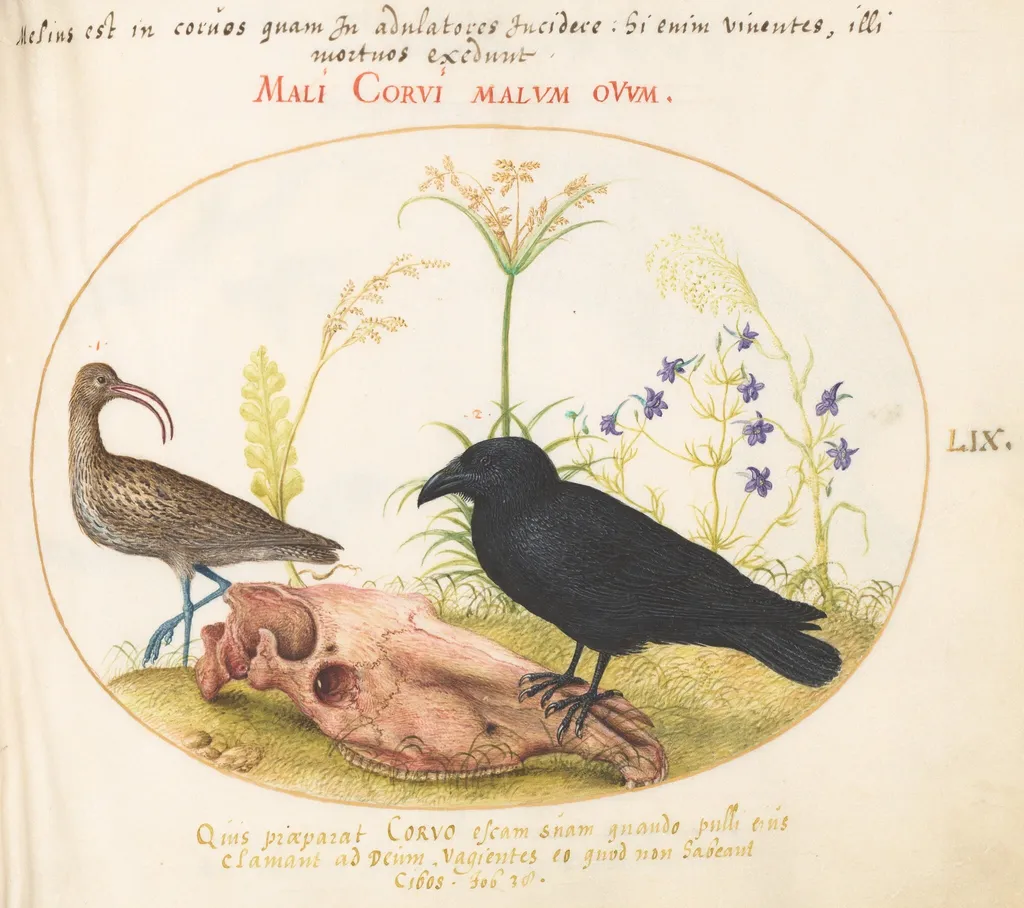
Plate 59: Curlew and Crow with Horse Skull is a gouache drawing by the Renaissance artist Joris Hoefnagel. It dates from 1594 and is held in the collection of the National Gallery of Art. Created circa 1594, Plate 59 depicts a curlew and a crow perched beside a horse skull.
- Inscription
- Inscribed:Upper center in black ink: Melius est in corvos quam in adulatores incidere: Hi enim vinentes, illi / mortuos exedunt./ in red ink: MALI CORVI MALVM OVVM.; center right in (gold?): LIX.; birds in image numbered .1. and .2.; lower center in (gold?): Quis praeparat CORVO escam suam quando pulli eius / clamant ad deum, vagientes eo quod non habeant / Cibos. Job 38. (“Who provides the raven with her food? When her young ones cry to God, wandering about, because they have no meat.” Job 38:41) (Latin Vulgate Bible) Facing page: upper center in black ink: Sed tacitus pasci si posset Corvus Haberet, / Plus dapis, et rixa multo minus Invidieq[ue].; lower center in black ink: Est aliquid quo tendis, et in quod dirigis arcum? / An passim corvuos sequeris, testaq[ue], lutoq[ue]? / Securos quo pes ferat; etq[ue] ex tempore vivis?
About this work
Overview
Created circa 1594, Plate 59 depicts a curlew and a crow perched beside a horse skull. Executed in watercolor with touches of gold on parchment, the image combines natural observation with the decorative sensibility of manuscript illumination. It exemplifies the work of Joris Hoefnagel, a Flemish artist whose career bridged scientific illustration and emerging still‑life traditions.
Subject & Meaning
The composition brings together a wading bird, a scavenging crow, and the skeletal remains of a horse, juxtaposing life, death, and the natural world’s cycles. By presenting these elements together, Hoefnagel invites contemplation of the fragility of living creatures and the study of anatomy, themes common in late‑sixteenth‑century natural history art.
Technique & Style
Watercolor provides delicate washes for feathers and flesh, while fine gold appliqué highlights details such as the birds’ eyes and the skull’s contours. The use of parchment recalls illuminated manuscripts, allowing the artist to apply a meticulous, layered approach that balances scientific accuracy with ornamental elegance.
History & Provenance
Plate 59 belongs to a series of illustrated plates produced by Hoefnagel toward the end of the manuscript illumination tradition in northern Europe. The work survived as part of a private collection before entering a museum archive in the early twentieth century, where it remains a reference point for studies of early natural‑history illustration.
Own this work as a print
Artist & collection

Artist
Joris Hoefnagel or Georg Hoefnagel (1542 – 24 July 1601) was a Flemish painter, printmaker, miniaturist, draftsman and merchant.

 Forum Vulcani: The Hot Springs at Pozzuoli
 Plate 76: Insects with a Pink and Cream Columbine
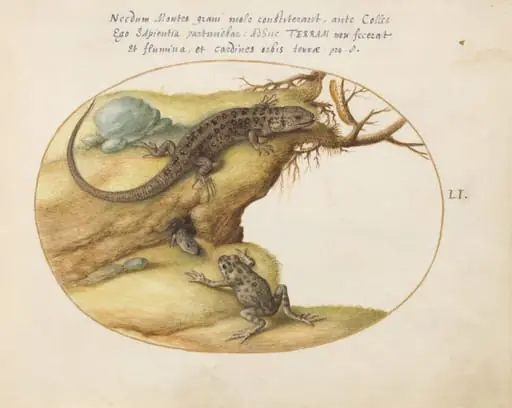 Plate 51: Two Sand Lizards, a Common Parsley Frog(?), and a Caterpillar
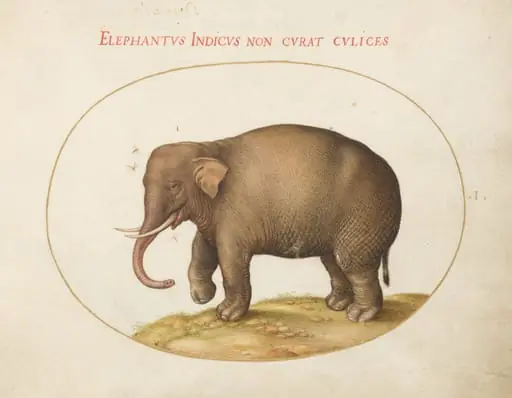 Plate 1: Elephant with Insects
- Plate 60: Magpie, Crow, and Goldfinch
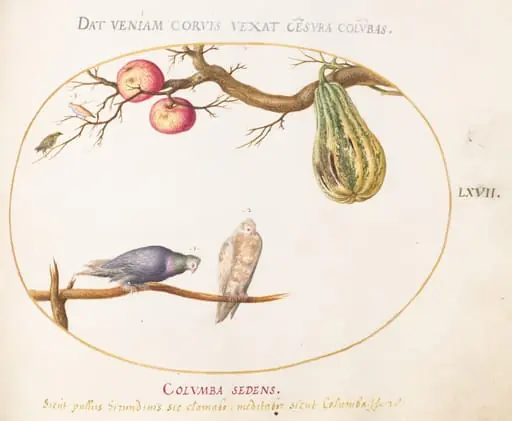 Plate 67: Two Doves beneath a Gourd and Apples
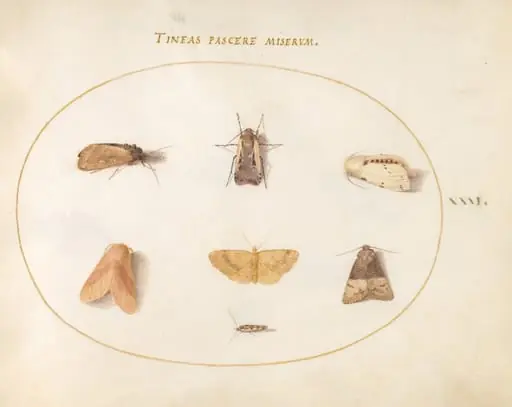 Plate 31: Seven Moths
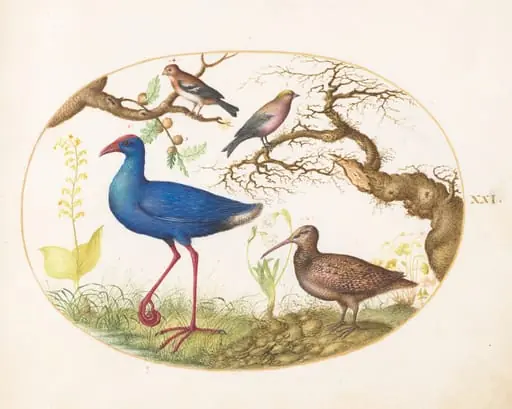 Plate 21: Swamp Hen and Woodcock with a Streaked Rosefinch, a Finch, and Oak Galls
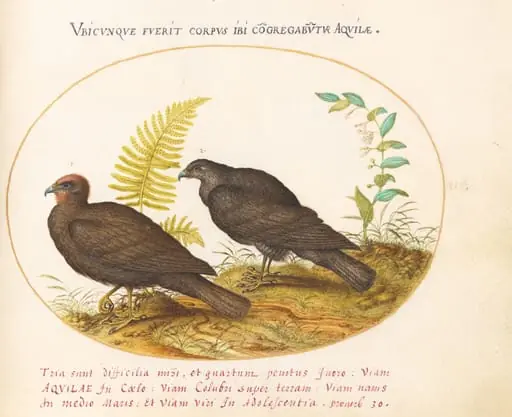 Plate 3: Two Hawks
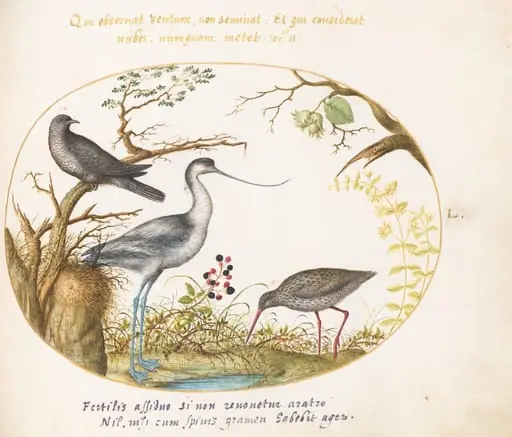 Plate 50: An Avocet with Two Other Birds
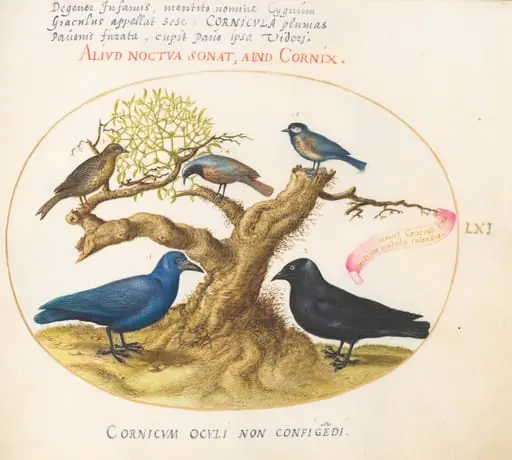 Plate 61: Blue Crow(?), Jackdaw, Chickadee or Tit, and Other Birds
 Plate 29: Geese with Poppies and a Cyclamen
 Plate 45: Spotted Nutcracker and Shore Birds
 Plate 1: Two Ostriches and a Starling
 Plate 28: Barnacle Goose with Shrikes and Other Birds
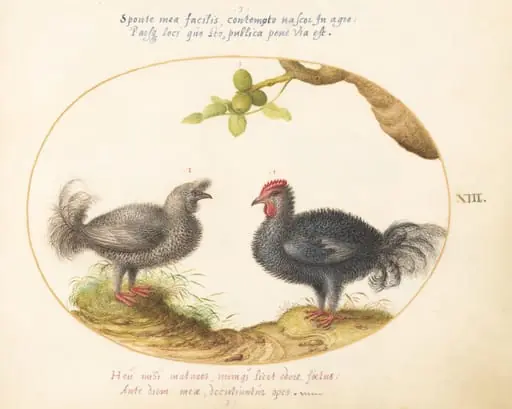 Plate 13: Two Curly Gray Chickens (Silkie Chickens?)
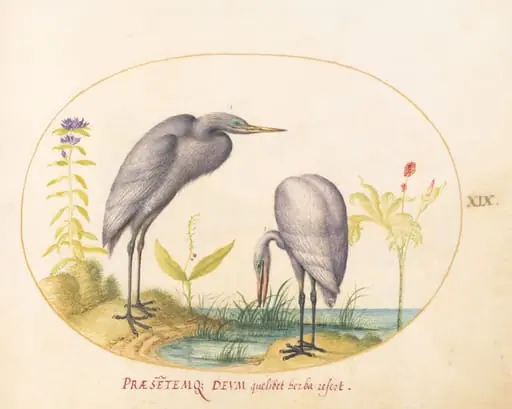 Plate 19: Two Great Egrets with Green Breeding Masks