Artwork
Parliamentary Regime
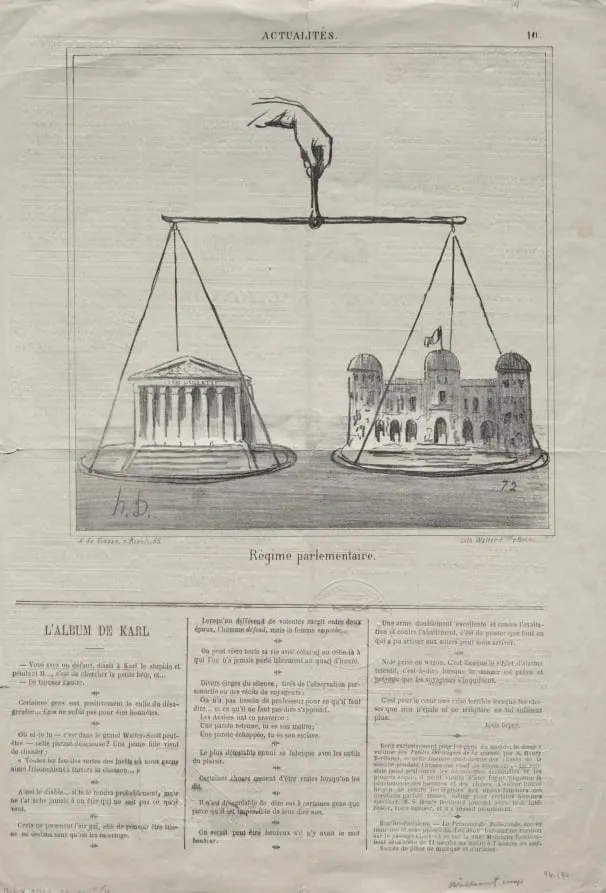
Parliamentary Regime is a print by the Impressionist artist Honoré Daumier. It dates from 1870 and is held in the collection of the Cleveland Museum of Art. This lithograph, published in Le Charivari on February 1, 1870, is the tenth plate in the series 'News of the Day.
- Accession no.
- 1946.199
- Credit line
- Gift of Mr. and Mrs. Theodore Spector
About this work
Overview
This lithograph, published in Le Charivari on February 1, 1870, is the tenth plate in the series 'News of the Day.' It captures a moment of political assembly, rendered with the satirical precision characteristic of 19th-century French periodical illustration. The composition focuses on the dynamics of public discourse, emphasizing movement and expression over formal structure.
Subject & Meaning
The scene depicts a parliamentary gathering, likely a French legislative session, where figures engage in heated debate. Postures and facial expressions convey urgency, frustration, and theatricality, reflecting the volatile nature of political life under the Second Empire. The artist critiques the performative aspects of governance, portraying lawmakers as actors in a chaotic public drama.
Technique & Style
Executed in lithography, the print uses bold, fluid lines and dense hatching to suggest motion and volume. Figures are rendered with exaggerated gestures and minimal detail, prioritizing emotional impact over realism. The crowded composition and overlapping forms create a sense of claustrophobia, reinforcing the tension of the moment through visual density rather than narrative clarity.
History & Provenance
Produced for Le Charivari, a leading satirical journal of the era, the print was part of a regular series commenting on current events. It circulated widely among urban readers, contributing to public discourse on governance. Its origin in a periodical ensures its survival in multiple institutional and private collections, though specific provenance beyond the publisher remains undocumented.
Context
Created just months before the fall of Napoleon III’s regime, the image reflects growing public skepticism toward parliamentary institutions. The chaotic depiction aligns with contemporary critiques of political inefficacy and theatricality. Similar imagery appeared in other satirical journals, indicating a shared visual language of dissent during a period of political instability.
Legacy
The print exemplifies the role of illustrated journalism in shaping political perception during the 19th century. Its stylistic approach influenced later cartoonists and political illustrators who used expressive distortion to convey institutional critique. Though not attributed to a single named artist, it remains a representative artifact of French visual satire from the era.
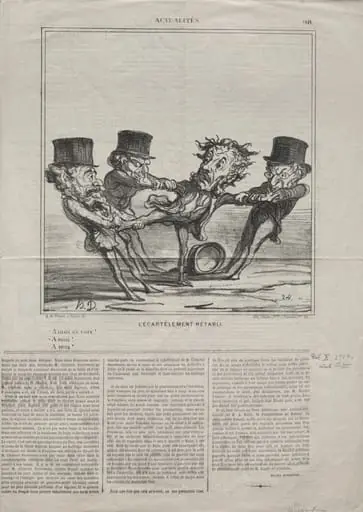
Artist & collection
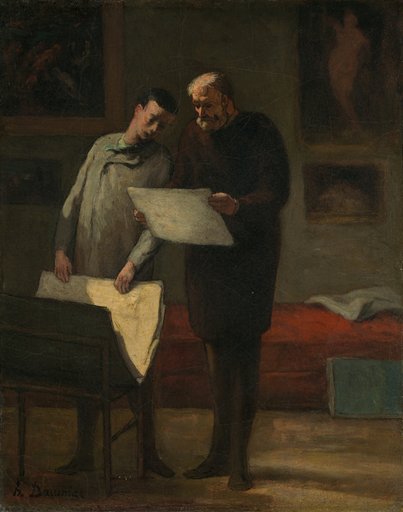
Artist
Honoré-Victorin Daumier (French: ; 26 February 1808 – 10 or 11 February 1879) was a French painter, sculptor, and printmaker, whose many works offer commentary on the social and political life in France, from the…









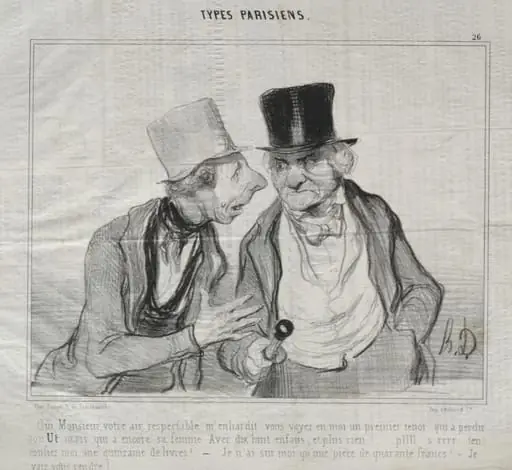 Yes, Sir, your respectable air encourages me...
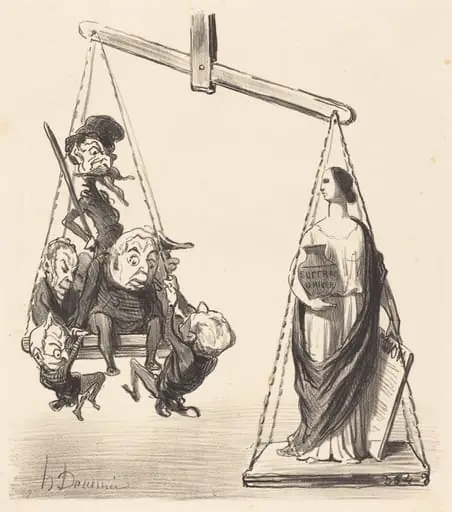 Suffrage universel (Universal Suffrage)
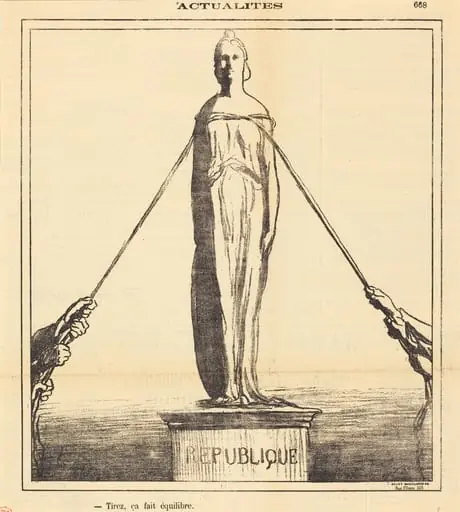 Tirez, ça fait équilibre
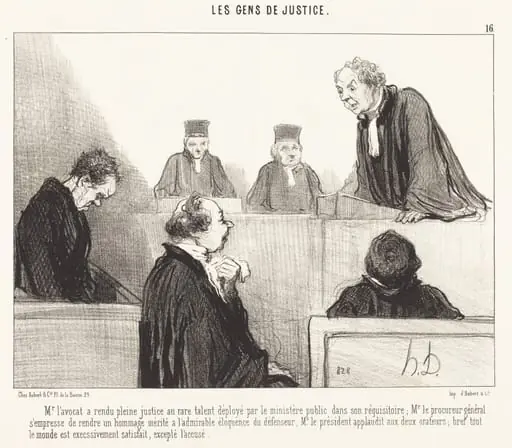 Mr. l'avocat a rendu pleine justice...
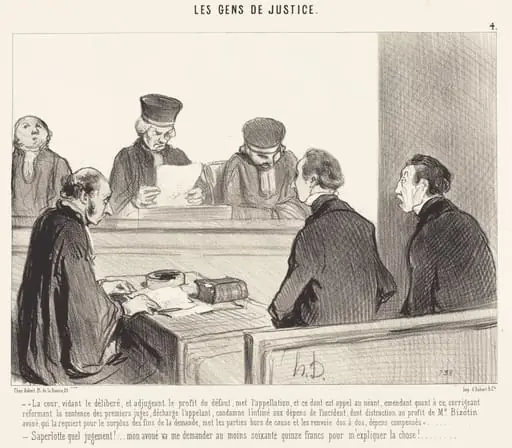 La Cour, vidant le délibéré...
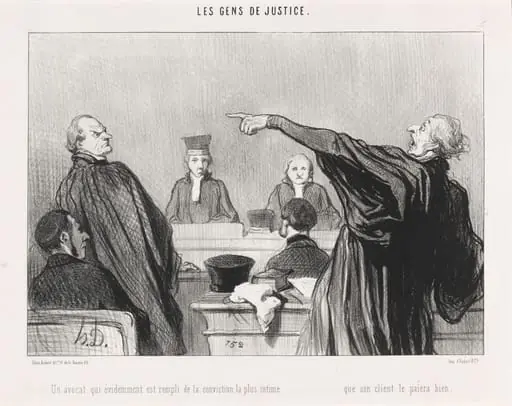 Un Avocat qui est... rempli de la conviction... intime...
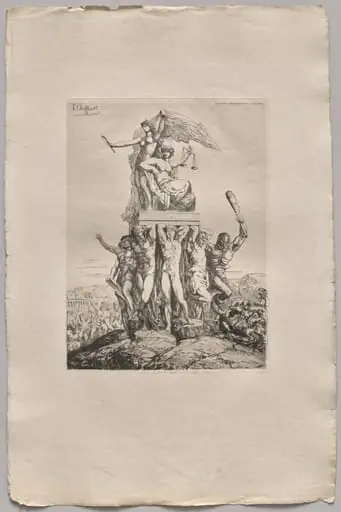 The Triumph of Justice and Truth
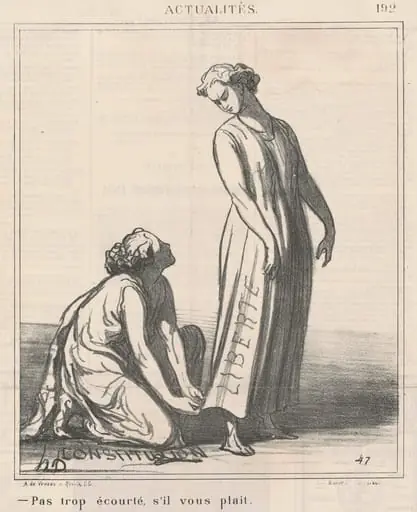 Pas trop écourté, s'il vous plait