Artwork
The ox-elephant, a new and very promising breed...
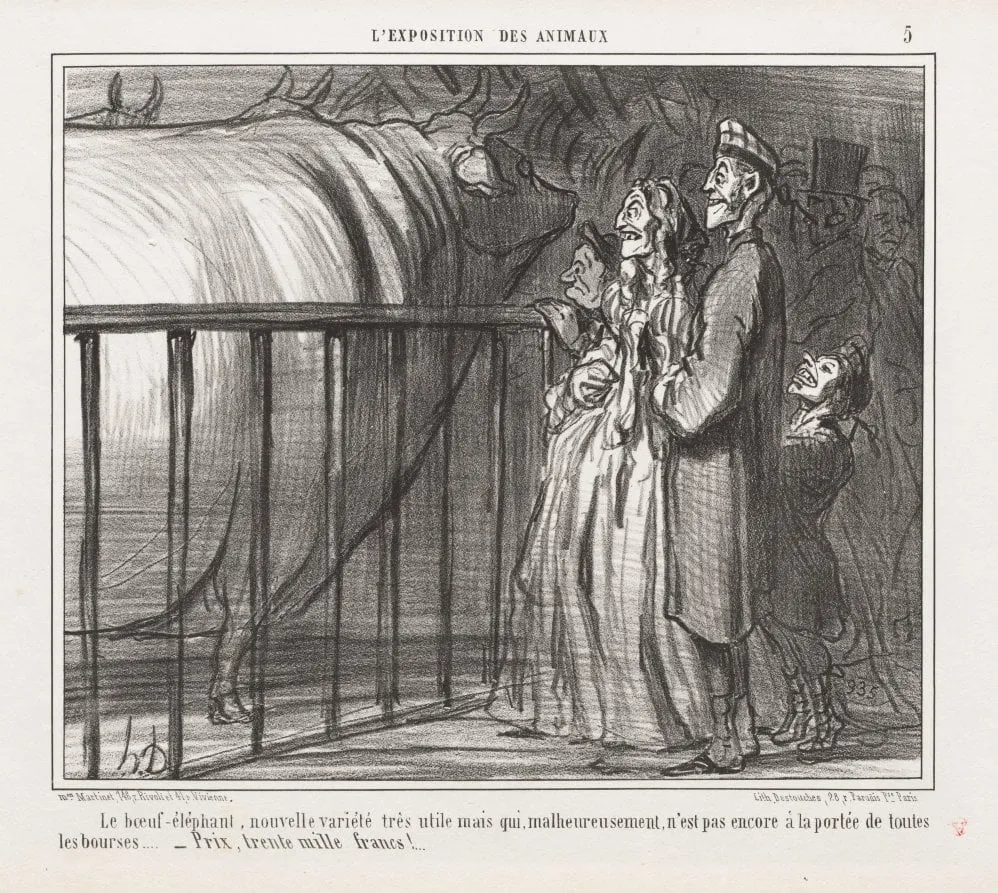
The ox-elephant, a new and very promising breed... is a print by the Impressionist artist Honoré Daumier. It dates from 1856 and is held in the collection of the Cleveland Museum of Art. This lithograph, published in Le Charivari on June 19, 1856, is the fifth plate from the series Exposition of Animals.
- Accession no.
- 2009.505
- Credit line
- Gift of John Bonebrake
About this work
This painting shows a strange animal, a mix of an ox and an elephant. It's a funny and unexpected image. The artist made this print to poke fun at new ideas and trends in France during the 19th century, which is evident in the satire and humor used in the work. To learn more about similar works, check out the museum: The Cleveland Museum of Art.
Overview
This lithograph, published in Le Charivari on June 19, 1856, is the fifth plate from the series Exposition of Animals. It presents a hybrid creature combining features of an ox and an elephant, presented with the dry tone of a scientific exhibit. The image functions as satirical commentary, using absurdity to critique the era’s fascination with novelty and pseudo-scientific progress.
Subject & Meaning
Its presentation mimics the language of natural history catalogs, mocking the period’s enthusiasm for classification and invention.
The ox-elephant is a fictional hybrid, neither biologically plausible nor historically documented. Its presentation mimics the language of natural history catalogs, mocking the period’s enthusiasm for classification and invention. The creature symbolizes the absurdity of unchecked innovation, reflecting skepticism toward scientific pretensions and the commercialization of novelty in mid-19th-century France.
Technique & Style
Executed as a lithograph, the image employs precise linework and tonal shading to mimic the authority of scientific illustration. The composition is deliberately clinical, animals are centered, labeled, and framed as specimens, contrasting sharply with the ridiculousness of the subject. This juxtaposition amplifies the satire, using formal visual conventions to undermine their own credibility.
History & Provenance
The print was produced during a period of vibrant political and social satire in French periodicals. Le Charivari, known for its sharp wit, regularly featured such works by artists like Honoré Daumier. Though the specific creator of this plate is unattributed, it aligns with the publication’s broader tradition of using visual humor to critique public discourse and institutional authority.
Context
In the 1850s, France experienced rapid industrialization and a surge in public interest in natural science, zoology, and exotic specimens. Exhibitions and sensationalized scientific claims were common. This print responds to that climate, ridiculing the tendency to treat every new idea, no matter how implausible, as worthy of serious attention, especially when tied to commercial or political agendas.
Legacy
The image endures as an example of 19th-century visual satire, illustrating how print media used absurdity to question authority and public gullibility. While not widely exhibited today, it remains a reference point in studies of caricature and the cultural history of science. Its humor lies not in the creature itself, but in the deadpan manner of its presentation.
Artist & collection
Artist
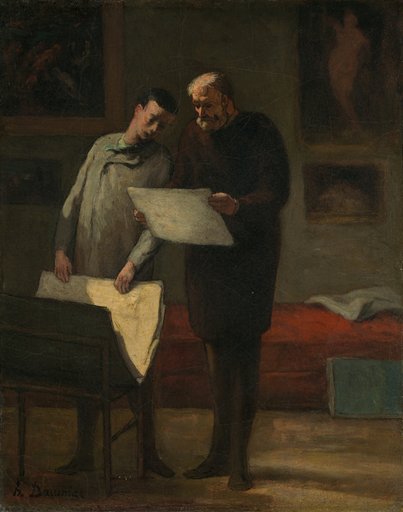
Honoré-Victorin Daumier (French: ; 26 February 1808 – 10 or 11 February 1879) was a French painter, sculptor, and printmaker, whose many works offer commentary on the social and political life in France, from the…









 Pardonnez-moi, o mon dieu! ...
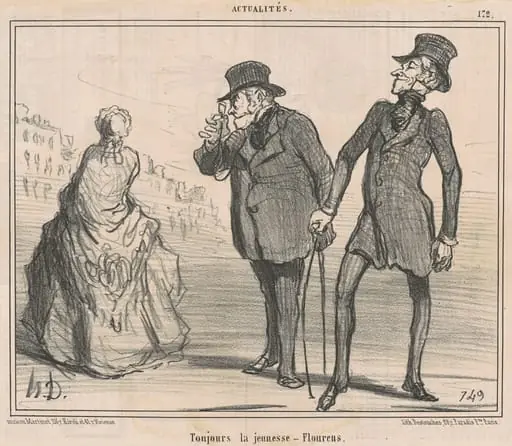 Toujours la heunesse-flourens
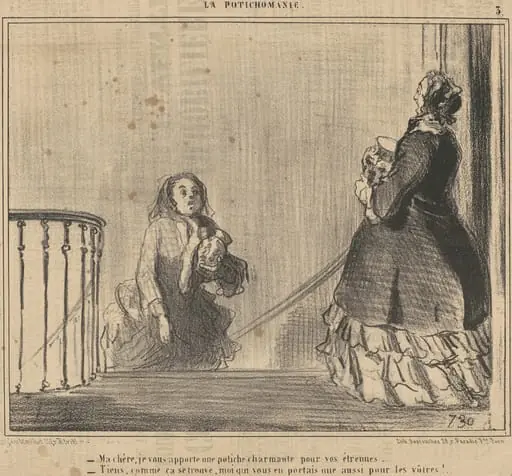 Ma chére, je vous apporte une potiche ...
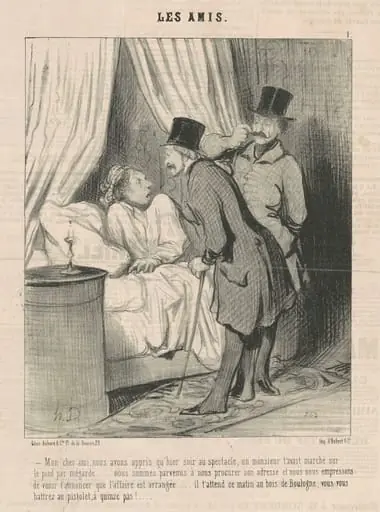 Mon cher ami, nous avons appris ...
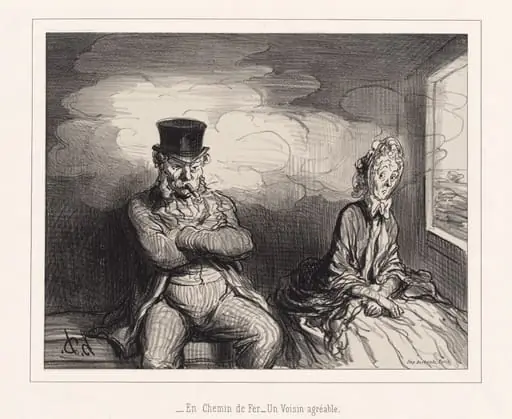 En Chemin de fer... un voisin agréable (On the Railroad: A Pleasant Neighbor)
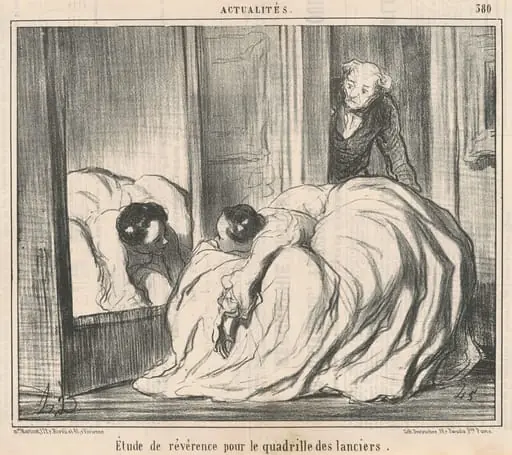 Etude de révérence pour le quadrille des lanciers
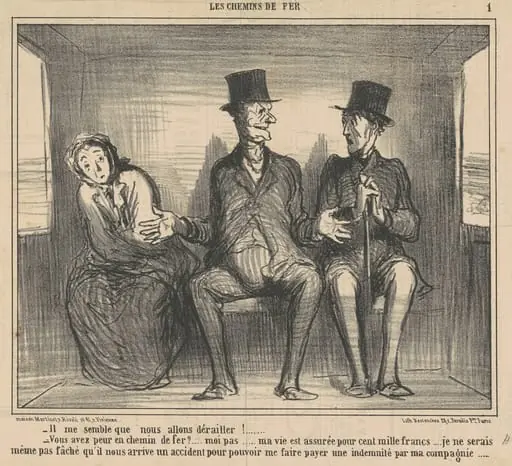 Il me semble que nous allons dèrailler ...
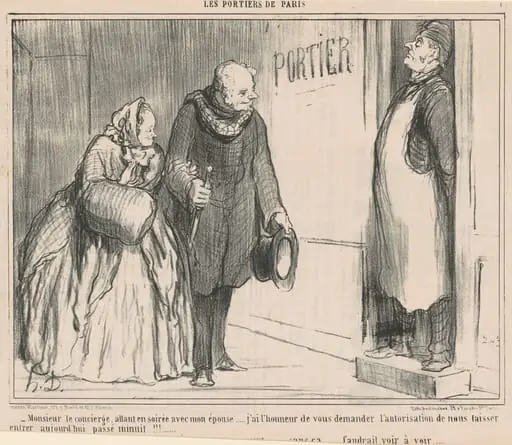 Monsieur le concierge, allant en soirée
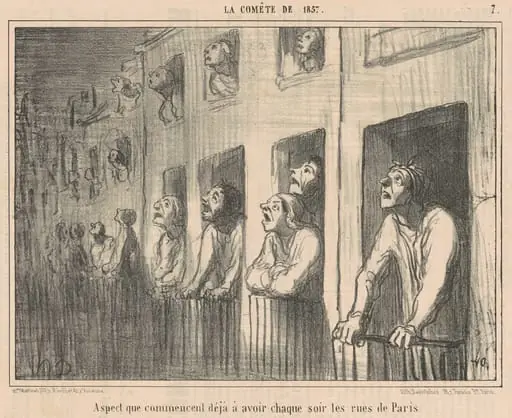 Aspect que commencent dèja a avoir ...
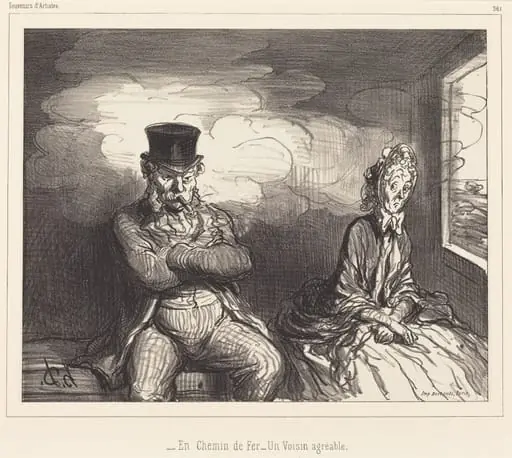 En Chemin de fer... un voisin agréable (On the Railroad... an agreeable neighbor)
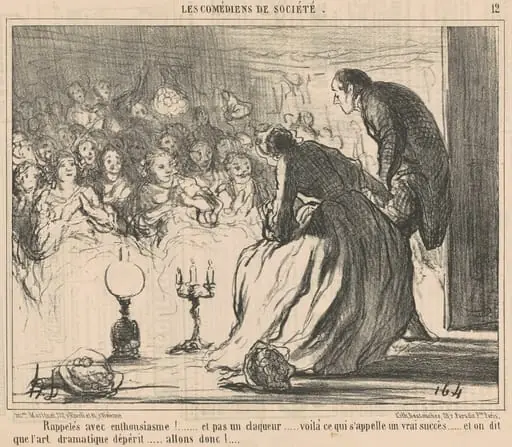 Rappelès avec enthousiasme! ...
- Le Boeuf-éléphant nouvelle variété