Artwork
Aqueduct in Ruins
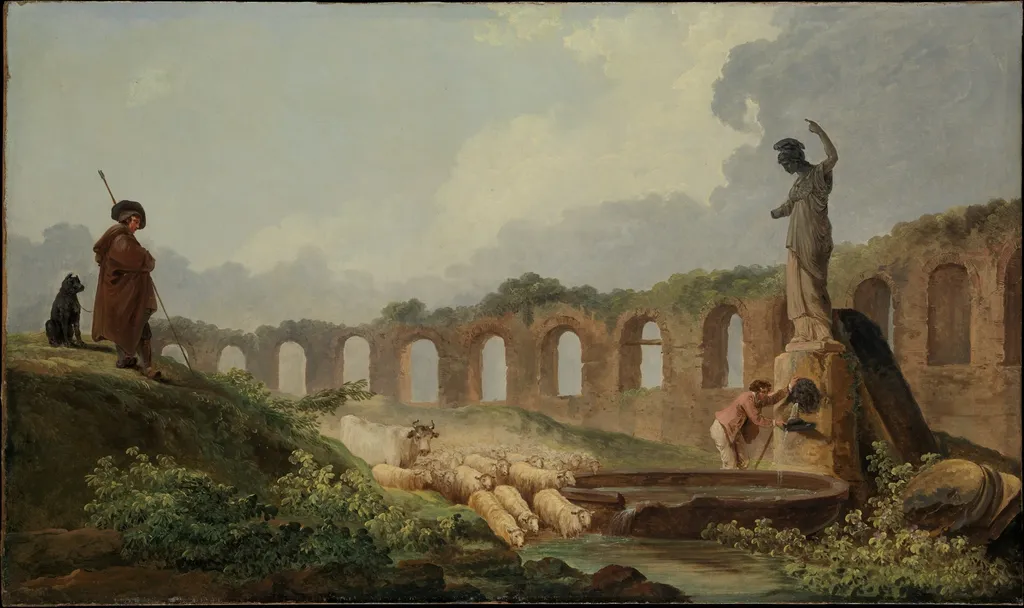
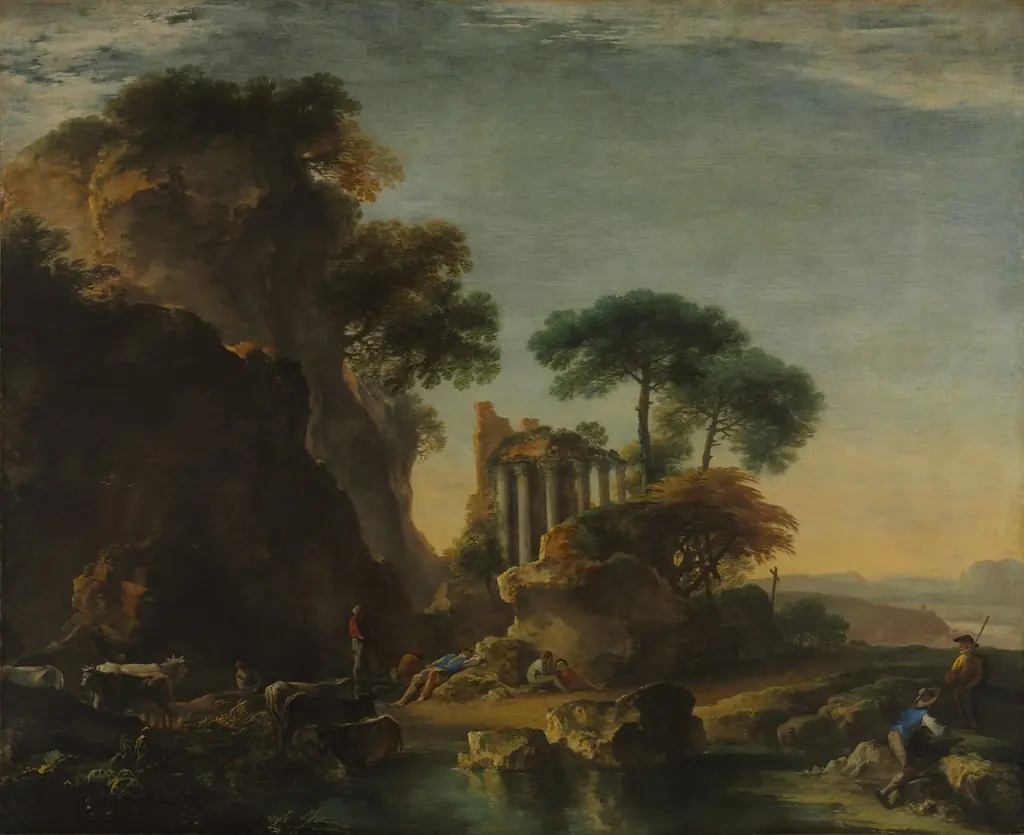
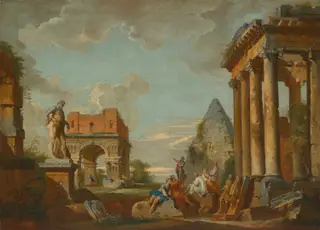
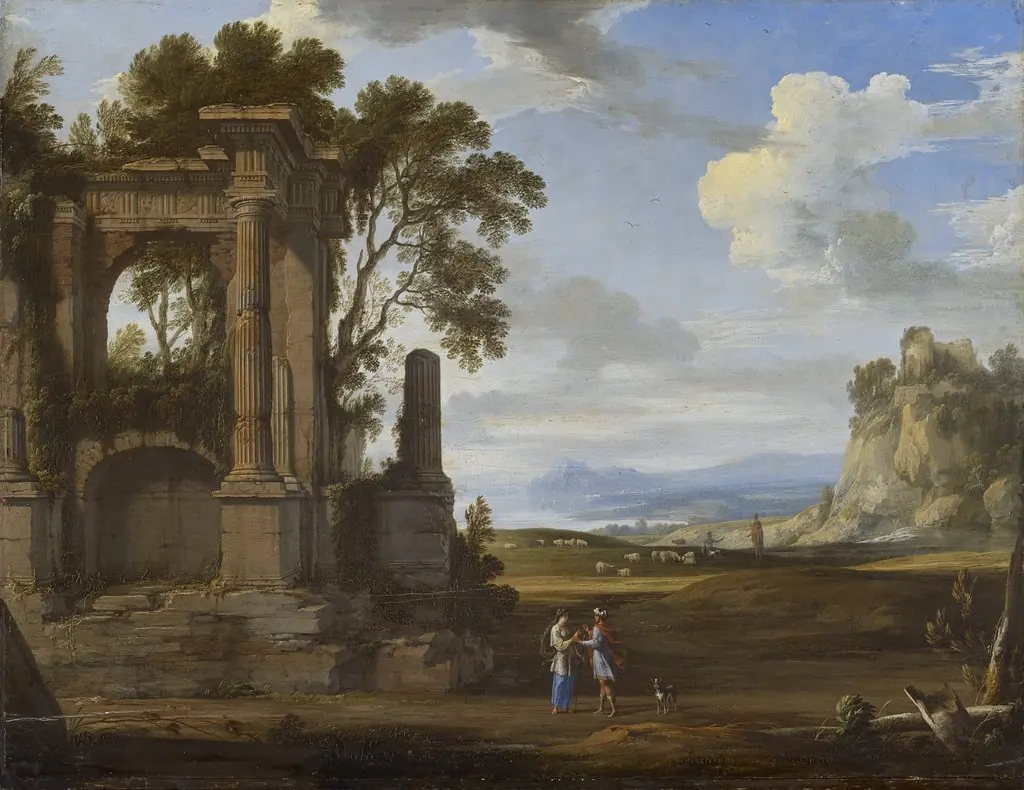
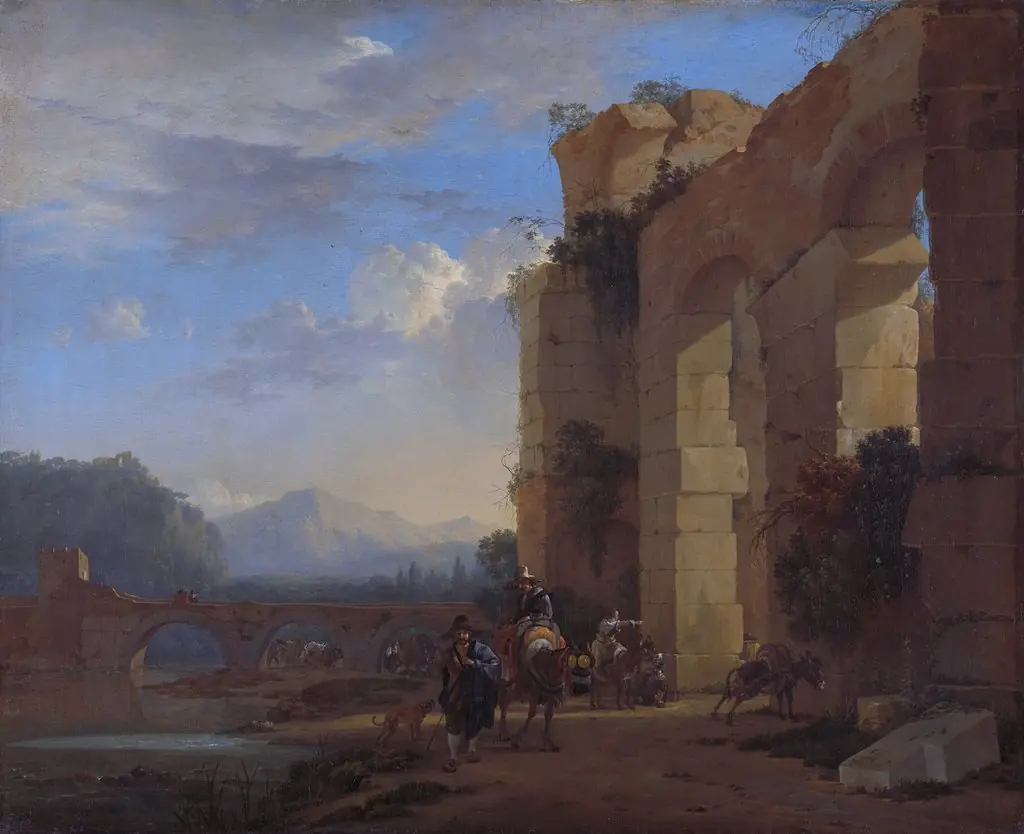
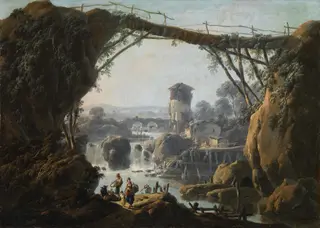
Aqueduct in Ruins is an oil painting by the Rococo painting artist Hubert Robert. It dates from 1750 and is held in the collection of the Metropolitan Museum of Art. Created in the mid‑18th century, this oil painting portrays a tranquil ruin of an ancient aqueduct set within a gentle landscape.
About this work
Subject & Meaning
The painting shows a crumbling ancient aqueduct surrounded by a landscape, symbolizing the passage of time and the permanence of nature amid decay. Hubert Robert rendered the ruin with a solitary figure, emphasizing human transience against enduring architecture. The work reflects Enlightenment-era fascination with antiquity and the romantic melancholy of fallen civilizations.
Technique & Style
Executed in 1750, this work by Hubert Robert is an oil painting on canvas. The composition measures 81.6 cm in height and 137.5 cm in width. As a painted depiction of architectural ruins, the piece utilizes oil paint as its primary medium applied to a fabric support. The subject matter features a man situated within the depicted scene of the aqueduct.
History & Provenance
It has been exhibited at the Metropolitan Museum of Art in the context of its European Paintings galleries, which include works by Hubert Robert.
Hubert Robert painted this work in 1750, depicting a ruined aqueduct. The Metropolitan Museum of Art holds the piece in its collection, having acquired it as part of its holdings of Robert's works. The artwork is executed in oil on canvas, measuring 81.6 centimeters in height and 137.5 centimeters in width.
The painting is held by the Metropolitan Museum of Art, New York, where it is accessioned as part of the museum’s permanent collection.
It has been exhibited at the Metropolitan Museum of Art in the context of its European Paintings galleries, which include works by Hubert Robert.
Legacy
Hubert Robert's 1750 canvas Aqueduct in Ruins entered the Metropolitan Museum of Art's collection and is documented in the museum's catalog as a work that influenced discussions of ruin painting in the late 18th century. Contemporary records note that the composition informed the decorative program of the Chambre des Musées at the Palais du Luxembourg and appears in exhibition histories of French neoclassical art. The painting's depiction of a solitary figure amid crumbling architecture contributed to the visual vocabulary of later artists exploring antiquity, a trajectory recorded in museum provenance files.
Overview
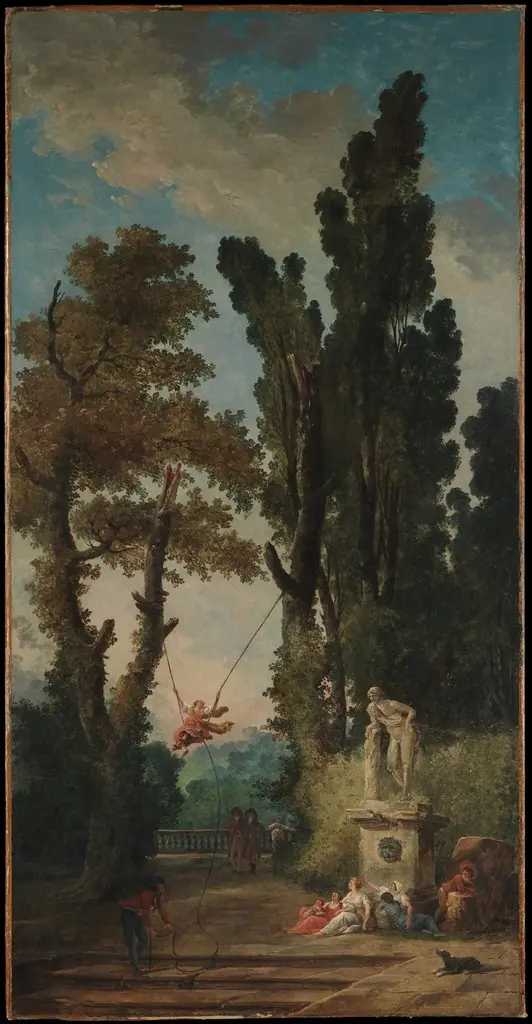
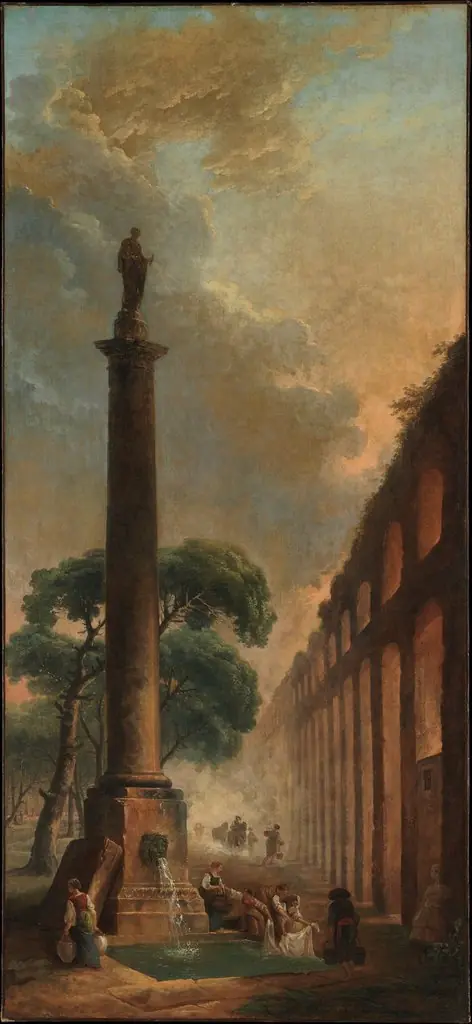
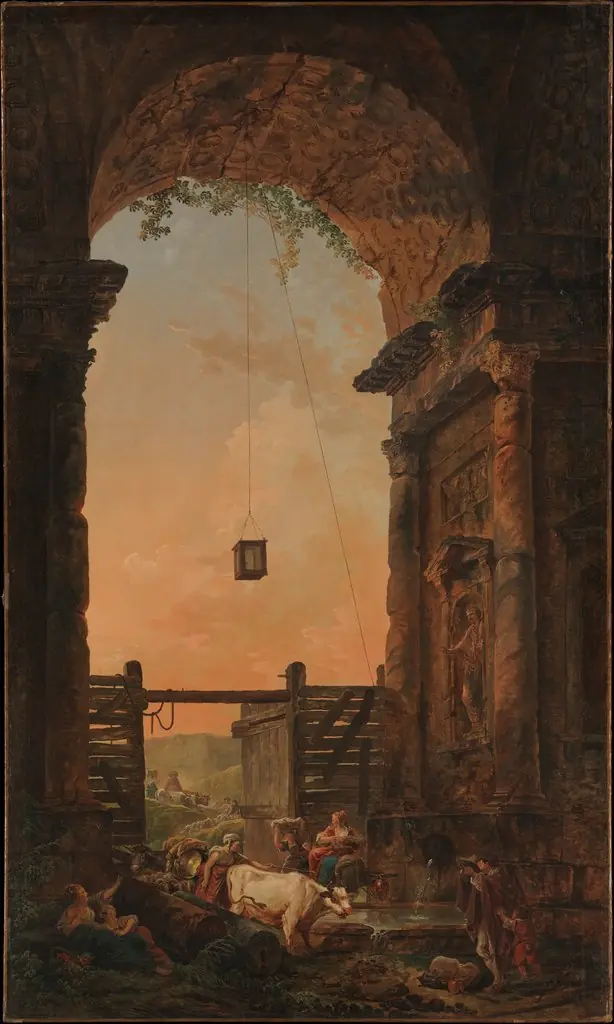
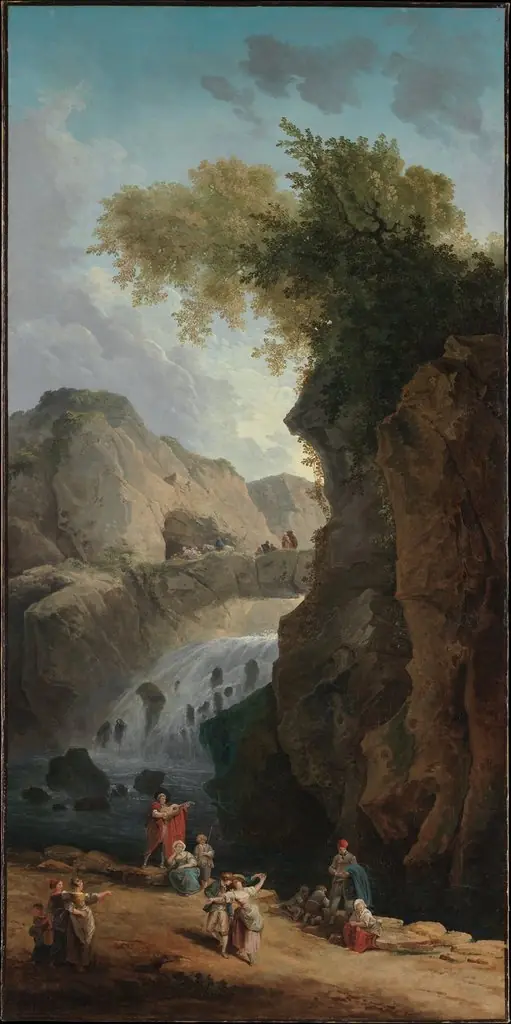
Created in the mid‑18th century, this oil painting portrays a tranquil ruin of an ancient aqueduct set within a gentle landscape. A solitary figure in a brown robe, accompanied by a black dog, stands on a rise, while a small statue and a man attending a fountain occupy the right side. The composition balances stone arches, verdant growth, and a pale sky, rendered in muted earth tones.
Context
During the mid‑1700s, European art saw a growing interest in antiquity and the sublime, with artists like Robert blending imaginative reconstruction and observation. The painting reflects this trend, merging the decorative lightness of the Rococo period with emerging Romantic concerns for the evocative power of decayed monuments within natural settings.
Artist & collection
Artist
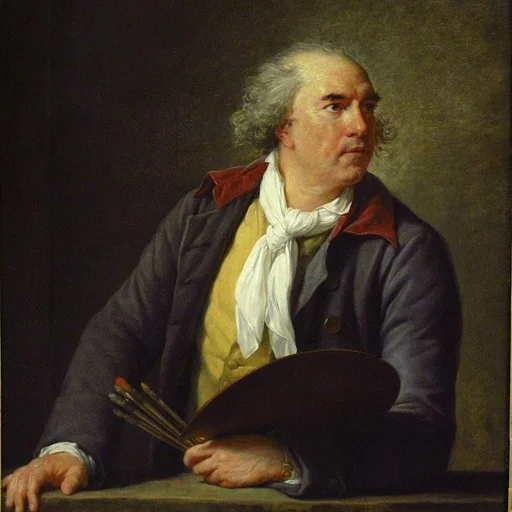
Hubert Robert (French pronunciation:; 22 May 1733 – 15 April 1808) was a French painter in the school of Romanticism, noted especially for his landscape paintings and capricci, or semi-fictitious picturesque depictions of ruins in Italy…