Artwork
Boats in Front of the Grotto in the Park at Méréville
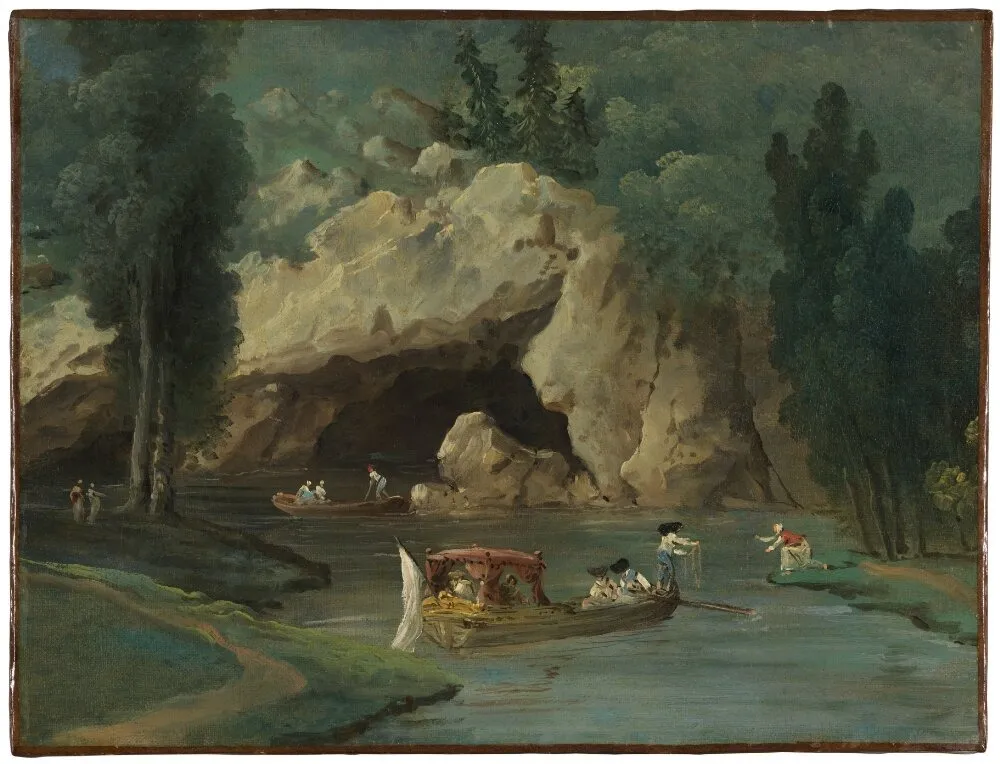
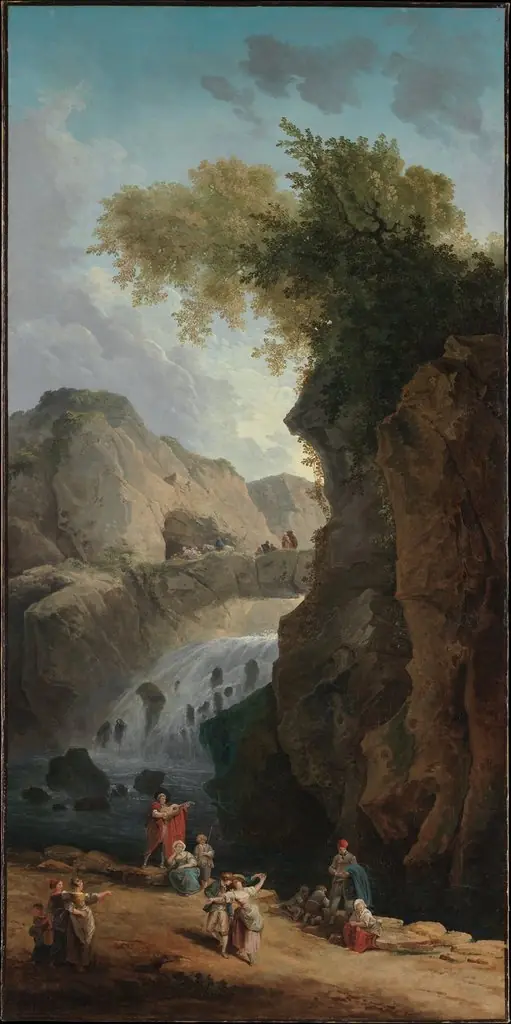
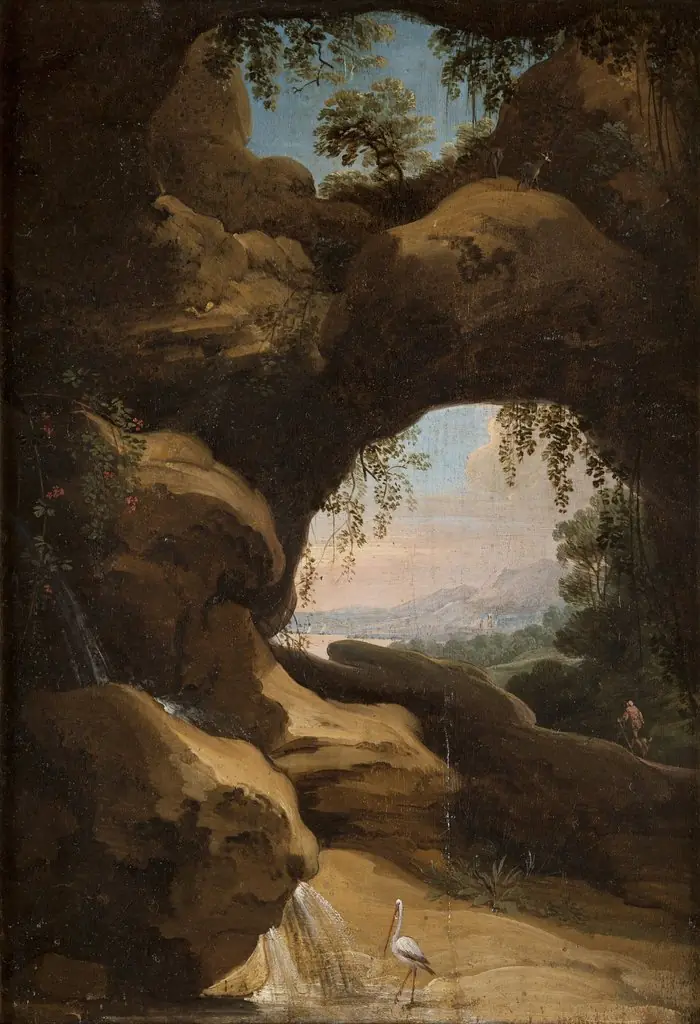
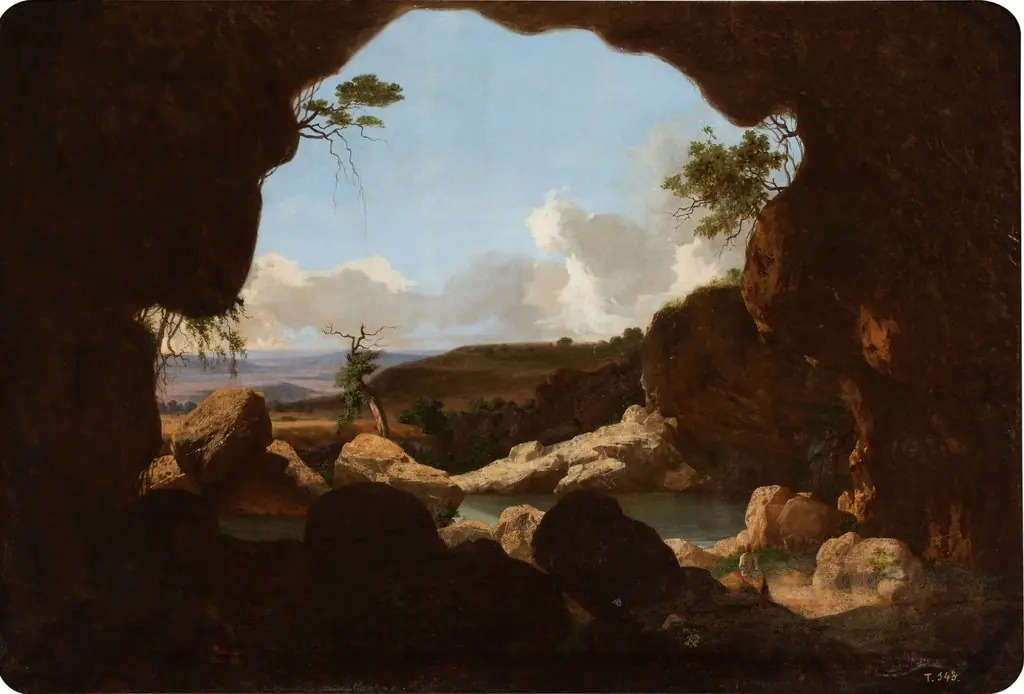
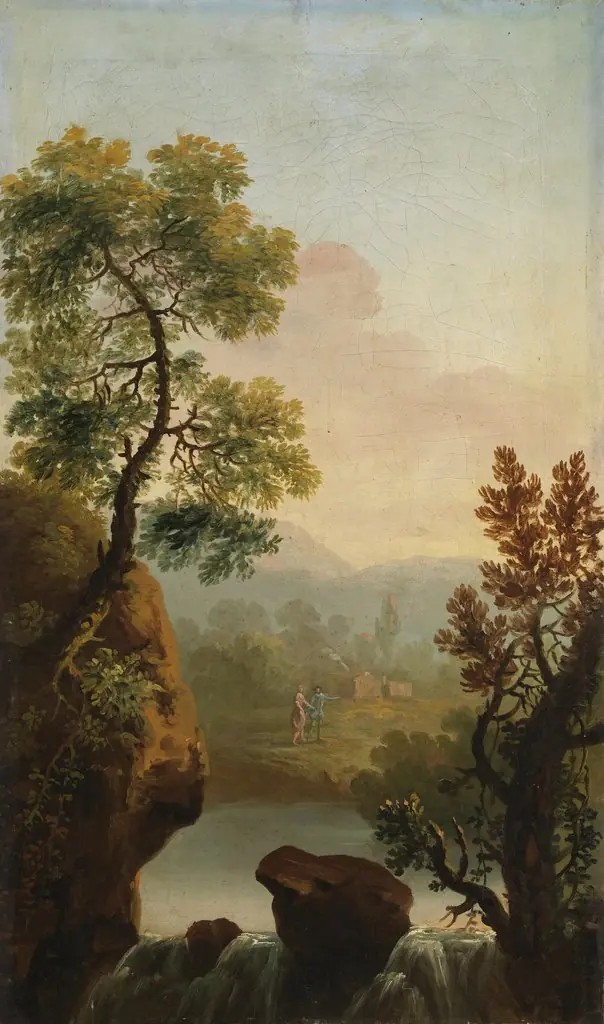
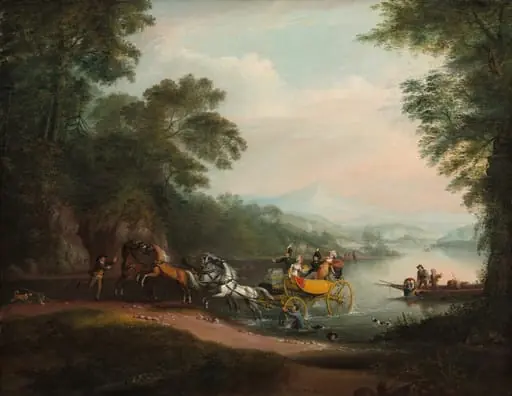
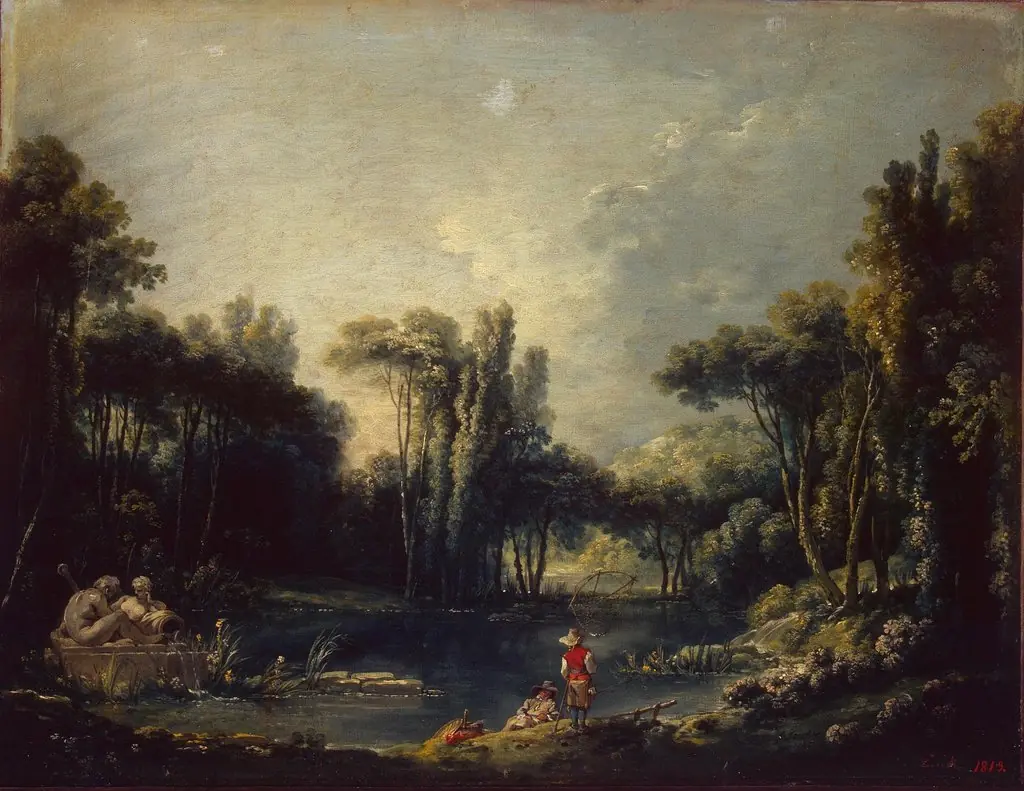
Boats in Front of the Grotto in the Park at Méréville is an oil painting by the Rococo painting artist Hubert Robert. It dates from 1794 and is held in the collection of the Nationalmuseum.
About this work
Overview
Painted in 1794 by Hubert Robert, this oil-on-canvas work captures a tranquil riverside scene at the Park of Méréville, a private estate near Paris.
Painted in 1794 by Hubert Robert, this oil-on-canvas work captures a tranquil riverside scene at the Park of Méréville, a private estate near Paris. Robert, known for his architectural landscapes and imaginative compositions, rendered the grotto and surrounding foliage with careful observation. The painting belongs to the Nationalmuseum’s collection and reflects his interest in integrating natural and constructed elements within idealized outdoor settings.
Subject & Meaning
The scene portrays leisurely boaters near a moss-covered grotto, a feature typical of 18th-century French landscape gardens designed to evoke romantic solitude. The presence of figures in small, canopied boats suggests quiet recreation, aligning with Enlightenment-era ideals of nature as a refuge from urban life. The grotto, neither purely natural nor entirely artificial, embodies the period’s fascination with the boundary between the wild and the cultivated.
Technique & Style
Robert employed layered oil glazes to achieve subtle atmospheric effects, with soft transitions between light and shadow enhancing spatial depth. The foliage is rendered with precise, delicate brushwork, while the grotto’s rocky surfaces suggest texture without overt detail. Though rooted in Rococo sensibilities, the composition leans toward a more restrained, observational approach, anticipating early Romantic sensibilities in its emphasis on mood over ornament.
History & Provenance
The painting was created during Robert’s later years, following his imprisonment during the French Revolution and his return to landscape work. It depicts the Park at Méréville, a property owned by the financier Jean-Joseph de Laborde, whose gardens were designed by the landscape architect Jean-Jacques Rousseau’s disciple, the Comte de Méréville. The work entered the Nationalmuseum’s collection in the 19th century, likely through diplomatic or acquisition channels.
Context
In the 1790s, French aristocratic gardens like Méréville were increasingly seen as cultural artifacts amid revolutionary upheaval. Robert’s depiction of such a site, even as the monarchy collapsed, reflects a lingering fascination with private, curated nature. His paintings of gardens and ruins served as visual records of a vanishing world, blending topographical accuracy with poetic suggestion, a trend shared by contemporaries like Claude-Joseph Vernet.
Legacy
Robert’s approach to landscape as a blend of observation and invention influenced later 19th-century painters interested in mood and atmosphere. While not widely celebrated in his lifetime as a revolutionary figure, his consistent focus on architectural integration within nature helped shape the evolution of landscape painting beyond mere decoration. This work remains a quiet testament to the aesthetic values of pre-revolutionary French garden culture.
Artist & collection
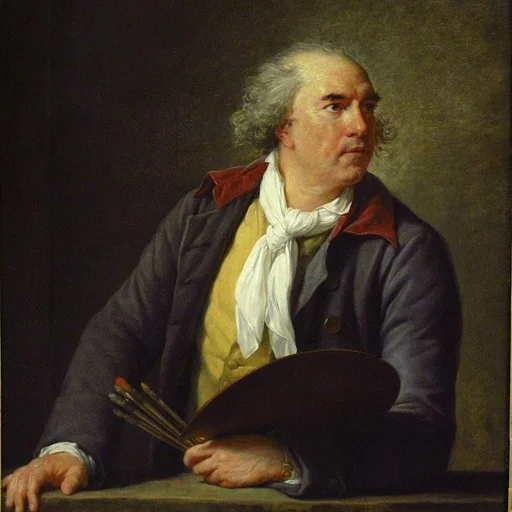
Artist
Hubert Robert (French pronunciation:; 22 May 1733 – 15 April 1808) was a French painter in the school of Romanticism, noted especially for his landscape paintings and capricci, or semi-fictitious picturesque depictions of ruins in Italy…