Artwork
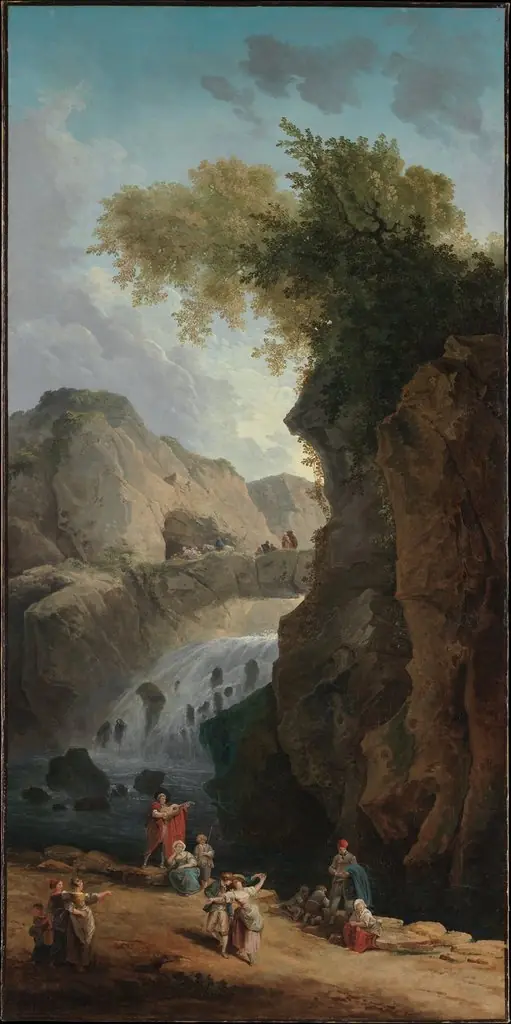
Landscape with a Waterfall
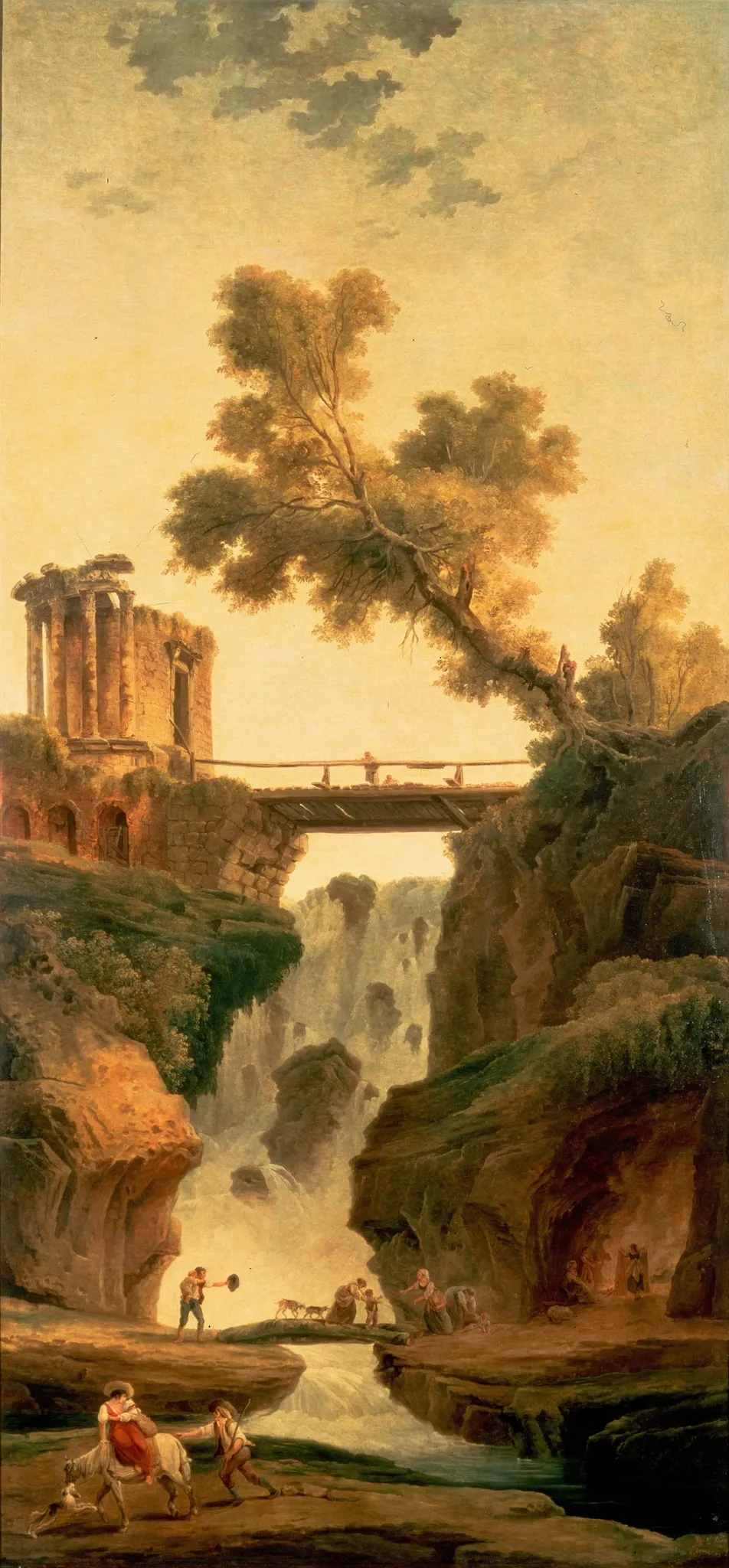
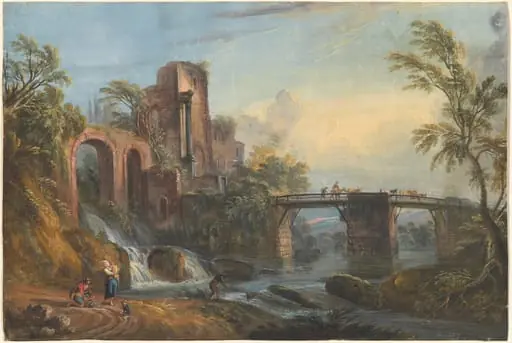
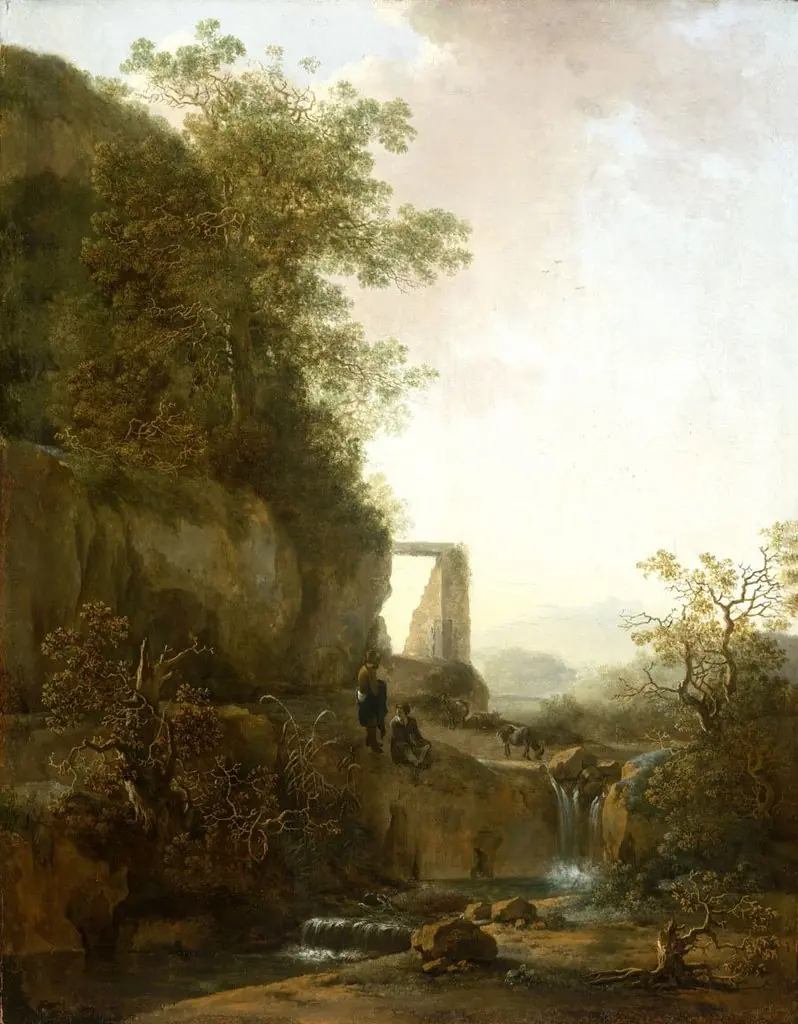
Landscape with a Waterfall is an oil painting by the French Romanticist artist Hubert Robert. It dates from 1802 and is held in the collection of the Hermitage Museum.
About this work
Overview
Painted in 1802 by Hubert Robert, this oil on canvas work presents a tranquil natural scene centered around a modest waterfall. Robert, known for his imaginative landscapes and ruins, blends observed topography with poetic invention. The painting is part of the State Hermitage Museum’s collection and reflects his mature style, where nature and architectural remnants coexist in quiet harmony.
Subject & Meaning
The composition evokes contemplation rather than action, emphasizing the passage of time and nature’s reclamation of human structures.
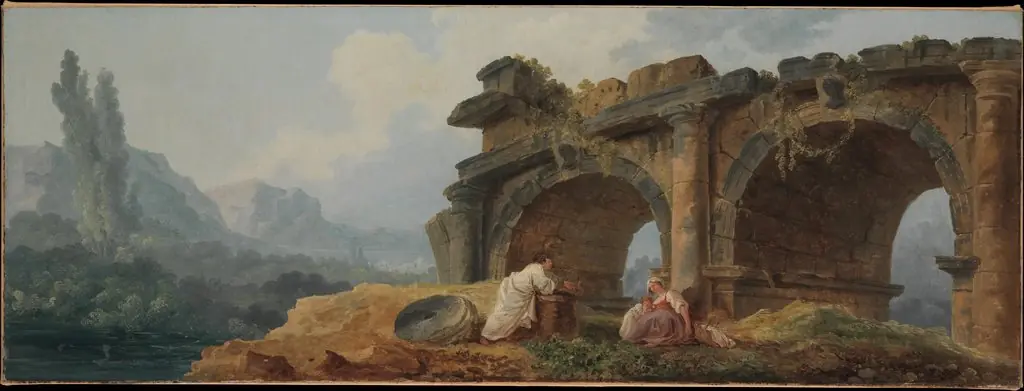
The scene features a crumbling stone bridge spanning a rocky stream, with figures crossing or resting along its banks. Ancient columns rise faintly in the distance, suggesting forgotten civilization. The inclusion of travelers and a horseman introduces human presence without narrative drama.
The composition evokes contemplation rather than action, emphasizing the passage of time and nature’s reclamation of human structures.
Technique & Style
Robert employed glazing techniques to build luminous, atmospheric depth, layering thin washes of warm ochres and soft grays to capture sunlight on wet stone and foliage. Shadows and highlights merge seamlessly, avoiding harsh contours. The brushwork is controlled yet fluid, enhancing the sense of calm. The tree’s expansive branches frame the bridge, guiding the viewer’s eye through the composition with subtle rhythm.
History & Provenance
Created during Robert’s later years, the painting reflects his lifelong fascination with ruins and landscape. It entered the Hermitage collection in the 19th century, likely acquired through Russian diplomatic or artistic networks. While not among his most famous works, it exemplifies his consistent thematic concerns and was preserved as part of imperial Russian collections of European art.
Context
Robert worked during the transition from Neoclassicism to Romanticism, and while his style retained classical order, his subjects increasingly embraced emotional resonance with nature and decay. This painting aligns with broader European interests in the sublime and the picturesque, though it avoids theatricality. His depictions of ruins resonated with Enlightenment-era reflections on impermanence and cultural memory.
Legacy
Though less celebrated than contemporaries like Géricault or Delacroix, Robert’s influence endured in landscape painting through his integration of architecture and nature. His approach to ruins as poetic elements rather than mere antiquities shaped later 19th-century views of historical landscape. This work remains a quiet testament to his ability to convey serenity through layered observation and restrained emotion.
Artist & collection
Artist
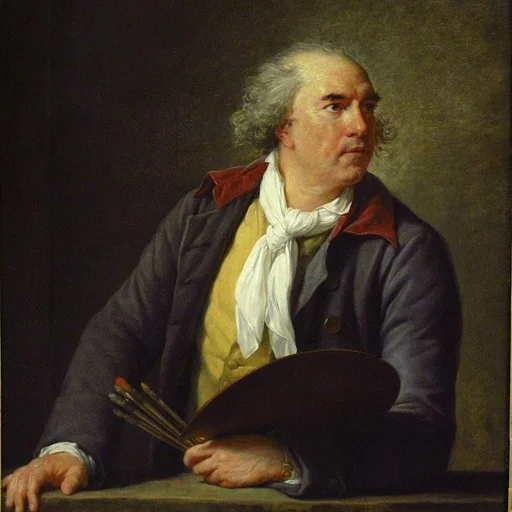
Hubert Robert (French pronunciation:; 22 May 1733 – 15 April 1808) was a French painter in the school of Romanticism, noted especially for his landscape paintings and capricci, or semi-fictitious picturesque depictions of ruins in Italy…