Artwork
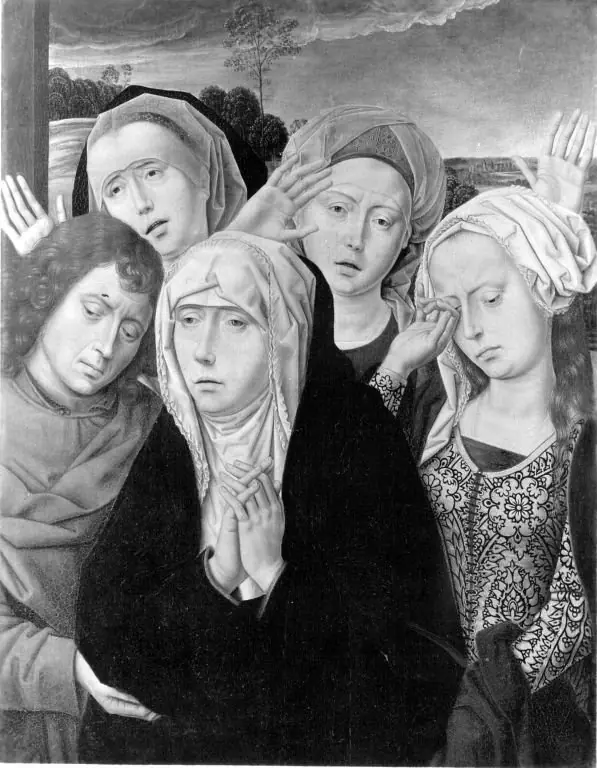
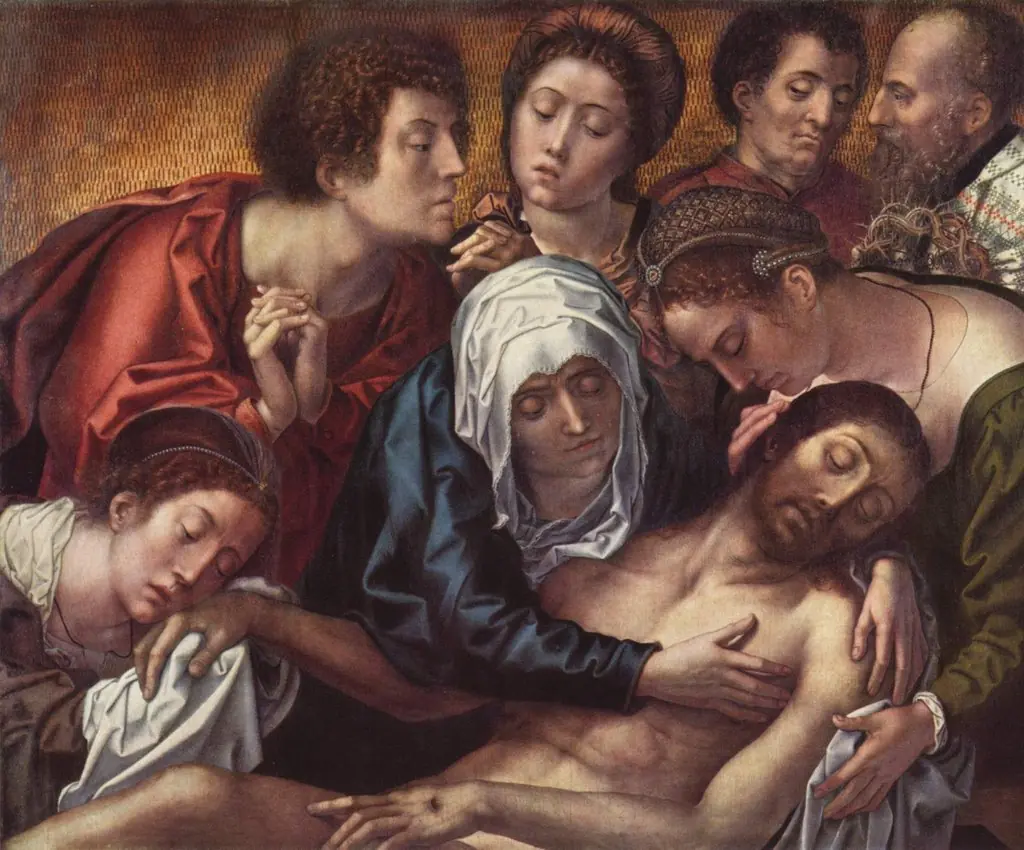
The Mourning of Christ
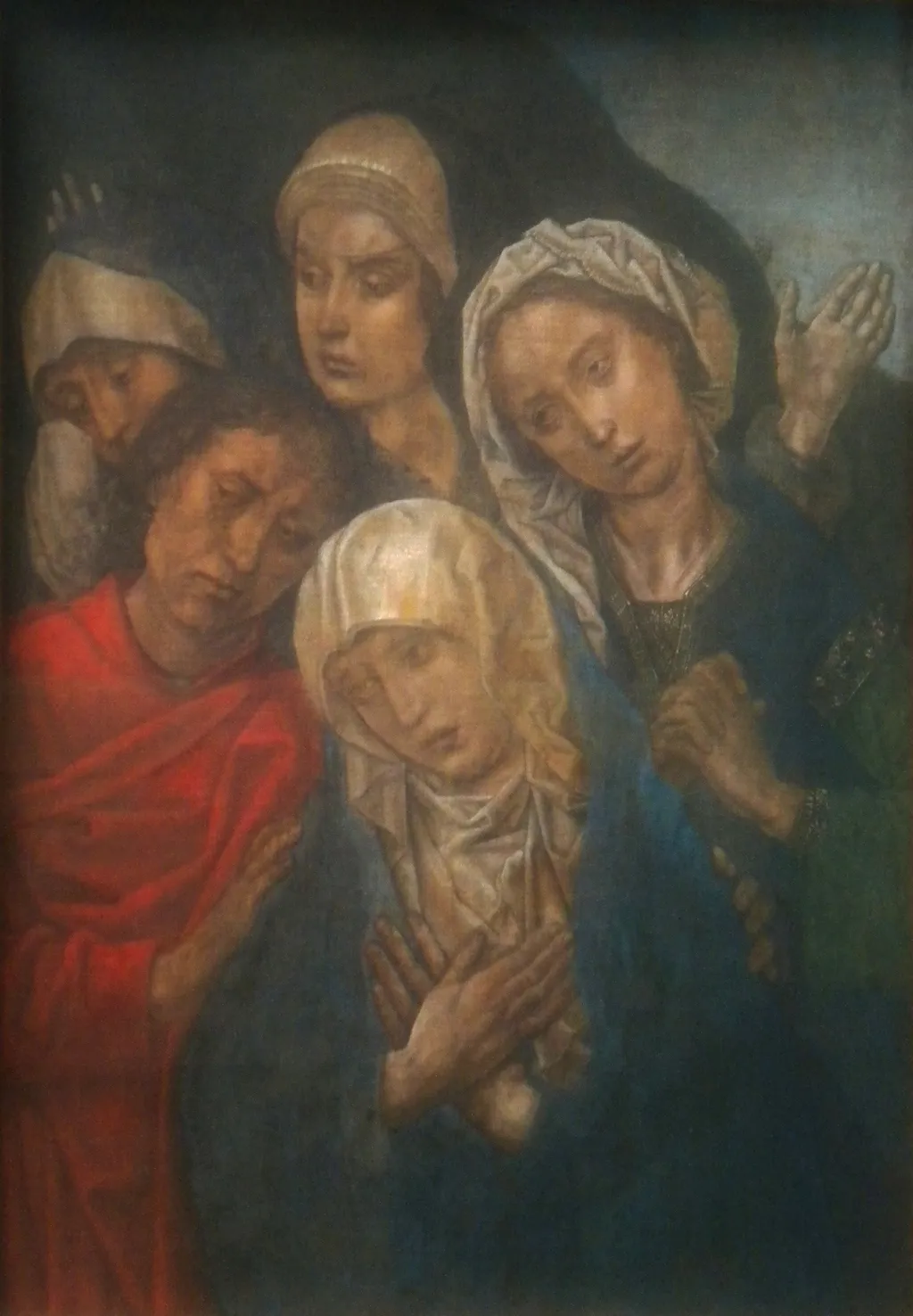
The Mourning of Christ is a tempera painting by the Northern Renaissance artist Hugo Van der Goes. It is held in the collection of the Gemäldegalerie Berlin.
About this work
Subject & Meaning
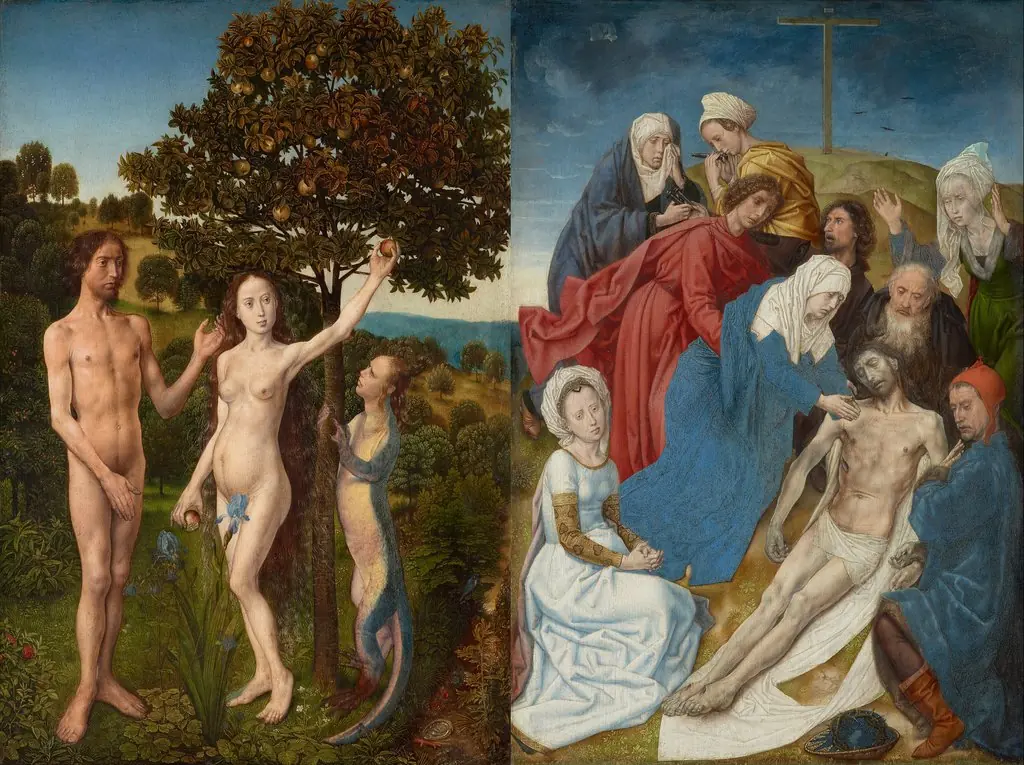
The painting depicts the Lamentation of Christ, a scene from the Passion narrative in which the body of Jesus is mourned after his crucifixion.
The painting depicts the Lamentation of Christ, a scene from the Passion narrative in which the body of Jesus is mourned after his crucifixion. The composition centers on the lifeless Christ, surrounded by a group of mourning figures that includes the Virgin Mary, three Marys (often identified as Mary Magdalene, Mary of Clopas, and Mary Salome), and John the Evangelist. The arrangement emphasizes sorrow and loss, with Mary cradling Christ’s head and the others gathered closely around the body.
The rocky outcrop and skull at the base reference Golgotha, the site of the Crucifixion, and evoke themes of mortality and redemption. The subdued palette and restrained gestures amplify the emotional weight of the moment.
Technique & Style
The work is executed in tempera on canvas, a technique characteristic of Early Netherlandish religious painting in the late fifteenth century. Its dimensions measure approximately 53.5 centimeters in height and 38.5 centimeters in width, supporting a composition that depicts the lamentation of Christ surrounded by Mary, the Three Marys, and John the Evangelist at the foot of the cross. The handling of line and coloration reflects the meticulous surface detail and emotional restraint typical of Hugo van der Goes' mature period, while the overall stylistic treatment aligns with the devotional intensity found in the Gemäldegalerie Berlin's collection.
History & Provenance
The Mourning of Christ is held at the Gemäldegalerie Berlin. Its inventory number is not specified in the sources. The work has been exhibited as part of religious art displays at the Gemäldegalerie Berlin.
It was created in 1480 as an Early Netherlandish religious painting using tempera on canvas, depicting the Lamentation of Christ with Mary, the Three Marys, John the Evangelist, and Calvary.
Context
Critical reception of Hugo van der Goes' 'The Mourning of Christ' emphasizes its emotional intensity and technical mastery within the religious art genre, particularly its depiction of the Lamentation of Christ featuring Mary, the Three Marys, John the Evangelist, and Calvary. Scholarship situates the work firmly in the Early Netherlandish painting movement, highlighting its significance within the artist's broader religious output and its presence in the Gemäldegalerie Berlin's collection since its creation in 1480. The painting's influence stems from its innovative use of tempera on canvas, demonstrating the technical and devotional concerns characteristic of 15th-century Northern European art.
Legacy
The Mourning of Christ shaped later religious imagery through its poignant Lamentation composition, influencing devotional practices in Early Netherlandish art. Its depiction of Mary, the Three Marys, John the Evangelist, and Calvary established visual conventions for Christ's lamentation that resonated through subsequent centuries. The work's legacy is anchored in its presence at the Gemäldegalerie Berlin, where it remains part of the permanent collection.
Art historians note its significance within the Early Netherlandish tradition as a key example of 15th-century religious painting.
The painting's compositional innovations in portraying the Lamentation became a reference point for later artists exploring themes of mourning and divine sacrifice. Its technical execution in tempera on canvas demonstrated advanced mastery that informed contemporary approaches to religious subjects.
Overview
Created circa 1490 by the Flemish artist Hugo van der Goes, this tempera panel belongs to the Northern Renaissance. It is currently part of the collection of the Gemäldegalerie in Berlin. The composition centers on a group of mourners gathered around the crucified Christ, rendered with a restrained palette that emphasizes the solemn atmosphere.
Own this work as a print
Artist & collection
Artist
Hugo van der Goes (c. 1430/1440 – 1482) was a Flemish painter who was one of the most significant and original Early Netherlandish painters of the late 15th century. Van der Goes was an important painter of altarpieces…