Artwork
Monforte Altarpiece
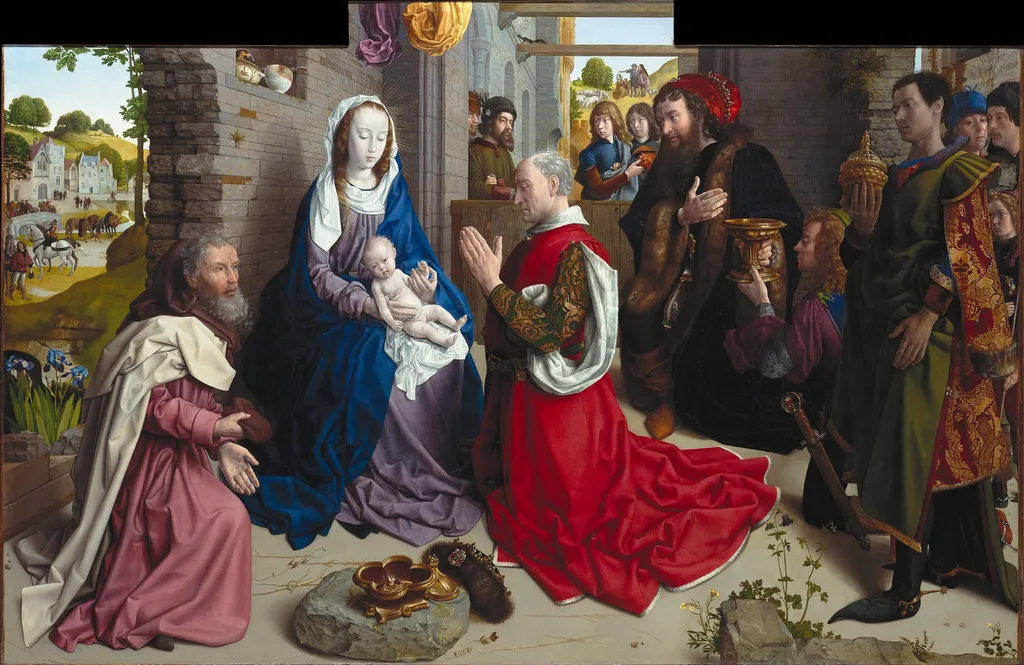
Monforte Altarpiece is an oil painting by the Northern Renaissance artist Hugo Van der Goes. It dates from 1470 and is held in the collection of the Gemäldegalerie Berlin.
About this work
Hugo van der Goes painted an old-style religious scene. This oil-on-wood work shows the Magi visiting baby Jesus. It was the center panel of a triptych whose side wings are now missing.
The frame still has hinges from the lost wings. A recent 2023 study reconstructed the missing top section. Now visitors can see how the full scene once looked.
Check out Hugo Van der Goes next.
Subject & Meaning
Symbolic elements are integrated into the landscape rather than arranged in vases; irises and columbines growing behind Joseph allude to Mary's future sorrows.
The central panel depicts the Adoration of the Magi, set within the ruins of a palace that likely symbolizes the House of David. The Virgin Mary presents the Christ Child, who uniquely gazes directly at the viewer while all other figures, including Joseph and the three kings, focus on the infant. The Magi represent the three known continents and stages of human life, with the eldest king kneeling in a red mantle and the youngest, a Black man, standing sumptuously dressed.
Symbolic elements are integrated into the landscape rather than arranged in vases; irises and columbines growing behind Joseph allude to Mary's future sorrows. A small still life in a wall niche contains bread, a bowl, and a spoon, while the background landscape includes a procession of the Magi and figures possibly representing the Visitation of Elizabeth and John the Baptist. Fragments of pink and yellow drapery at the top indicate lost angels who originally flew toward a comet.
Technique & Style
Executed in oil paint on oak panels, the Monforte Altarpiece is a Flemish devotional work whose handling emphasizes luminous color, intricate detail, and illusionistic textures. The central panel measures 147 cm in height by 242 cm in width, with the surviving oak support retaining its original engaged frame and visible hinge traces for lost wings.
The composition stages the Adoration of the Magi within a shallow, stage-like space defined by a ruined palace wall. Broad, sloping ground planes and sharply receding architecture create a low horizon that tilts foreground figures slightly upward, while Mary and the Christ Child are rendered in a subtly lowered view. Figures are modeled with delicate chiaroscuro, their sumptuous textiles, velvets, brocades, furs, rendered with shimmering, almost sculptural plasticity.
A restrained palette of saturated reds, deep blues, and warm golds is punctuated by naturalistic still-life details, a bowl, pot, spoon, and bread in a wall niche, and symbolic flora such as irises. The background landscape integrates the Magi’s distant procession with botanically observed flora in spring verdure, reinforcing the scene’s spatial and temporal unity.
History & Provenance
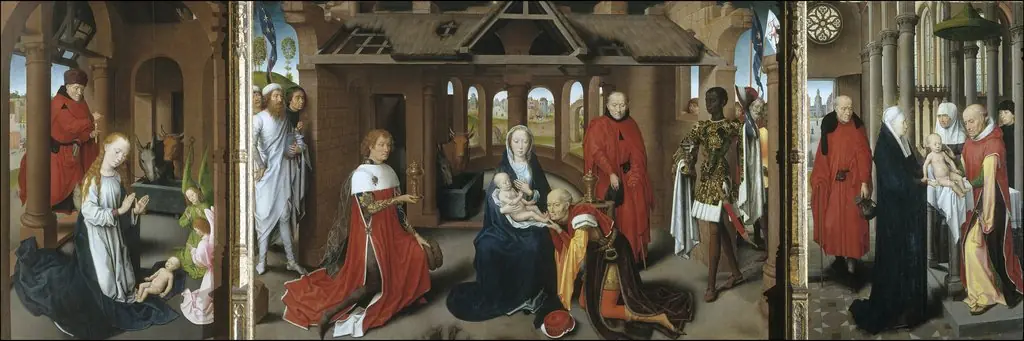
Created circa 1470 in Ghent, the Monforte Altarpiece is an oil-on-oak panel by Hugo van der Goes, dated through stylistic analysis and dendrochronology. The work originally served as the central panel of a triptych with now-lost wings depicting the Nativity and Circumcision; hinges in the original frame confirm this configuration. The upper portion of the panel was later cut down, removing painted angels.
Both the original commissioner and the initial destination remain unknown, though hypotheses suggest a link to Willem Hugonet or a chapel in Mechelen. The painting likely arrived at a convent in Monforte de Lemos, Spain, by the early 16th century. After being rediscovered there, it was offered on the London market in 1910 while still in Spain.
Max Jakob Friedländer and Wilhelm von Bode acquired the work for the Berlin museum collection in 1913 following Spanish export approval, with the piece arriving in Hamburg by ship in 1913 before its public debut in Berlin in January 1914.
The Monforte Altarpiece is held in the Gemäldegalerie, Berlin, with inventory number 157.5 × 239 cm (panel; framed 180.2 × 263 cm).
It was acquired for the Berlin collection in 1914 after Max Jakob Friedländer inspected the work in Spain and the Spanish government granted export permission; the purchase followed its appearance on the London art market in 1910. The painting first went on public display in Berlin on 2 January 1914. In 2023, a reconstruction of the reduced upper section was presented at a van der Goes exhibition at the Gemäldegalerie, Berlin.
Context
The Monforte Altarpiece (c. 1470) by Hugo van der Goes is a seminal work of Early Netherlandish painting, noted for its stylistic advancement that initially confused scholars. Upon its acquisition by the Gemäldegalerie Berlin in 1914, a significant attribution dispute arose between Max Jakob Friedländer, who linked the work to van der Goes via similarities to the Portinari Altarpiece, and Heinrich Wölfflin. Wölfflin, employing a formalist approach, erroneously dated the piece to the 16th century, suggesting it resembled the style of Peter Paul Rubens due to its dramatic chiaroscuro and coloristic freedom.
Although now universally accepted as an early van der Goes, the painting reflects a complex synthesis of influences, recalling the monumentality of Jan van Eyck's Ghent Altarpiece while anticipating Baroque drama. Its historical impact is evidenced by numerous 16th-century copies and adaptations by artists such as Jan Gossaert, Geertgen tot Sint Jans, and the Master of Frankfurt.
Overview
The Monforte Altarpiece is an oil painting on an oak panel by the Flemish artist Hugo van der Goes, depicting the Adoration of the Magi. Housed in the Gemäldegalerie, Berlin, this work originally formed the central part of a larger triptych. Its composition was recently enhanced in 2023 through a detailed reconstruction of a previously lost upper section, allowing viewers to appreciate the artist's full design.
Own this work as a print
Artist & collection
Artist
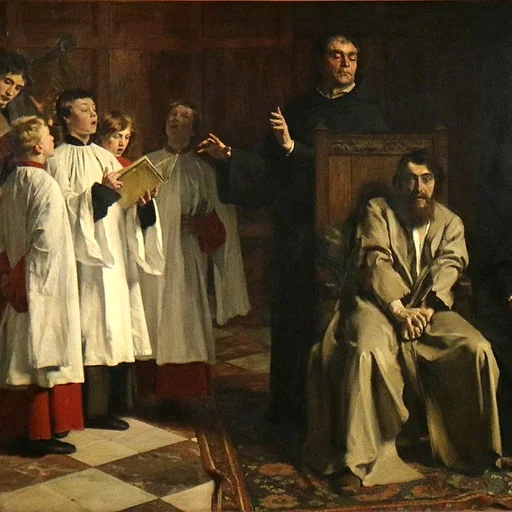
Hugo van der Goes (c. 1430/1440 – 1482) was a Flemish painter who was one of the most significant and original Early Netherlandish painters of the late 15th century. Van der Goes was an important painter of altarpieces…

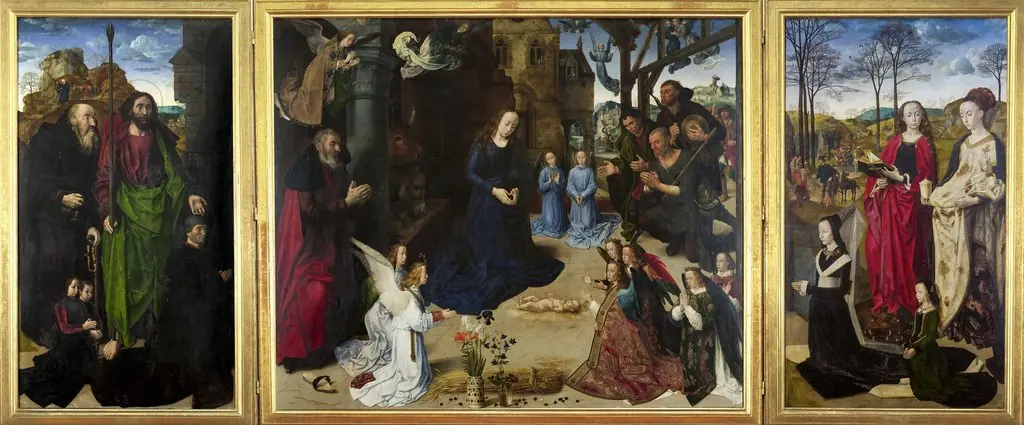
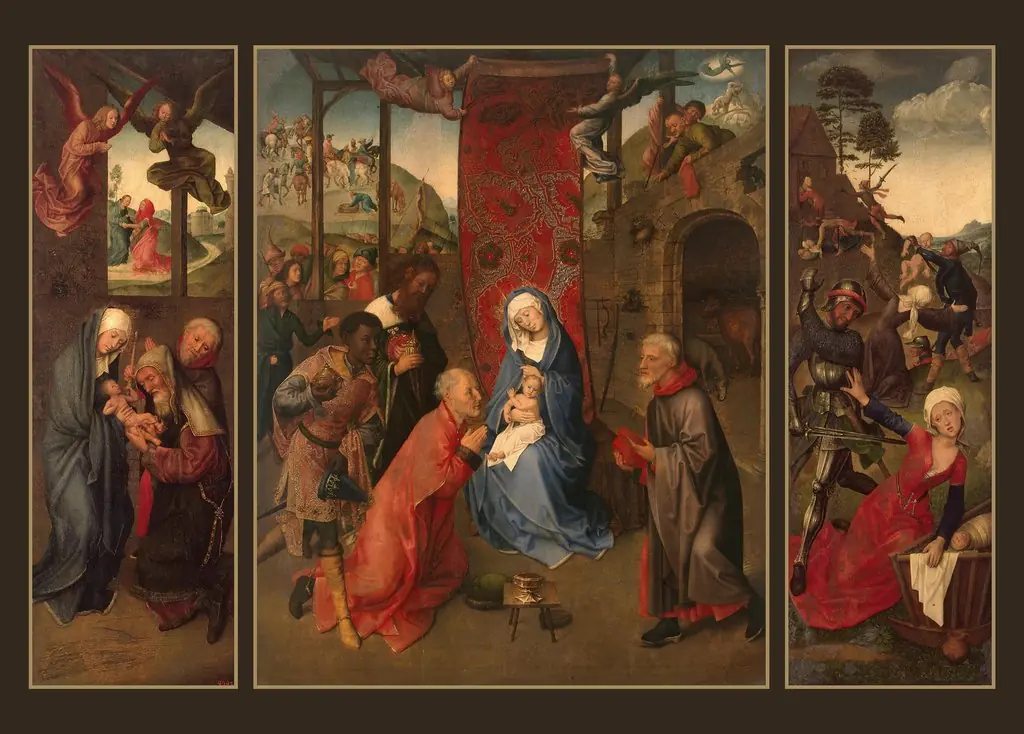
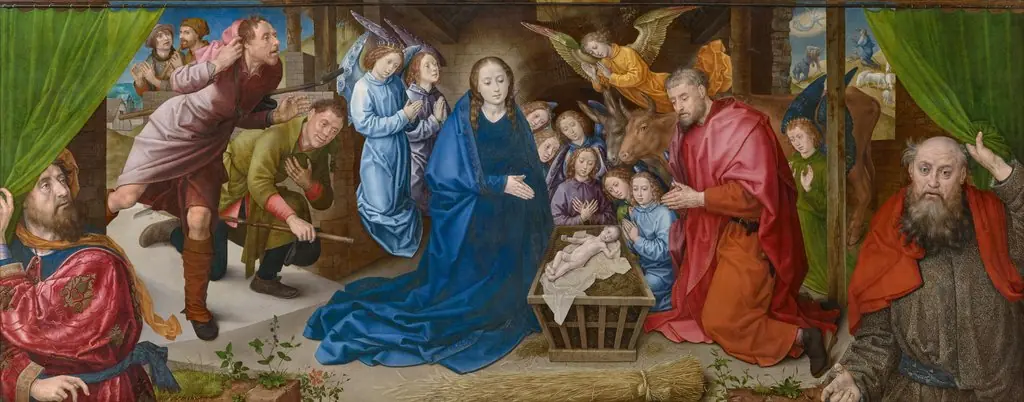
- Adoration of the Magi Triptych
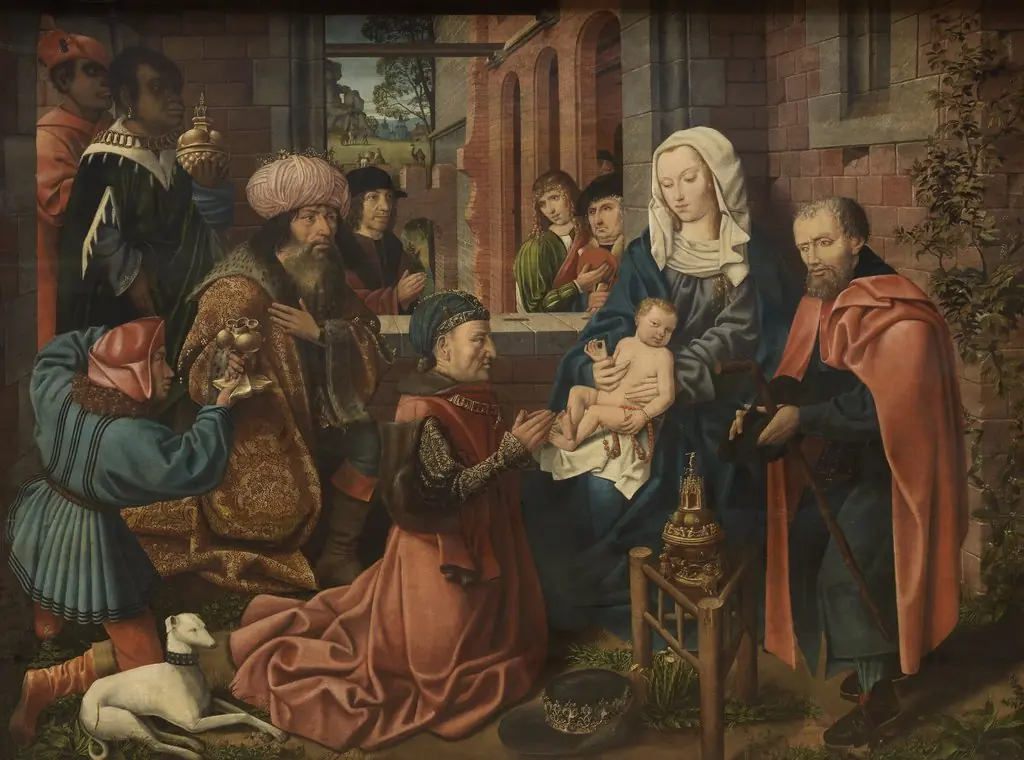 The Adoration of the Magi
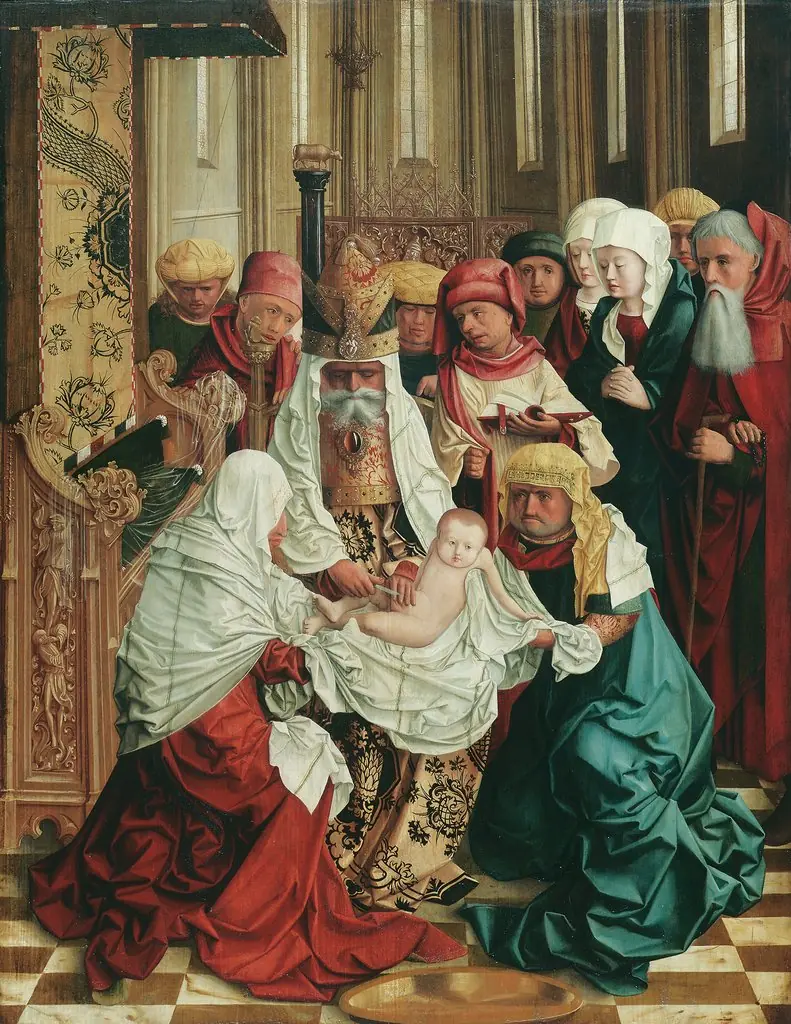 Beschneidung Christi
 Anbetung der Könige
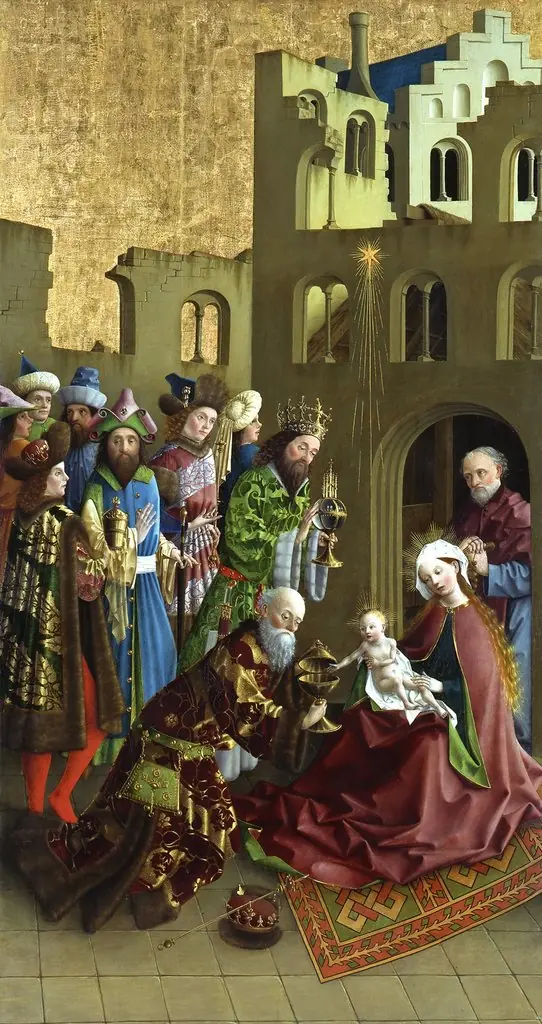 Darmstadt Altarpiece: The Epiphany
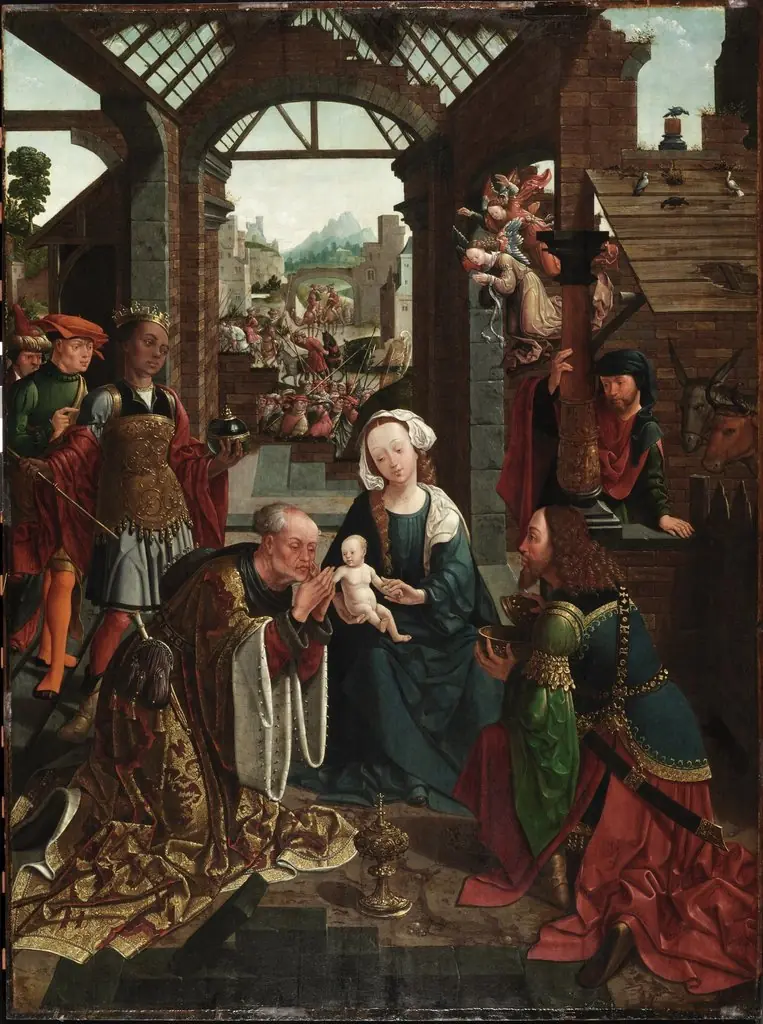 The Adoration of the Kings
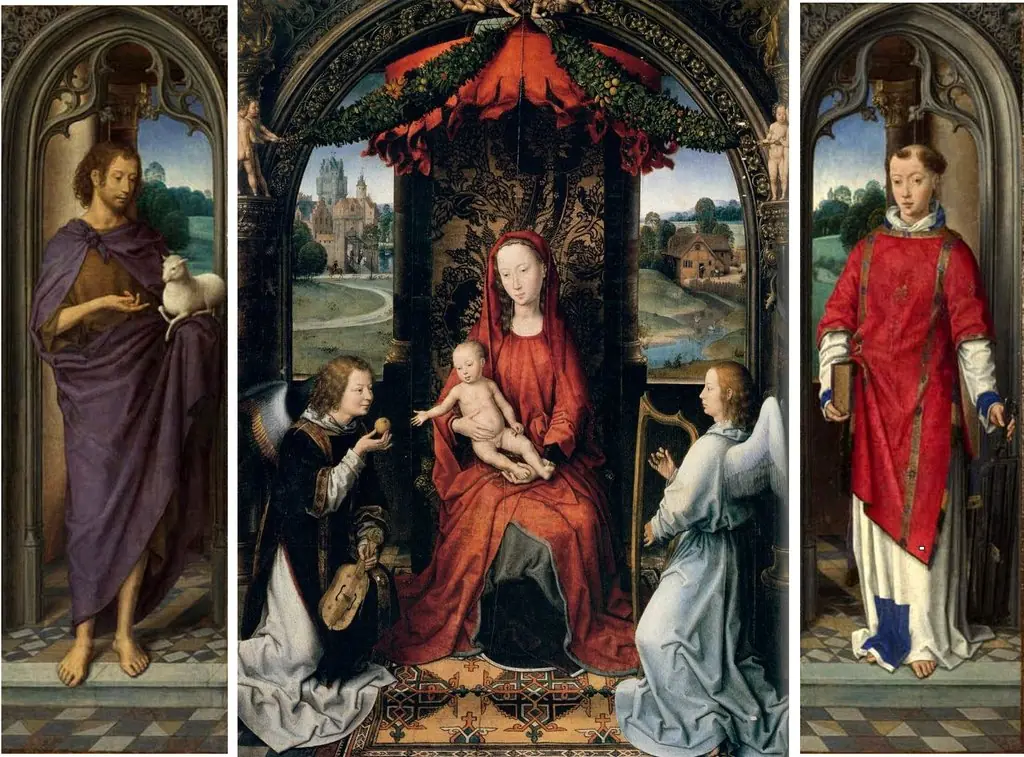 Pagagnotti Triptych
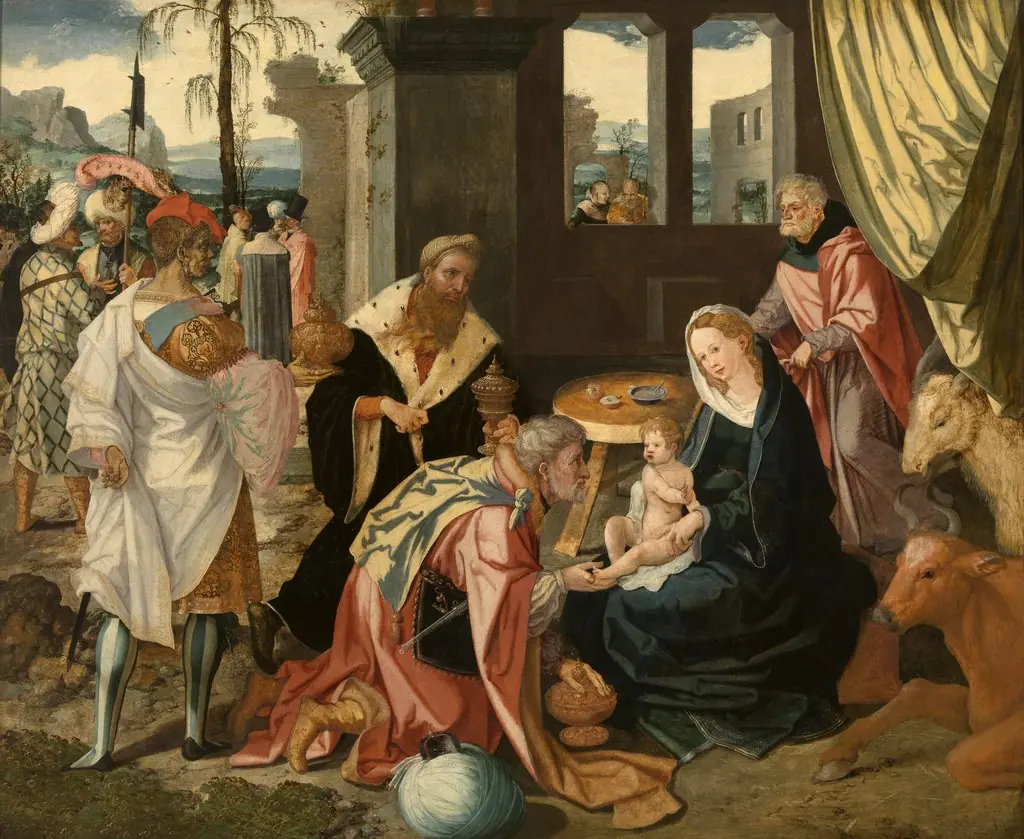 The Adoration of the Magi
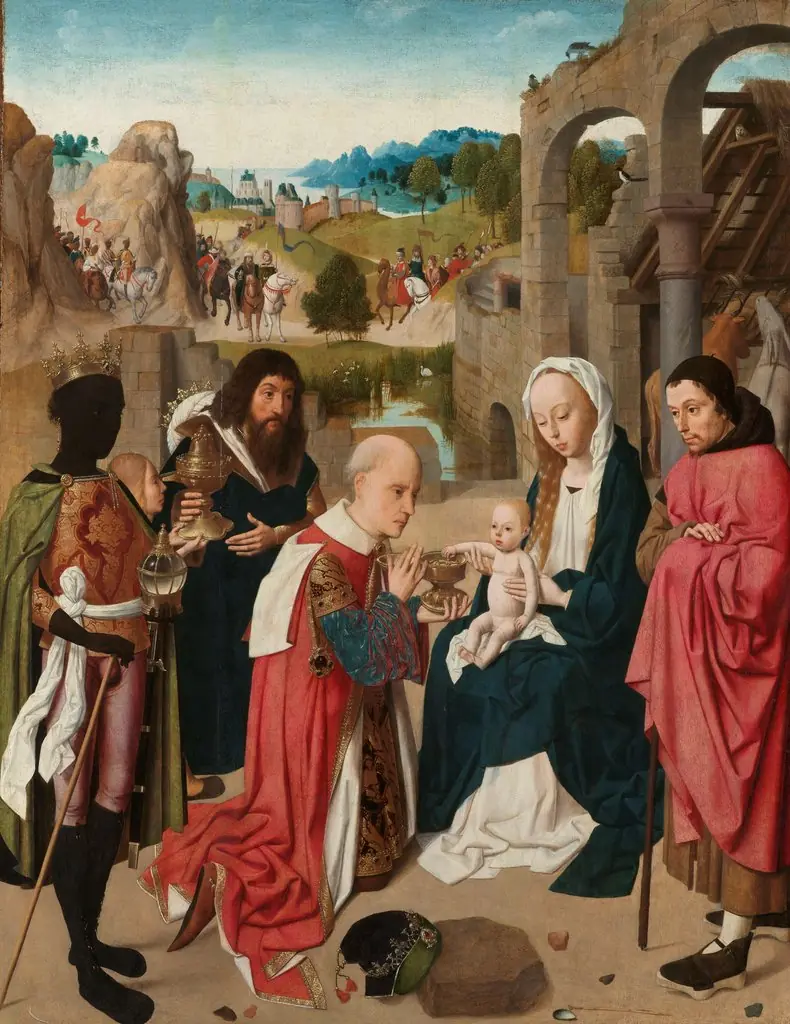 The Adoration of the Magi
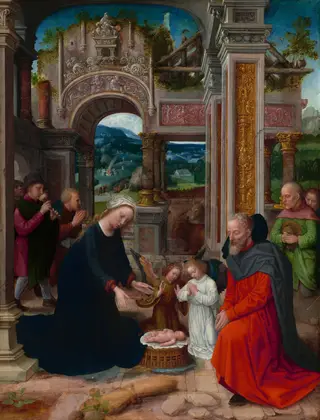 The Adoration of the Shepherds
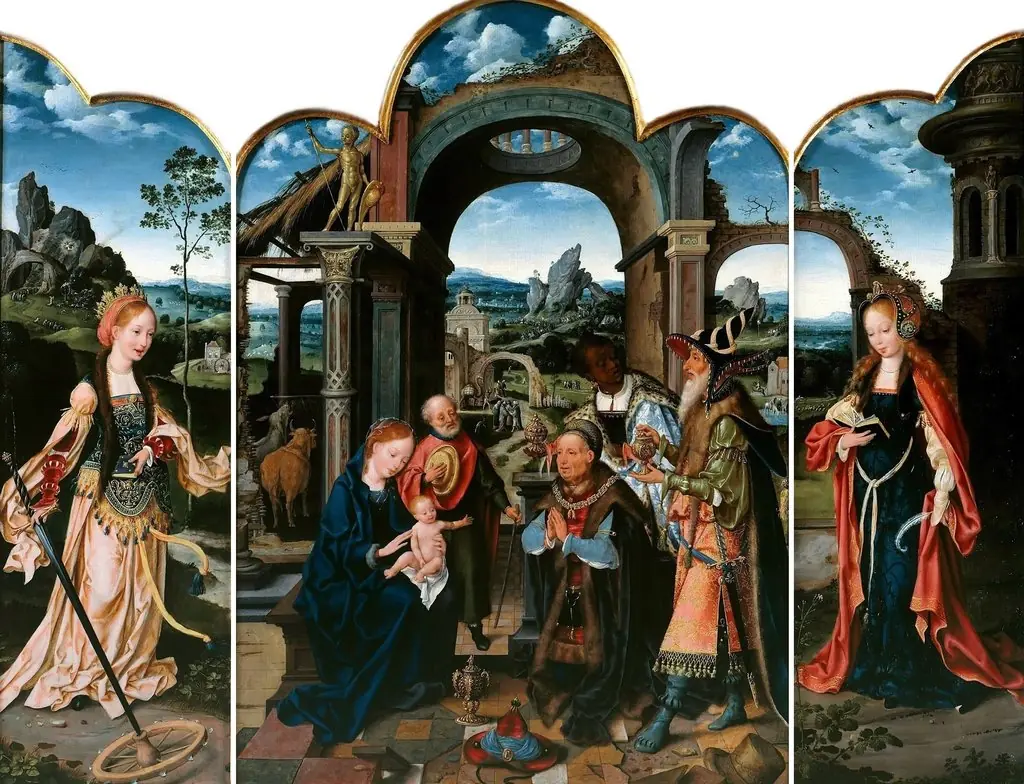 Adoration of the Magi with Sigismund I of Poland.
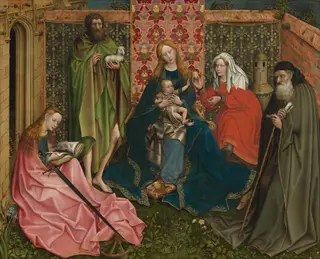 Madonna and Child with Saints in the Enclosed Garden