Artwork
Lake Albano, Sunset
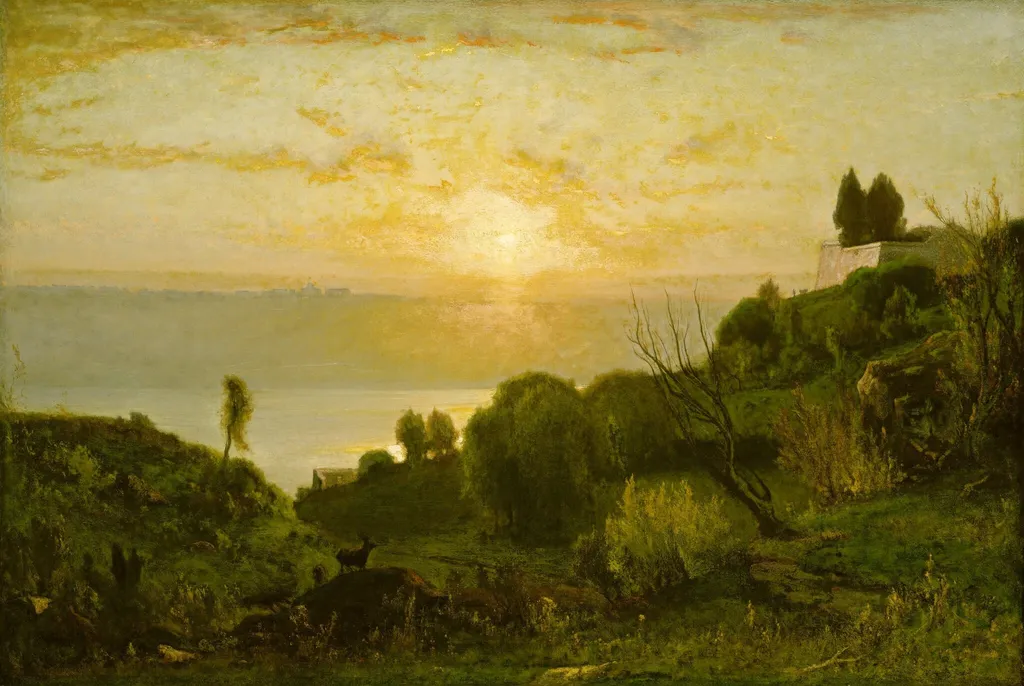
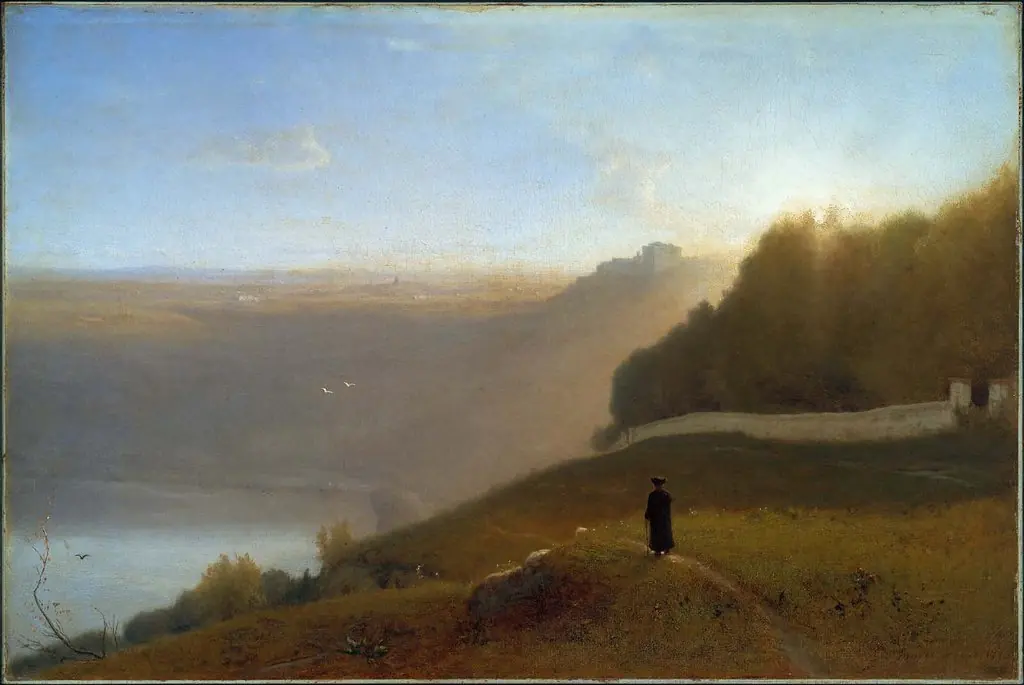
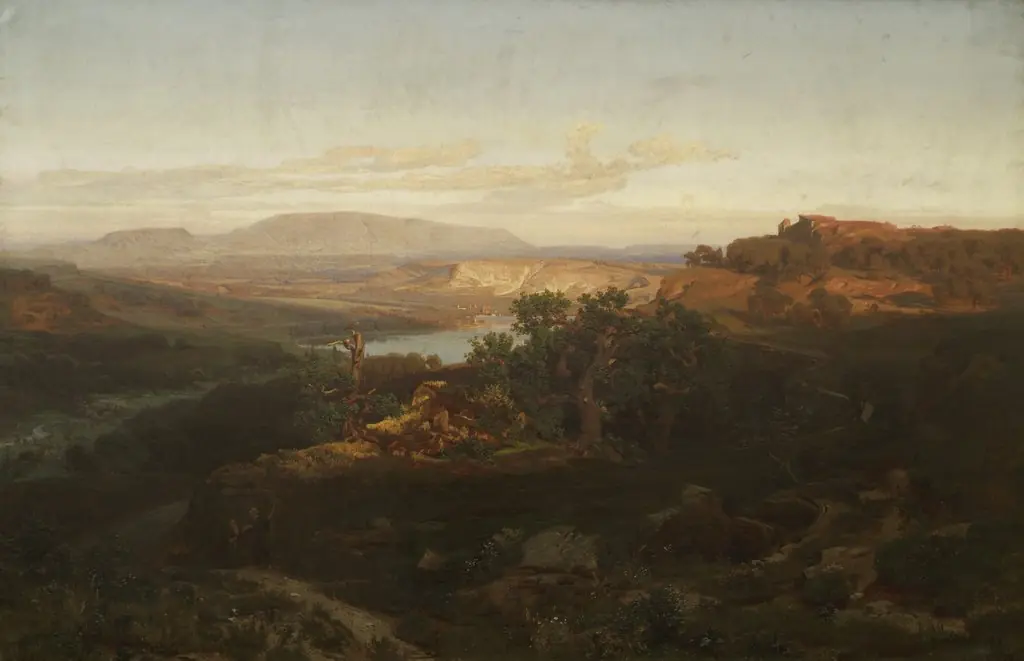
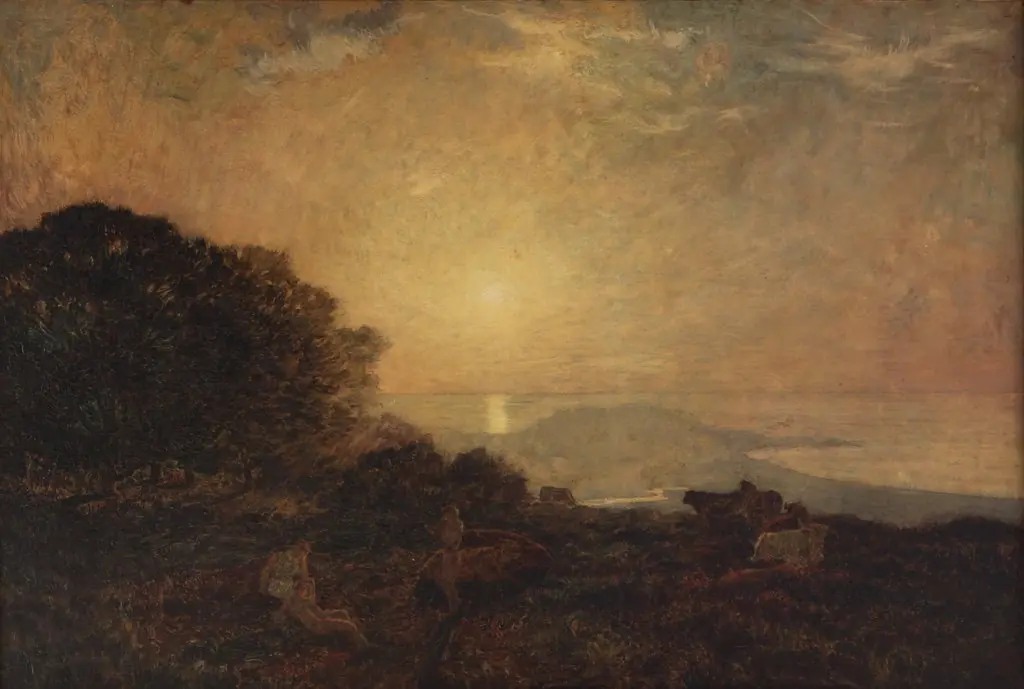
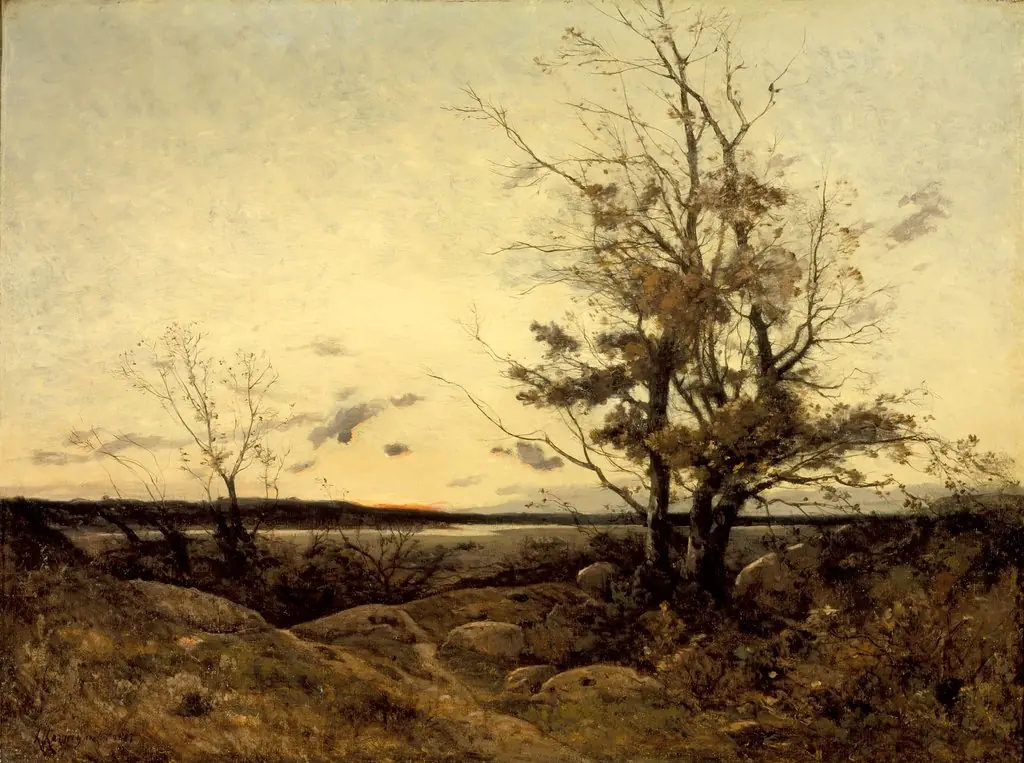
Lake Albano, Sunset is an oil painting by the Hudson River School artist George Inness. It dates from 1874 and is held in the collection of the National Gallery of Art.
- Inscription
- Inscribed:lower left: G. Inn[ess] 187[?]
About this work
Subject & Meaning
The work portrays a tranquil lake surface bathed in the warm glow of a setting sun, an effect that Inness used to convey both the fleeting quality of light and the spiritual harmony he found in nature. By emphasizing the expansive sky and reflective water, the painting suggests a contemplative mood, inviting viewers to perceive the natural world as a manifestation of divine order. The subtle transition from amber to violet tones underscores a symbolic link between temporal day and eternal night, reinforcing Inness's belief that landscape can serve as a conduit for spiritual reflection.
Technique & Style
4 cm in width, reflecting the artist's characteristic atmospheric handling of light and landscape.
Lake Albano, Sunset is an oil painting on canvas created in 1874 by George Inness. The work measures 76.5 cm in height and 114.4 cm in width, reflecting the artist's characteristic atmospheric handling of light and landscape. Its formal qualities include a luminous tonal palette and a composition that balances naturalistic detail with a poetic, almost impressionistic treatment of atmospheric effects.
The painting's surface retains its original oil medium without significant degradation, preserving the delicate glazes and layered brushwork that define Inness's mature style.
The support is a canvas substrate, typical of Inness's practice during this period, and the handling exhibits a smooth, blended application that enhances the sense of depth and luminosity in the depicted sunset over Lake Albano. Stylistically, the piece aligns with the tonalist approach, emphasizing mood and light over precise topographical accuracy, while the composition showcases Inness's skill in rendering atmospheric effects through subtle gradations of color and tone.
History & Provenance
Lake Albano, Sunset was painted by George Inness in 1874. On 9 June 1874, the work was purchased directly from the artist in Paris by Mr. and Mrs. J. Cleaves Dodge, as documented by a letter Inness wrote to J. Cleaves Dodge on that date, now held in the National Gallery of Art curatorial files.
The painting remained with the Dodge family for nearly nine decades. In 1916 it passed by inheritance to Mrs. Dodge's nephew, Henry Percival Dodge, in Paris. His wife, Agnes Page Dodge, held it from 1936 to 1953, after which it went to her stepdaughter, Alice Lamb Cleaves Dodge, who kept it in Paris from 1953 to 1955 and then in Washington, D.C., from 1955 to 1962.
In 1962, Alice Dodge gifted the painting to the National Gallery of Art, though she retained a life interest in it. The work finally entered the NGA's collection at her death in 1985.
The painting Lake Albano, Sunset is held by the National Gallery of Art in Washington, D.C. It entered the museum's collection in 1962 as a gift from Alice Lamb Cleaves Dodge, although she retained a life interest until her death in 1985. The work was originally purchased from the artist George Inness on June 9, 1874, by Mr. and Mrs. J. Cleaves Dodge in Paris. It subsequently passed by inheritance to Henry Percival Dodge and his wife Agnes Page Dodge before reaching Alice Dodge.
The provided sources detail this provenance chain but do not list specific exhibition history or an inventory accession number.
Overview
George Inness's Lake Albano, Sunset, executed in 1874, is a quintessential example of his mature Tonalist style, marking a departure from the detailed realism of his earlier Hudson River School period. The work depicts the volcanic crater lake near Rome, Italy, rendered not as a topographical record but as a spiritual meditation on light and atmosphere. Inness composes the scene with a soft, hazy horizon where the sky and water merge in a unified palette of warm yellows and ochres.
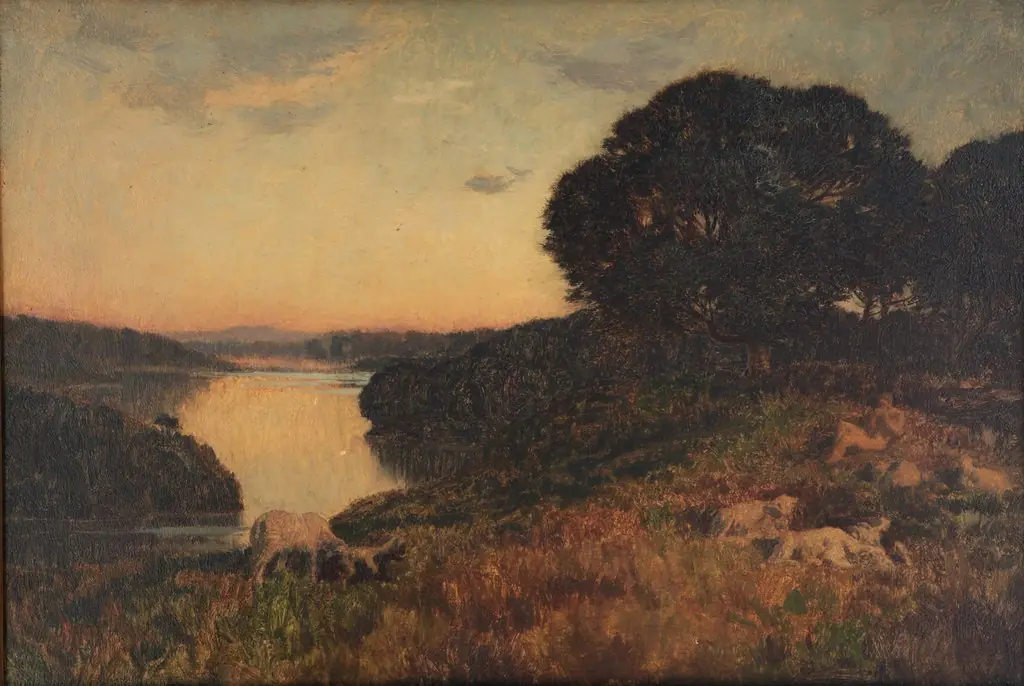
The brushwork is loose and blended, creating a luminous, ethereal quality that dissolves specific forms into a harmonious whole. A solitary sheep grazes in the foreground, a recurring motif in Inness's work that serves to emphasize the scale of nature and evoke a sense of pastoral tranquility rather than narrative action. Painted during the artist's second extended stay in Italy, this canvas reflects his deepening interest in the metaphysical dimensions of landscape, influenced by the philosophy of Emanuel Swedenborg.
The painting prioritizes emotional resonance and the subjective experience of light over precise geographic detail, establishing Inness as a pivotal figure in the transition from American realism to modern abstraction.
Own this work as a print
Artist & collection

Artist
George Inness (May 1, 1825 – August 3, 1894) was an American landscape painter. Now recognized as one of the most influential American artists of the nineteenth century, Inness was influenced by the Hudson River School…