Artwork
Grapes, Flowers and Animals
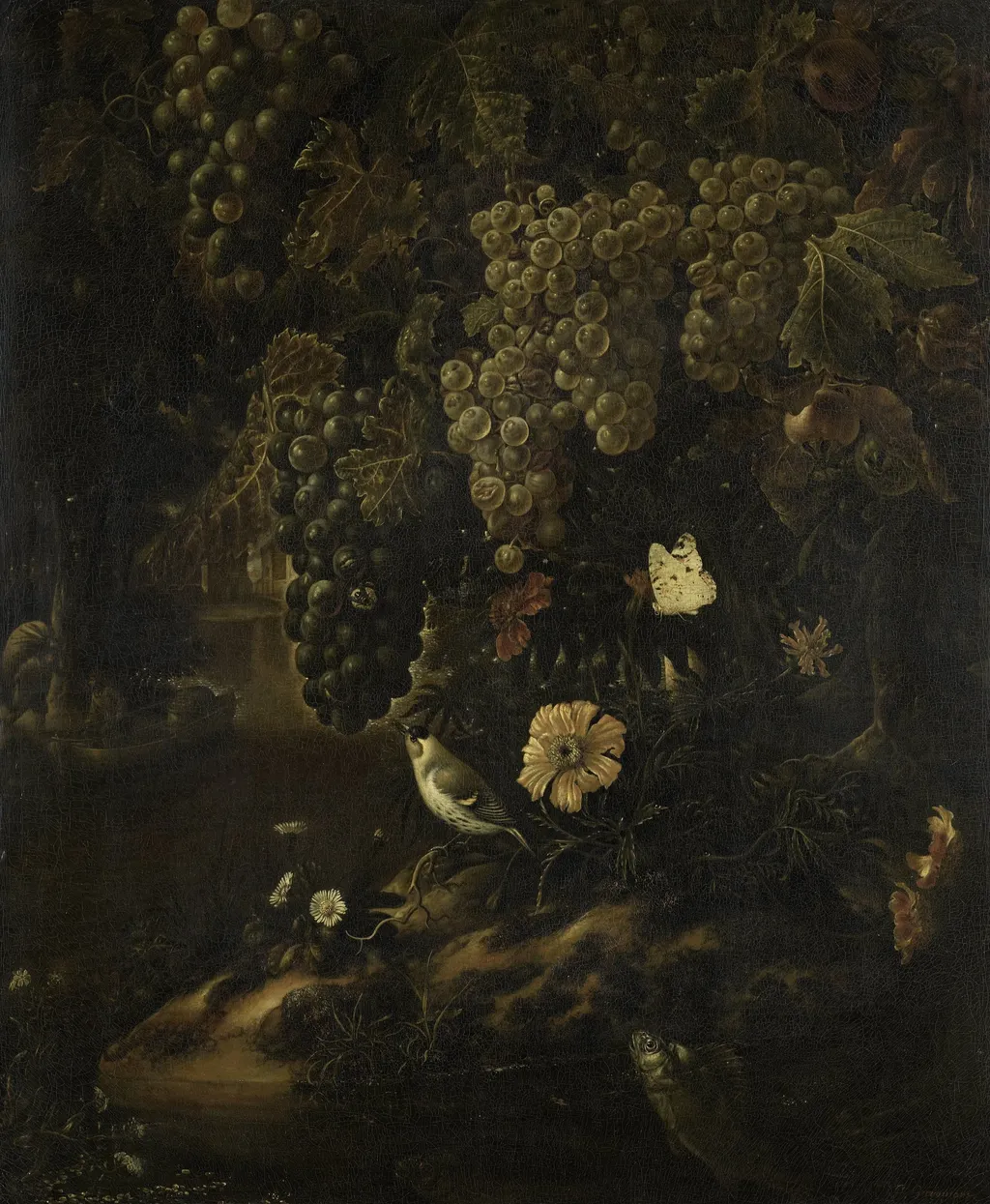
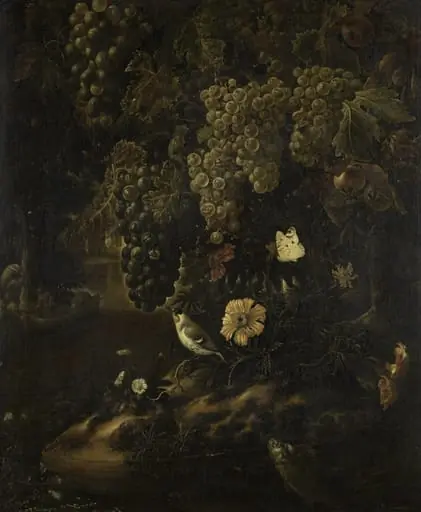
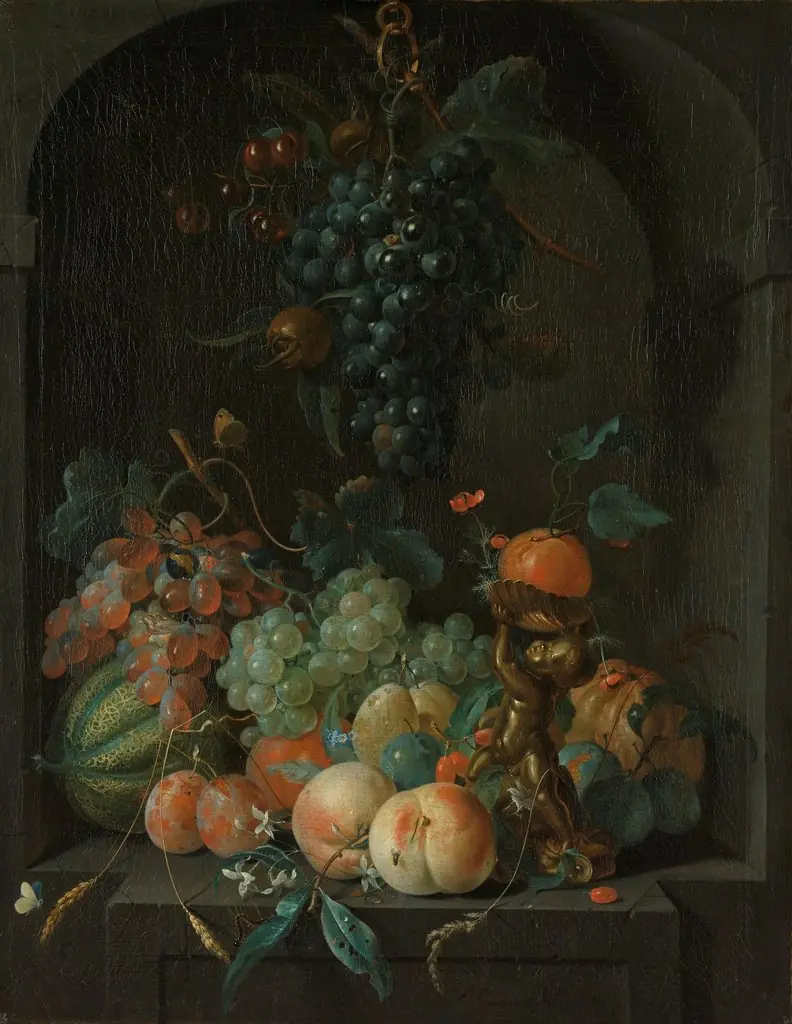
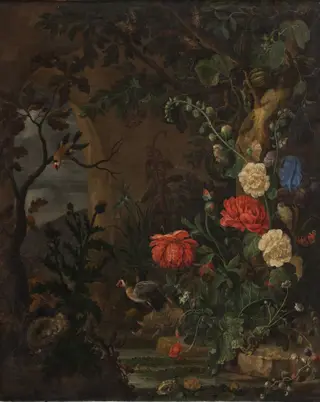
Grapes, Flowers and Animals is an oil painting by the Dutch Golden Age artist Isac Vromans. It dates from 1696 and is held in the collection of the Rijksmuseum.
About this work
Technique & Style
Executed in 1692, this still life by Isac Vromans is an oil painting on canvas. The work measures 65 cm in height and 53 cm in width. As a representative piece of the genre, the composition focuses on floral subjects, consistent with the artist's approach to depicting natural elements within a controlled setting.
History & Provenance
The work was included in the exhibition Still Life: 1650–1800 from the Rijksmuseum held at the museum from 18 June to 18 September 2016.
The painting Grapes, Flowers and Animals was created in 1692 by the Dutch artist Isac Vromans as an oil on canvas still life. According to the sources, the work is presently housed in the Rijksmuseum, where it forms part of the museum’s collection. No earlier ownership, commission, or provenance details are recorded in the provided references; the painting’s history before its arrival at the Rijksmuseum remains undocumented.
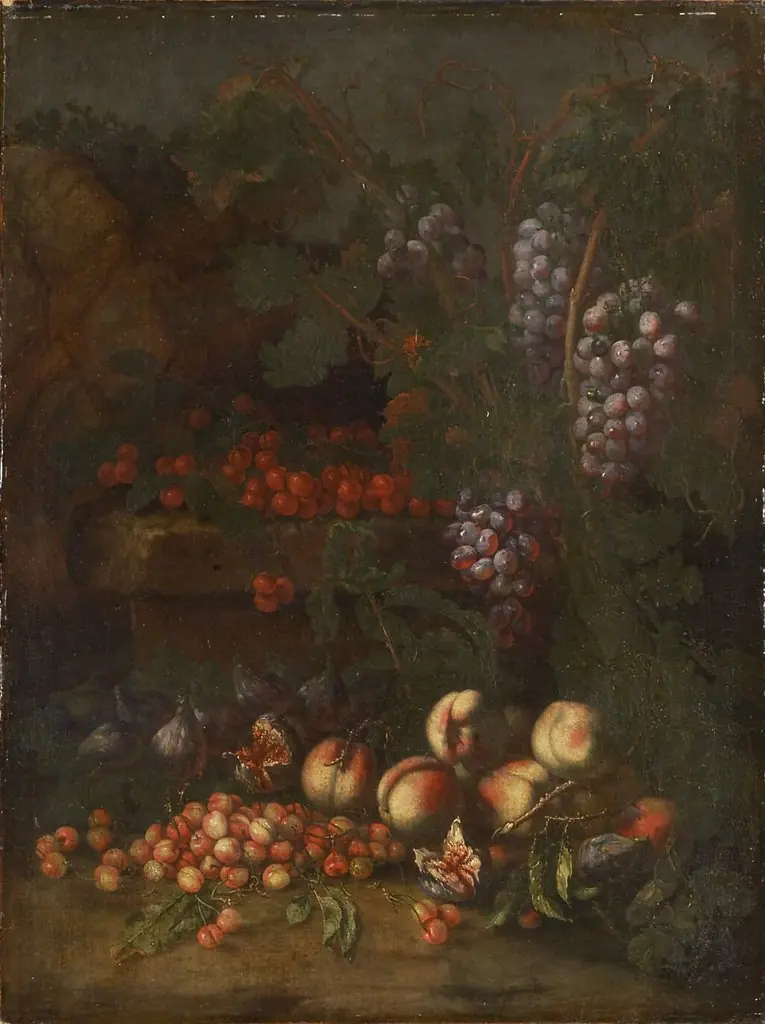
The work is executed in oil paint on canvas, depicting a composition of grapes, flowers and animals typical of the still‑life genre.
The painting is held in the collection of the Rijksmuseum, Amsterdam. Its inventory number is SK-C-1446. The work was included in the exhibition Still Life: 1650–1800 from the Rijksmuseum held at the museum from 18 June to 18 September 2016.
Overview
Isac Vromans’ oil painting Grapes, Flowers and Animals, executed in 1696, presents a richly detailed still‑life composition. The work is part of the Rijksmuseum’s collection and showcases the artist’s skill in rendering natural objects with precise texture and colour.
Subject & Meaning
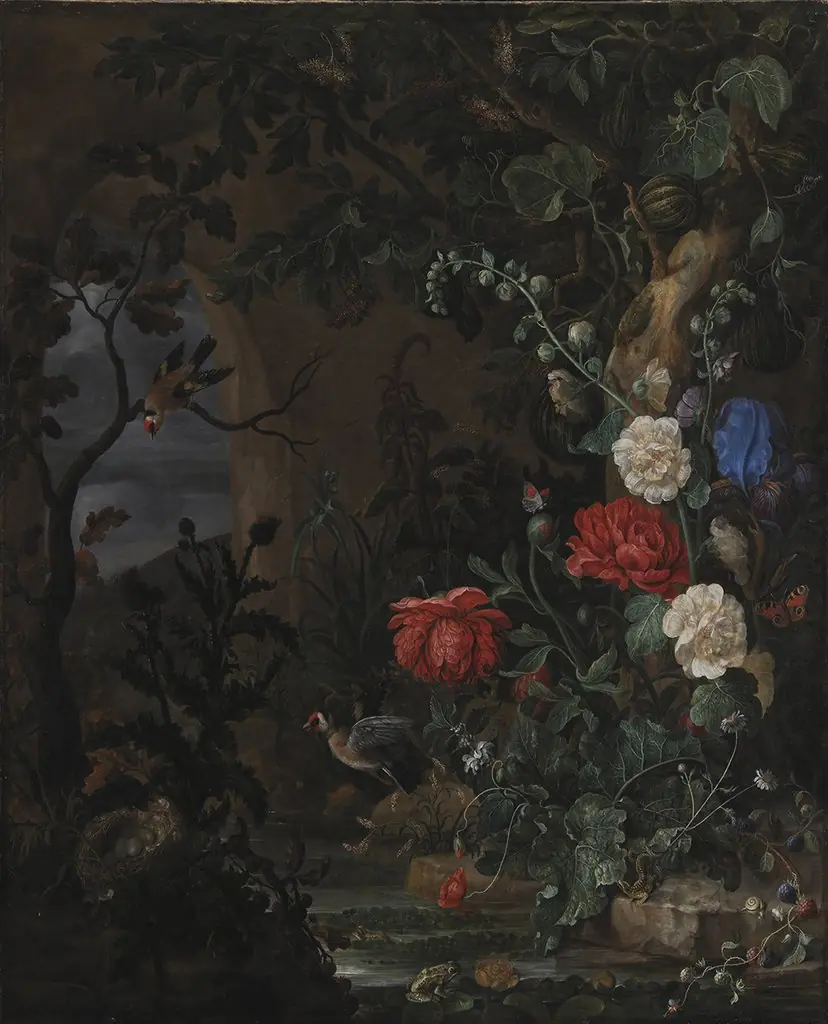
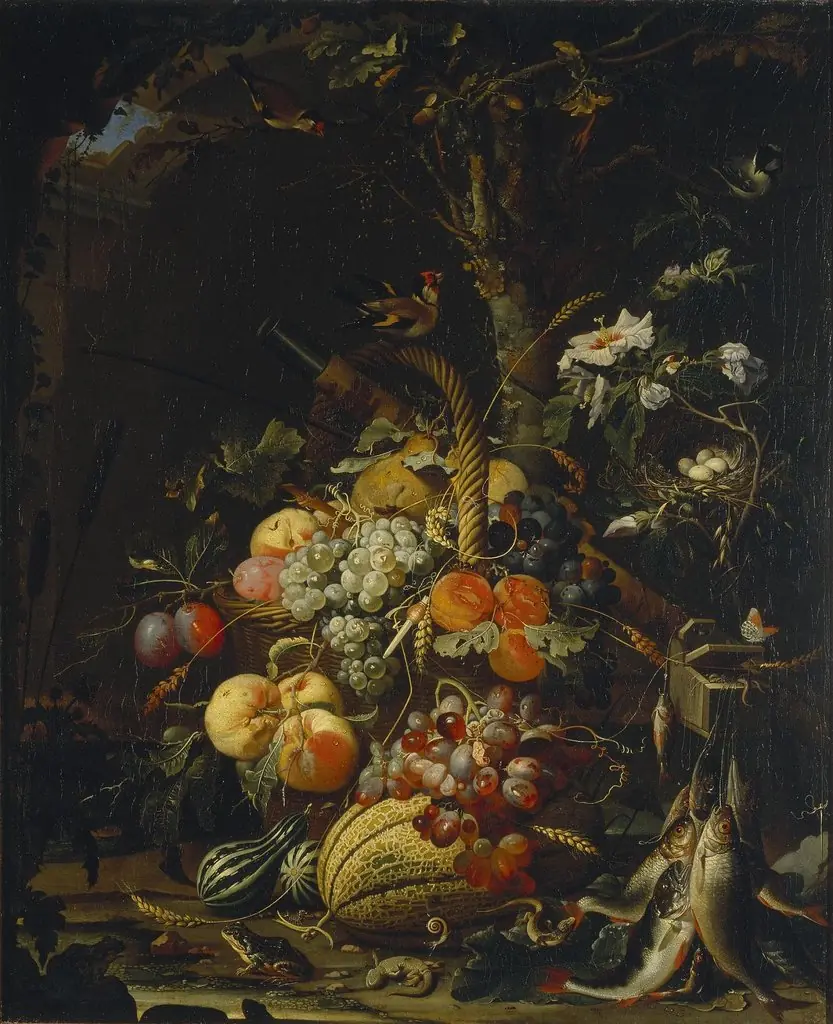
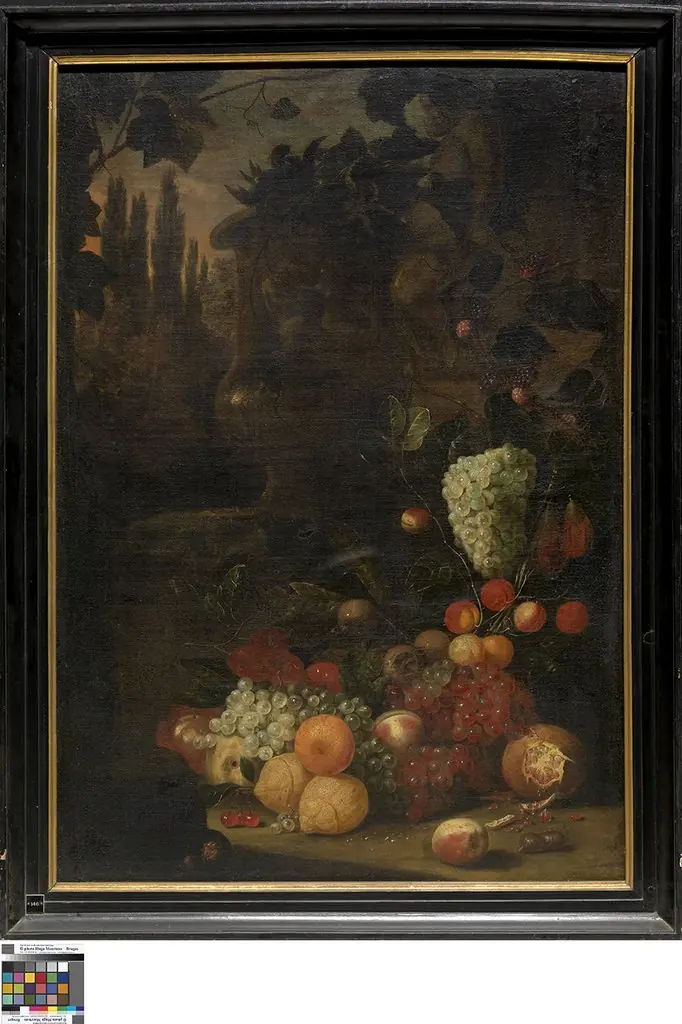
The canvas brings together clusters of ripe grapes, assorted blossoms, and two small creatures, a bird and a fish, arranged to suggest abundance and the cycle of life. The juxtaposition of fruit, flora and fauna hints at themes of fertility and the interdependence of nature.
Context
The work belongs to a Dutch Golden Age genre that celebrated material prosperity through detailed depictions of food and nature. Vromans’ inclusion of both terrestrial and aquatic animals aligns with contemporary symbolic conventions linking wildlife to seasonal bounty.
Own this work as a print
Artist & collection