Artwork
Adoration of the Child with SS. Joseph, Jerome, Hilarion, Magdalena and angels
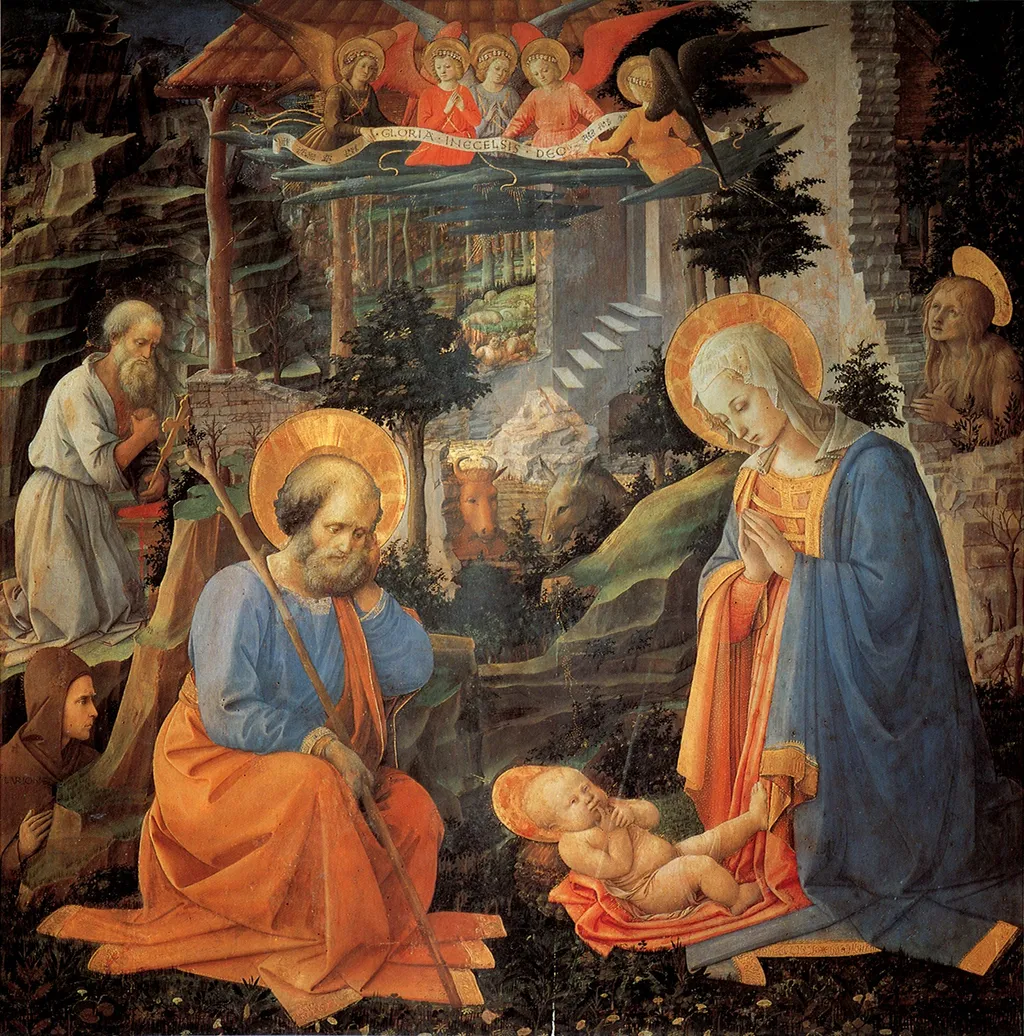
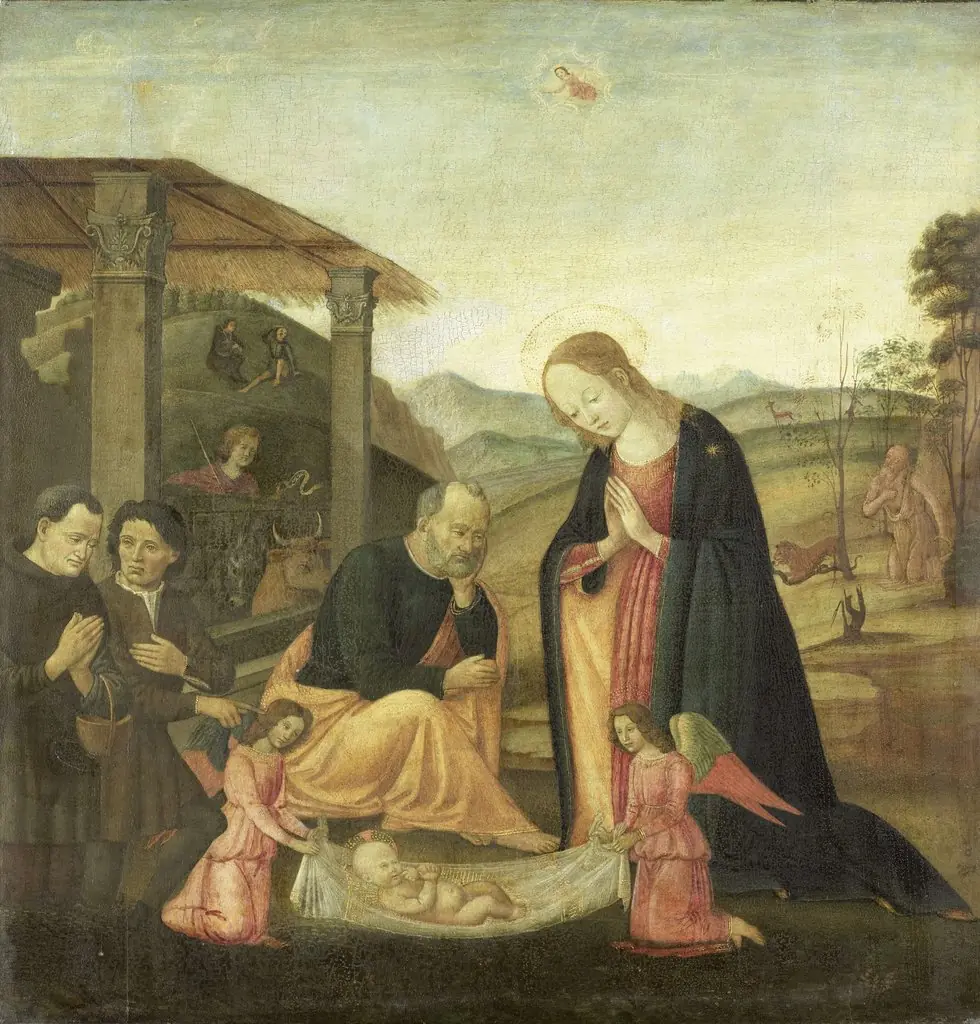
Adoration of the Child with SS. Joseph, Jerome, Hilarion, Magdalena and angels is a tempera painting by the Early Renaissance artist Filippo Lippi. It dates from 1455 and is held in the collection of the Uffizi Gallery.
About this work
Subject & Meaning
This composition follows traditional iconography of the Adoration of the Child, emphasizing the sacred moment of Christ's birth and the veneration it inspires.
The painting depicts the Nativity of Jesus with the Virgin Mary, the Christ Child, and Saint Joseph, surrounded by saints Jerome, Hilarion, and Magdalene accompanied by angels. This composition follows traditional iconography of the Adoration of the Child, emphasizing the sacred moment of Christ's birth and the veneration it inspires. The presence of Saint Jerome in his characteristic habit, Saint Hilarion as a desert hermit, and Magdalene in a penitent pose reflects their established symbolic roles within the narrative.
The work was created for the convent of Annalena in Florence and later entered the Uffizi Gallery collection in 1919, preserving its religious significance within a historic Florentine spiritual context.
Technique & Style
This work is executed in tempera on a wooden panel, measuring 137 cm in height and 134 cm in width. The composition employs a deep perspective that integrates natural elements with the architectural setting of the stable, creating spatial distance between the foreground figures and those in the background. In the foreground, the Virgin Mary, the Christ Child, and Saint Joseph are prominently displayed.
The background features a rugged landscape where Saint Jerome is depicted in his traditional guise as a bearded elder praying on his knees. Below him, Saint Hilarion appears as a monk. To the right, Mary Magdalene is shown in a posture of prayer.
The arrangement of the ox and donkey at the center further anchors the Nativity scene within this distinct spatial and stylistic framework.
History & Provenance
The painting, titled Adoration of the Child with SS. Joseph, Jerome, Hilarion, Magdalena and angels, was created by Filippo Lippi around 1453 or 1455. According to Giorgio Vasari, the work was commissioned specifically for the convent of Annalena in Florence.
Historical records by Giuseppe Richa from the 18th century confirm the piece remained in its original location at the church and convent of San Vincenzo d'Annalena for centuries. The ownership chain transferred the artwork to the Uffizi Gallery in Florence, where it has been conserved since 1919.
The painting is held in the Uffizi Gallery, Florence. It was originally created for the Convent of Annalena in Florence and, according to the Italian Wikipedia entry, has been part of the Uffizi’s collection since 1919, when it entered the museum. The work has remained on display at the Uffizi, and the sources do not record any specific exhibitions, loans, or changes in location after its acquisition. It continues to be a part of the Uffizi’s permanent collection.
Context
Filippo Lippi's Adoration of the Child (c. 1453) serves as a significant example of mid-15th-century religious painting, originally commissioned for the convent of Annalena in Florence. The work has generated specific scholarly debate regarding its portraiture; eighteenth-century historian Giuseppe Richa identified the figure of Saint Hilarion as a likeness of Roberto Malatesta, a theory endorsed by later scholars such as Milanesi, Crowe, and Cavalcaselle. This attribution was firmly rejected by Igino Benvenuto Supino, though it was recently reaffirmed by Marchini, who also proposed the 1453 date based on the convent's founding.
Stylistically, the painting is noted for its deep perspective that integrates natural elements with architectural structures, distinguishing it through the placement of secondary figures like Saint Jerome and the Magdalene within an expansive landscape. The panel entered the Uffizi Gallery collection in 1919, having been documented in situ by Richa prior to its removal.
Overview
Created in 1455 by the Florentine painter Filippo Lippi, this tempera panel presents a devotional gathering around the infant Christ. The composition includes the Virgin Mary, Saint Joseph, Saint Jerome, Saint Hilarion, Saint Magdalena and a host of angels, all arranged beneath a delicate canopy. The work is part of the Uffizi Gallery’s collection and exemplifies the early Renaissance’s emphasis on balanced, serene religious imagery.
Legacy
The panel exemplifies Lippi’s influence on subsequent generations, particularly in the treatment of sacred narratives with intimate, humanized figures. Its presence in the Uffizi offers scholars a reference point for studying the development of tempera technique and the spread of Quattrocento visual language across Italy.
Own this work as a print
Artist & collection

Artist
Filippo Lippi (c. 1406 – 8 October 1469), also known as Lippo Lippi, was an Italian Renaissance painter of the Quattrocento (fifteenth century) and a Carmelite priest. He was an early Renaissance master of a painting…

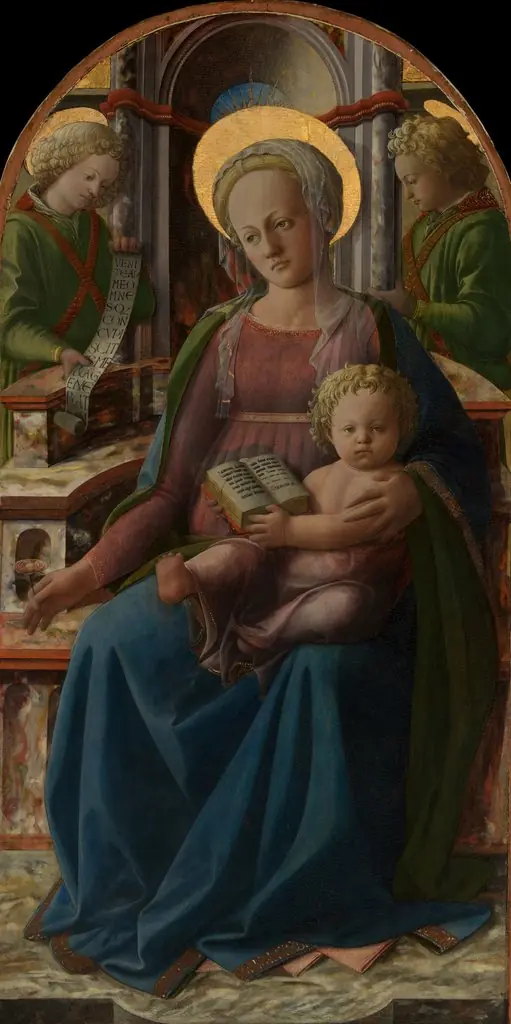 Madonna and Child Enthroned with Two Angels
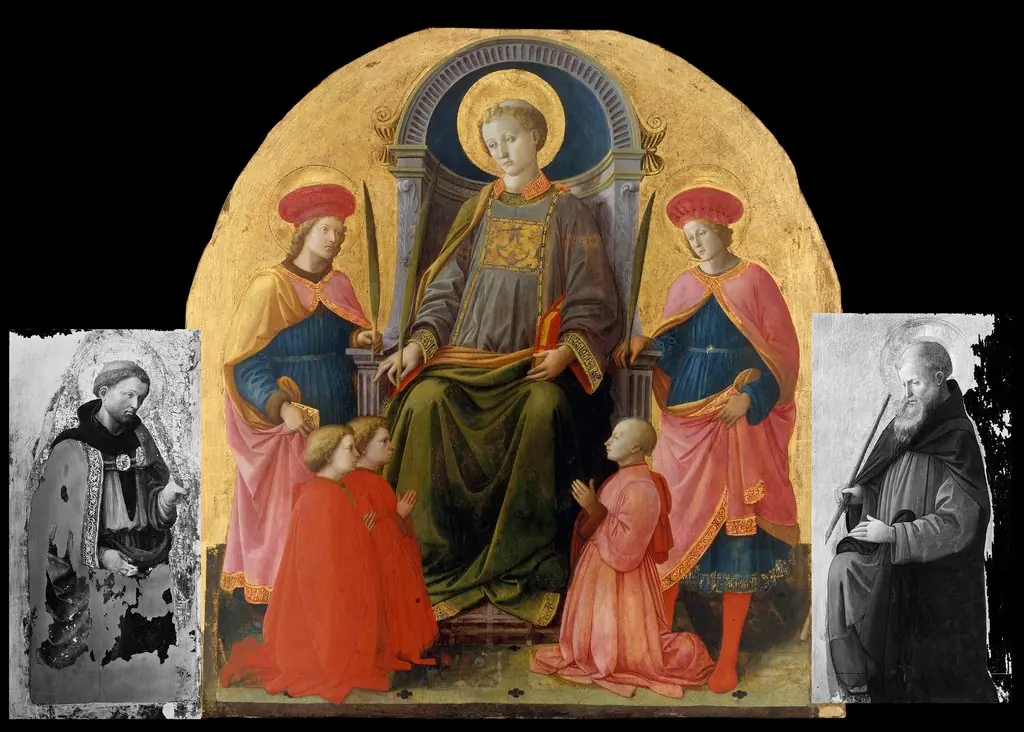 Saint Lawrence Enthroned with Saints and Donors
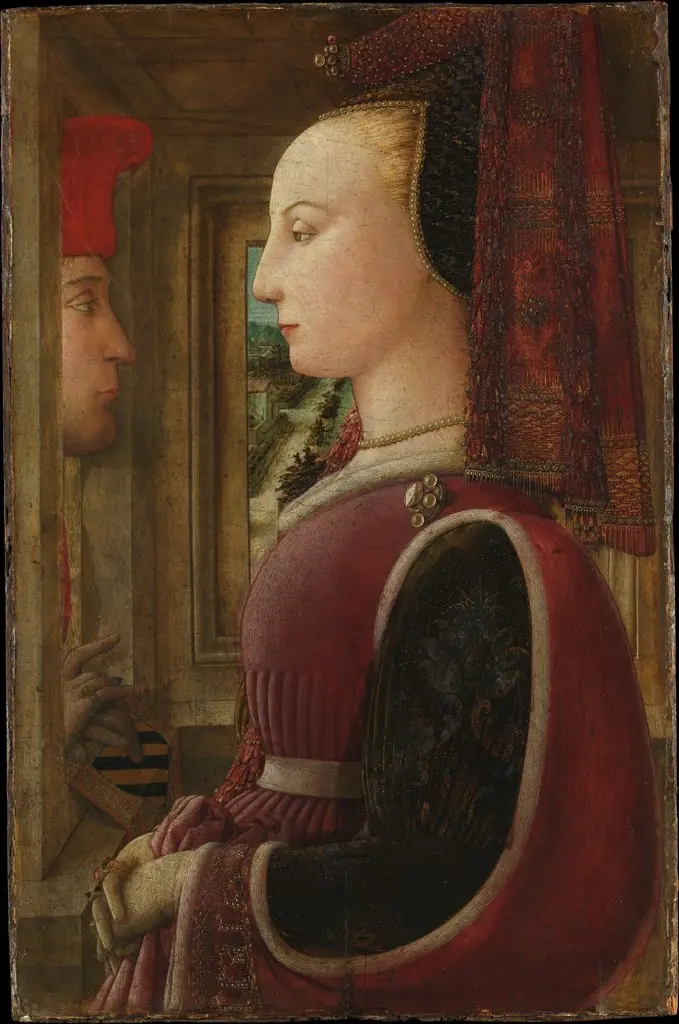 Portrait of a Woman with a Man at a Casement
 Saints Augustine and Francis, a Bishop Saint, and Saint Benedict
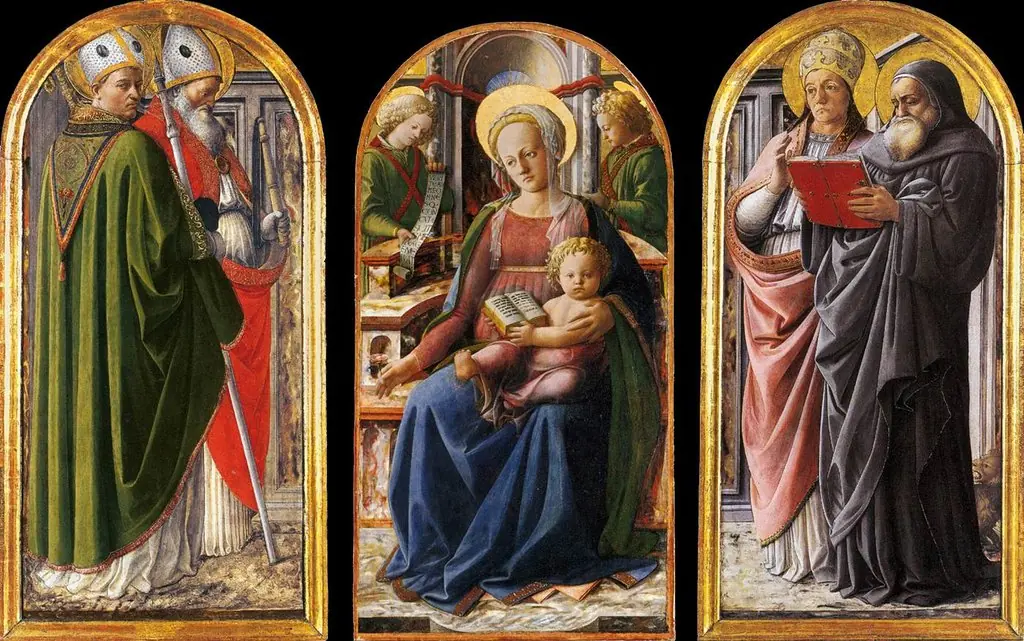 Madonna and Child with Angels and Saints
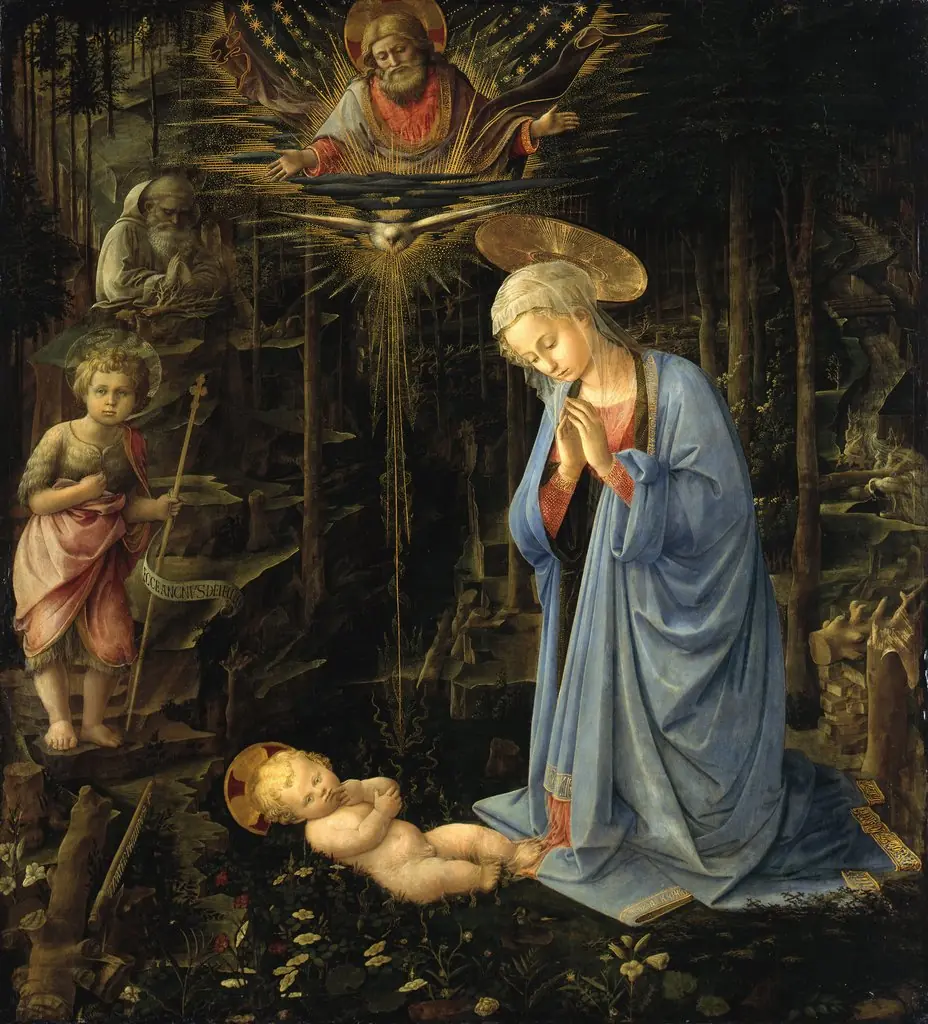 Adoration in the Forest
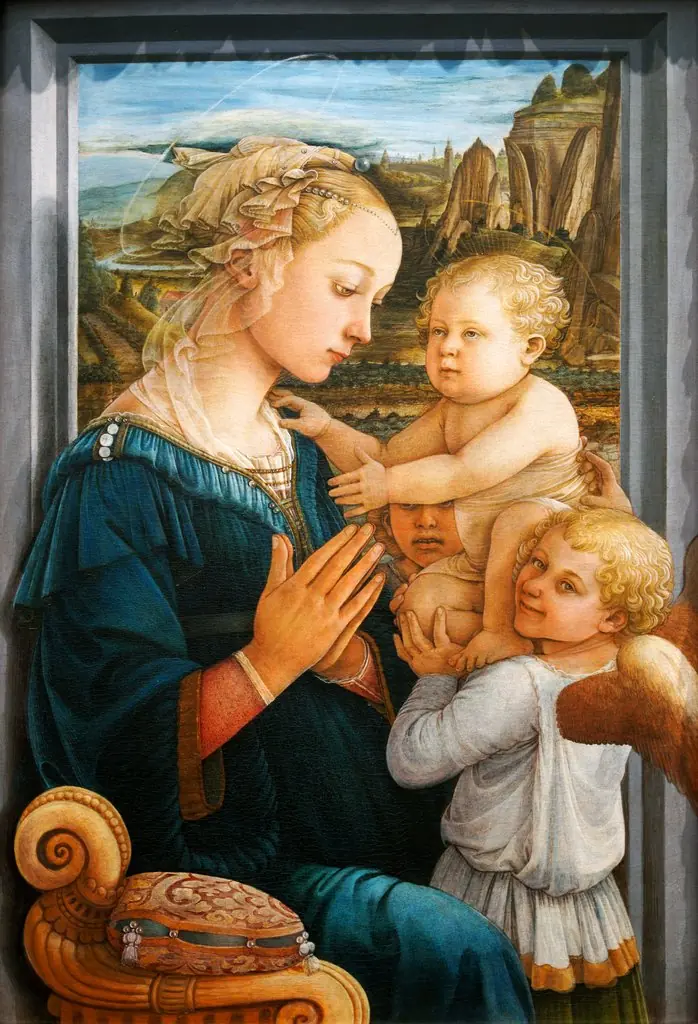 Madonna and Child
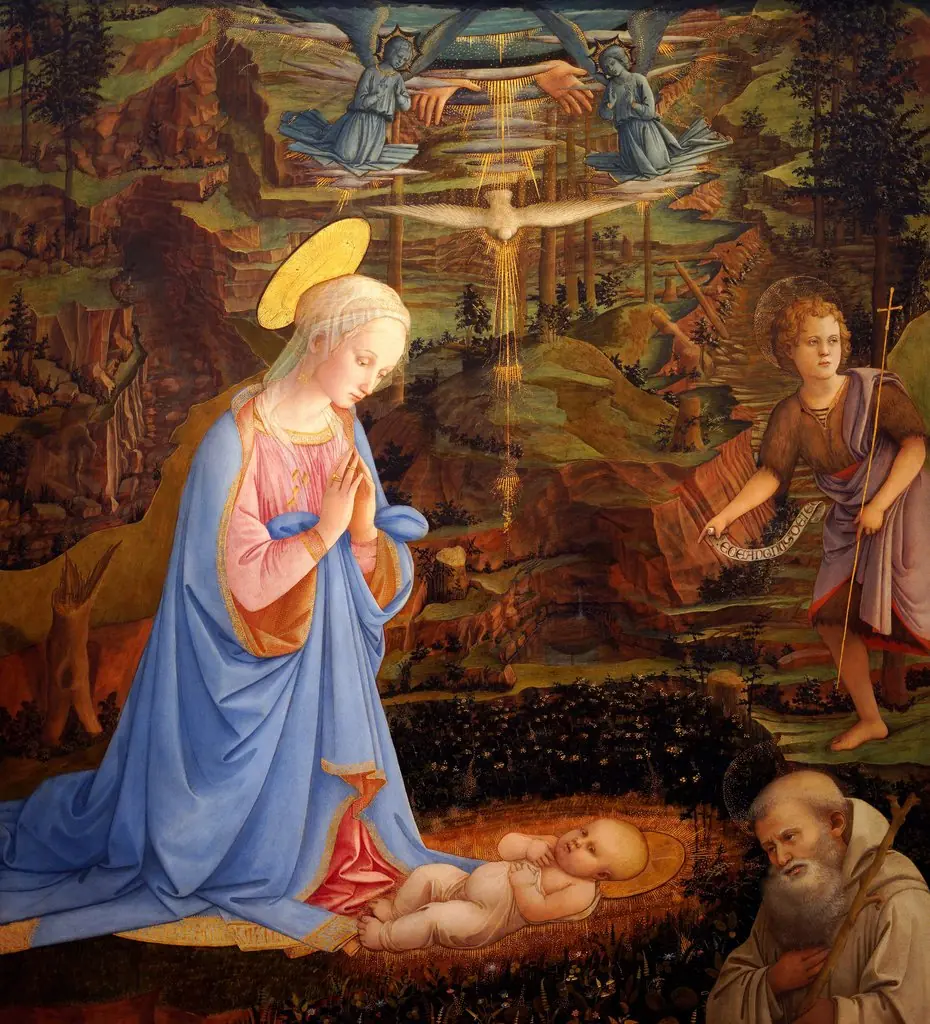 Adoration of Camaldoli