Artwork
The Delft Plate
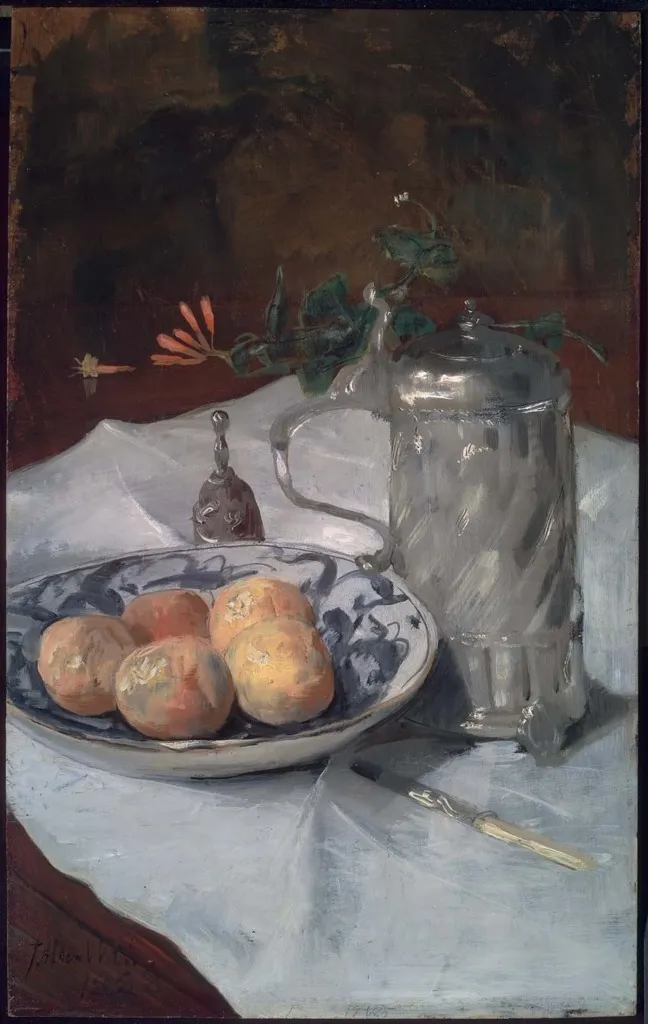
The Delft Plate is an unspecified painting by the American Impressionist artist Julian Alden Weir. It dates from 1894 and is held in the collection of the Museum of Fine Arts Boston.
About this work
Overview
Painted in 1894 by Julian Alden Weir, The Delft Plate is a still life that exemplifies American Impressionism’s quiet focus on everyday objects.
Painted in 1894 by Julian Alden Weir, The Delft Plate is a still life that exemplifies American Impressionism’s quiet focus on everyday objects. Weir, a key figure in the Cos Cob Art Colony, used this composition to explore light, texture, and spatial harmony without dramatic narrative. The work reflects his interest in domestic interiors and the subtle interplay of form and surface, aligning with broader trends in late 19th-century American art.
Subject & Meaning
The painting presents a modest arrangement: a Delft-style ceramic plate holding four round fruits, a pitcher, a knife, and a small ornamental object placed behind the pitcher. These items, arranged on a patterned white cloth, suggest a quiet moment of domestic life. The absence of human presence invites contemplation of the objects themselves, emphasizing stillness and order rather than symbolism or allegory.
Technique & Style
Weir employed loose, visible brushwork typical of Impressionism, capturing the sheen of ceramic, the softness of fabric, and the matte surface of fruit with varied strokes. The dark background isolates the objects, enhancing their three-dimensionality. Color is restrained, with muted tones dominating, while the plate’s blue-and-white glaze provides a focal contrast. Light falls evenly, avoiding sharp shadows to preserve a sense of calm immediacy.
History & Provenance
Created during Weir’s active years in Cos Cob, Connecticut, the painting emerged from a community of artists seeking to develop a distinctly American approach to Impressionism. While its early ownership is not widely documented, it has remained within institutional and private collections associated with American art of the period, reflecting its recognized place in Weir’s oeuvre.
Context
In the 1890s, American artists like Weir moved away from European academic traditions toward intimate, light-infused scenes of everyday life. The Delft Plate aligns with this shift, echoing the still-life traditions of Dutch painting while embracing modern sensibilities. It was made during a time when artists in Cos Cob were experimenting with plein air and interior subjects, blurring boundaries between genre and landscape.
Legacy
Though not among Weir’s most widely exhibited works, The Delft Plate contributes to the understanding of American Impressionism’s quieter, more contemplative side. It illustrates how artists of the era found artistic value in domestic simplicity, influencing later generations interested in the poetic potential of ordinary objects. The painting remains a quiet testament to Weir’s sensitivity to form and atmosphere.
Artist & collection

Artist
Julian Alden Weir was an American impressionist painter and member of the Cos Cob Art Colony in Greenwich, Connecticut.




- Still Life with Pewter Jar
 Still life with Apples and Breton Pots
 Asetelma
 Still-life
 Plate of Peaches
 Still Life with Jug and Knife
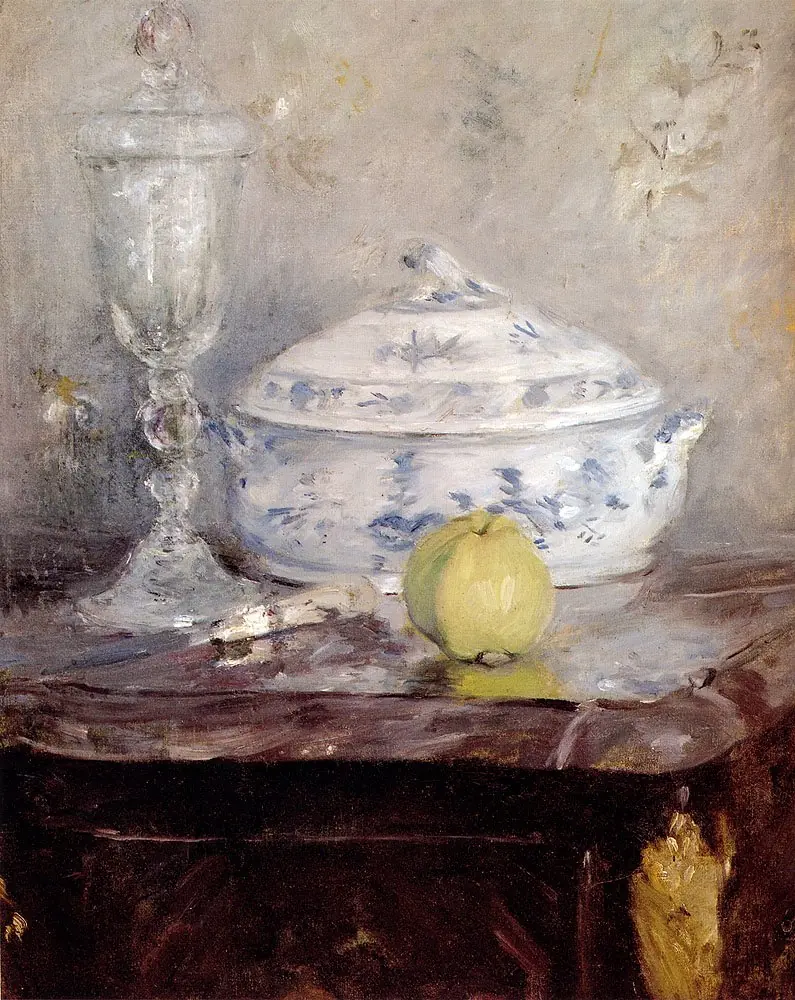 Soup Tureen and Apple
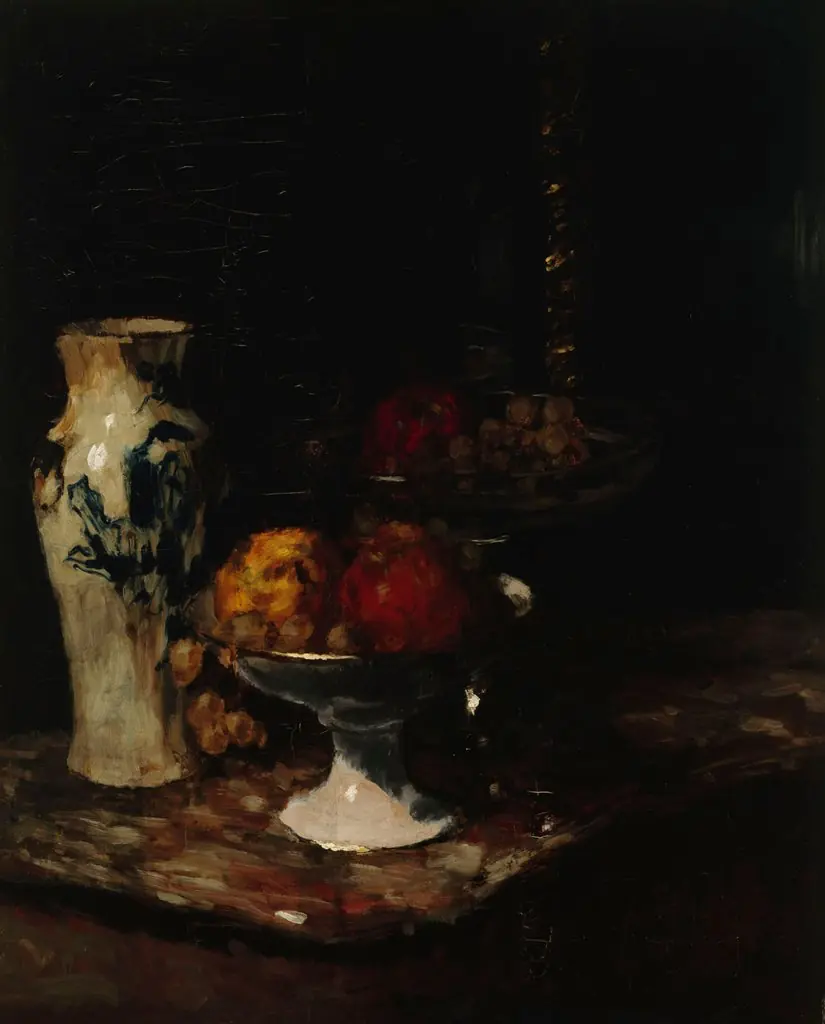 Still Life
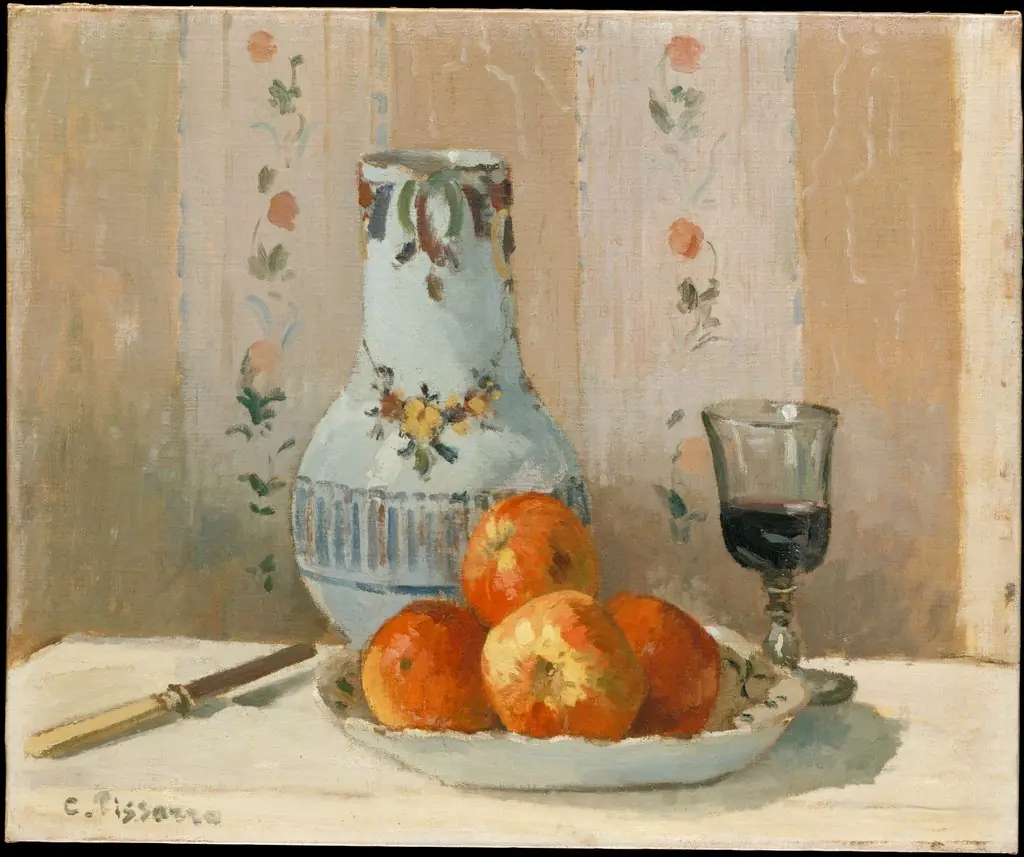 'Ghâtaignier' Apples and Glazed Earthenware on a Table
 Stlll Life with Dahlias, Wine Glass and Fruit
 Natură statică cu fructe
 Still Life with a Dessert