Artwork
Landscape with river and cellar entrance
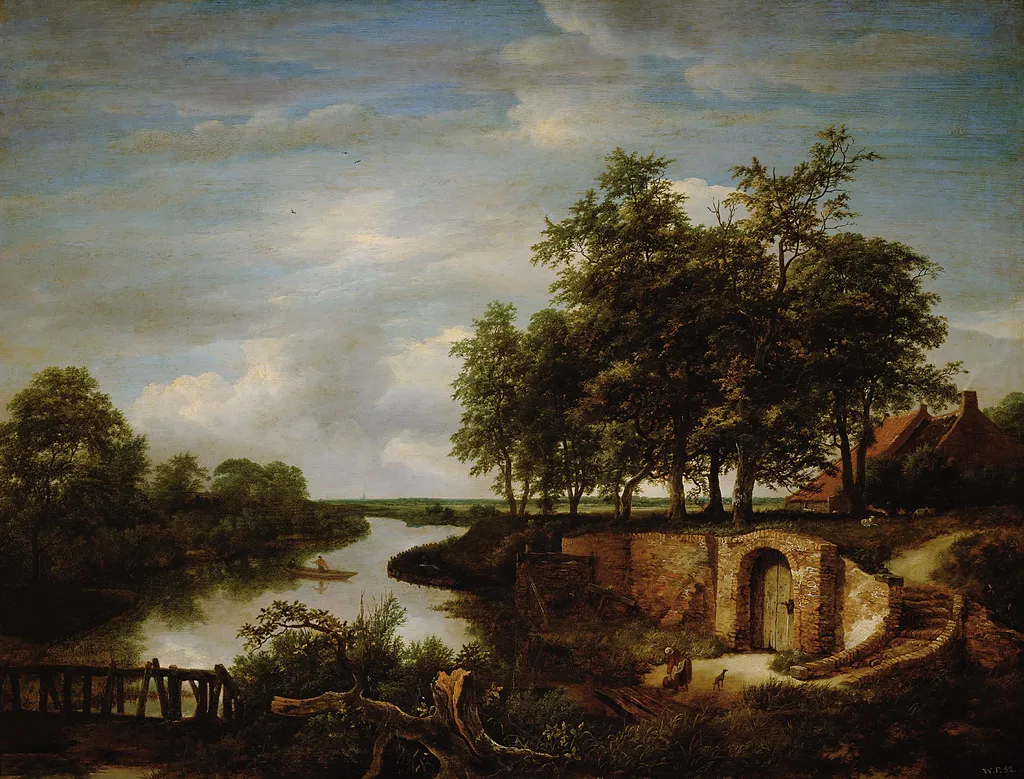
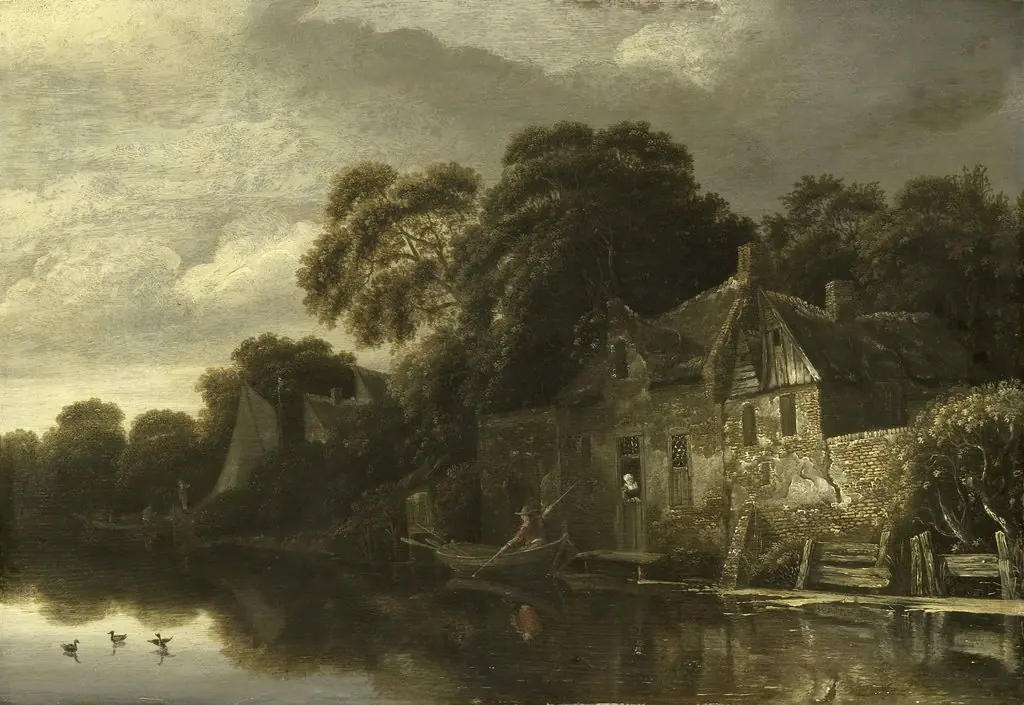
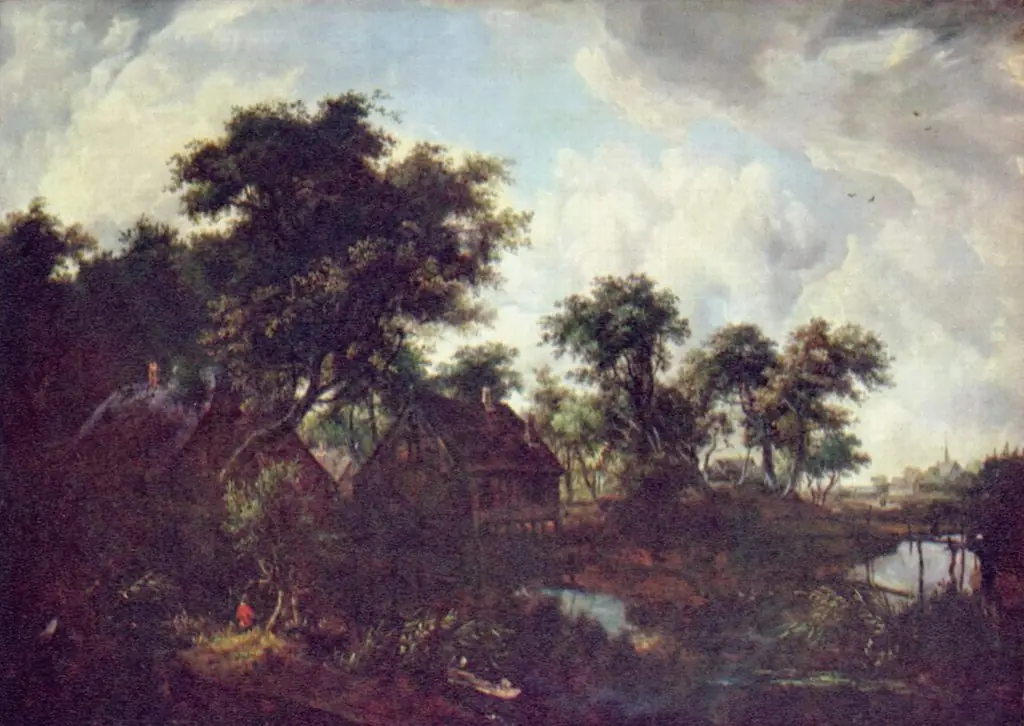
Landscape with river and cellar entrance is an oil painting by the Dutch Golden Age artist Jacob van Ruisdael. It dates from 1649 and is held in the collection of the Kunsthistorisches Museum.
About this work
Subject & Meaning
Trees frame the setting, contributing to the genre's characteristic focus on the interplay between the built environment and the natural world.
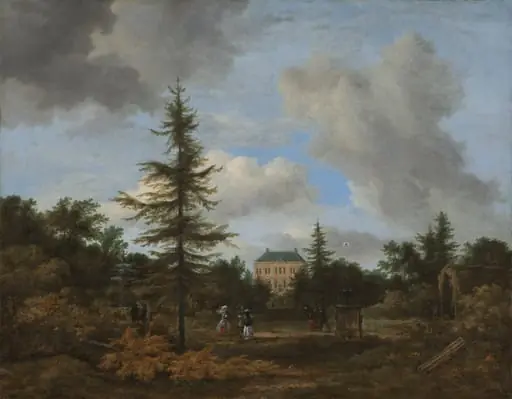
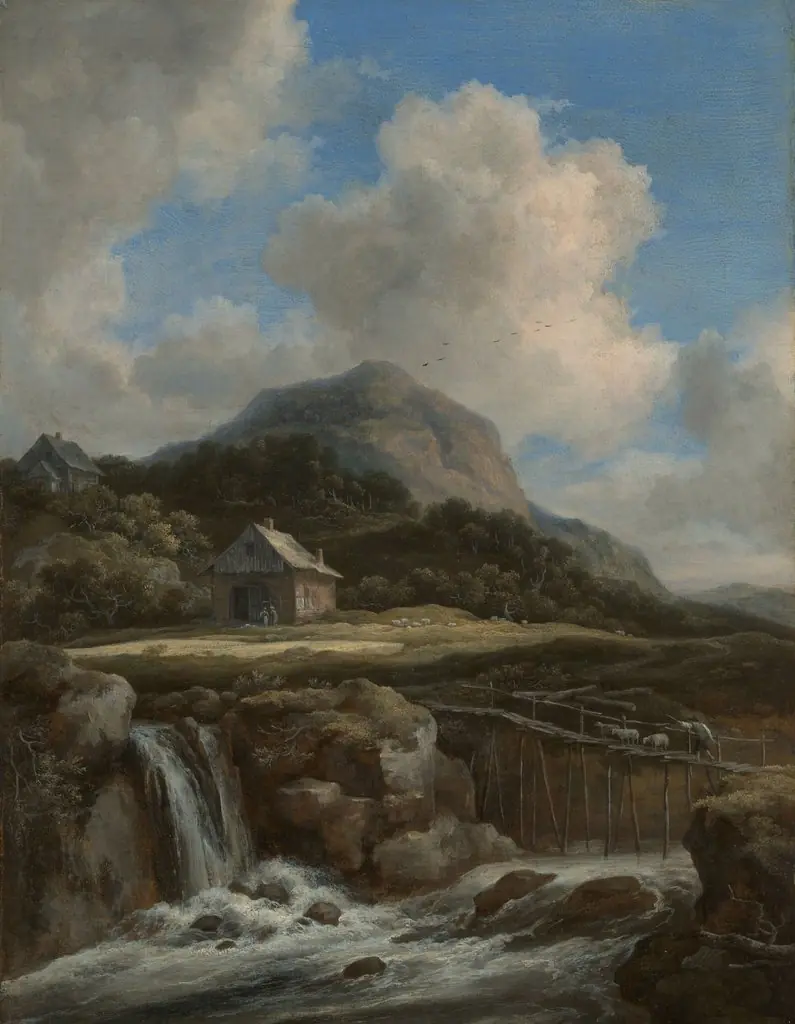
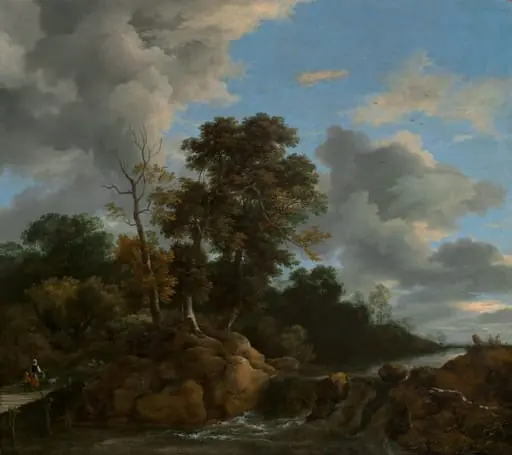
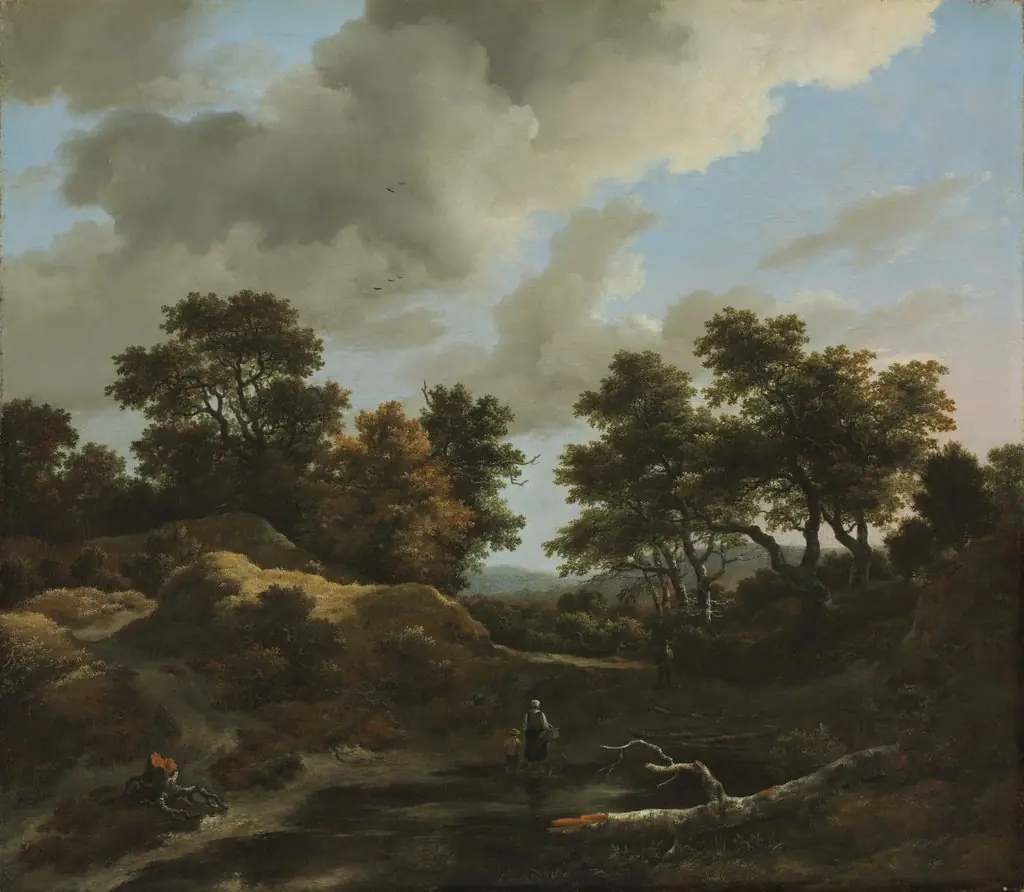
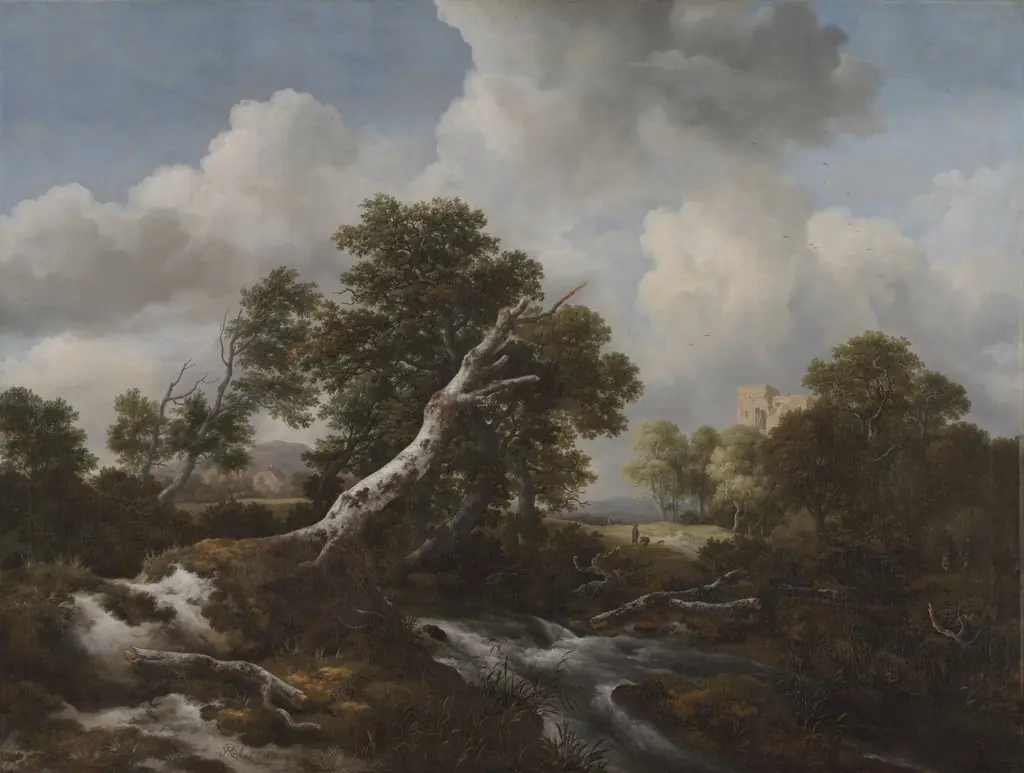
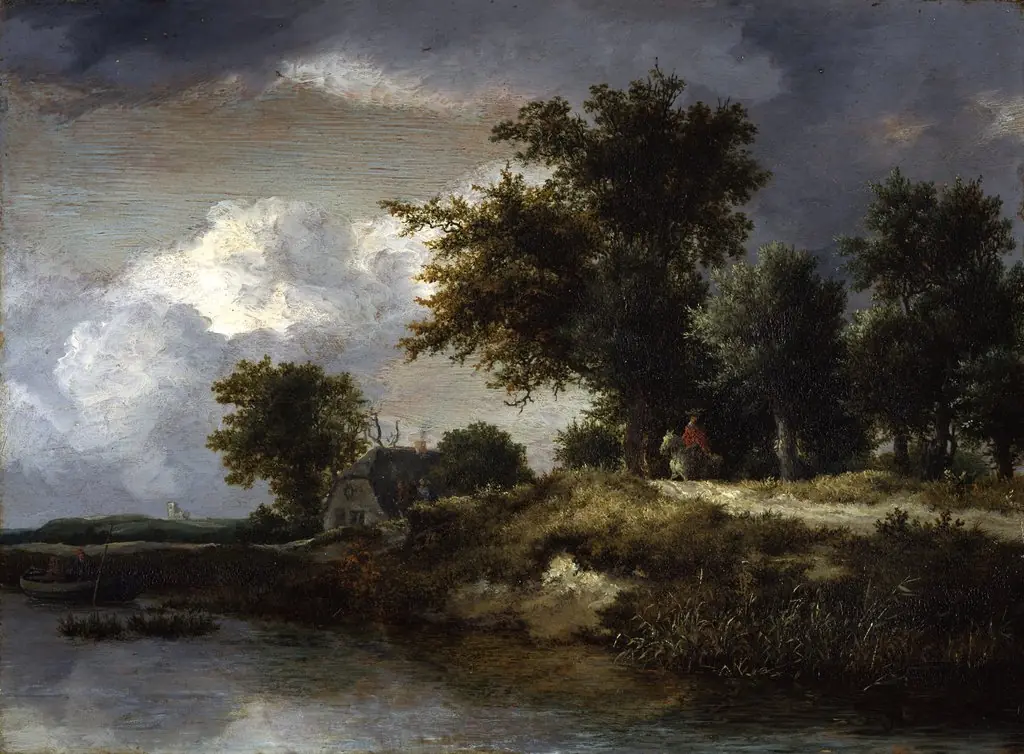
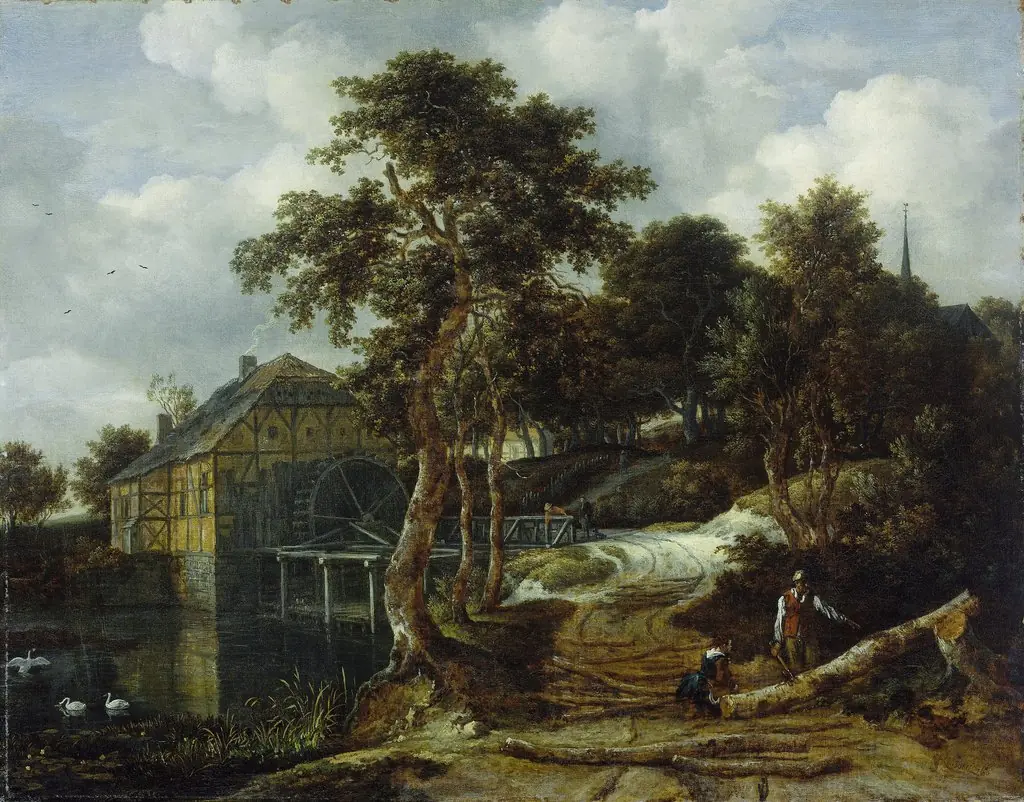
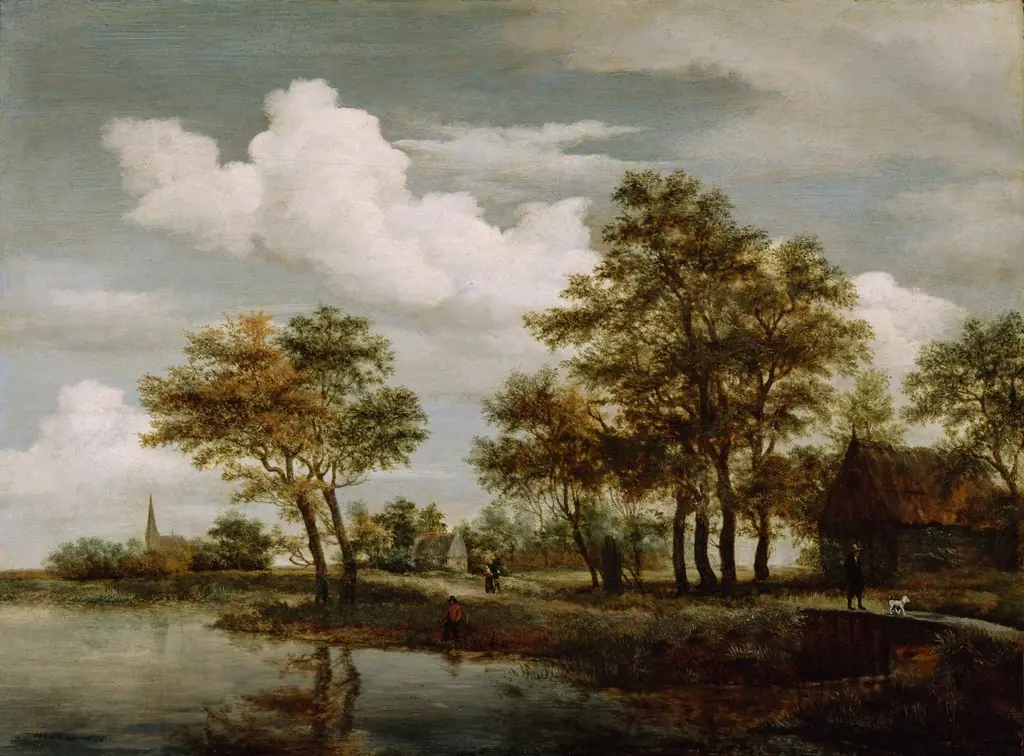
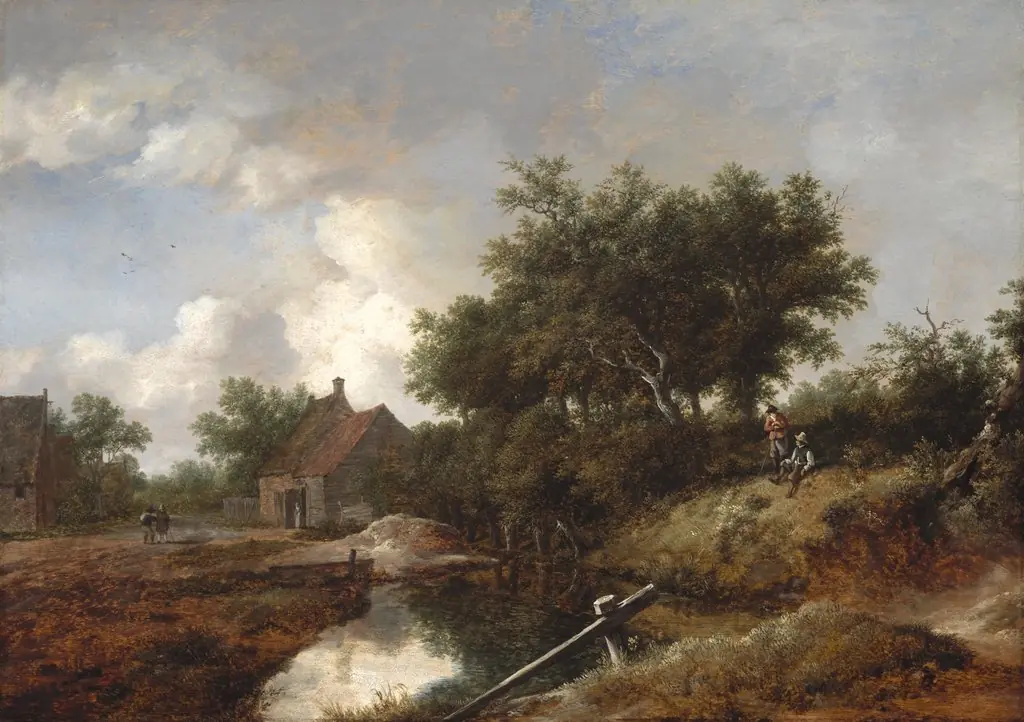
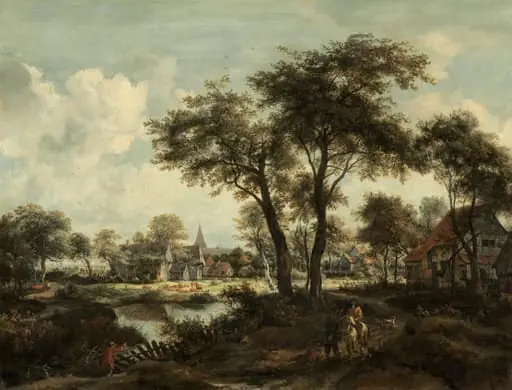
Jacob van Ruisdael's 1649 oil painting depicts a naturalistic Dutch landscape centered on a river scene. The composition includes specific architectural and human elements, such as a footbridge, a longboat, a house, and a distinct cellar entrance situated near the water. Trees frame the setting, contributing to the genre's characteristic focus on the interplay between the built environment and the natural world.
The work represents a typical example of 17th-century landscape painting, documenting a rural riverside location with attention to structural details like the basement and the boat.
Technique & Style
The painting is an oil work on canvas, typical of mid‑17th‑century Dutch landscape practice. Jacob van Ruisdael used a restrained palette and fine brushwork to depict a river scene that includes a footbridge, a longboat, a house with a cellar entrance, and surrounding trees. The composition balances atmospheric recession with precise detail, emphasizing the play of light on water.
Measured at 69.8 cm in height by 92 cm in width, the piece reflects a meticulous handling of space and tone. The sources do not elaborate on condition or specific formal analysis beyond these visual elements.
History & Provenance
The painting entered the Kunsthistorisches Museum in Vienna with the 1894 imperial bequest from the Habsburg collections assembled at Schloss Rohrau, where it had been recorded by 1820 in the Ambraser Sammlung inventories. The work is dated 1649 on technical grounds and is associated with Jacob van Ruisdael’s Haarlem period, aligning with the artist’s known activity in that city during the late 1640s. No documented commission survives, but its small scale and detailed rendering suggest it was produced as a cabinet piece for a private patron rather than a church or civic institution.
The painting is held in the collection of the Kunsthistorisches Museum in Vienna. It was previously owned by Schloss Rohrau. Created in 1649, the work measures 69.8 cm in height and 92 cm in width.
The provided sources do not contain information regarding a specific inventory or accession number, nor do they list any exhibitions in which the artwork has been displayed.
Context
Created in 1649 by Jacob van Ruisdael, Landscape with river and cellar entrance exemplifies the Dutch Golden Age landscape tradition. The work, executed in oil paint, depicts a river scene featuring a footbridge, longboat, house, and a distinct basement entrance alongside trees. Produced in Haarlem, the painting is currently held by the Kunsthistorisches Museum in Vienna, having originated from the collection of Schloss Rohrau.
While specific scholarly debates regarding this individual canvas are not detailed in the provided records, its attribution to Ruisdael and its inclusion in a major imperial collection underscore its recognized status within the canon of 17th-century landscape painting.
Overview
Jacob van Ruisdael's "Landscape with river and cellar entrance," an oil painting from 1649, presents a tranquil natural scene. This work exemplifies the artist's early engagement with landscape as a primary subject. It features a winding river, a small footbridge, and architectural elements integrated within a verdant setting. The painting is presently housed in the collection of the Kunsthistorisches Museum.
Own this work as a print
Artist & collection
Artist
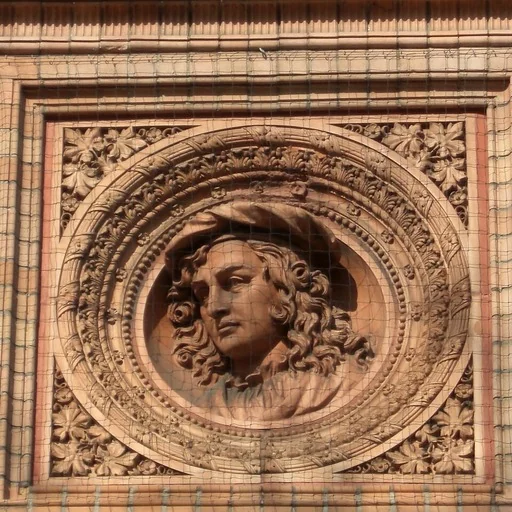
Jacob Isaackszoon van Ruisdael was a Dutch painter, draughtsman, and etcher. He is generally considered the pre-eminent landscape painter of the Dutch Golden Age, a period of great wealth and cultural achievement when…