Artwork
Village at the Wood's Edge
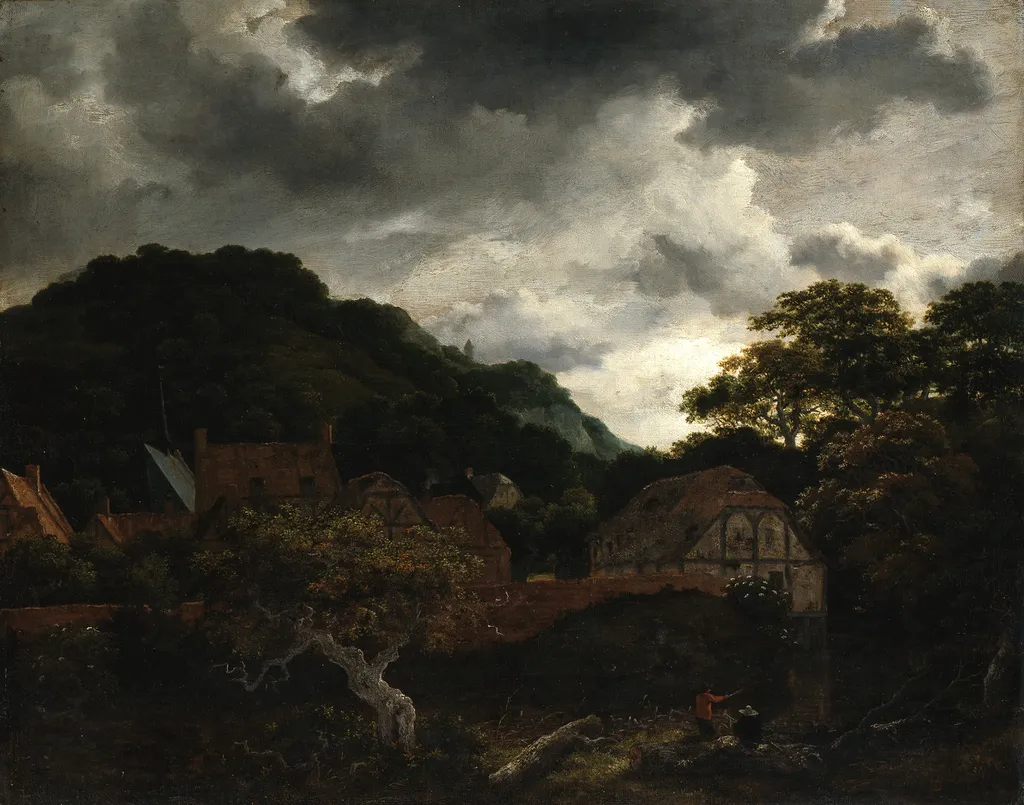
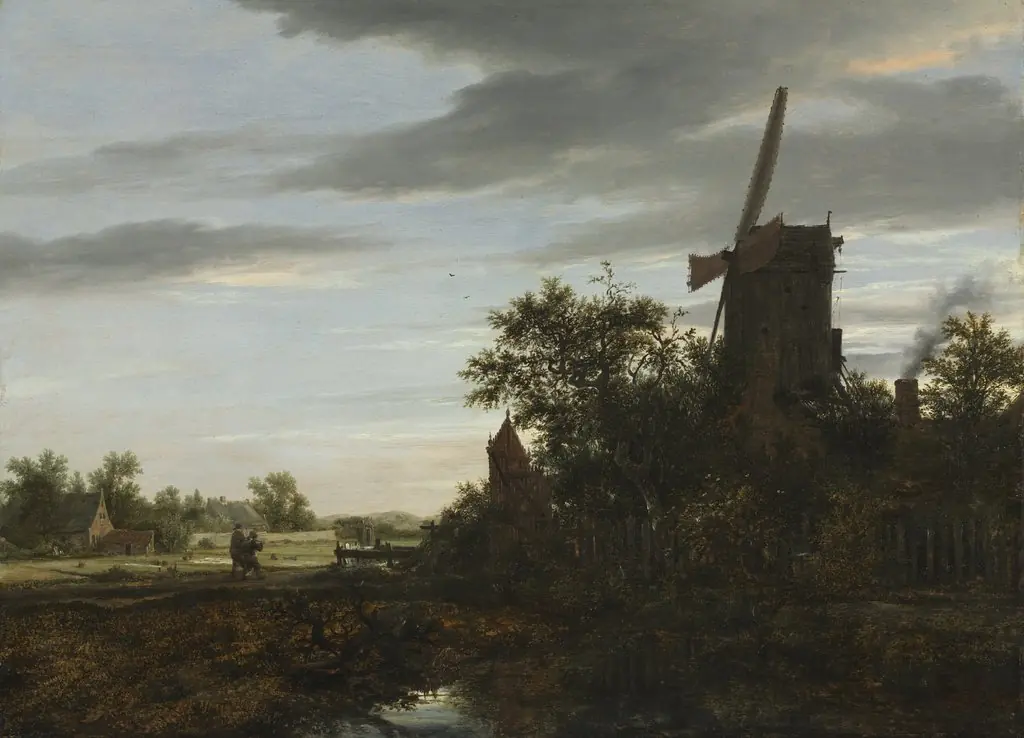
Village at the Wood's Edge is an oil painting by the Dutch Golden Age artist Jacob van Ruisdael. It dates from 1651 and is held in the collection of the Gemäldegalerie Berlin.
About this work
Overview
Village at the Wood's Edge is an oil on canvas landscape painting by Jacob van Ruisdael, dated to circa 1651 and measuring 52 by 66 centimeters.
Village at the Wood's Edge is an oil on canvas landscape painting by Jacob van Ruisdael, dated to circa 1651 and measuring 52 by 66 centimeters. The work was created in Haarlem and is now held in the Gemäldegalerie in Berlin, part of the Staatliche Museen, under accession number 885F. It stands as a characteristic example of Dutch Golden Age landscape painting, demonstrating the dramatic naturalism for which Ruisdael became the most celebrated landscapist of his generation. The painting fuses intimate observation of rural architecture with an imposing, turbulent sky, encapsulating the Baroque era's interest in the sublime power of nature and the precarious position of human habitation within it.
Subject & Meaning
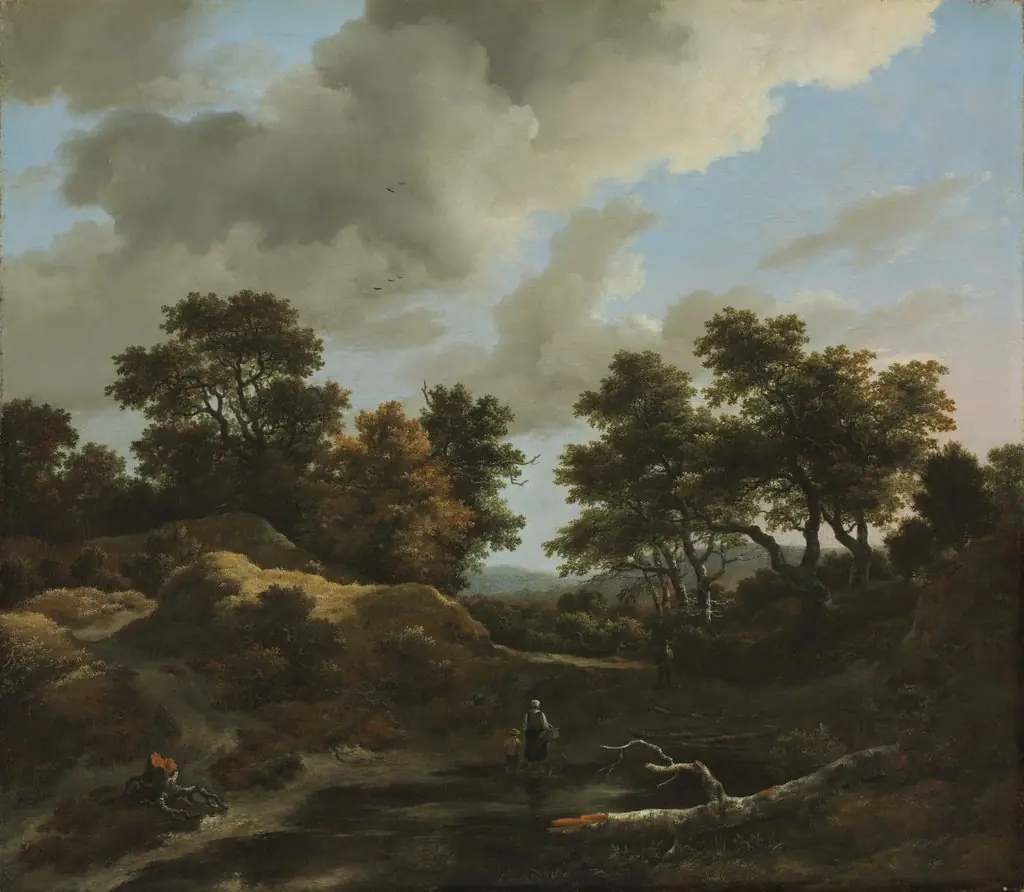
The painting depicts a village situated at the boundary between dense forest and open sky, a liminal zone that generates tension between cultivation and wilderness. In the lower half, clustered buildings with steeply pitched roofs, some thatched and others tiled, nestle among thick foliage. A pale spire or gable rises left of center, while to the right a half-timbered house with white plaster infilling catches a shaft of light. The foreground is dominated by twisted tree trunks and scrubby vegetation emerging from deep shadow, where two small figures appear near the bottom edge, one in a red garment gesturing or working beside a darker form, perhaps a woodcutter at fallen timber. The upper half is filled with turbulent, dark grey clouds parting to reveal pale light, creating what scholars have described as a strange fusion of intimacy and threat. The perils of human existence are suggested by defenseless cottages below stormy skies and ominous-looking hills. This interplay between shelter and exposure, between the cozy positioning of village structures and the overwhelming scale of sky and wood, evokes contemplation on the temporal state of existence and the sublime interplay between human habitation and untamed nature.
History & Provenance
The painting was created in Haarlem around 1651, during a pivotal period in Ruisdael's early career. Following a trip to Germany in 1650, his landscapes had taken on a more heroic character, and this work reflects that development. The exact commission history remains unknown, as does the early provenance chain. By the modern era, the painting had entered the collection of the Gemäldegalerie in Berlin, where it remains today as part of the Staatliche Museen. Its accession number is 885F. Specific exhibition history is not documented in the available sources, though the work's presence in one of Germany's foremost painting collections ensures its regular display and scholarly attention.
Context
Jacob van Ruisdael, born in Haarlem in 1628 or 1629 into a family of painters, is generally considered the pre-eminent landscape painter of the Dutch Golden Age. He was prolific and versatile, depicting a wide variety of landscape subjects from 1646 onward. Village at the Wood's Edge belongs to his early mature phase, when he was still based in Haarlem before his move to Amsterdam around 1657. During this period, landscape paintings had grown to be as popular as history paintings in Dutch households, a shift that continued throughout his career. Ruisdael's work was in demand in the Dutch Republic during his lifetime, and he shaped landscape painting traditions worldwide, from the English Romantics to the Barbizon school in France and the Hudson River School in the United States. The critical reception of Village at the Wood's Edge has emphasized its emotional complexity, with scholars noting how it involves the viewer in a strange fusion of intimacy and threat that transcends mere topographical recording.
Legacy
As a work by the artist universally regarded as the greatest Dutch landscapist, Village at the Wood's Edge contributes to a body of work that influenced generations of artists. Ruisdael's only registered pupil was Meindert Hobbema, though many others emulated his approach. Today his paintings are spread across major collections worldwide, with the National Gallery in London, the Rijksmuseum in Amsterdam, and the Hermitage Museum in St. Petersburg holding the largest concentrations. The painting's residence in the Gemäldegalerie ensures its continued accessibility to scholars and the public, while its reproduction in digital archives and educational platforms extends its reach. The work exemplifies how Ruisdael's landscapes transcend simple documentation of Dutch terrain to address universal themes of human vulnerability and natural grandeur, securing his position as a foundational figure in the history of Western landscape art.
Own this work as a print
Artist & collection
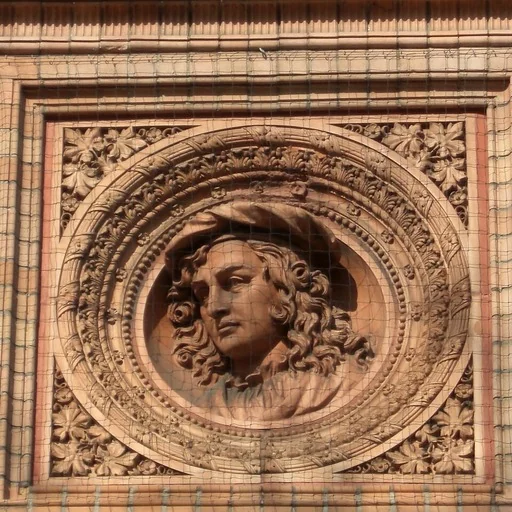
Artist
Jacob Isaackszoon van Ruisdael was a Dutch painter, draughtsman, and etcher. He is generally considered the pre-eminent landscape painter of the Dutch Golden Age, a period of great wealth and cultural achievement when…