Artwork
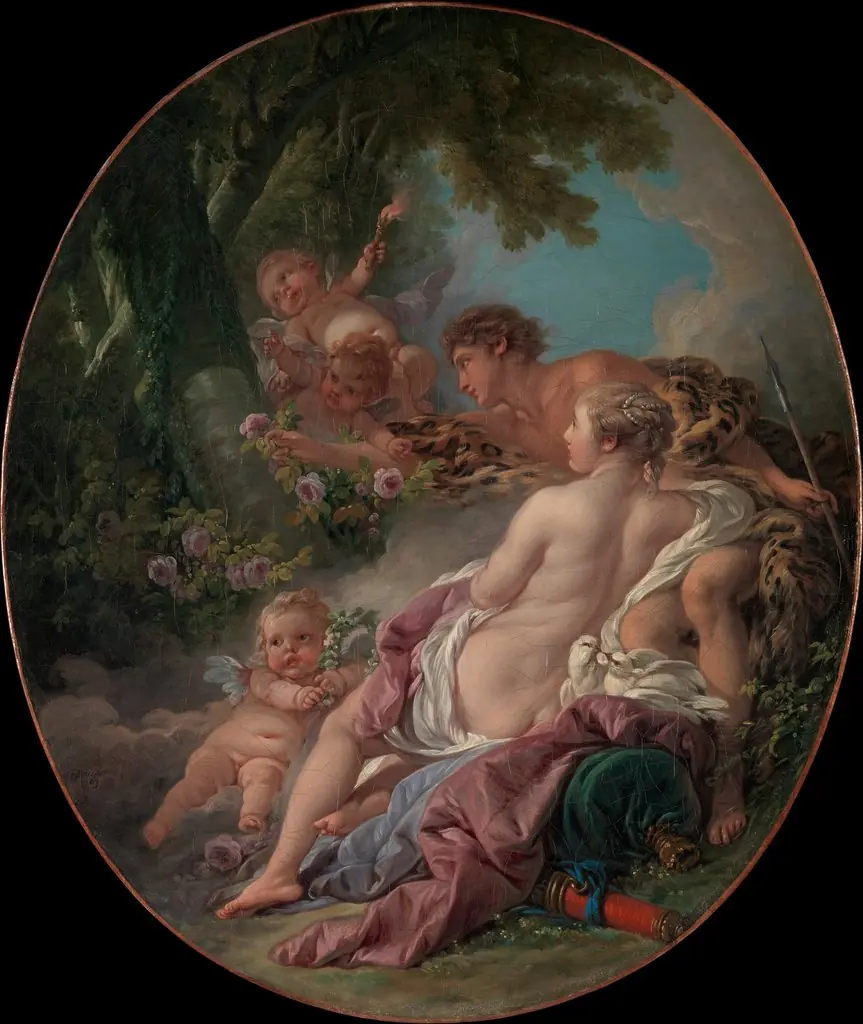
Jupiter, in the Guise of Diana, and Callisto
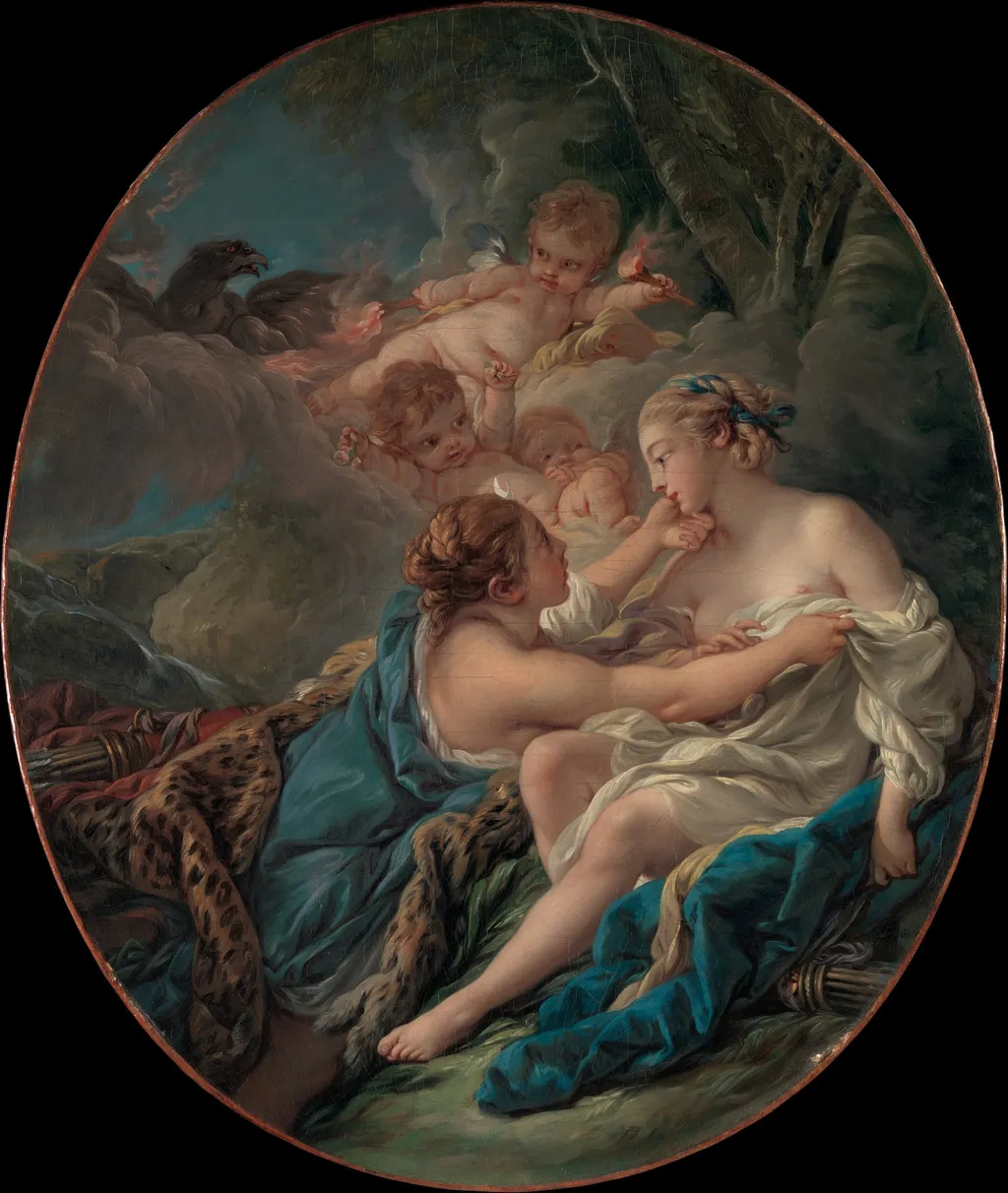
Jupiter, in the Guise of Diana, and Callisto is an oil painting by the Rococo painting artist François Boucher. It dates from 1763 and is held in the collection of the Metropolitan Museum of Art.
About this work
Subject & Meaning
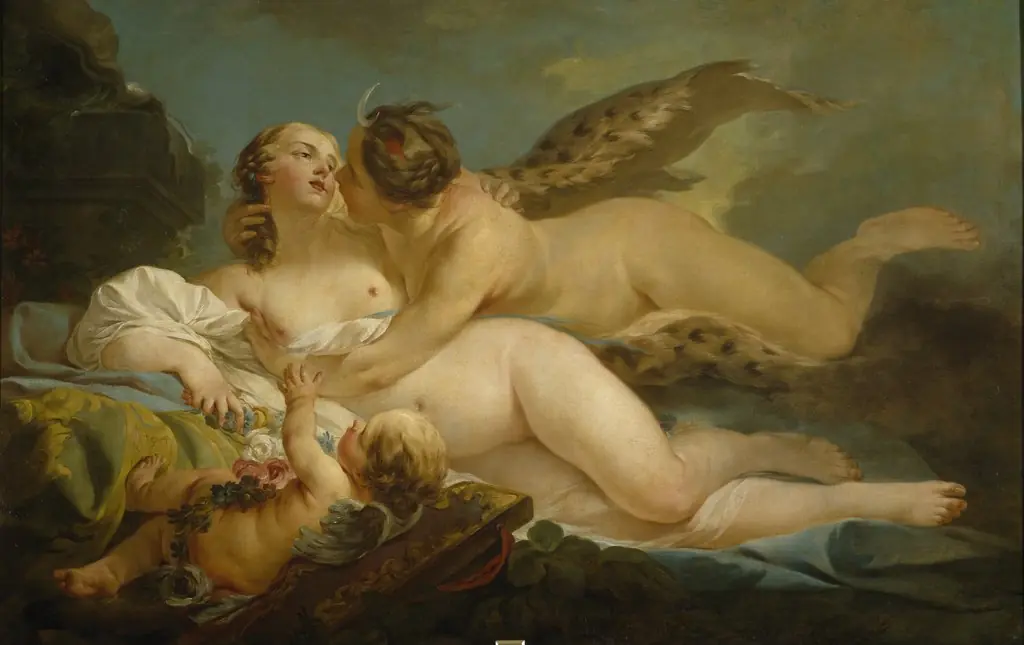
The painting portrays the moment when Jupiter, king of the gods, assumes the guise of the huntress Diana to approach the nymph Callisto.
The painting portrays the moment when Jupiter, king of the gods, assumes the guise of the huntress Diana to approach the nymph Callisto. Iconographically the figure is identified by the crescent moon and hunting attire of Diana, while the presence of Jupiter is conveyed through compositional tension. This juxtaposition symbolizes divine seduction and the fluidity of identity within myth, reflecting Enlightenment interest in transformation and moral ambiguity.
The work, executed in oil on canvas in 1763 by François Boucher, is part of the Metropolitan Museum of Art's collection and is classified as a mythological painting.
Technique & Style
Executed in oil paint on canvas, the work measures 64.8 by 54.9 centimetres, a relatively modest scale suited to its mythological subject matter. The medium and support are consistent with François Boucher's mature practice of the 1760s, when he frequently produced cabinet-sized mythological compositions for private patrons. The painting belongs to the genre of mythological painting and is held in the collection of the Metropolitan Museum of Art.
History & Provenance
François Boucher executed Jupiter, in the Guise of Diana, and Callisto in 1763. The oil on canvas measures 64.8 × 54.9 cm. It entered the Metropolitan Museum of Art under accession number 1975.1.208 and remains in the museum's European paintings galleries.
Overview
François Boucher's 'Jupiter, in the Guise of Diana, and Callisto' (1763) illustrates a pivotal moment from Ovid's Metamorphoses where the god Jupiter, disguised as the huntress Diana, seduces the nymph Callisto. The composition features two central female figures in a verdant, pastoral landscape characteristic of the Rococo style. The figure on the left represents Jupiter in his disguise, draped in a blue robe with a leopard skin, while Callisto stands to the right in white.
A dark bird, likely an eagle symbolizing Jupiter, perches in the upper left, subtly hinting at the deity's true identity. Surrounding the pair are playful cherubs, adding a layer of mythological allegory and softening the narrative's tension. Painted late in Boucher's career, this work exemplifies his mastery of mythological subject matter, utilizing a delicate palette and fluid brushwork to create an atmosphere of eroticism and grace.
The painting reflects the French court's preference for lighthearted, sensual interpretations of classical texts during the mid-18th century, prioritizing decorative beauty and narrative charm over moral gravity.
Own this work as a print
Artist & collection

Artist
François Boucher was a French painter, draughtsman and etcher, who worked in the Rococo style.