Artwork
The Lovers
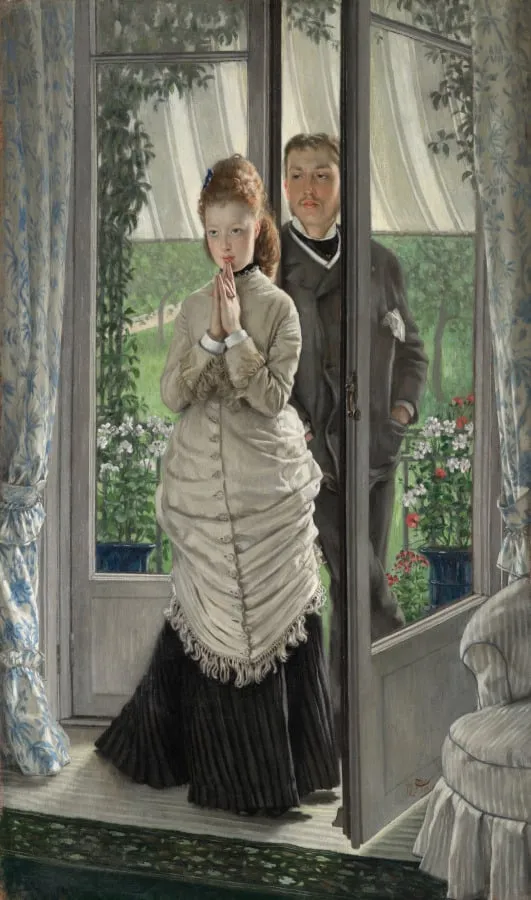
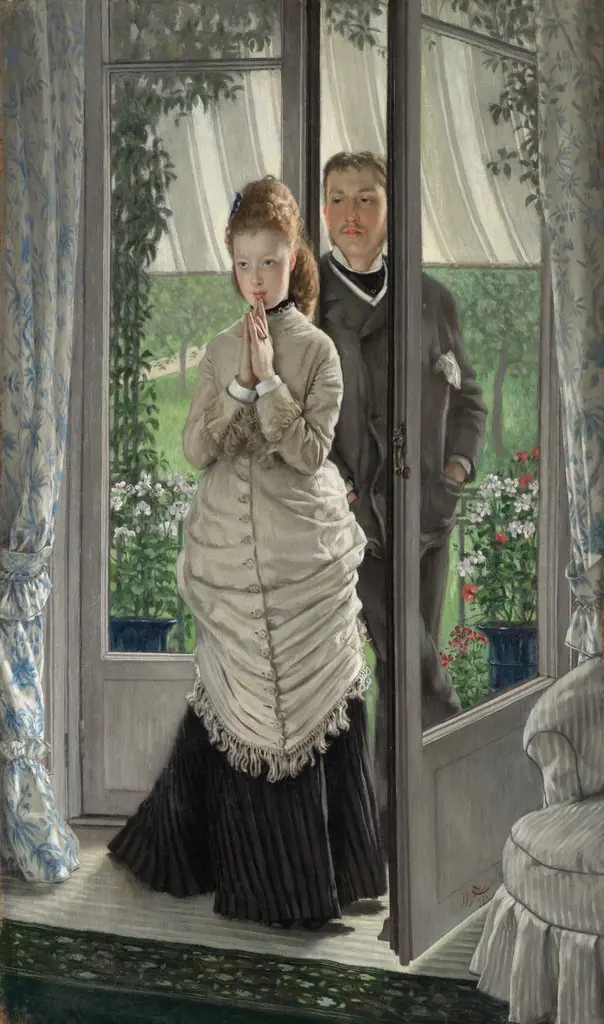
The Lovers is an unspecified painting by the Impressionist artist James Tissot. It dates from 1872 and is held in the collection of the Cleveland Museum of Art.
- Accession no.
- 2022.140
- Credit line
- Partial gift from Ralph and Terry Kovel and Family, and partial purchase from the John L. Severance Fund
About this work
A woman in a long blue dress steps into a shadowy room, her gloved hand resting on her chin.
A woman in a long blue dress steps into a shadowy room, her gloved hand resting on her chin. A man in a dark suit follows close behind, holding his hat. Sunlight spills through open doors behind them, lighting up the garden outside.
Tissot painted this in London, where he sold scenes like this to Victorian buyers. They loved guessing stories, was this a proposal? The woman’s thoughtful pose makes you wonder. The painting feels like a snapshot of upper-class life, but with a quiet tension.
If you like this, look up other works in the subject: france, 19th century, mod euro.
Overview
Created during the early years of James Tissot’s residence in London, this oil painting captures a moment when a young couple steps from a bright garden into a dimly lit interior. The woman, dressed in a flowing blue gown, rests her gloved hand on her chin, while the man in a dark suit follows, his hat in hand. Sunlight streams through the open doors behind them, contrasting the interior’s shadowy atmosphere.
Subject & Meaning
The composition suggests a pause in an everyday encounter, inviting speculation about the couple’s relationship. The woman’s contemplative gesture hints at inner deliberation, perhaps weighing a proposal or another significant decision. The man’s close proximity and attentive stance reinforce a sense of anticipation, yet the narrative remains unresolved, allowing viewers to infer a private dialogue concealed within the public setting.
Technique & Style
Tissot employs a precise, almost photographic realism characteristic of his Victorian clientele, rendering textures, from the sheen of silk to the softness of upholstery, with meticulous detail. Light is used dramatically: the external daylight floods the doorway, while interior shadows create depth and focus on the figures. The palette balances cool blues with warm, muted earth tones, emphasizing the contrast between the garden’s openness and the room’s intimacy.
History & Provenance
Painted shortly after Tissot settled in London in 1871, the work was intended for the city’s middle‑class market, which favored narrative scenes that sparked imagination. It was exhibited in London galleries and sold to a private Victorian collector, remaining in private hands for much of the 20th century before entering a public collection in the early 2000s.
Context
During the 1870s, British taste favored genre paintings that depicted contemporary life with moral or romantic undertones. Tissot, originally trained in France, adapted his French academic background to meet this demand, producing elegant, anecdotal images of fashionable society that resonated with the era’s fascination with courtship rituals and domestic interiors.
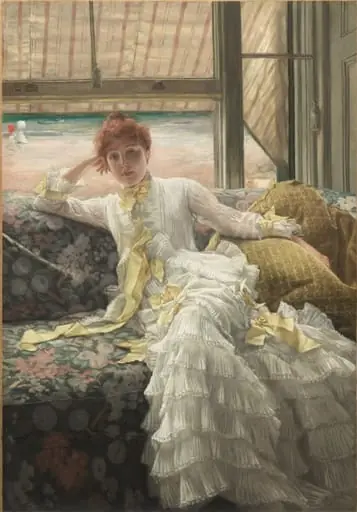
Artist & collection
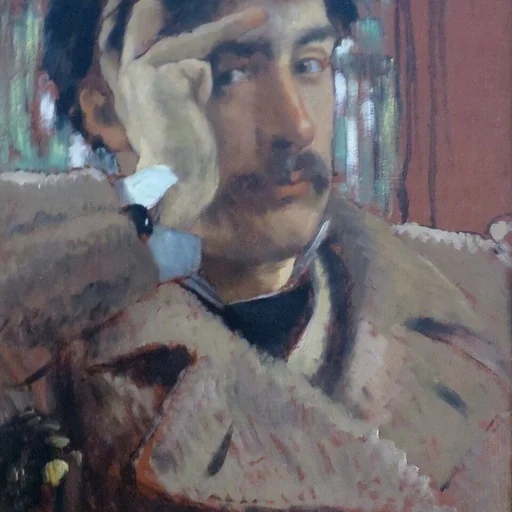
Artist
Jacques Joseph Tissot (French:; 15 October 1836 – 8 August 1902), better known as James Tissot (UK: TISS-oh, US: tee-SOH), was a French painter, illustrator, and caricaturist.