Artwork
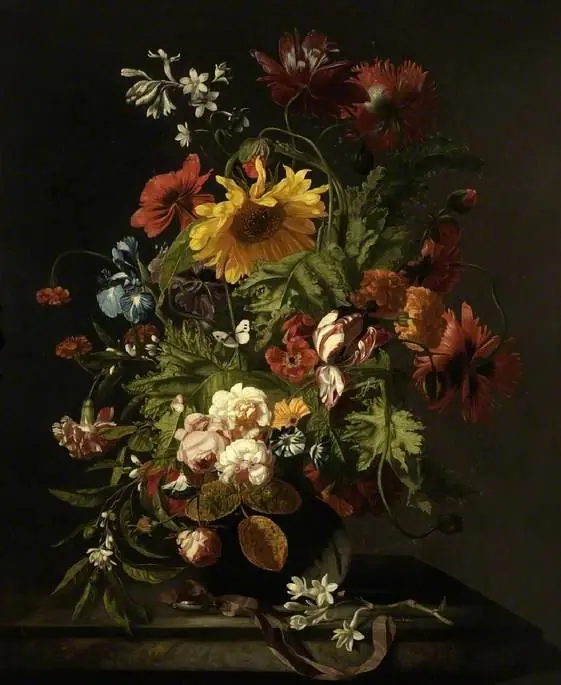
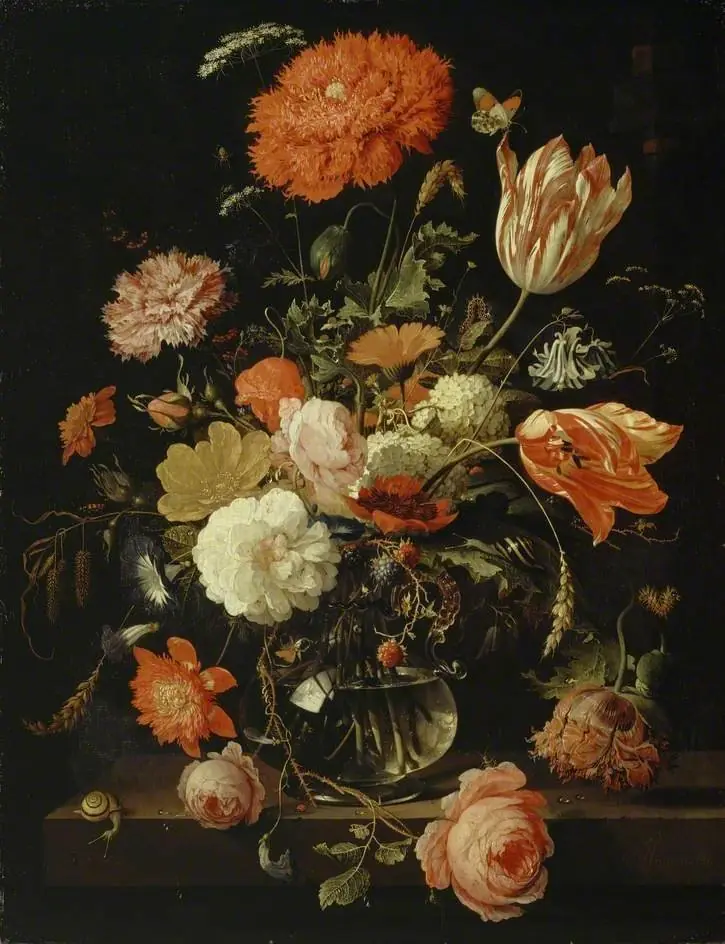
Flowers in a glass vase
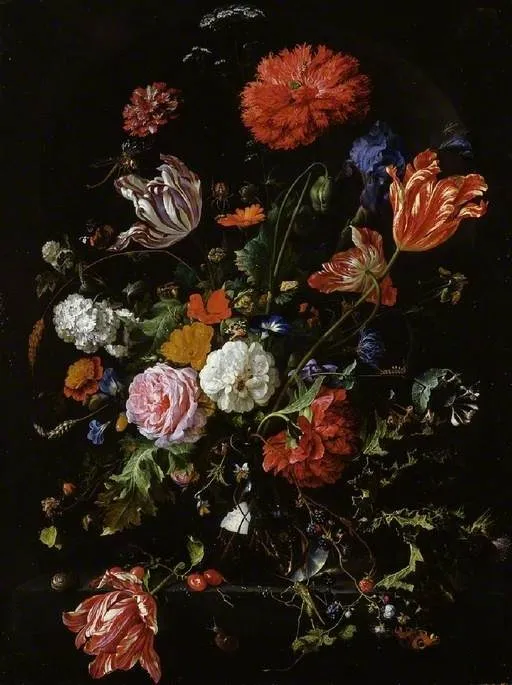
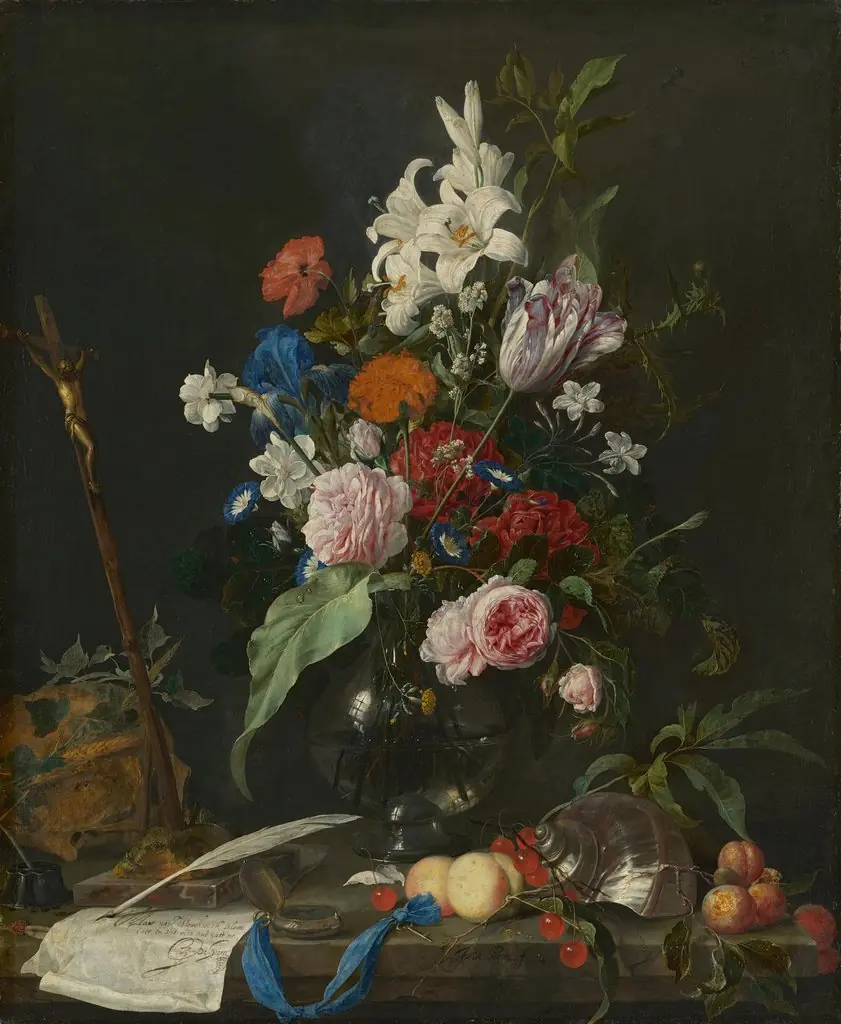
Flowers in a glass vase is an oil painting by the Dutch Golden Age artist Jan Davidsz. de Heem. It dates from 1670 and is held in the collection of the Fitzwilliam Museum. Jan Davidsz.
About this work
Overview
6 cm, the work is held by the Fitzwilliam Museum in Cambridge, where it entered the collection in 1928 as a bequest from A.
Flowers in a glass vase is an oil painting on panel by the Dutch still-life master Jan Davidsz. de Heem, dated to 1670. Measuring 93.2 by 69.6 cm, the work is held by the Fitzwilliam Museum in Cambridge, where it entered the collection in 1928 as a bequest from A. G. Hartley. The painting exemplifies de Heem's mature flower pieces, combining meticulous naturalistic observation with a complex symbolic programme that has made it a significant example of Dutch Golden Age still-life painting. It is signed 'JD de Heem f' and carries the accession number 1487.
Subject & Meaning
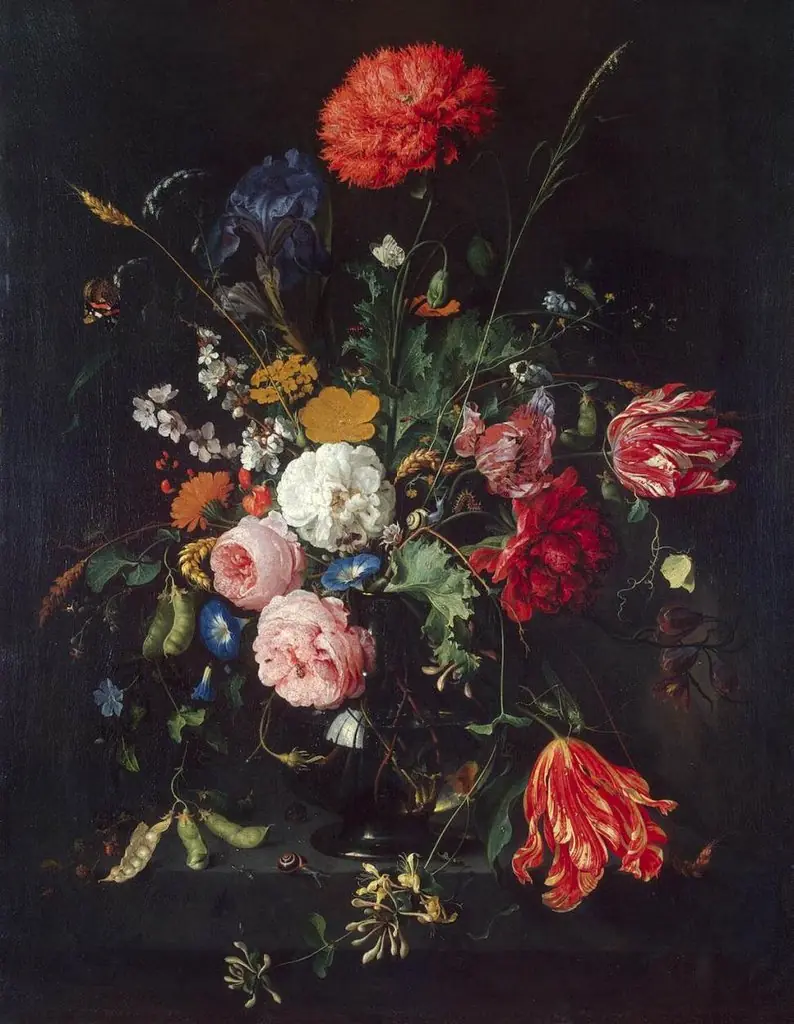
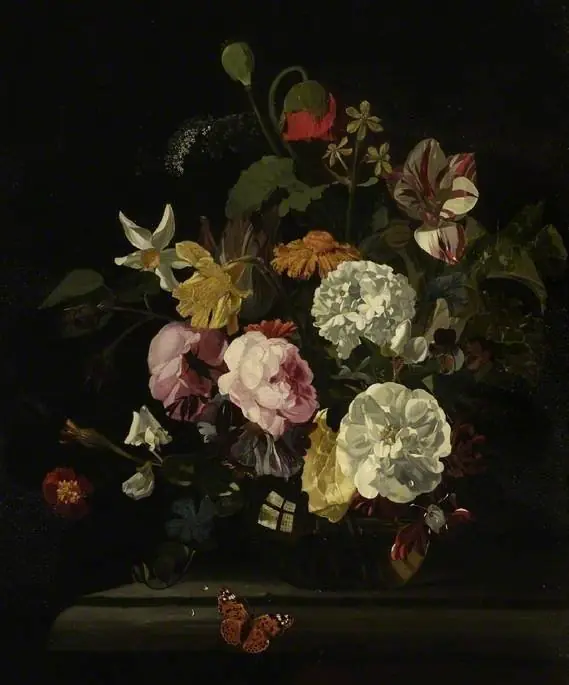
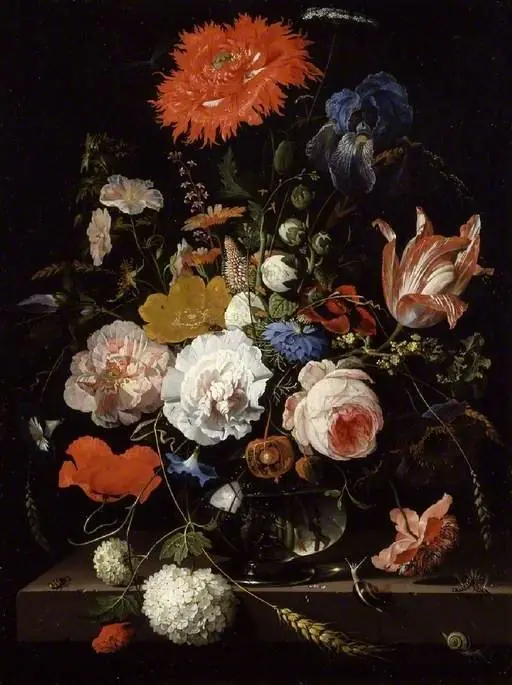
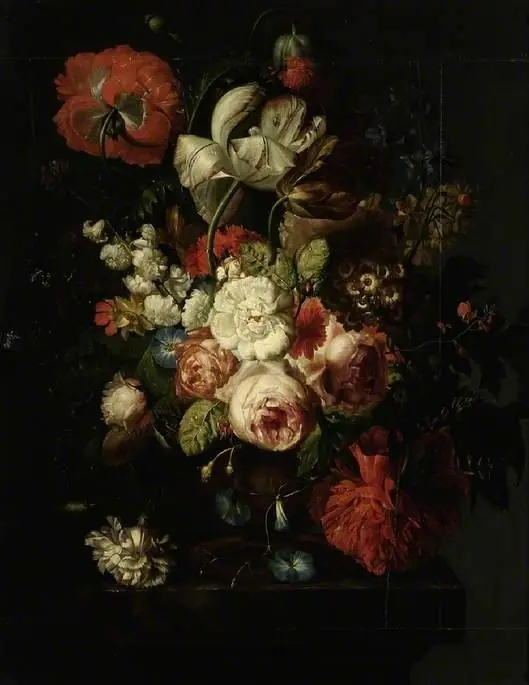
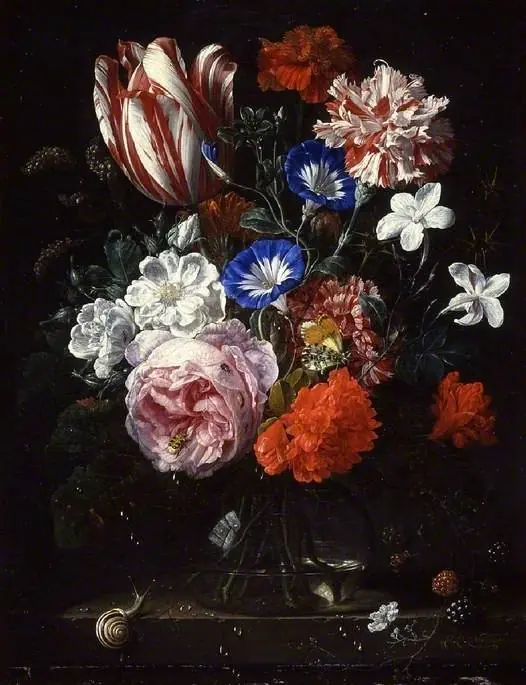
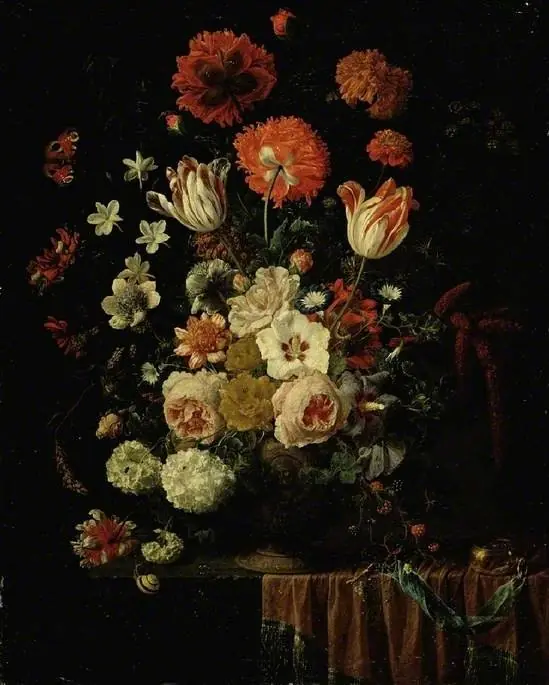
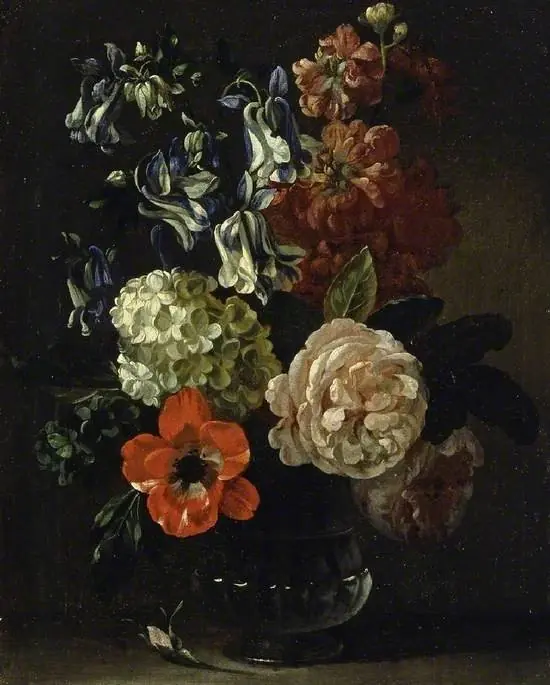
The painting presents a dense bouquet of flowers arranged in a clear glass vase against a deep, nearly black background. The composition rises vertically with a naturalistic, slightly asymmetrical cluster of stems, leaves, and blossoms. Identifiable species include striped white and red tulips, a large pink rose, white peonies or roses, red carnations or poppies, blue irises, and smaller orange, yellow, and blue blossoms. Green leaves of varying shapes interweave among the stems, some showing wilting or insect damage. Red berries and vine tendrils trail below the vase. Visible creatures include a spider hanging from a thread near the top and small insects or caterpillars on leaves and stems. The iconography carries potential vanitas associations, reminding viewers of life's transience, while the cross reflected in the vase water may allude to Christian faith. The iris has been interpreted as a symbol of the Virgin, and the anemone as a reference to life's fleeting nature. However, scholars such as Gaskell have emphasised that such compositions primarily demonstrate the painter's virtuoso ability in depicting the natural world.
Technique & Style
De Heem executed the work in oil on panel, employing precise, smooth brushwork for the flowers with finer, more textured strokes in foliage and background. The finish is polished and detailed, typical of careful observational study. Light falls from the upper left, illuminating petals and leaves while casting deep shadows that enhance three-dimensionality. The palette is vivid against the dark ground: saturated reds, pinks, oranges, and blues with bright whites and varied greens. The glass vase is rendered with particular subtlety, suggested primarily by the water line and the way stems refract. The painting's technique shows de Heem's complete mastery of his medium, with minute detail and painstaking glazing that render individual brushstrokes imperceptible. This approach to the transparent vase, with its precise definition of stalks and thorns visible through the water, represents a recurring motif in his work. The dark background, in which light defines areas of the ledge or its edge, is characteristic of his mature style.
History & Provenance
The painting was created in 1670, during de Heem's late career. Following his move to Antwerp in 1636, de Heem developed increasingly complex and elaborate compositions under Flemish influence, returning to Utrecht around 1658 and later moving back to Antwerp in 1672. The work was bequeathed to the Fitzwilliam Museum by A. G. Hartley in 1928, entering the collection with accession number 1487. Its provenance prior to Hartley's ownership is not detailed in the available sources. The painting has been exhibited and studied as part of the Fitzwilliam's Dutch and Flemish holdings, and is catalogued on Art UK under the title 'Flower Piece'.
Context
Jan Davidsz. de Heem was born in Utrecht in 1606 and became one of the most outstanding still-life painters of his era, with a style so popular that he could scarcely finish one painting before being commissioned to begin another. His early training under Balthasar van der Ast in Utrecht gave him a foundation in detailed observation, but his move to Antwerp in 1636 exposed him to Flemish influences that enriched his palette and compositional complexity. The 1660s, when this work was painted, saw growing interest in the natural world as Dutch trade and exploration brought exotic specimens to the Netherlands. Flowers such as tulips, originally introduced from Turkey, had become symbols of national wealth and commercial reach; during the 'Tulip Mania' of 1633-1637, a single bulb could cost 4,400 guilders. De Heem's flower pieces from this period reveal the influence of Daniel Seghers, though de Heem abandoned symmetrically balanced bouquets in favour of more natural, free arrangements. The painting belongs to a group of works in which de Heem signed his name with an 'R' after it, a practice of the late 1660s and early 1670s whose meaning remains debated among scholars, possibly indicating 'repatriat' following his return to Utrecht or 'Refecit' signalling completion or refinement of studio works.
Legacy
De Heem's flower pieces, including this work, established standards of naturalistic illusionism that influenced subsequent generations of still-life painters. His son Cornelis de Heem and the painter Abraham Mignon, both active in his Utrecht workshop, absorbed and transmitted his style. The re-use of elements such as specific rose poses across multiple works indicates that de Heem employed sketches and drawings in preparation, a practice that facilitated the production of related compositions by his circle. The Fitzwilliam Museum has used the painting in educational programming, encouraging viewers to search for insects and identify flowers as an entry point into Dutch Golden Age culture. The work remains a significant example of de Heem's ability to combine scientific observation with aesthetic pleasure and moral reflection, securing his reputation as a defining master of European still-life painting.
Artist & collection
Artist
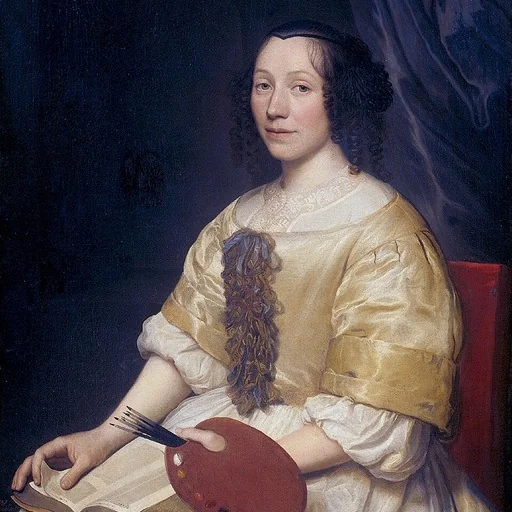
Maria van Oosterwijck (1630–1693), also spelled Oosterwyck, was a Dutch Golden Age painter, specialising in richly detailed flower paintings and other still lifes.