Artwork
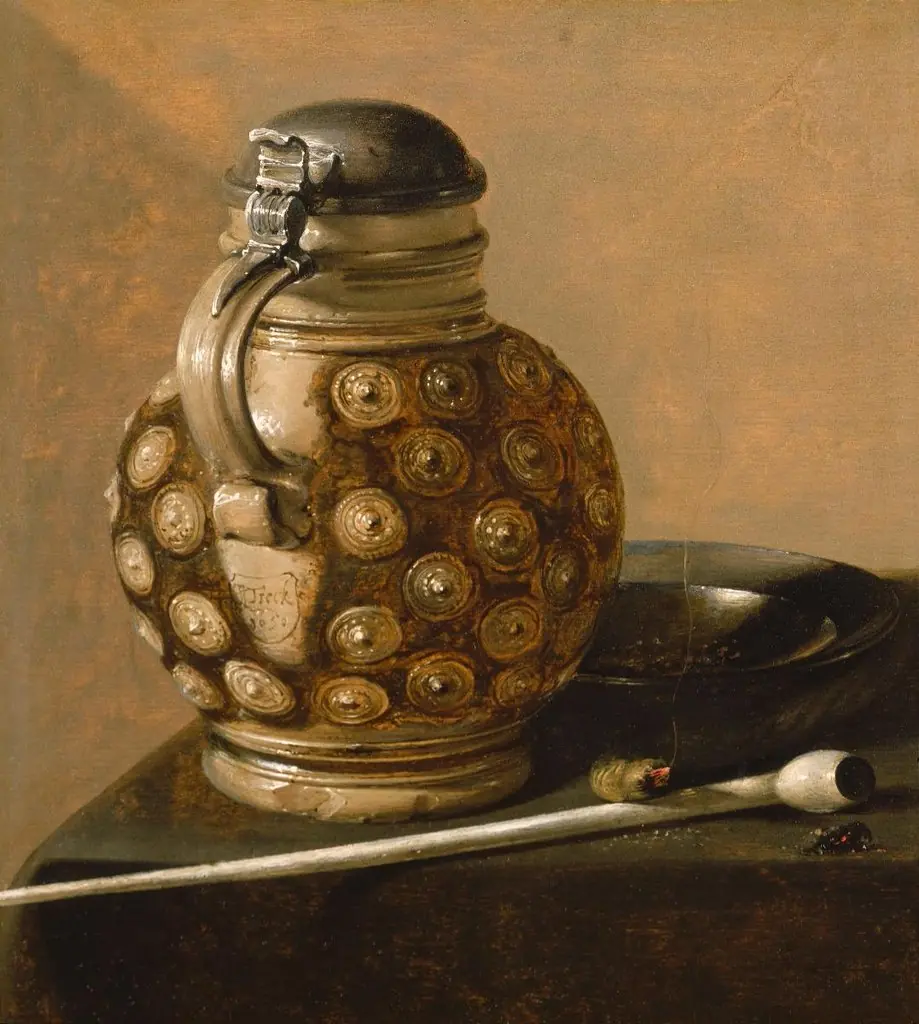
Still Life with Westerwald Jug and Smoking Paraphernalia
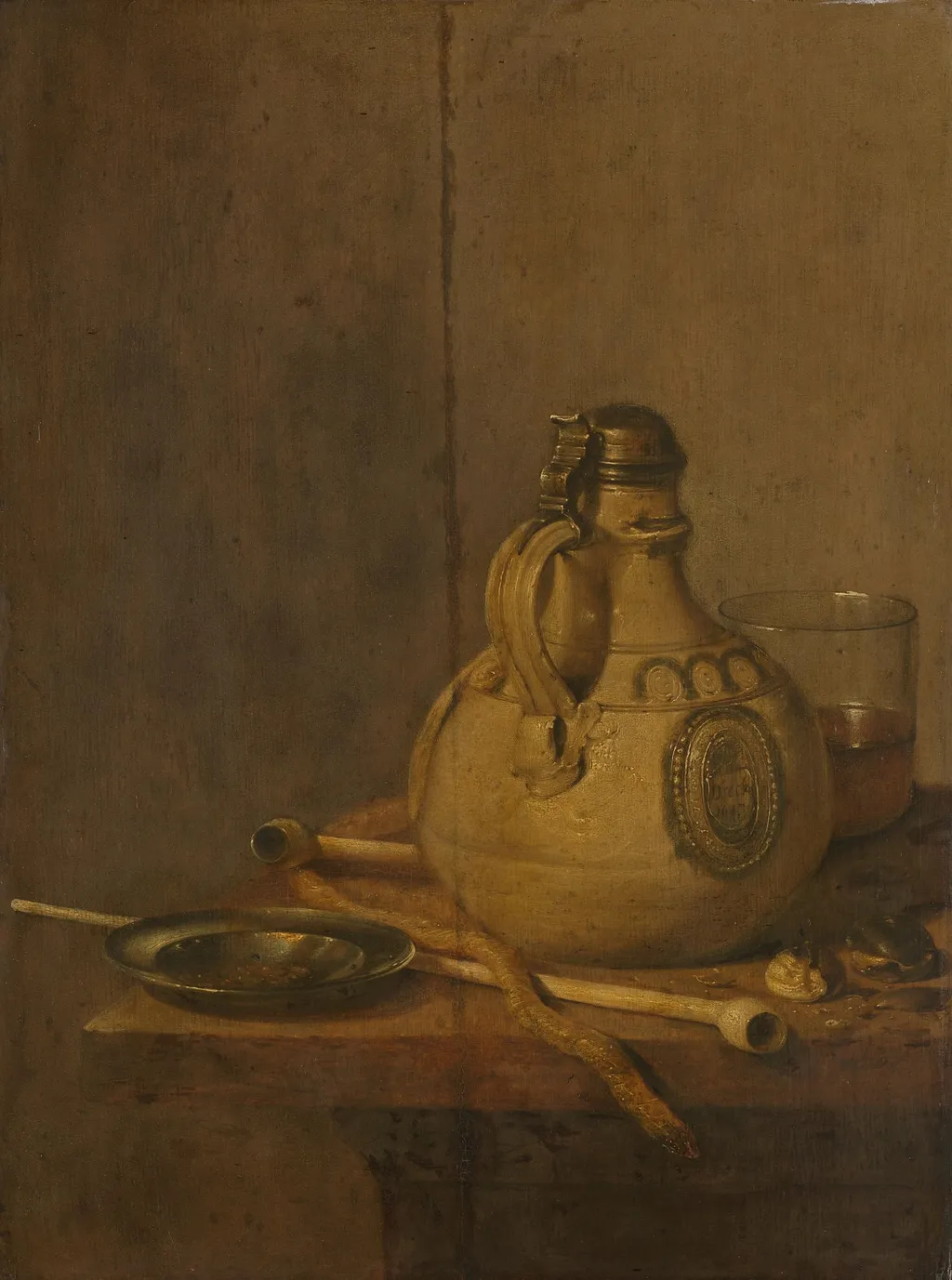
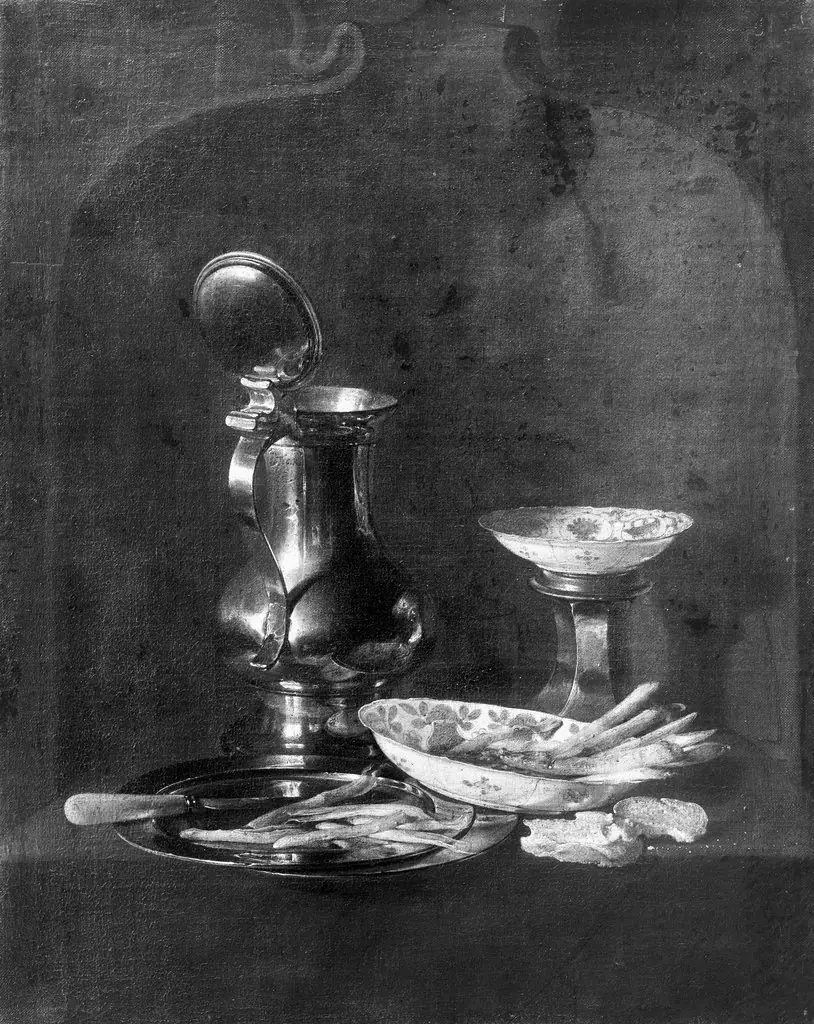
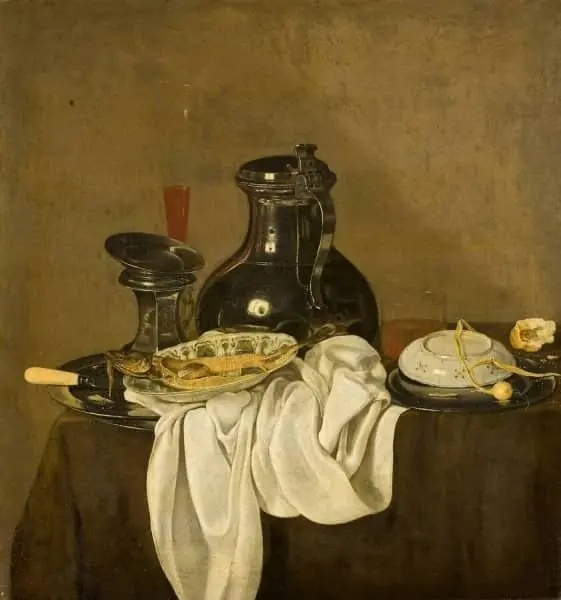
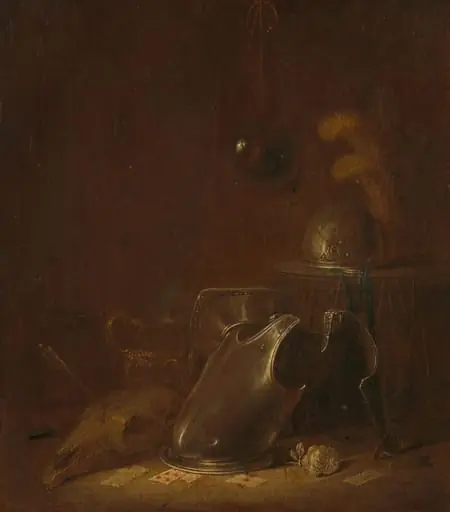
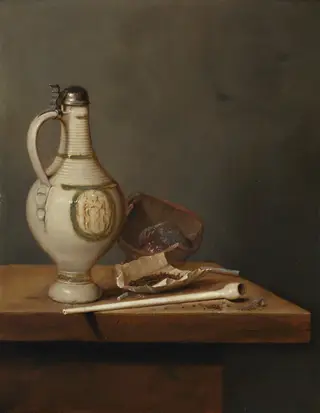
Still Life with Westerwald Jug and Smoking Paraphernalia is an unspecified painting by the Dutch Golden Age artist Jan Treck. It dates from 1647 and is held in the collection of the Rijksmuseum.
About this work
Technique & Style
The work reflects influences from Pieter Claesz and Willem Heda, particularly in its sober arrangement and attention to textural detail.
The painting is executed in oil on canvas or wood panel, typical of Dutch Golden Age still lifes. It depicts a Westerwald jug alongside smoking paraphernalia, rendered with restrained object count and precise handling characteristic of Treck's economy of composition. The work reflects influences from Pieter Claesz and Willem Heda, particularly in its sober arrangement and attention to textural detail. The formal qualities emphasize clarity of light and surface treatment, aligning with the vanitas tradition while maintaining a minimalist approach to still-life elements.
History & Provenance
Jan Jansz. Treck created *Still Life with Westerwald Jug and Smoking Paraphernalia* in 1647. The work belongs to the artist's mature period, following his earliest known signed and dated piece from 1641. Treck, a Dutch Golden Age painter active in Amsterdam, developed his style under the influence of his brother-in-law Jan den Uyl, as well as Pieter Claesz and Willem Heda. While specific records of a private commission for this piece are not detailed in the available sources, the painting reflects the artist's characteristic economy of objects and technical precision typical of his Haarlem-influenced tradition. Following Treck's death in September 1652, his estate, including various paintings, was inherited by his brother, sister, niece, and nephews. In 1661, the painter Simon Luttichuys was reportedly asked to repaint a vanitas work by Treck, indicating the continued circulation and maintenance of his oeuvre shortly after his passing.
Context
Jan Jansz. Treck operated as a still-life painter during the Dutch Golden Age, active in Amsterdam between 1606 and 1652. His work, including the 1647 painting *Still Life with Westerwald Jug and Smoking Paraphernalia*, is situated within the tradition of Haarlem masters such as Pieter Claesz and Willem Claesz. Heda, whose influence is evident in his precise technique. Art historical scholarship notes that Treck distinguished himself through a restrained composition, utilizing a notably small number of objects compared to his contemporaries. This economy of form often included specific motifs like folded napkins. His artistic legacy includes influencing later painters such as Willem Kalf and Pieter van Anraedt. Furthermore, the survival of a 1640 work bearing both his and his brother-in-law Jan den Uyl's signatures suggests Treck may have completed Uyl's unfinished paintings after the latter's death.
Legacy
Treck's later reputation was shaped by his influence on Dutch Golden Age still-life painters. He mentored Pieter van Anraedt and Willem Kalf, and his compositional restraint, evident in sparse object arrangements, was noted by contemporaries. After his death, his workshop legacy was sustained by Simon Luttichuys, who repainted a Treck vanitas in 1661, and by ongoing scholarly attention to his techniques, such as precise rendering of materials like pewter and porcelain. His works remain held in major institutions, including the National Gallery in London.
Own this work as a print
Artist & collection
Artist
Jan Jansz. Treck (1606, Amsterdam, 25 September 1652 ) was a still-life painter during the Dutch Golden Age. Treck used economy in the number of his objects.