Artwork
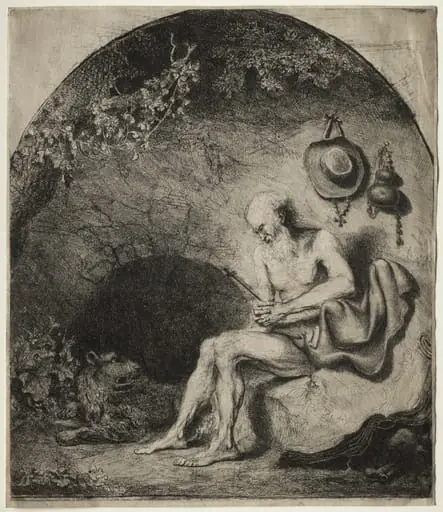
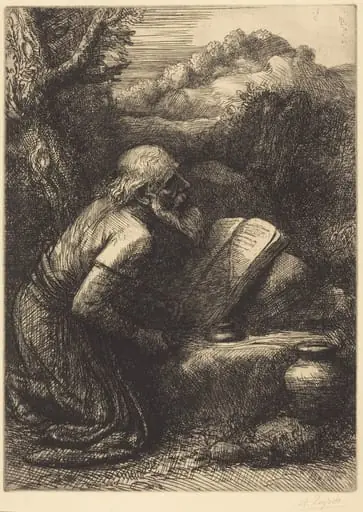
St. Jerome
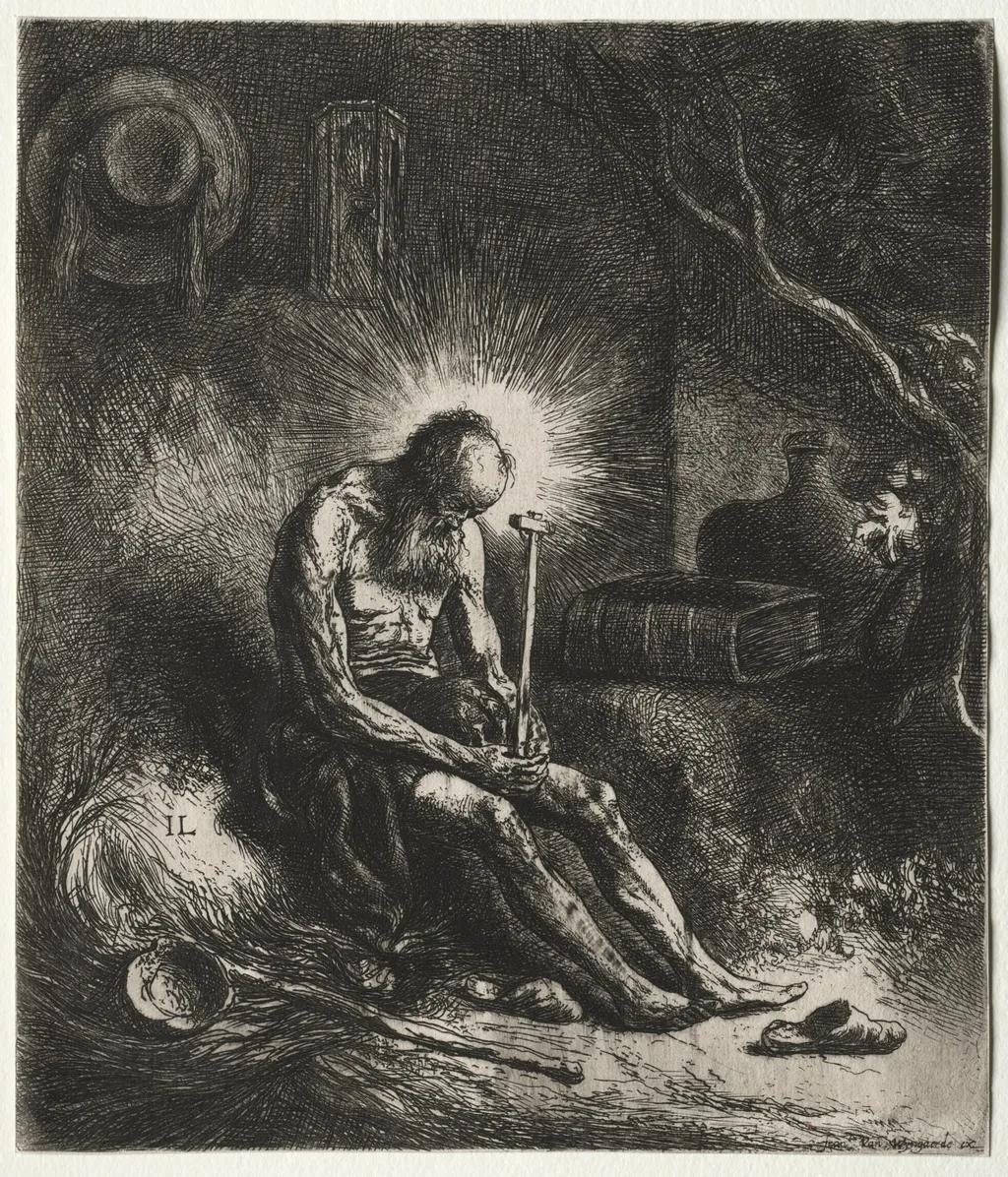
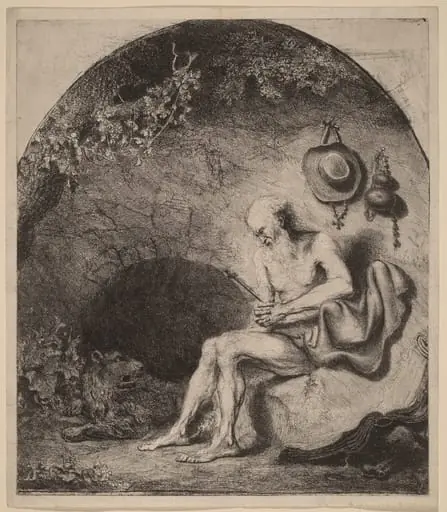
St. Jerome is a print by the Baroque artist Jan Lievens. It dates from 1631 and is held in the collection of the Cleveland Museum of Art.
- Accession no.
- 1943.588
- Credit line
- Mr. and Mrs. Lewis B. Williams Collection
About this work
Overview
Jan Lievens, a Dutch artist of the early 17th century, produced the print titled St. Jerome in 1631. The work is held by the Cleveland Museum of Art and presents the saint in a solitary, reflective pose, surrounded by symbolic objects that underscore his scholarly and ascetic reputation.
Subject & Meaning
The figure is identified as St. Jerome, the biblical translator traditionally shown in the act of contemplation. He is seated on the ground, clothed only in a simple loincloth, with a halo indicating sanctity. In his right hand he grips a hammer, while his left holds a skull, both conventional symbols of mortality and the labor of translation.
Technique & Style
Lievens employs a stark chiaroscuro, allowing deep shadows to dominate the background while a narrow beam of light illuminates the saint’s face and hands. This contrast creates a three‑dimensional presence and focuses attention on the central figure’s introspective demeanor.
History & Provenance
Born in Leiden, Lievens trained in Amsterdam alongside Rembrandt before establishing an independent career that took him to several European cities. St. Jerome entered the Cleveland Museum of Art’s collection in the 20th century, though the exact acquisition path is not detailed in the available records.
Own this work as a print
Artist & collection

Artist
Jan Lievens (24 October 1607 – 4 June 1674) was a Dutch Golden Age painter who was associated with his close contemporary Rembrandt, a year older, in the early parts of their careers.