Artwork
Samson and Delilah
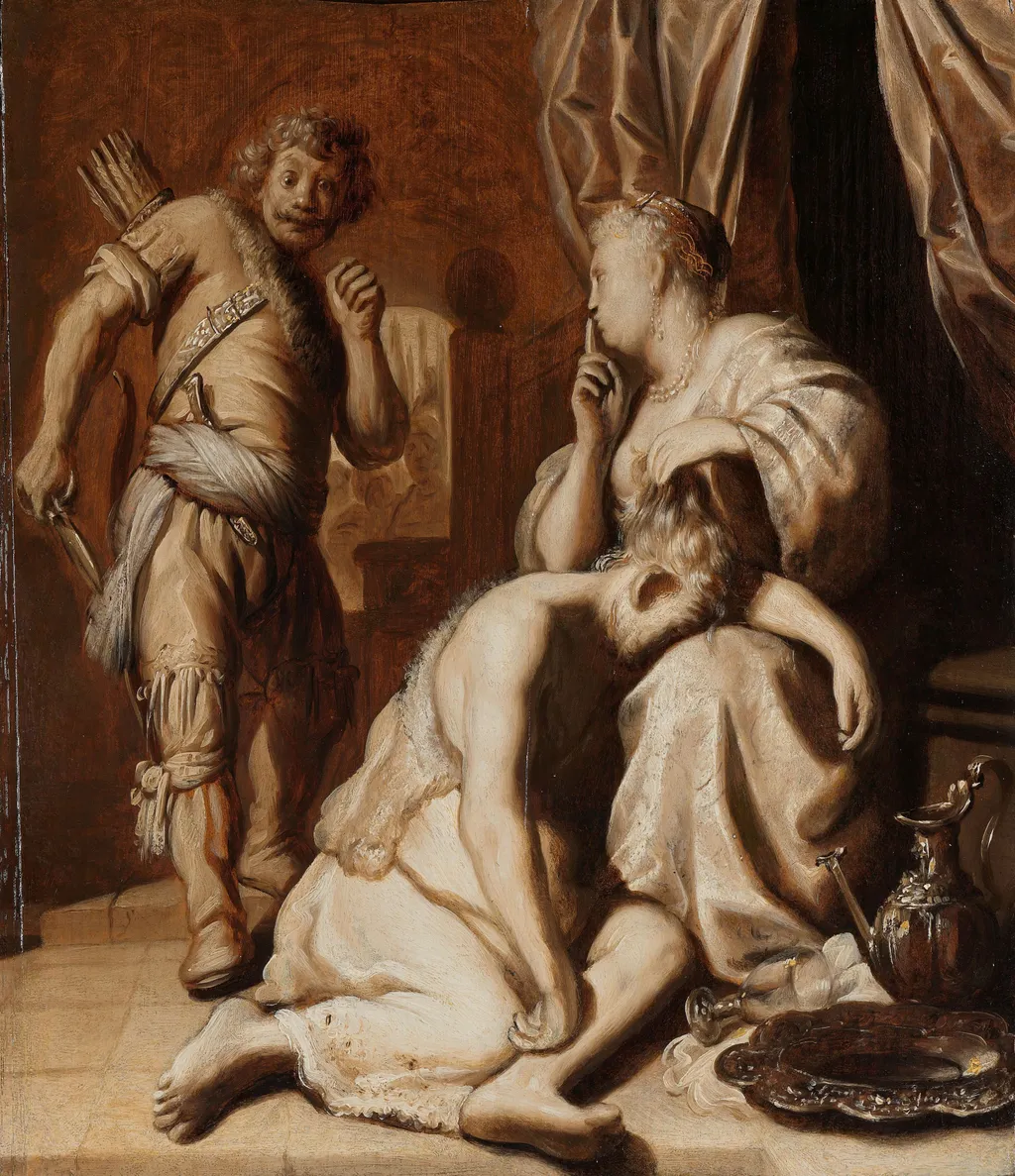
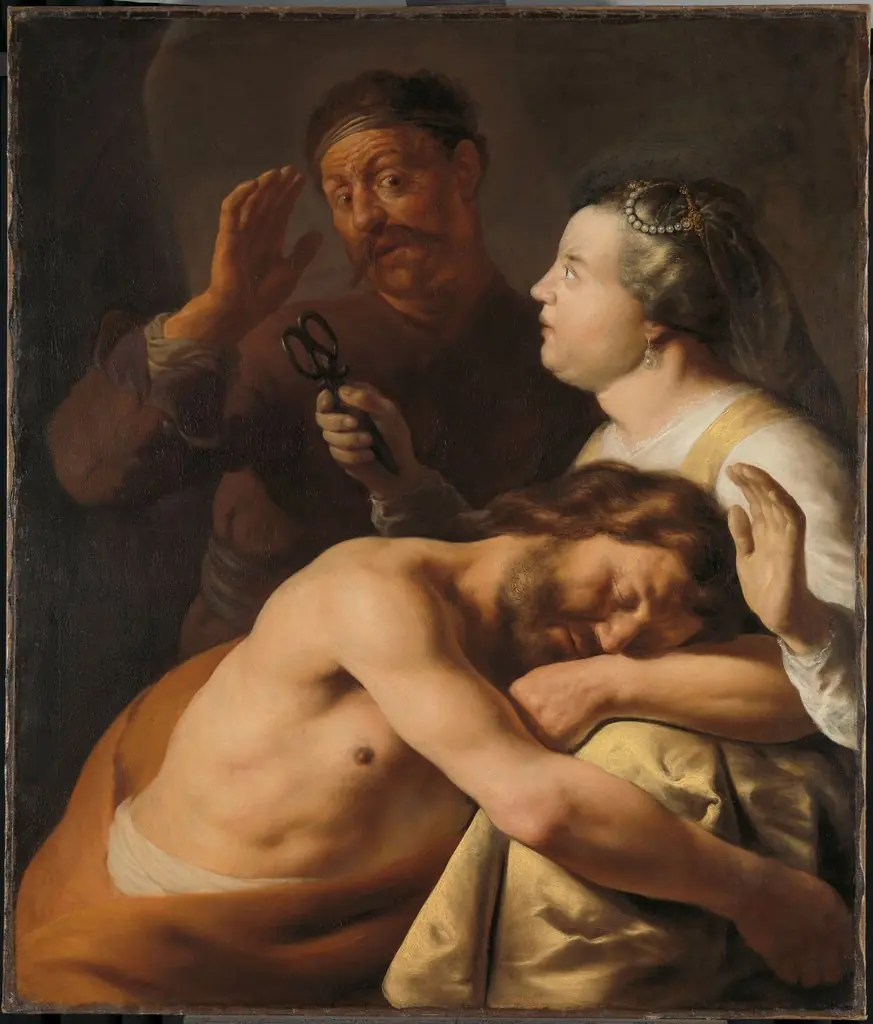
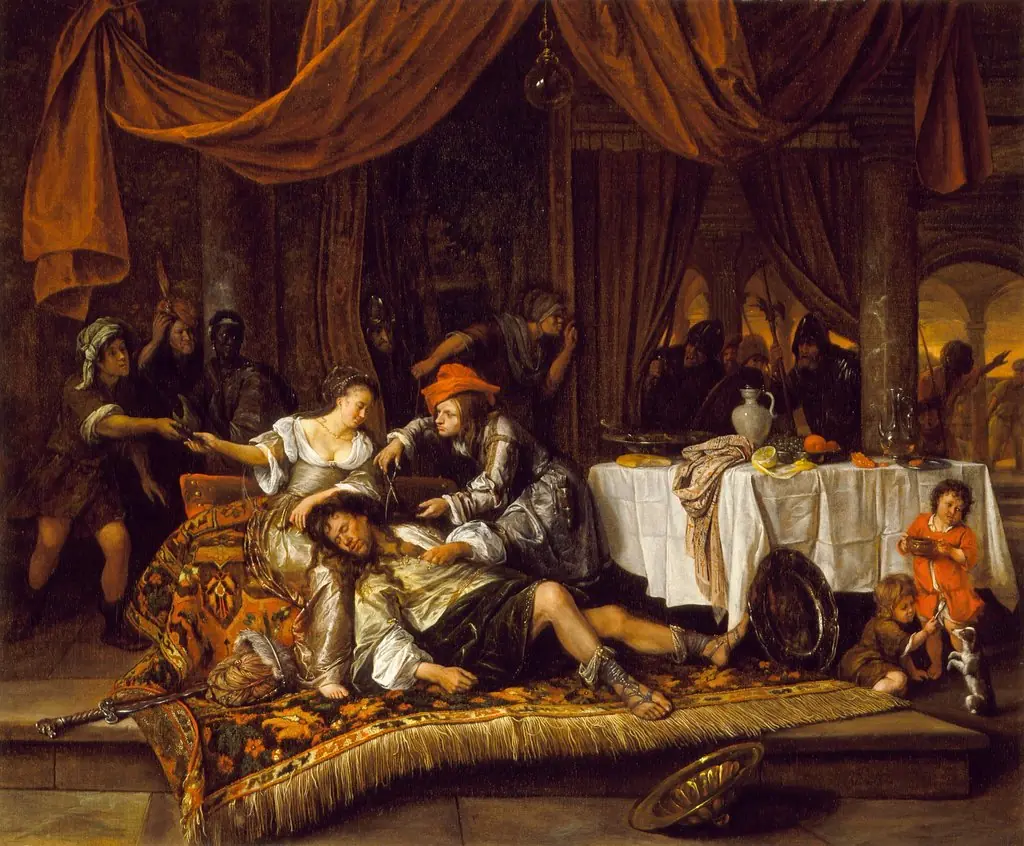
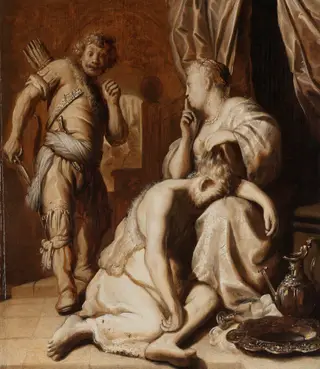
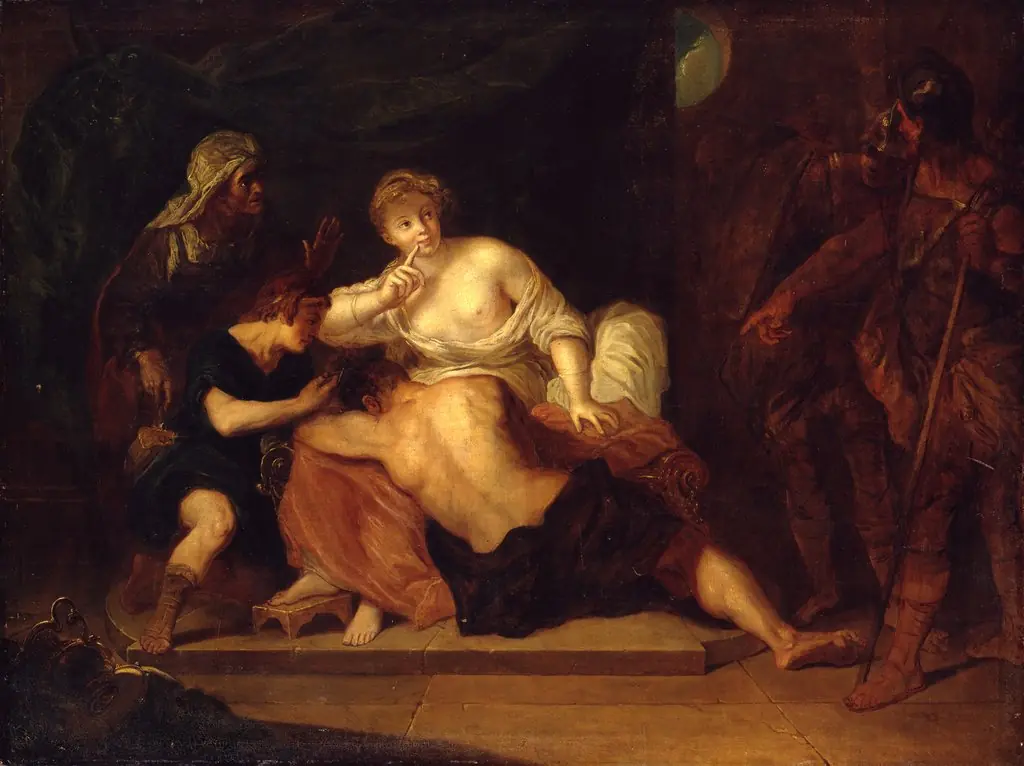
Samson and Delilah is an oil painting by the Dutch Golden Age artist Jan Lievens. It dates from 1628 and is held in the collection of the Rijksmuseum.
About this work
Subject & Meaning
The work is classified as religious genre painting and its main subject is identified as the figures of Samson and Delilah.
The painting depicts the Old Testament narrative of Samson and Delilah, a popular subject in religious art of the period. According to the biblical account, Delilah, bribed by Philistine lords, coaxed Samson into revealing that his supernatural strength derived from his uncut hair, then had it shorn while he slept, leaving him vulnerable to capture.
The work is classified as religious genre painting and its main subject is identified as the figures of Samson and Delilah. As a small-scale devotional panel, it condenses the moment of betrayal into an intimate encounter, a treatment well suited to private contemplation rather than grand narrative display. The pairing of Samson and Delilah traditionally functioned as both a moral warning against the dangers of seduction and a typological prefiguration of Christ's Passion, since Samson's captivity and humiliation paralleled themes of betrayal and sacrifice.
Technique & Style
Executed in oil on panel in 1628, the work exhibits a restrained handling typical of Lievens’s early Leiden period, with delicate transitions between light and shadow to model the figures’ faces and drapery.
The composition is tightly framed around the sleeping Samson and the attentive Delilah, emphasizing quiet narrative tension rather than dramatic gesture. Subtle glazes articulate the texture of flesh and fabric, while a muted palette of ochres and umbers focuses attention on the central encounter.
History & Provenance
Jan Lievens’s Samson and Delilah is dated 1628 and is executed in oil on panel, measuring 27.5 by 23.5 cm.
The painting entered the collection of the Rijksmuseum in Amsterdam, where it remains held. This work is one of the artist’s early religious compositions, created when Lievens was in his late teens. There is no documentary record of a specific commission, and the painting appears to have been produced as an independent work rather than for a particular patron or setting.
Jan Lievens' 1628 painting Samson and Delilah is held in the collection of the Rijksmuseum in Amsterdam. The work, executed in oil on panel, measures 27.5 cm in height and 23.5 cm in width. While the provided sources confirm the museum as the current location and specify the medium and dimensions, they do not contain the specific inventory or accession number for the piece. Furthermore, no details regarding the painting's exhibition history are recorded in the available documentation.
Legacy
The painting has been cited as an influential early example of Baroque narrative painting, particularly noted for its dramatic chiaroscuro and psychological depth that prefigure later treatments of the Samson and Delilah story. Its composition has informed subsequent interpretations by artists such as Rembrandt and Peter Paul Rubens, who adapted Lievens' handling of light and gesture in their own works. The piece remains a reference point in discussions of Dutch Golden Age religious imagery and is frequently reproduced in scholarly surveys of 17th‑century art.
The work is part of the permanent collection at the Rijksmuseum, where it is displayed in the Gallery of Honour alongside other masterpieces of the period.
Overview
Jan Lievens’ oil painting Samson and Delilah, executed in 1628, belongs to the Dutch Golden Age. The work portrays a quiet, tension‑filled interior where the biblical hero Samson lies asleep while a bearded figure watches and a woman in a draped garment studies him. The composition is dominated by warm brown tones and deep shadows, creating a confined, intimate atmosphere.
Own this work as a print
Artist & collection

Artist
Jan Lievens (24 October 1607 – 4 June 1674) was a Dutch Golden Age painter who was associated with his close contemporary Rembrandt, a year older, in the early parts of their careers.