Artwork
Portrait of Constantijn Huygens
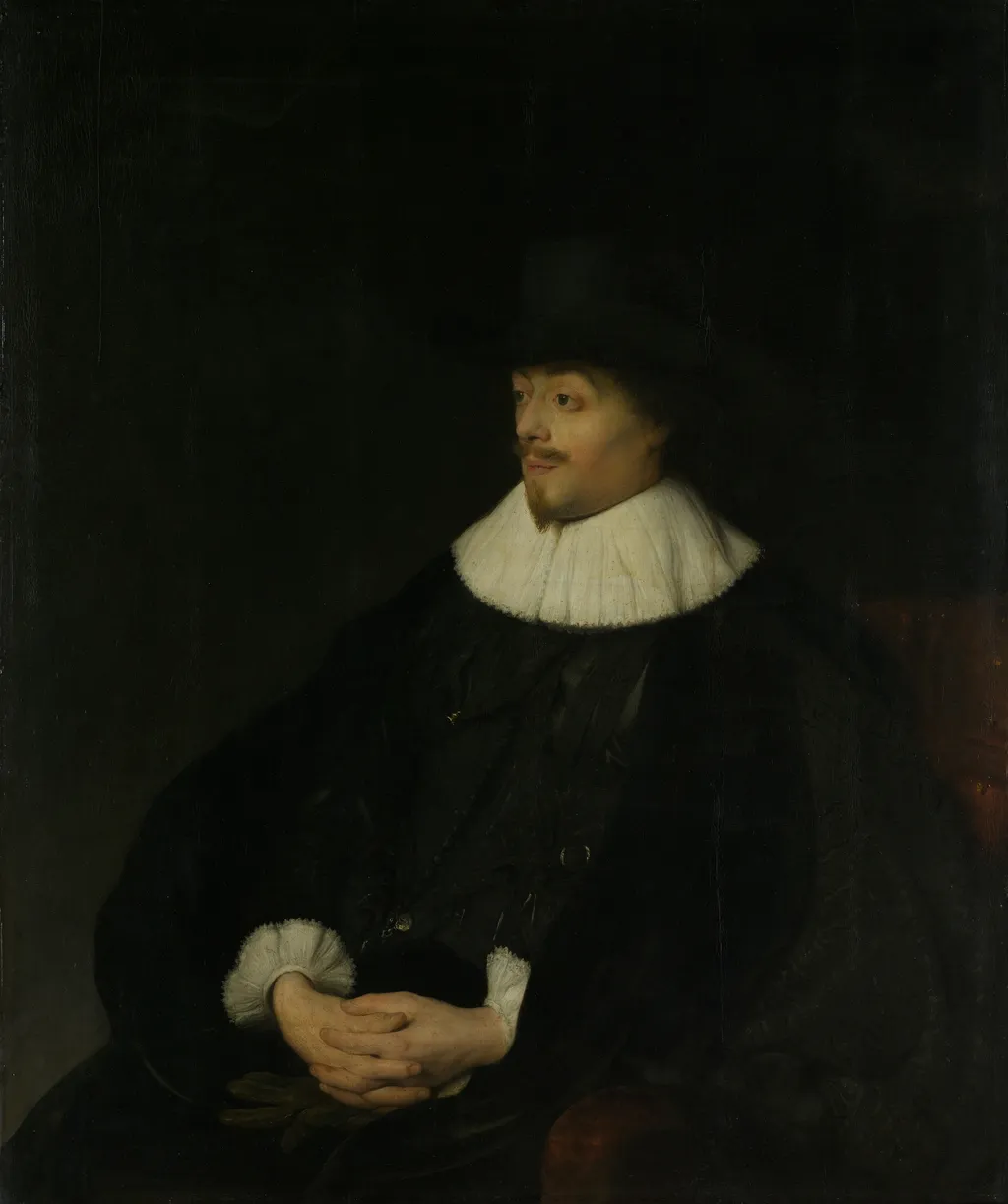
Portrait of Constantijn Huygens is an oil painting by the Dutch Golden Age artist Jan Lievens. It dates from 1628 and is held in the collection of the Rijksmuseum. Created in 1628, this oil portrait presents the Dutch statesman and poet Constantijn Huygens seated before a subdued backdrop.
About this work
Subject & Meaning
The work serves primarily as a visual record of the young man during the early period of his career, capturing his likeness in oil on panel.
The painting depicts Constantijn Huygens, a prominent Dutch statesman and writer, as its sole main subject. Created in 1628 by Jan Lievens, the work presents a straightforward portrait of the sitter without explicit allegorical figures or complex narrative scenes described in the available documentation. The iconography focuses on the individual identity of Huygens rather than symbolic attributes or hidden meanings.
While the subject is clearly identified as Huygens, the provided sources do not detail specific symbols, emblems, or deeper philosophical representations within the composition itself. The work serves primarily as a visual record of the young man during the early period of his career, capturing his likeness in oil on panel.
Technique & Style
Jan Lievens executed the Portrait of Constantijn Huygens in 1628 using oil paint applied to a panel support. The work measures 99 cm in height and 84 cm in width, adhering to the portrait genre conventions of the Dutch Golden Age. As a painting created during the artist's early Leiden period, the piece reflects the material practices of the time, combining pigment with a rigid wooden ground.
The physical dimensions and medium are consistent with the artist's output from this era, distinguishing it from works on canvas. The painting remains a significant example of Lievens' portraiture from the late 1620s.
History & Provenance
Jan Lievens executed the Portrait of Constantijn Huygens in 1628, utilizing oil paint on a panel support. The work measures 99 cm in height and 84 cm in width. While the specific original commission details are not explicitly recorded in the provided texts, the painting's early history is documented through its inclusion in the Musée de Douai collections by at least 1869, as noted in Auguste Cahier's catalogue of the museum's holdings.
The painting has a robust exhibition history, appearing in major surveys such as the 1937 Descartes exhibition at the Bibliothèque Nationale in Paris and the 1952 Rijksmuseum show dedicated to three centuries of Dutch portraiture. It was later featured in significant retrospectives including the 1979 Jan Lievens exhibition in Braunschweig and the comprehensive 2008–2009 international tour visiting Washington, Milwaukee, and Amsterdam.
Portrait of Constantijn Huygens is held in the Rijksmuseum in Amsterdam and is also part of the collection at the Musée de la Chartreuse de Douai. The work is accessioned under museum inventory numbers referenced in exhibition catalogues but not explicitly stated in the provided sources. It has been exhibited in multiple venues including the Rijksmuseum in 1952, the Musée et Bibliothèque de Douai in 1953, the Petit Palais in Paris in 1970, and in the 2008–2009 exhibition 'Jan Lievens: A Dutch Master Rediscovered' in Washington and Milwaukee.
The painting was included in the 1937 exhibition at the Bibliothèque Nationale in Paris and has appeared in several subsequent French and Dutch exhibitions documented in exhibition records.
Context
The portrait of Constantijn Huygens, painted by Jan Lievens in 1628, has attracted scholarly attention since the early twentieth century. Art historians such as Brière‑Misme highlighted its rediscovery in articles published in Oud Holland (1936) and the Bulletin des Musées de France (1937), situating the work within Lievens’s oeuvre and his relationship to Rembrandt. Subsequent studies appeared in specialist journals and monographs, including Van Schendel’s 1963 Rijksmuseum bulletin and Bauch’s analyses of the early Rembrandt school.
The painting has been featured in numerous exhibitions, ranging from the 1952 Rijksmuseum show Drie Eeuwen Portret in Nederland to the 1979 Braunschweig retrospective Jan Lievens ein Maler im Schatten Rembrandts and the 2008‑2009 traveling exhibition Jan Lievens‑ A Dutch Master Rediscovered. Held today in the Rijksmuseum and the Musée de la Chartreuse de Douai, the portrait is regarded as a key example of Lievens’s portraiture and a document of Huygens’s intellectual circle.
Legacy
The Portrait of Constantijn Huygens by Jan Lievens has been repeatedly highlighted in exhibitions and scholarly literature as a pivotal early portrait that foreshadows Lievens' later innovations and his influence on Rembrandt. Its inclusion in major retrospectives such as the 1971 Hollandse schilderijen uit Franse musea show at the Rijksmuseum and the 2008-2009 Jan Lievens- A dutch Master rediscovered exhibition underscores its enduring relevance. Contemporary accounts from the 1930s through the 1970s emphasized its role in illustrating the artistic relationship between Huygens and Lievens, contributing to a broader reassessment of Lievens' stature within Dutch Golden Age art.
The work's presence in both the Rijksmuseum and Musée de la Chartreuse de Douai has facilitated ongoing study of Lievens' technique and his impact on portraiture, cementing its reputation as a key example of early 17th-century Dutch portraiture.
Overview
Created in 1628, this oil portrait presents the Dutch statesman and poet Constantijn Huygens seated before a subdued backdrop. The composition centers on the sitter’s solemn expression, framed by a dark wardrobe and a stark white collar, while his hands rest gently together on his lap. The work exemplifies the restrained elegance typical of early‑17th‑century Dutch portraiture.
Own this work as a print
Artist & collection

Artist
Jan Lievens (24 October 1607 – 4 June 1674) was a Dutch Golden Age painter who was associated with his close contemporary Rembrandt, a year older, in the early parts of their careers.

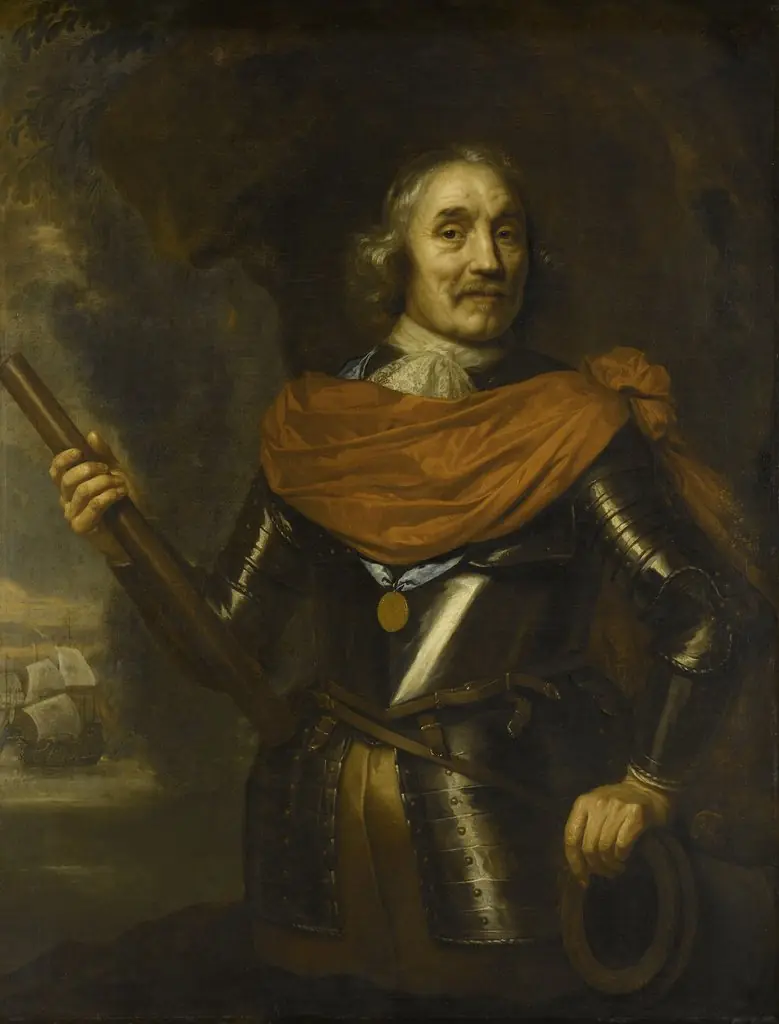
- Portrait of a Man in a Tall Hat
 unknown man
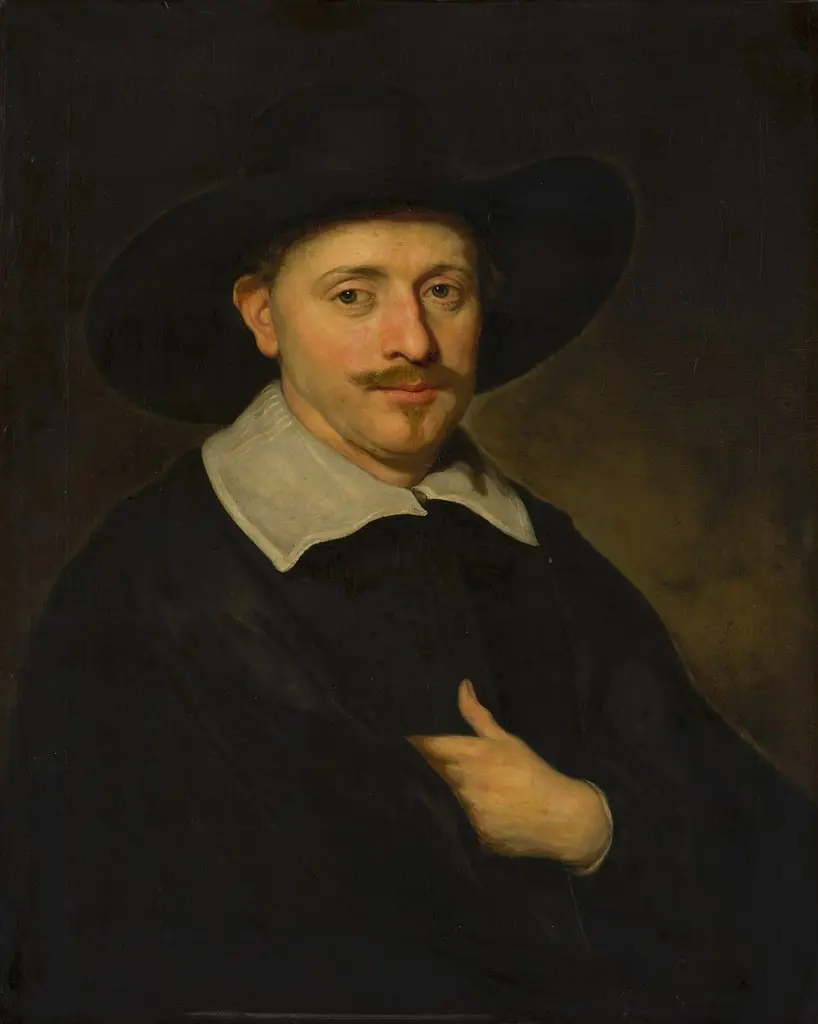 Portrait of a man
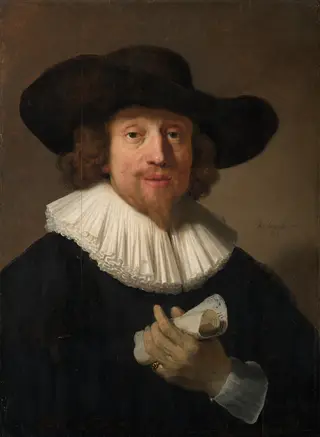 Man with a Sheet of Music
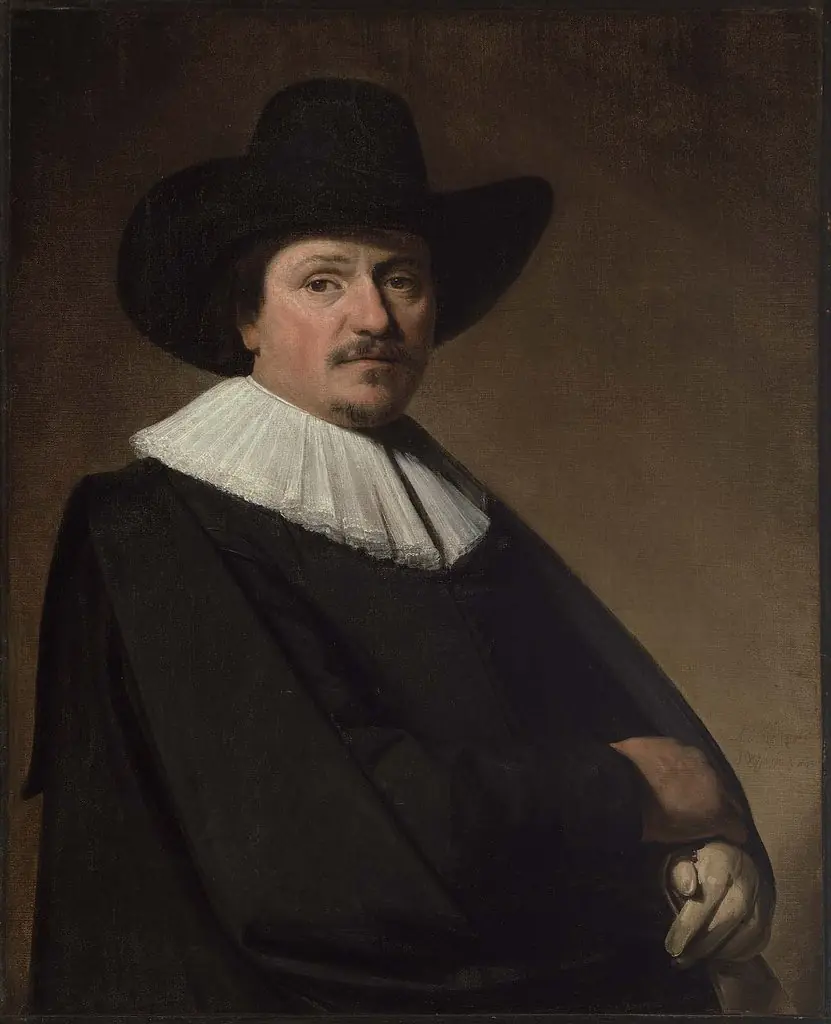 Portrait of a Man in Black
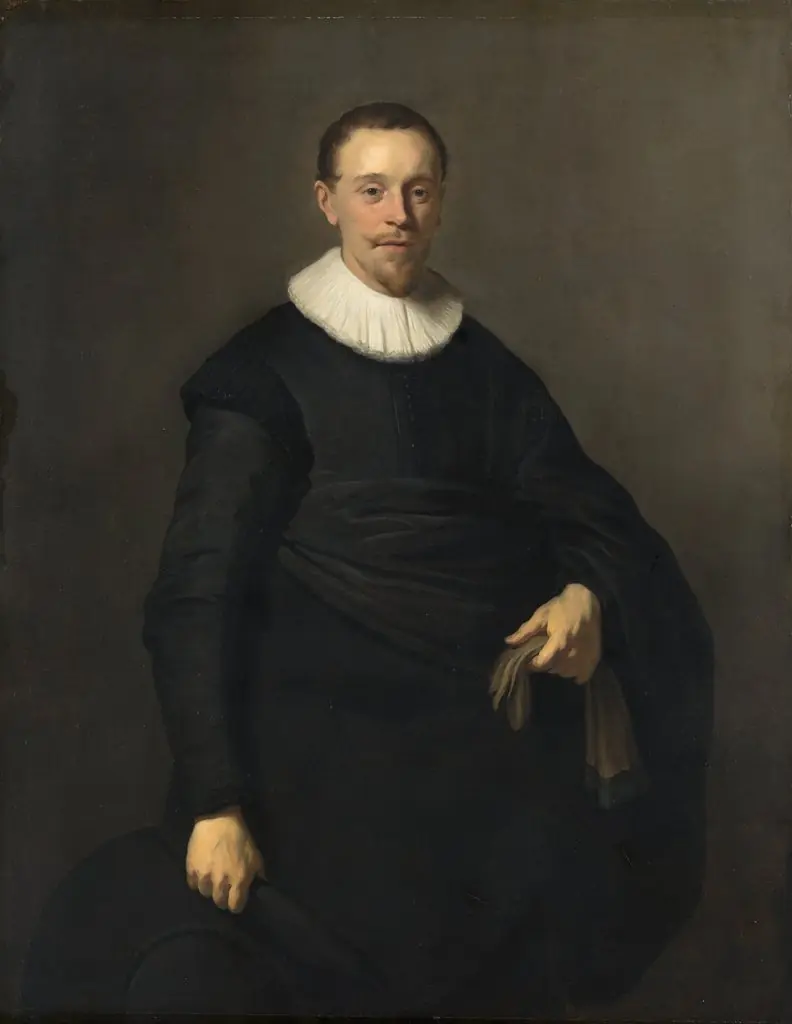 Portrait of a Man
 Portrait of a Man Wearing a Black Hat
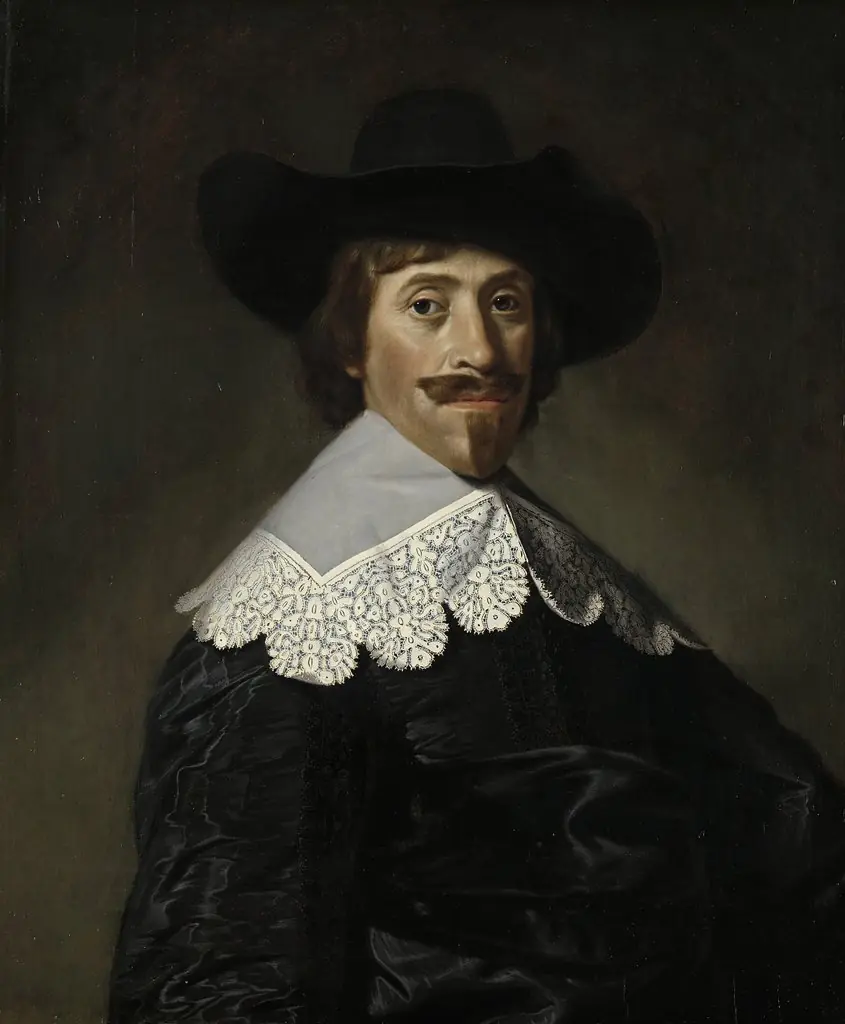 Frederik Dircksz Alewijn (1603-65). Alderman and councillor of Amsterdam
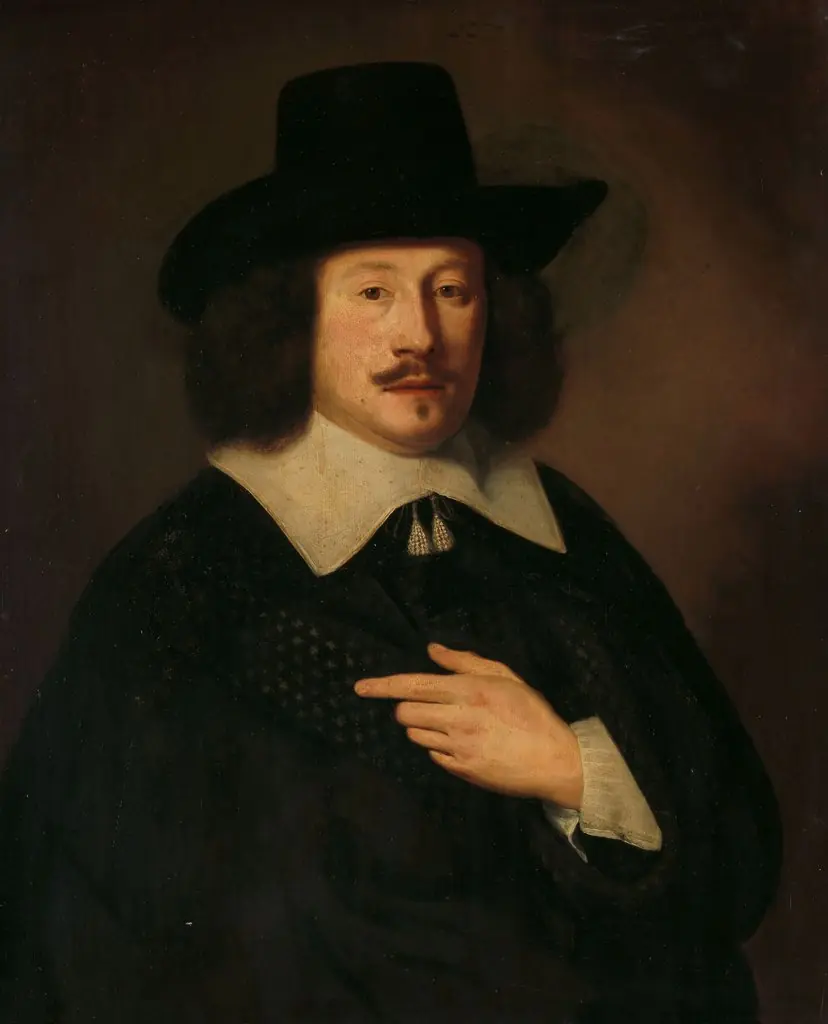 Portrait of a man
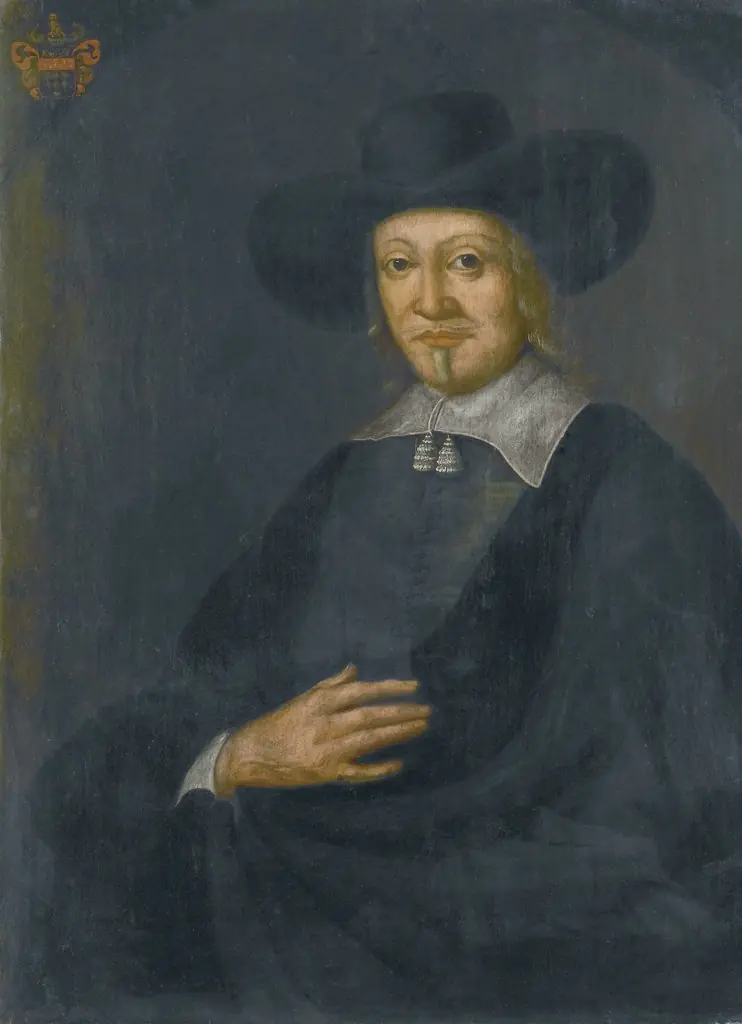 Portrait of Karel Reyniersz, Governor-General of the Dutch East Indies
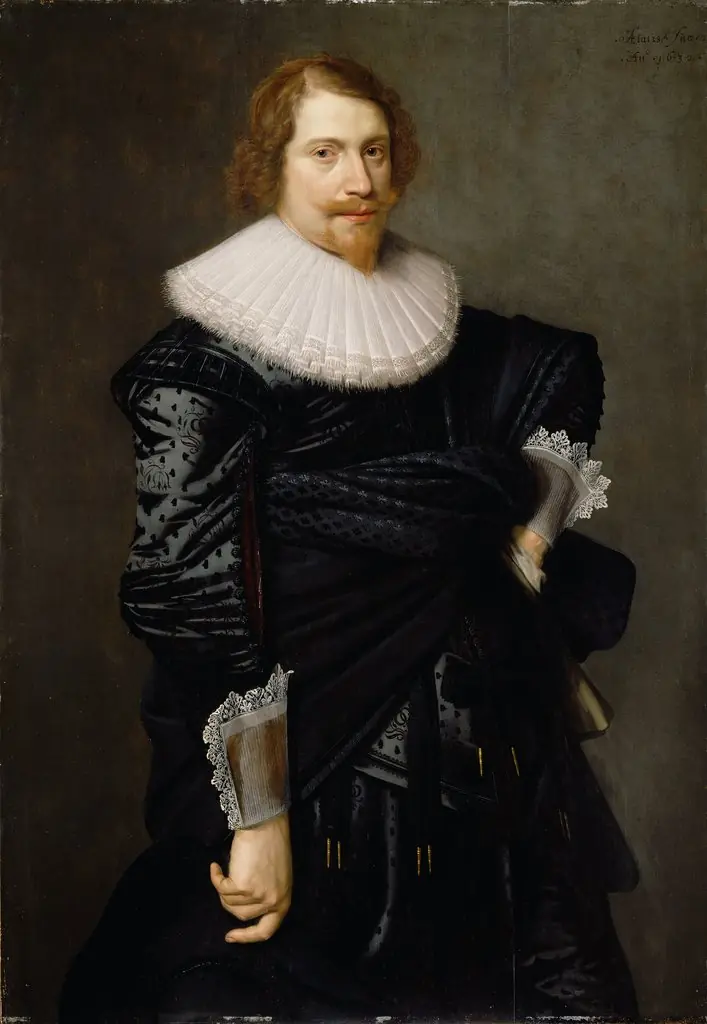 Portrait of a Man
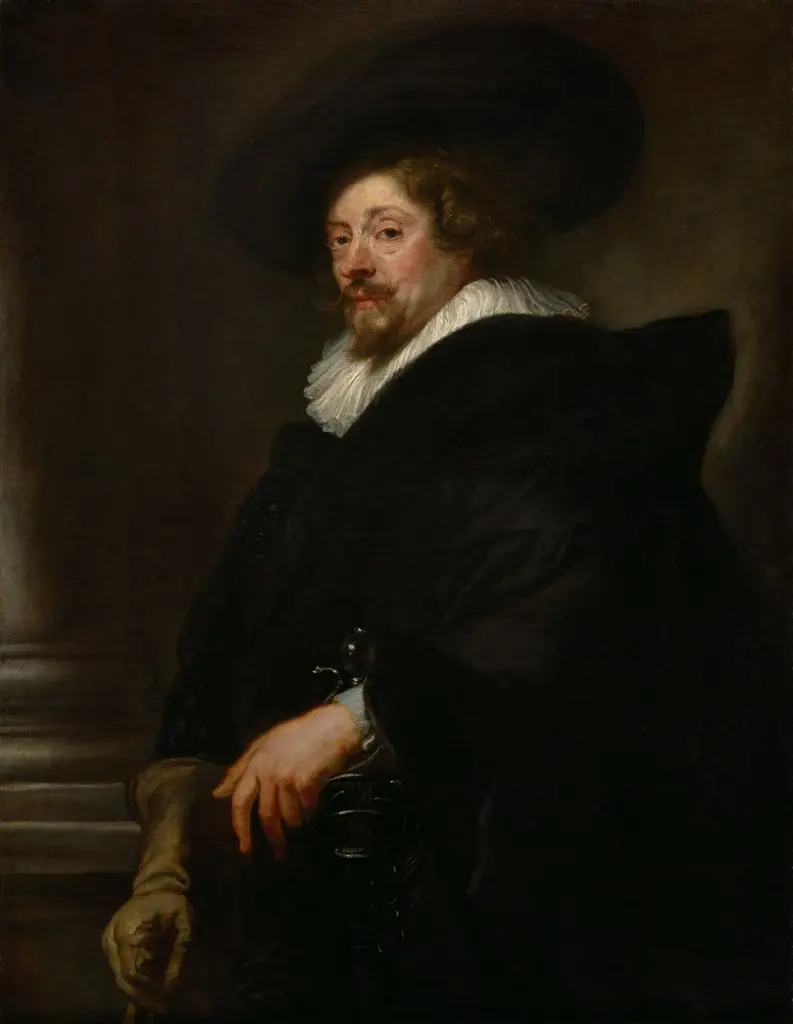 Self-portrait