Artwork
Evening Landscape
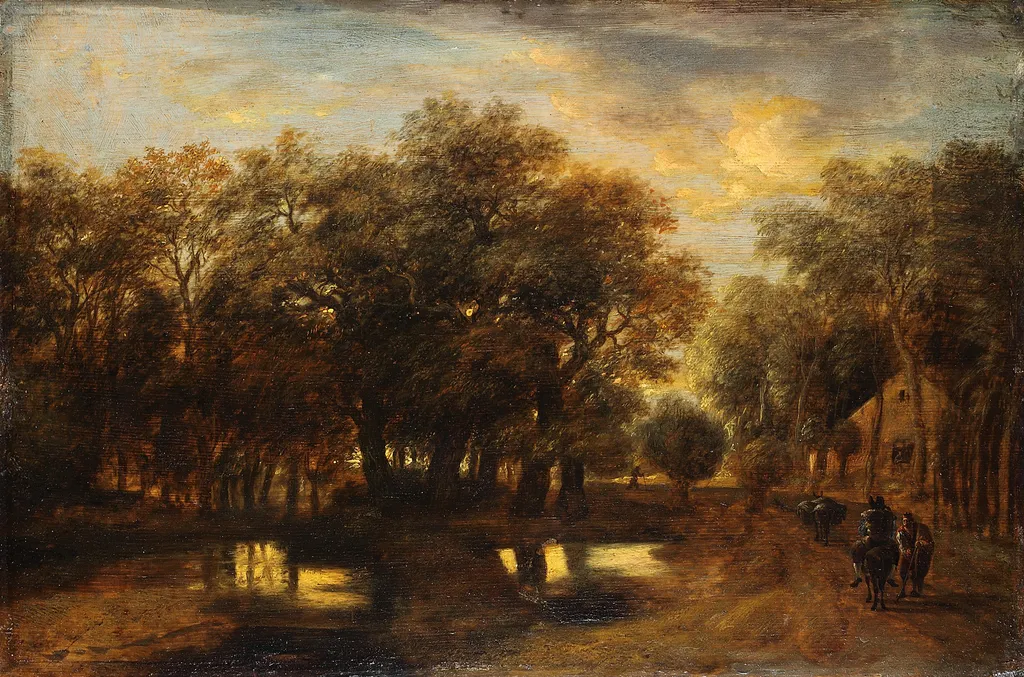
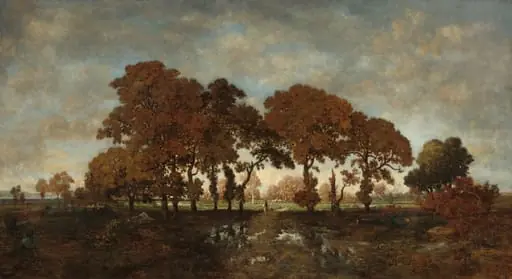
Evening Landscape is an oil painting by the Dutch Golden Age artist Jan Lievens. It dates from 1650 and is held in the collection of the Gemäldegalerie Berlin.
About this work
Overview
2 centimetres, this small but atmospheric landscape is held in the collection of the Gemäldegalerie Berlin at Charlottenburg Palace.
Evening Landscape is an oil painting on oak panel by the Dutch Golden Age artist Jan Lievens, dated 1650. Measuring 31 by 47.2 centimetres, this small but atmospheric landscape is held in the collection of the Gemäldegalerie Berlin at Charlottenburg Palace. The work exemplifies Lievens's mature landscape style and contributes to our understanding of his artistic range beyond the portraits and history paintings for which he is better known.
Subject & Meaning
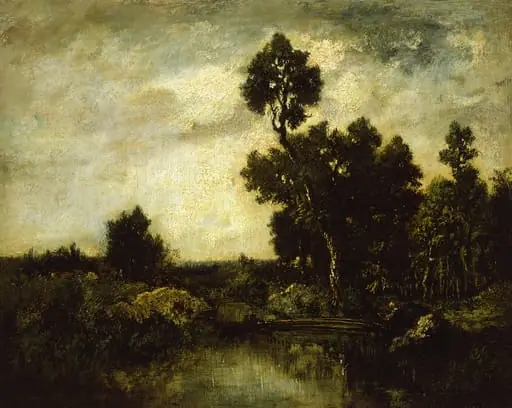
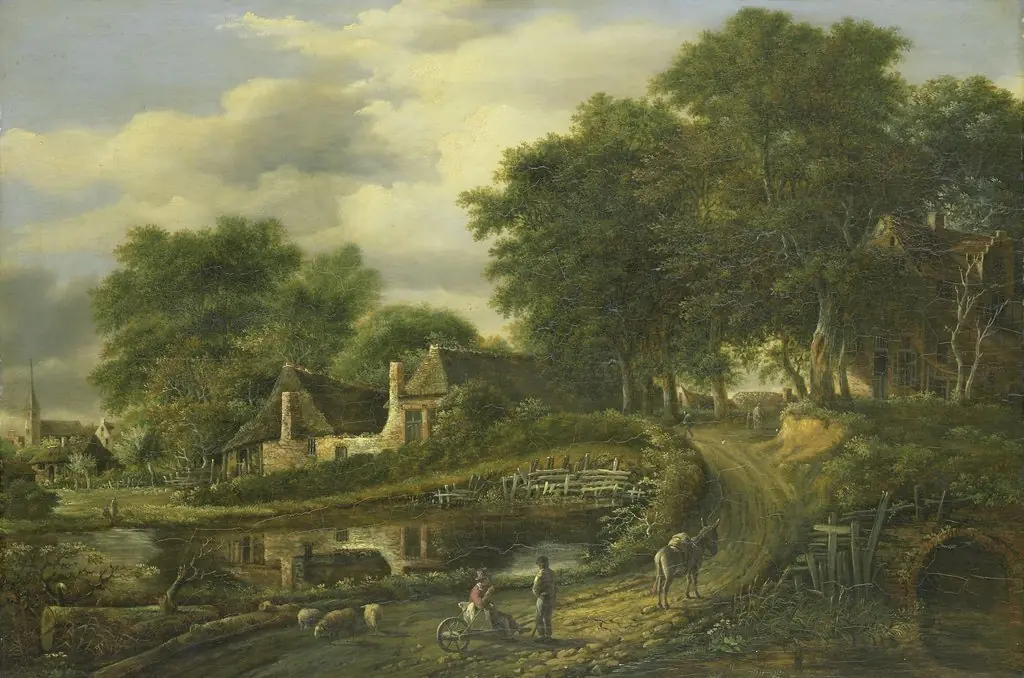
The painting depicts a twilight rural scene centred on a body of water in the foreground that reflects golden light filtering through dense woodland. In the middle ground, thick tree canopies block any view beyond, creating a sense of enclosure and mystery. On the right, a path carries two mounted riders accompanied by a figure on foot past a gabled building partially concealed by foliage; a distant figure appears near the horizon centre. The iconography suggests an ambiguous narrative of journey or return, though the human presence is deliberately understated. The scale relationship between the diminutive figures and the overwhelming natural setting emphasises the vastness of nature and the relative insignificance of human activity. The reflective water surface doubles the visual density of foliage and creates an illusion of infinite space, while the building hints at distant civilisation without disturbing the prevailing solitude. Thematically, the work invites contemplation of transience, the passage of time, and humanity's relationship with the natural world.
Technique & Style
Executed in oil on oak panel, Evening Landscape displays the visible, textured brushwork characteristic of Lievens's handling in this period. The sky is built from loose, directional strokes that suggest dynamic atmospheric movement, while the trees receive thicker, layered application. Forms soften into shadow toward the edges, producing an atmospheric finish rather than sharp detail. The artist employs chiaroscuro with particular effectiveness: strong contrasts between light and shadow define forms and direct the viewer's eye toward key areas. Warm sunlight penetrates the foliage from behind and reflects on the water, creating patches of illumination against the deep browns, muted greens, and gray-blue sky tones. Individual tree forms are suggested rather than precisely delineated, contributing to the impression of depth and atmospheric perspective. This approach is stylistically closely related to a landscape background that appears in Lievens's signed self-portrait in the National Gallery, London.
History & Provenance
The painting is dated 1650, placing it in Lievens's mature period after his return from England and his travels in the Netherlands. An inscription in contemporary handwriting on the reverse reads "Jan Lievens" alongside the initials "J.L.", providing early documentary attestation of the attribution. The work entered the collection of the Gemäldegalerie Berlin, where it remains today at Charlottenburg Palace. Its relatively modest dimensions and landscape subject suggest it may have been painted for the open market rather than as a commission, though no specific patron has been identified.
Context
Jan Lievens (1607-1674) was a close associate of Rembrandt during their Leiden years and enjoyed considerable reputation in his lifetime, though subsequent art historical attention has often favoured his more famous contemporary. Evening Landscape demonstrates Lievens's engagement with the emerging Dutch landscape tradition of the mid-seventeenth century, a genre that gained increasing prestige as an independent category during this period. The painting's moody atmosphere and emphasis on natural grandeur over human narrative align it with the tonal phase of Dutch landscape painting, while the sophisticated handling of reflected light reveals the technical accomplishment that earned Lievens esteem among his peers. The stylistic connection to the landscape in his National Gallery self-portrait indicates that Lievens considered such settings integral to his artistic identity.
Legacy
Evening Landscape remains a significant work for understanding Lievens's contribution to Dutch landscape painting, a genre less frequently associated with him than with specialists such as Jacob van Ruisdael or Meindert Hobbema. Its residence in the Gemäldegalerie Berlin ensures continued scholarly access and public visibility. The painting's reputation rests on its exemplary demonstration of how a small-scale panel could achieve remarkable atmospheric depth through controlled chiaroscuro and reflective effects. For modern viewers and researchers, it offers essential evidence of Lievens's versatility and his sustained engagement with landscape throughout a career marked by shifts between portraiture, history painting, and printmaking.
Own this work as a print
Artist & collection

Artist
Jan Lievens (24 October 1607 – 4 June 1674) was a Dutch Golden Age painter who was associated with his close contemporary Rembrandt, a year older, in the early parts of their careers.