Artwork
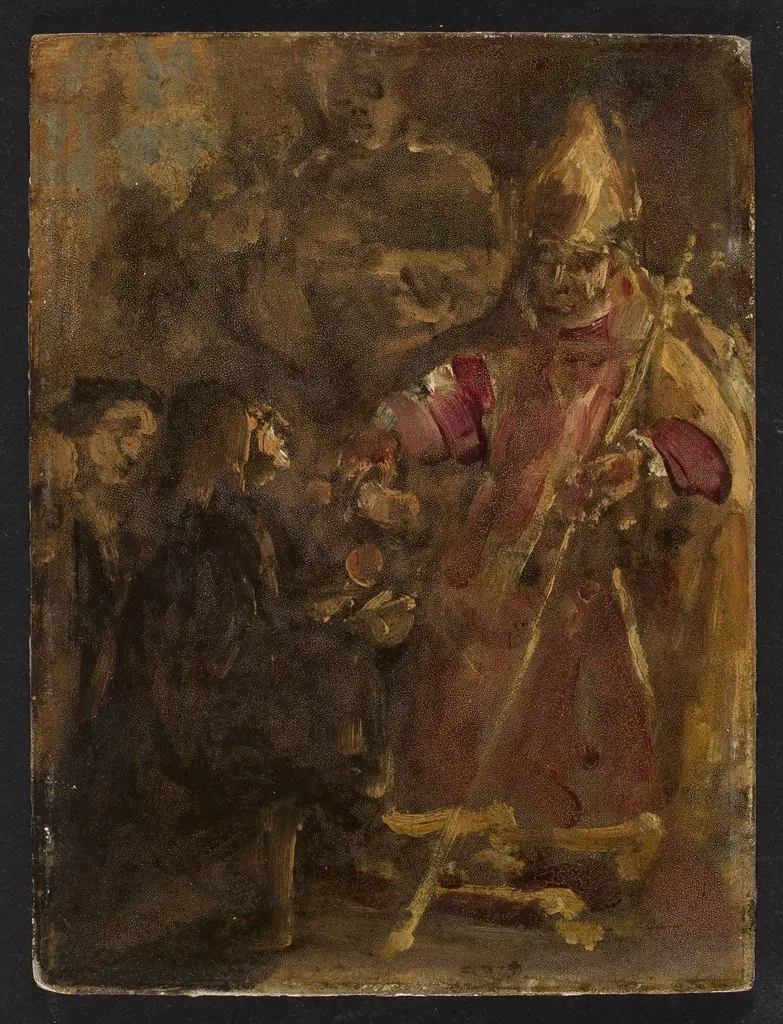
Sketch for “Skarga's Sermon”
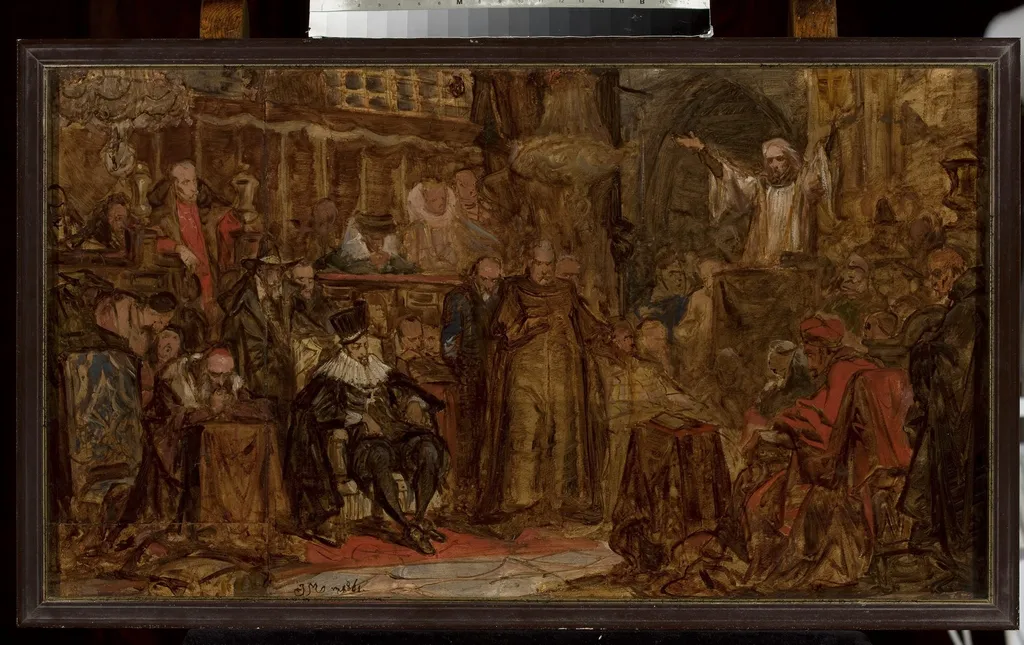
Sketch for “Skarga's Sermon” is an unspecified painting by the Realist artist Jan Matejko. It dates from 1861 and is held in the collection of the National Museum in Warsaw.
About this work
The medium used is unknown, but the level of detail and expression suggests a high level of skill and craftsmanship.
This painting depicts a scene of a sermon, with a priest standing at a pulpit, addressing a crowd of people. The atmosphere is one of reverence and attention, as the listeners are engaged in the priest's words.
The painting is a sketch for a larger work, titled "Skarga's Sermon," created by Jan Matejko in 1861. The medium used is unknown, but the level of detail and expression suggests a high level of skill and craftsmanship.
If you're interested in learning more about the artist's use of chiaroscuro, a technique that creates a strong contrast between light and dark, you can explore more of Jan Matejko's works.
Overview
Jan Matejko's Sketch for 'Skarga's Sermon' (1861) is a preparatory painting for a larger work, characteristic of the artist's realist approach to depicting pivotal moments in Polish history.
Subject & Meaning
The sketch captures a serene scene of a priest delivering a sermon to an attentive crowd, evoking an atmosphere of reverence. The subject reflects Matejko's interest in exploring themes integral to Poland's national identity through historical narratives.
Technique & Style
While the medium is unspecified, the sketch showcases meticulous detail and expressive qualities, hinting at Matejko's skillful craftsmanship. Notably, the composition likely employs chiaroscuro, a technique emphasizing contrast between light and dark, a common element in Matejko's oeuvre.
History & Provenance
Created in 1861, this sketch is part of Matejko's methodical process for developing large-scale historical paintings, a practice seen in his notable works like Rejtan (1866) and Battle of Grunwald (1878).
Context
Within Matejko's body of work, Sketch for 'Skarga's Sermon' sits alongside other historically themed pieces, contributing to his reputation as a leading 19th-century history painter focused on Polish national themes.
Legacy
As a precursor to a larger, unfinished work (Skarga's Sermon), the sketch provides insight into Matejko's creative process, though its standalone impact on his overall legacy is less defined compared to his completed, large-scale historical paintings.
Own this work as a print
Artist & collection
Artist
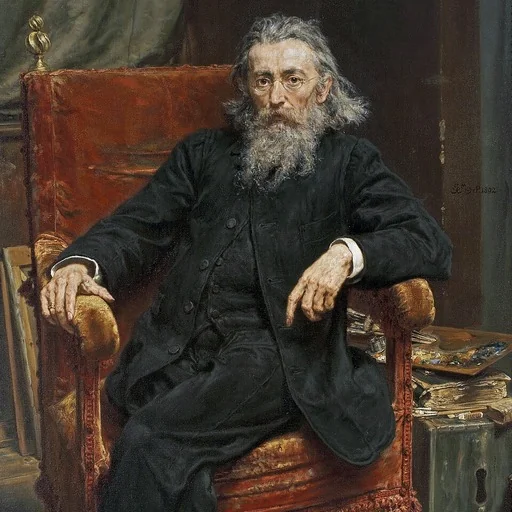
Jan Alojzy Matejko (Polish pronunciation:; also known as Jan Mateyko; 24 June 1838 – 1 November 1893) was a Polish painter, a leading 19th-century exponent of history painting, known for depicting nodal events from Polish history.

- Presenting the Fowler to the Fowler Brotherhood (Sketch)
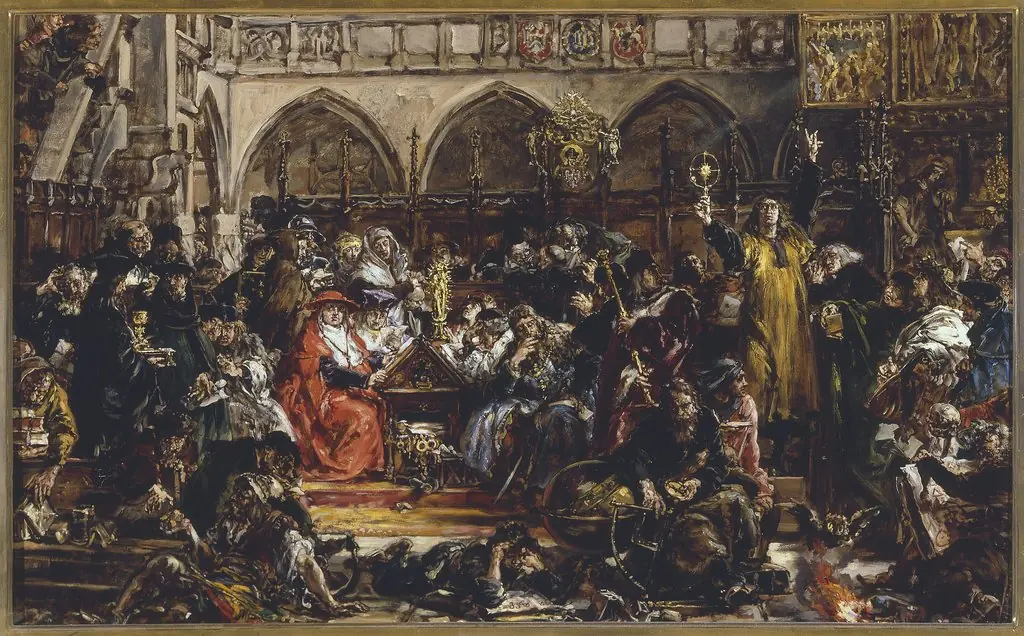 Influence of the university on the country, from the series “History of Civilization in Poland”
 King Gustav Vasa of Sweden Receiving the Swedish Translation of the Bible
 The Hanseatic League receives its Charter
 Bloody feast of Count Gero
 Alchemist Sendivogius and Sigismund III, sketch
 Prince Maurits Receiving a Russian Delegation in 1614
 Death of the leader
 Ștefan cel Mare primind solii tătari
 Heilige geknield voor een paus
 Bishop Lubrański establishes the Ecclesiastical Academy in Poznań, sketch
 Behind the Scenes at Astley's