Artwork
Cavalier Playing a Lute to a Lady (‘Lucelle and Ascagnes’)
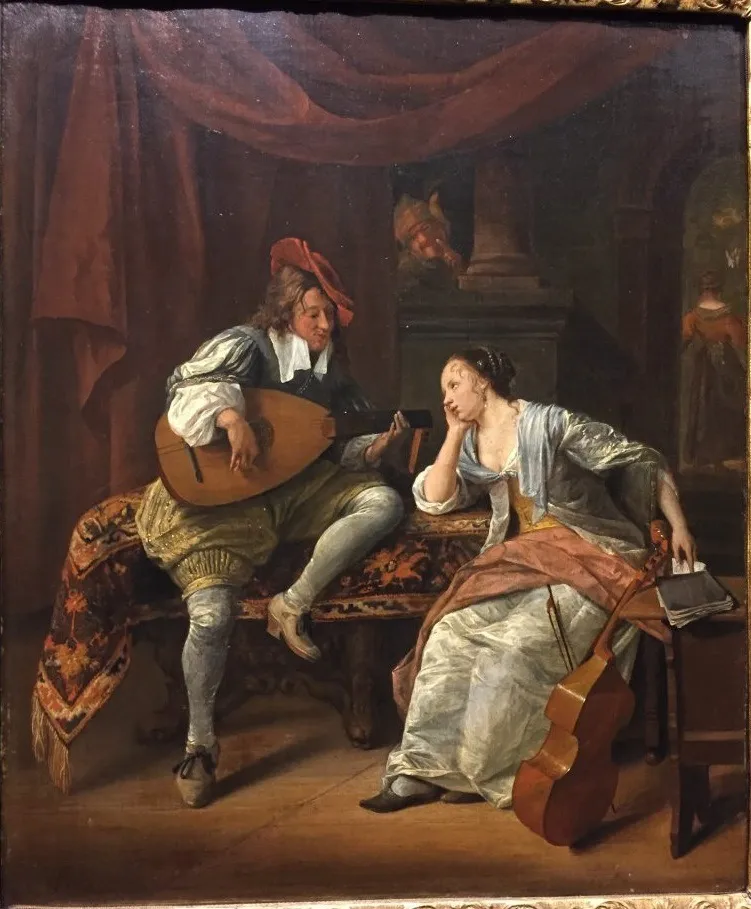
Cavalier Playing a Lute to a Lady (‘Lucelle and Ascagnes’) is an oil painting by the Dutch Golden Age artist Jan Steen. It dates from 1660 and is held in the collection of the National Galleries Scotland.
About this work
Overview
Cavalier Playing a Lute to a Lady, also known as Lucelle and Ascagnes, is an oil painting by the Dutch Golden Age artist Jan Steen, dated 1660.
Cavalier Playing a Lute to a Lady, also known as Lucelle and Ascagnes, is an oil painting by the Dutch Golden Age artist Jan Steen, dated 1660. The work, measuring 38.20 by 32.40 centimeters, is executed in oil paint and belongs to the genre painting tradition. It is currently held in the Bute Collection at Mount Stuart, part of the National Galleries Scotland, though it has also been associated with the Scottish National Gallery. The painting depicts an courtship scene drawn from contemporary Dutch literature, representing Steen's characteristic blend of theatrical narrative with intimate domestic settings. Its identification as a specific literary subject rather than a generic genre scene has significantly shaped scholarly understanding of Steen's working methods and his engagement with Amsterdam's popular culture.
Subject & Meaning
The painting illustrates a pivotal moment from Gerbrand Adriaensz Bredero's tragicomedy Over-gesette Lucelle, first published in Amsterdam in 1616 and frequently reprinted throughout the seventeenth century. The central figures are Lucelle, a wealthy young woman, and Ascagnes, her father's clerk, lovers from different social classes who have arranged to meet under the pretext of a music lesson. The man sits on a patterned bench playing a lute, his body turned toward the woman, who reclines beside him with her head propped on her right hand, gazing at him. She wears a pale blue dress with coral drapery across her lap, while a viola da gamba rests on the floor near her and an open book sits on a small table. The amorous nature of the encounter is reinforced by multiple symbolic elements: the downturned bed with two pillows visible behind heavy dark red curtains, and a sculpted bust on a pedestal that contributes to the intimate chamber setting. A figure in orange stands in a doorway to the right, representing the comic character Lecker-Beetje, a servant who spies on the lovers and will ultimately betray them to Lucelle's father. The presence of an older woman, presumably Margriet the maid who orchestrated the ruse, further confirms the literary source. Music functions as a metaphor for love and desire throughout, with the unattended music book indicating that instruction is not the couple's true concern. The scene captures the lovers as they pledge eternal devotion, unaware that their happiness will soon be threatened by betrayal, poison, and eventual revelation of Ascagnes's true identity as the son of the king of Poland.
Technique & Style
Steen executed the painting in oil with a smooth finish on the faces and fabrics, employing more textured handling in the drapery and background elements. The palette consists of warm browns, deep reds, and pale blues, with light falling from the left to illuminate the figures and create deep shadows in the background. Heavy dark red curtains drape across the upper portion of the composition, while a carved wooden floor stretches beneath the figures. The artist's brushwork demonstrates particular attention to material differentiation, contrasting the rendering of textiles, skin, and architectural details. The composition's lighting scheme and color harmonies are consistent with Steen's broader practice of creating intimate, theatrically inflected domestic interiors. The work's relatively modest dimensions, 38.20 by 32.40 centimeters, suggest it was intended for close viewing, appropriate for its detailed narrative content and the subtle gestures that carry its meaning.
History & Provenance
The painting's documented provenance begins with a possible appearance at a sale in Haarlem on 19 August 1749, where a work by Steen was listed as lot 26, though this attribution remains uncertain. By the nineteenth century, it had entered the collection of Richard M. Foster at Clewer Manor, near Windsor, Berkshire, and subsequently passed to his son Edmund Benson Foster. The painting was sold at Christie's, Manson & Woods in London on 3 June 1876 as The Guitar Lesson, entering the collection of Samuel Addington. Following Addington's estate sale at Christie's on 22 May 1886, again titled The Guitar Lesson, it passed through the collection of Davis before being acquired by Sir Julian Goldsmid. Goldsmid's sale at Christie's on 13 June 1896 saw the painting purchased by the dealer Charles Sedelmeyer in Paris. Baron Michael Ephrussi acquired it before 1900, and William A. Clark purchased it that year. Clark bequeathed the painting to the Corcoran Gallery of Art in Washington in 1926, and it was acquired by the National Gallery of Art in 2014. The work was exhibited at the Royal Academy in London in 1880 as The Guitar Lesson, at the Corcoran Gallery of Art in 1959 for its centenary exhibition, at the Yellowstone Art Center and Montana Historical Society in 1989, and again at the Corcoran in 2001-2002. It is now held by National Galleries Scotland, Bute Collection at Mount Stuart, with association to the Scottish National Gallery.
Context
Steen was among the most versatile and prolific Dutch painters of the seventeenth century, and this painting exemplifies his characteristic practice of drawing inspiration from contemporary literature and popular theater. Bredero, the playwright, was the first important Dutch poet, songwriter, and playwright to focus upon everyday reality, matching insights about human nature with gentle warmth and humor. His use of local dialects rather than classical prototypes, and his belief that the best painters come closest to life, resonated with Steen's own artistic priorities. The tragicomedy genre, which developed in Italy and France in the sixteenth century, typically featured lovers from different social classes overcoming restrictions through ruse and deceit, with inevitable betrayal leading to dramatic denouement and eventual happy resolution. Steen's engagement with Bredero's work reflects broader patterns in his oeuvre, where characters from Italian commedia dell'arte and native Dutch rederijkerskamers frequently appear. The painting has traditionally been called The Music Lesson, and its correct identification as a specific literary scene from Lucelle has clarified understanding of Steen's narrative methods. Scholarly attention, particularly by Mariët Westermann in her 1997 study The Amusements of Jan Steen: Comic Painting in the Seventeenth Century, has helped establish the theatrical and literary dimensions of Steen's genre scenes.
Legacy
The painting's shifting identification, from The Music Lesson or The Guitar Lesson to its recognition as Lucelle and Ascagnes, illustrates evolving scholarly approaches to Dutch genre painting. Where earlier viewers saw a straightforward domestic instruction scene, modern scholarship recognizes a sophisticated literary adaptation that would have been immediately legible to contemporary Amsterdam audiences familiar with Bredero's widely circulated play. This reidentification has influenced understanding of Steen's narrative strategies and his assumption of audience literacy in popular theater. The work's provenance through major nineteenth-century British and American collections, its exhibition history spanning from the Royal Academy to the National Gallery of Art, and its current place in the Bute Collection demonstrate its sustained appeal to collectors and institutions. The painting serves as a significant case study for the intersection of Dutch visual art with contemporary literature, the role of music as metaphor in seventeenth-century courtship imagery, and the methods by which Steen transformed theatrical sources into seemingly naturalistic domestic scenes. Its detailed documentation in catalogues raisonnés by Hofstede de Groot and subsequent scholarly literature has secured its place in the established corpus of Steen's authenticated works.
Artist & collection
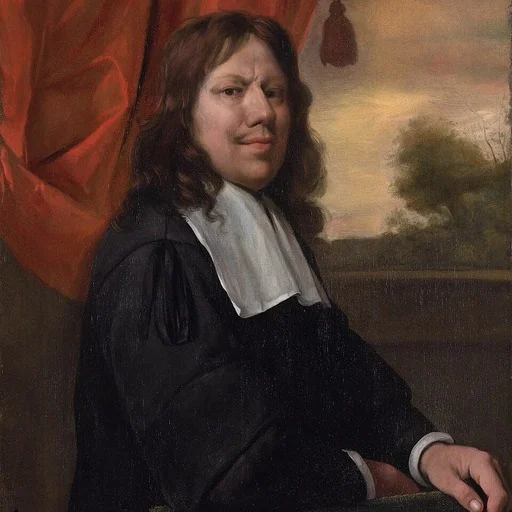
Artist
Jan Havickszoon Steen was a Dutch Golden Age painter, one of the leading genre painters of the 17th century.

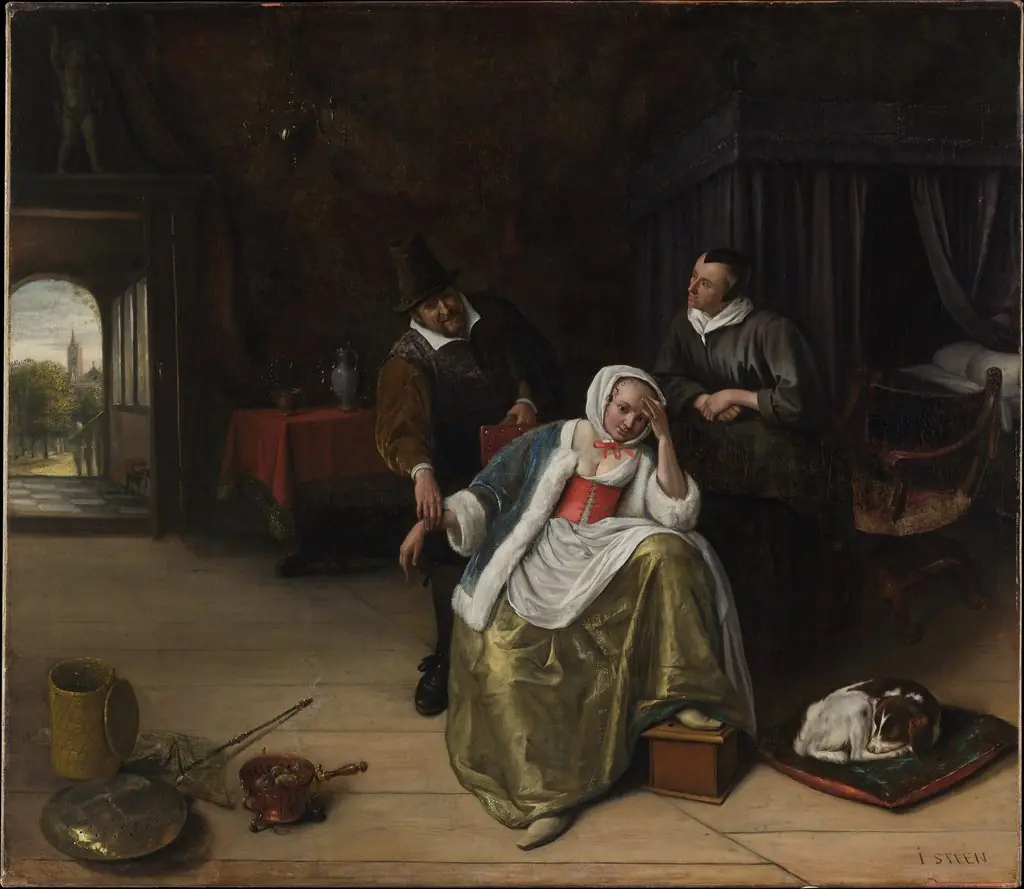 Paintings of physicians by Jan Steen
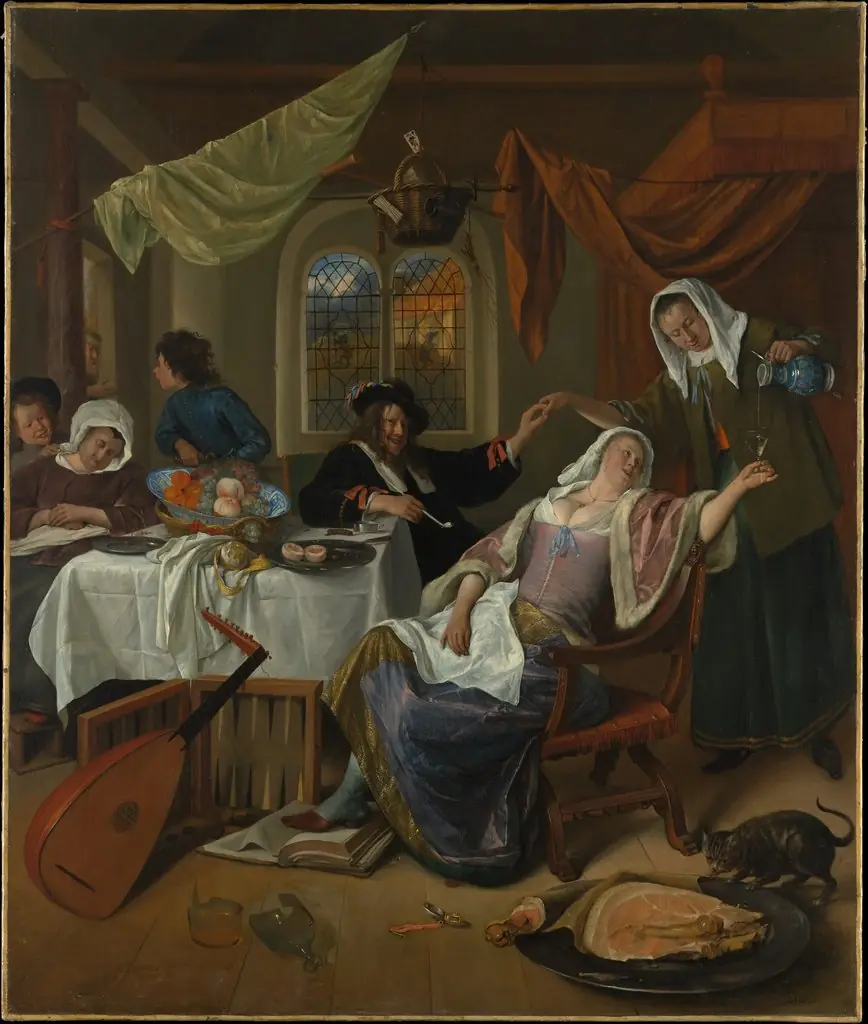 The Dissolute Household
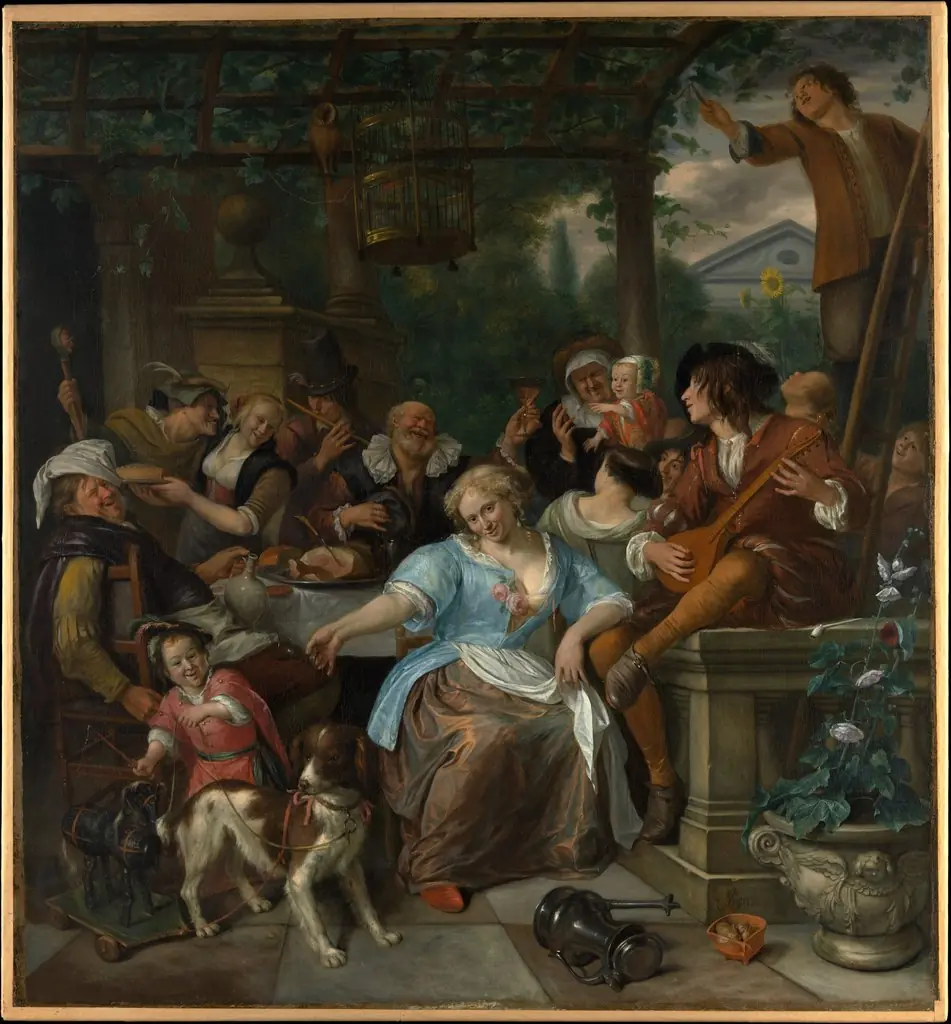 Merry Company on a Terrace
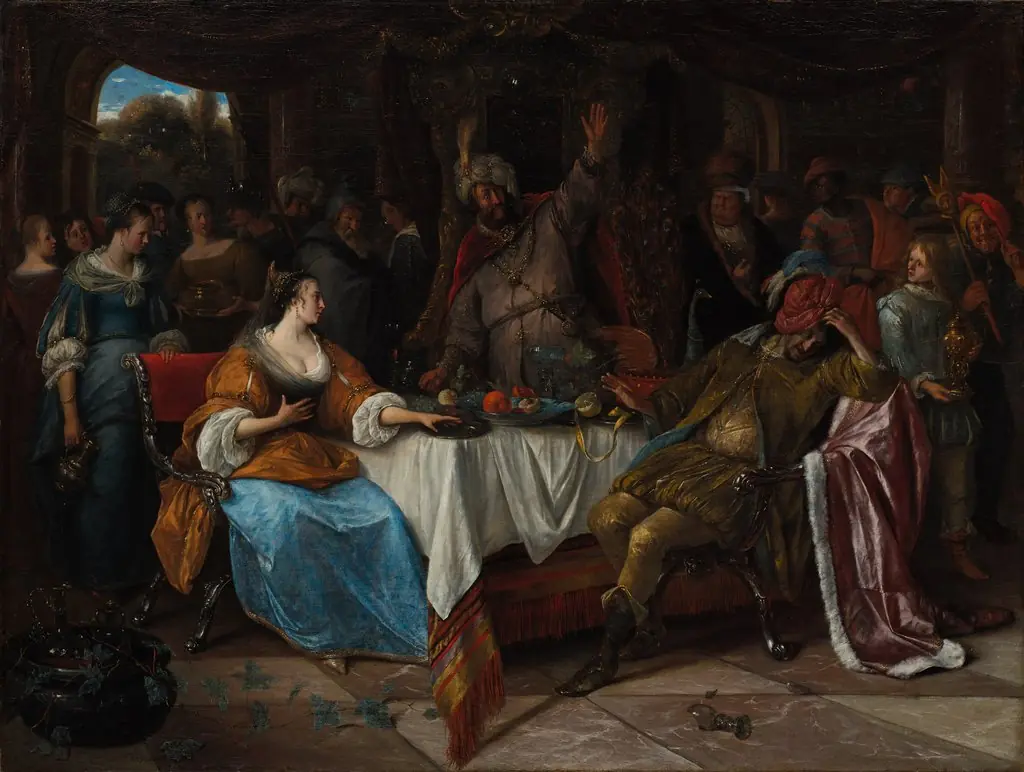 Esther, Ahasuerus, and Haman
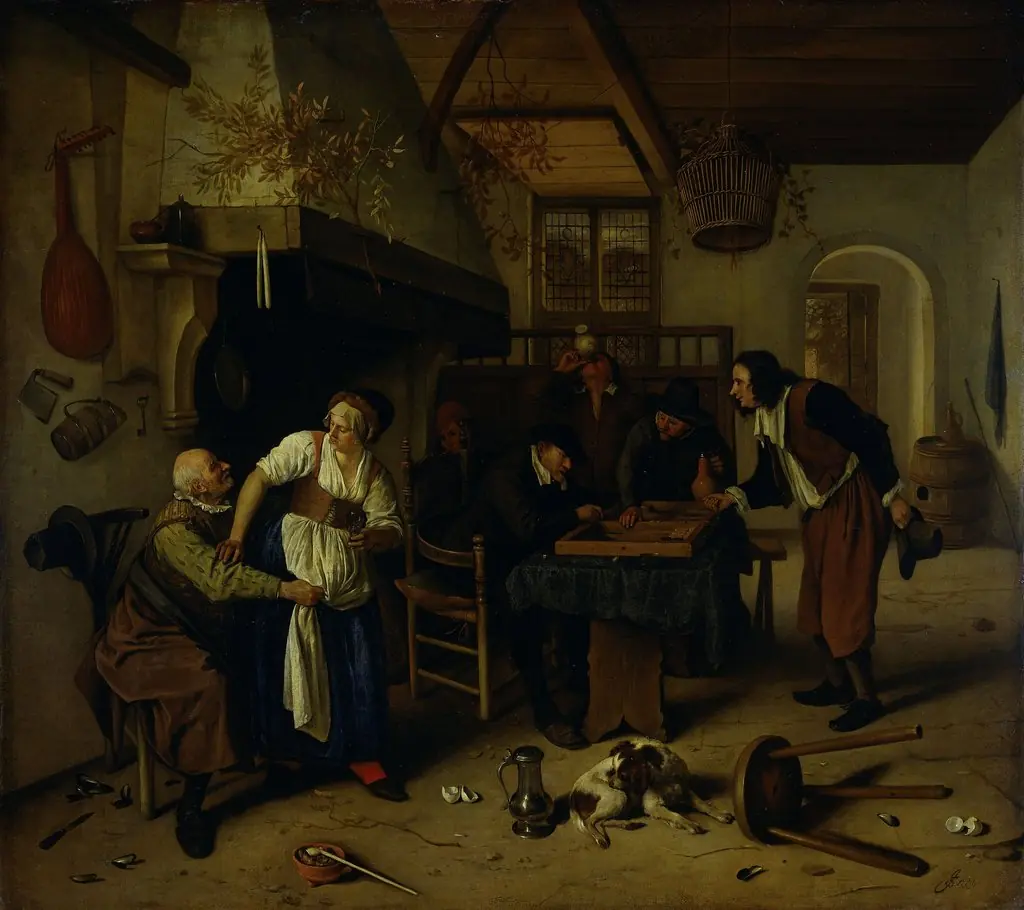 Interior of an inn with an old man amusing himself with the landlady and two men playing backgammon, known as 'Two kinds of games'
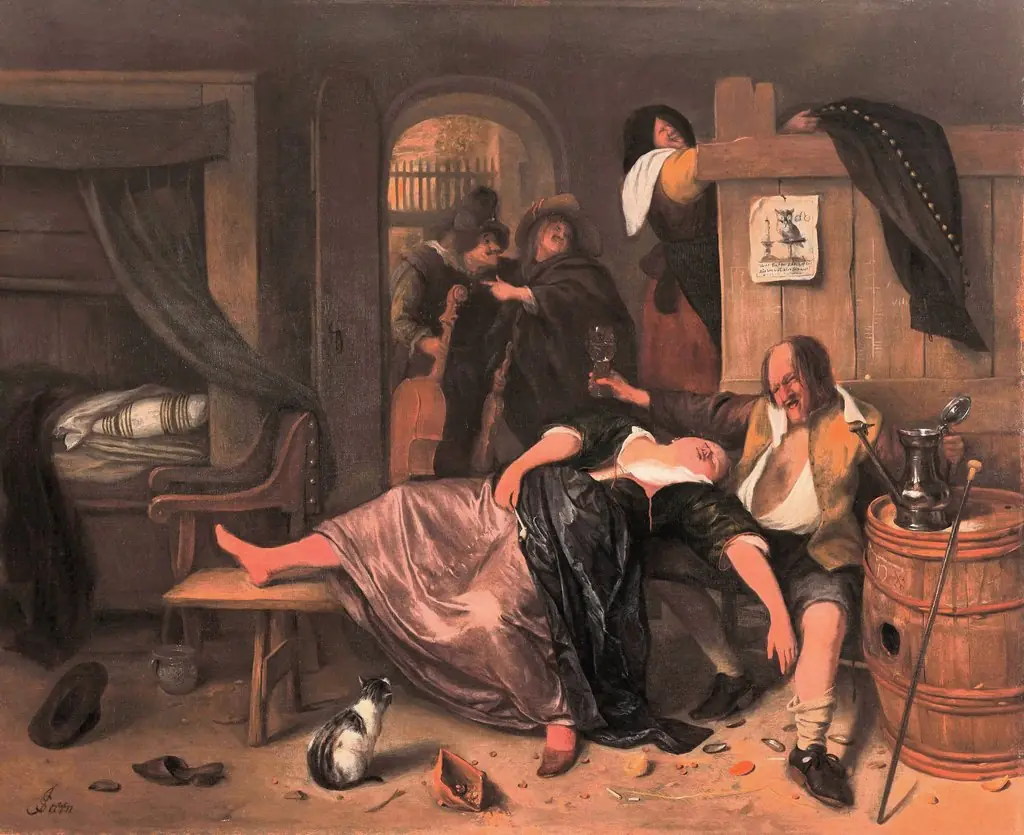 The Drunken Couple
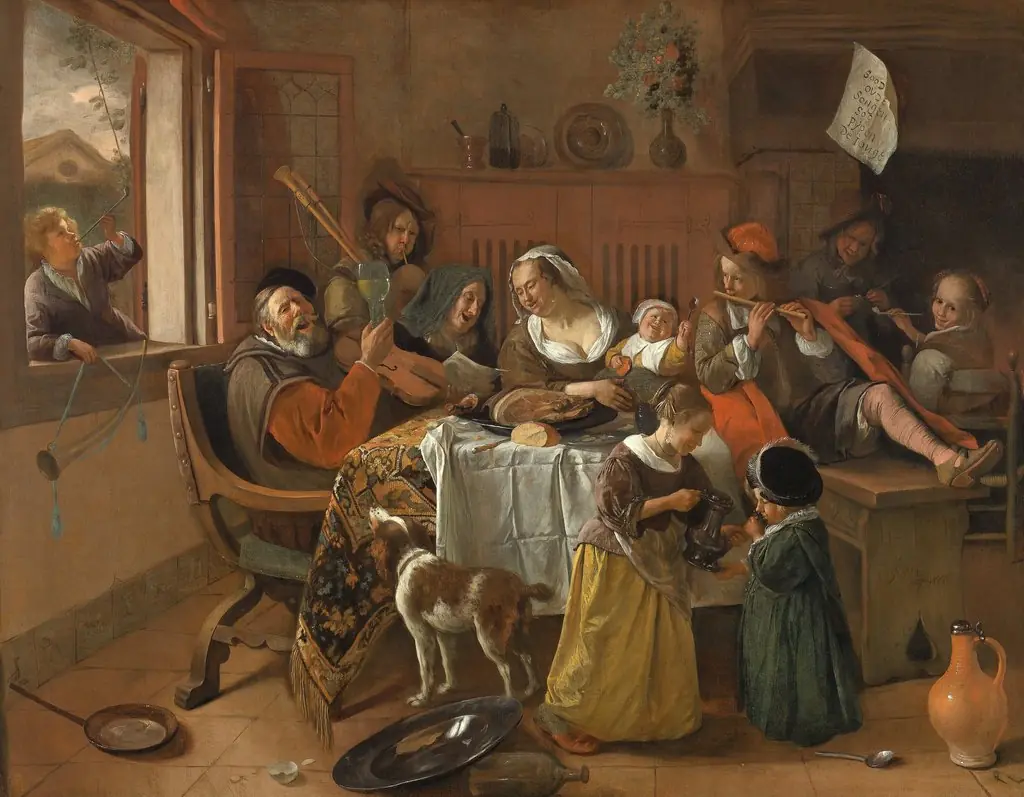 The Happy Family
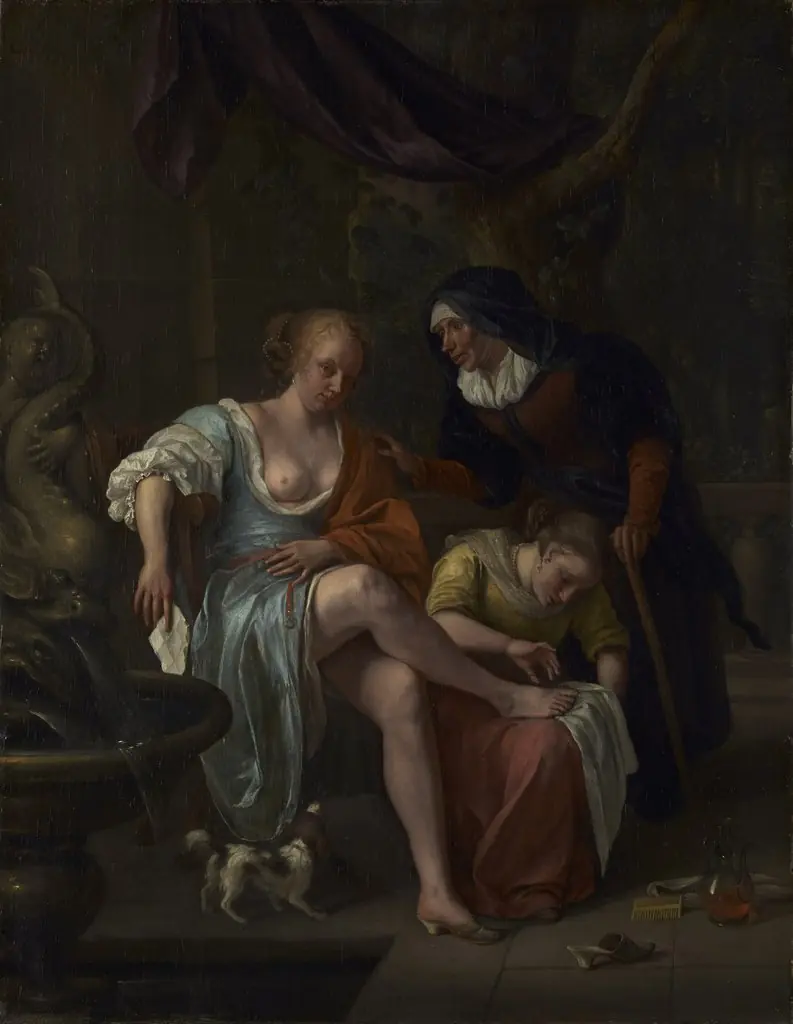 Bathsheba after the Bath